Iraq PM Commends Role of Germany in Fight against Terrorism

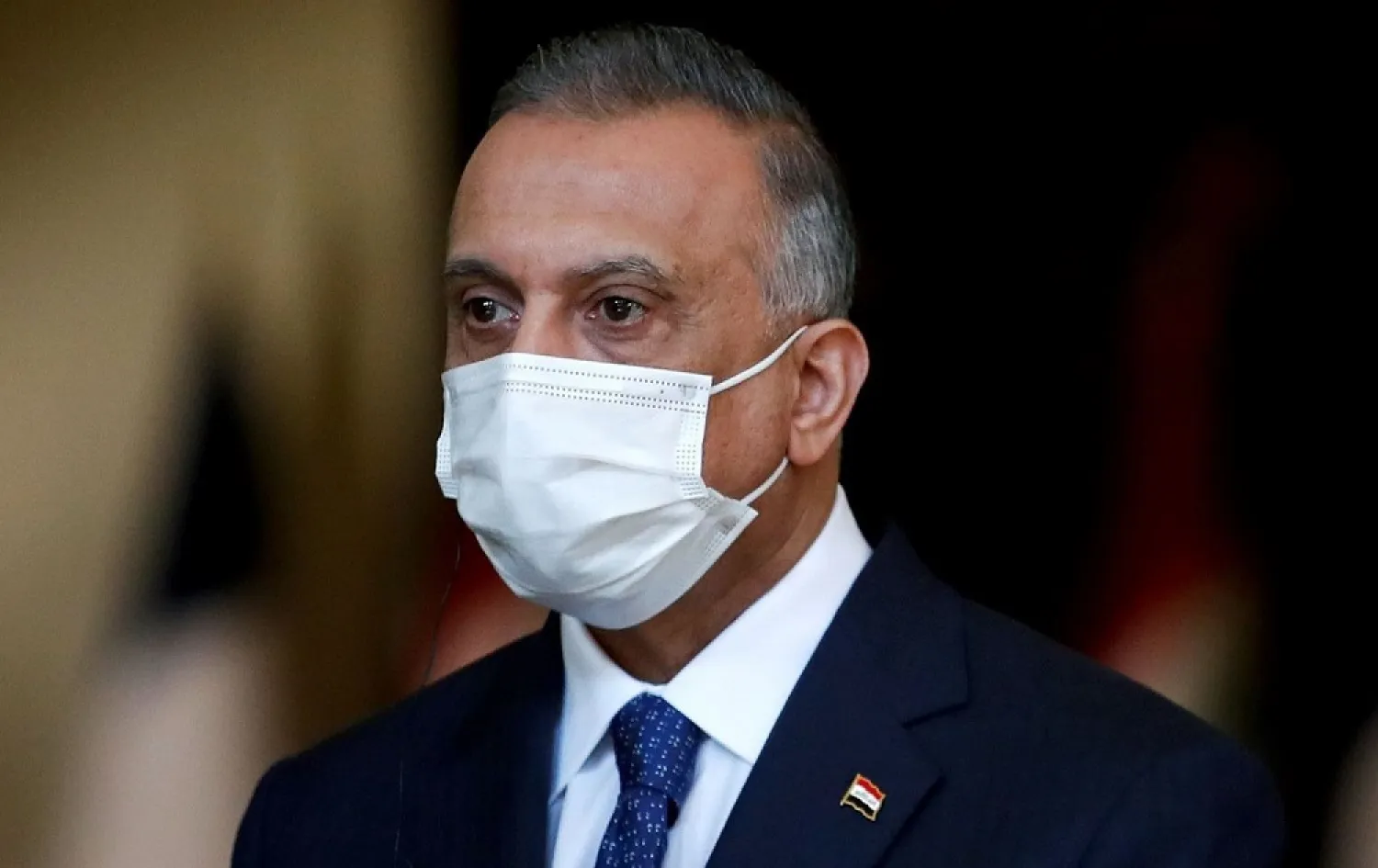
Iraqi Prime Minister Mustafa al-Kadhimi. (AFP file photo)
TT

Iraq PM Commends Role of Germany in Fight against Terrorism

Iraqi Prime Minister Mustafa al-Kadhimi. (AFP file photo)

Iraqi Prime Minister Mustafa al-Kadhimi commended on Thursday the role played by Germany in the fight against terrorism.

Kadhimi and German Chancellor Olaf Scholz spoke by telephone on Thursday, discussing security and intelligence coordination in the fight against terrorism, according to a statement by PM’s office.

They also tackled bilateral relations between their countries.

Kadhimi expressed his hope that “relations between both countries would witness further progress and prosperity.”

Scholz hailed Iraq's growing role in the region where it has emerged as mediator in various crises.

He welcomed the economic reforms implemented by Iraq, saying it will boost the opportunities of cooperation between their countries.

Among other issues discussed were potential German investment in Iraq, as well as the conditions of Iraqi migrants in Germany, according to the statement.


Pope Says he is 'Closer Than Ever' to Lebanese People

Pope Leo XIV addresses the crowd from the window of the apostolic palace overlooking St. Peter's square during the Regina Caeli prayer in The Vatican on April 12, 2026. (Photo by Filippo MONTEFORTE / AFP)
TT

Pope Says he is 'Closer Than Ever' to Lebanese People

Pope Leo XIV addresses the crowd from the window of the apostolic palace overlooking St. Peter's square during the Regina Caeli prayer in The Vatican on April 12, 2026. (Photo by Filippo MONTEFORTE / AFP)

Pope Leo XIV expressed his closeness to the people of Lebanon on Sunday, saying there was a "moral obligation" to protect them while calling on warring parties to seek peace.

"I am closer than ever, in these days of sorrow, fear, and unconquerable hope in God, to the beloved Lebanese people," the pope told the crowd at St. Peter's Square following his Regina Coeli prayer, citing "a moral obligation to protect the civilian population from the atrocious effects of war."

An Israeli strike on Sunday morning hit a home of seven people in the Lebanese town of Maaroub, the state-run National News Agency reported.

The strike came without warning, and Israel did not immediately comment on it.

Israel’s government has said its strikes target operatives or infrastructure belonging to Hezbollah.

Israeli strikes over Beirut have decreased in recent days, but its attacks on southern Lebanon have intensified alongside a ground invasion.


Israeli Strikes Target ‘Joint Force’ Fighters in Gaza

Mourners react during the funeral of Palestinians who were killed in an Israeli strike, according to medics, at Al-Aqsa Martyrs Hospital in Deir al-Balah, central Gaza Strip, April 11, 2026. REUTERS/Mahmoud Issa
TT

Israeli Strikes Target ‘Joint Force’ Fighters in Gaza

Mourners react during the funeral of Palestinians who were killed in an Israeli strike, according to medics, at Al-Aqsa Martyrs Hospital in Deir al-Balah, central Gaza Strip, April 11, 2026. REUTERS/Mahmoud Issa

Israeli strikes in the Gaza Strip have recently focused on targeting Palestinian faction fighters operating within what is known as the “joint force,” deployed near sensitive areas close to the so-called “yellow line,” Palestinian sources said.

The force is tasked with preventing infiltration by Israeli special units or armed groups, particularly in zones a few hundred meters from the line.

Israeli forces and allied armed groups are positioned inside the “yellow line,” described as the initial withdrawal boundary under a ceasefire agreement that took effect on Oct. 10, 2025.

The line covers around 52 percent of the Gaza Strip, while Hamas and other Palestinian factions are deployed to the west, seeking to prevent incursions into their areas of control and avert attempts to create “chaos” through field operations, including assassinations or abductions.

An Israeli drone strike late Friday killed six fighters from the Ezzedine al-Qassam Brigades, the armed wing of Hamas, as they were deployed in Bureij refugee camp in central Gaza, according to local sources.

The bodies were brought in pieces to Al-Aqsa Martyrs Hospital in Deir al-Balah, while several other fighters and civilians were wounded, some critically, in the strike, which involved two missiles.

Hundreds of Palestinians attended the funeral on Saturday at the main mosque in Bureij camp.

A field source told Asharq Al-Awsat that those killed included a company commander and his deputy in the Qassam Brigades. They had arrived in the area to inspect fighters deployed there just one day after armed group members attempted to infiltrate near the Anis Stadium area, located several hundred meters west of the yellow line.

The deployment aimed to counter any renewed infiltration attempts, the source said.

In recent days, Israeli forces and allied armed groups have concentrated their attacks in central Gaza, killing several Palestinian faction fighters, most of them from the Qassam Brigades, including some displaced from northern areas.

The number of Palestinians killed since the ceasefire took effect has risen to more than 749, bringing the overall death toll since Oct. 7, 2023 to 72,328, according to Palestinian figures.

Hamas spokesman Hazem Qassem said the Bureij strike and what he described as ongoing Israeli violations show that the offensive “has not stopped,” despite claims that the ceasefire is holding.

He added that the developments underscore the need to compel Israel to fully implement the first phase of the ceasefire agreement, including halting daily violations, before moving to the second phase.

Hamas told mediators and the high representative of the Peace Council, Nikolay Mladenov, during meetings in Cairo last week that it and other factions want Israel to fully implement the first phase before advancing further.

Cairo has been hosting new rounds of Palestinian talks since Friday, along with meetings involving mediators and Mladenov to discuss the factions’ final response to a proposed disarmament plan.

Dispute over aid deliveries

The talks come amid Hamas criticism of Mladenov after he said Thursday that 602 trucks carrying goods and aid had entered Gaza.

Gaza’s government media office and Hamas denied the figure.

In a post on X, Mladenov said: “Today, 602 trucks entered Gaza carrying essential supplies for families who have waited too long. This is what expanded aid access should look like, and it must become the daily standard, not the exception.”

He noted that the deliveries were made possible by efforts from his team, the Gaza Administration Committee and the Peace Council, adding that all parties must fully adhere to ceasefire commitments.

His comments came as Reuters reported, citing sources, that the Peace Council faces funding challenges affecting the Gaza administration body’s ability to assume its responsibilities and delaying reconstruction, claims the council has denied.

Bassem Naim, a member of Hamas’s political bureau and part of its negotiating delegation, described Mladenov’s statements as “misleading,” saying only 207 trucks entered Gaza on Thursday, including 79 carrying aid.

He stressed that Israel was meeting less than 38 percent of its agreed commitments to allow aid into Gaza.

“This misinformation does not conceal the worsening humanitarian catastrophe,” Naim underlined, calling on the international community to ensure full implementation of the first phase of the ceasefire.

Gaza’s government media office confirmed the 207-truck figure, saying deliveries fall far short of humanitarian needs.

The Gaza Chamber of Commerce revealed that average daily truck entries do not exceed 113, about 19 percent of the minimum required, with 86 percent consisting of food items and a near absence of production inputs, reflecting severe economic paralysis and contributing to shortages, market imbalances and rising prices.



Lebanese Army Warns Hezbollah Supporters against Undermining Civil Peace

Hezbollah supporters demonstrate in Beirut to protest the Lebanese authorities’ decision to engage in direct negotiations with Israel, on April 10, 2026. (Photo by FADEL itani / AFP)
TT

Lebanese Army Warns Hezbollah Supporters against Undermining Civil Peace

Hezbollah supporters demonstrate in Beirut to protest the Lebanese authorities’ decision to engage in direct negotiations with Israel, on April 10, 2026. (Photo by FADEL itani / AFP)

The Lebanese army warned supporters of Hezbollah against actions that could undermine civil peace, as protests in Beirut over government policy entered a second day, raising tensions in the capital.

Demonstrations involving hundreds of Hezbollah and Amal Movement supporters have taken place in central Beirut, including near government headquarters in Riad al-Solh Square, with protesters blocking roads and moving through areas such as Hamra, Raouche, Sakiet al-Janzir and the so-called Ring Bridge. The protests are aimed at pressuring the government over its decision to launch direct negotiations with Israel and to restrict weapons to state control in Beirut.

Prime Minister Nawaf Salam postponed a planned trip to the United States following the unrest.

“In light of the current domestic situation, and in order to fully carry out my duty to safeguard the security and unity of the Lebanese people, I have decided to postpone my trip to the United Nations and the United States to continue the government’s work from Beirut,” Salam said in a post on X.

The Lebanese army said in a statement it respects the right to peaceful expression but warned strongly against any actions that could endanger stability or civil peace.

“Any movement that could threaten stability, civil peace or lead to attacks on public or private property will not be tolerated,” the army said, adding it would act decisively to prevent any disruption to internal stability.

Protesters raised party flags and slogans rejecting what they described as “concessions and normalization with Israel,” insisting that “the resistance’s weapons are what liberate the land.”

Security coordination

Amid fears of escalation, President Joseph Aoun convened a security meeting at Baabda Palace attended by Defense Minister Maj. Gen. Michel Menassa and Interior Minister Ahmad al-Hajjar to review measures aimed at maintaining stability.

Salam also chaired a meeting at the Grand Serail with the defense and interior ministers, Lebanese Armed Forces Commander Gen. Rodolphe Haykal and Internal Security Forces chief Maj. Gen. Raed Abdallah to discuss the implementation of cabinet decisions to maintain security in Beirut.

The army and Internal Security Forces deployed heavily across central Beirut, including elite units, and set up checkpoints at key entry points including Hamra and Spears. Patrols were also conducted near displacement centers and in mixed sectarian neighborhoods.

Al-Hajjar said peaceful protest is permitted under the law but stressed that security forces have taken all necessary measures to protect state institutions and ensure the safety of Beirut and its residents. He called for “responsibility, awareness and national unity at this delicate stage.”

Ahead of a second rally on Saturday afternoon near the Grand Serail, security forces expanded their deployment across Beirut.

A security source said there would be “no tolerance for any attempt to undermine security or threaten civil peace,” describing stability as a “red line” and warning that any destabilization would be met with a firm response.