
Saudi PIF Acquires Stakes in 4 Egyptian Companies Worth $1.3b
Egypt looks forward to more cooperation with the Saudi Public Investment Fund. (Asharq Al-Awsat)
The Saudi Egyptian Investment Company (SEIC), owned by Saudi Arabia's state-owned Public Investment Fund (PIF), has bought minority stakes in four Egyptian companies for $1.3 billion, Egypt's planning ministry said on Wednesday.
The companies are Abu Qir Fertizilers and Chemical Industries, Misr Fertilizers Production Company, Alexandria Container and Cargo Handling, and payments firm E-Finance for Financial and Digital Investments.
The PIF congratulated in a tweet the SEIC on acquiring stakes in four major Egyptian companies.
Last week PIF set up SEIC with the stated aim of investing in Egypt's “promising economic sectors,” being one of the key strategic economic markets in Africa.
The Saudi sovereign wealth fund is building an international portfolio of investments while also investing locally in projects to help reduce the Kingdom's economic reliance on oil. It has approximately $620 billion of assets under management.
Minister of Planning and Economic Development and Chairman of the Board of Directors at Egypt's Sovereign Fund Hala al-Saeed said that the deal comes in line with the state’s plan to expand the ownership base and encourage foreign direct investment.
"It is also part of the Fund's strategy to attract Arab and foreign investors and provide promising investment opportunities in various economic sectors, achieving the highest benefits for the Egyptian state, maximizing the exploitation of state-owned assets, and guaranteeing the rights of future generations."
The deal further reflects the confidence of the foreign investors in the Egyptian economy, Saeed added.
The acquisitions are in line with SEIC’s objective to invest in promising sectors in Egypt, which is considered one of the world’s emerging markets and one of the MENA region’s fastest-growing economies.
The Company stated that it will invest in priority sectors including but not limited to, infrastructure, real estate development, health care, financial services, food and agriculture, manufacturing, pharmaceutical and other opportunistic investments.
SEIC aims to support PIF’s efforts to explore new investment opportunities in the MENA region that support the creation of long-term strategic economic partnerships to achieve sustainable returns to maximize PIF's assets in line with Vision 2030.
Lucid in Saudi Arabia: From Assembly to Manufacturing
Lucid CEO and board member Silvio Napoli. (Asharq Al-Awsat)
Lucid Motors is entering a new phase focused on improving liquidity and operational discipline, while launching new products and expanding manufacturing in Saudi Arabia as it seeks to address financial pressures and strengthen its capacity for growth.
The shift comes as the company continues to expand its business. Second-quarter revenue rose 56 percent year on year to $405 million, while vehicle deliveries increased 19 percent to 3,953.
At the same time, Lucid deliberately reduced production to better align supply with demand, cut inventory and preserve cash. Total liquidity stood at about $3 billion at the end of the quarter.
In an exclusive interview with Asharq Al-Awsat, Lucid CEO and board member Silvio Napoli outlined four priorities for the next phase: improving cash flow and costs, with the aim of generating $1.4 billion in savings in 2026; advancing its autonomous robotaxi program with Uber and Nuro; completing the transition of its AMP-2 plant in Saudi Arabia to fully integrated manufacturing; and advancing its midsize vehicle program toward launch readiness.
Napoli noted that Lucid possesses leading technology and distinctive products but is addressing financial challenges through stronger execution, centered on three pillars: liquidity and costs; customers and quality; and corporate culture and the workforce.
His comments came on the sidelines of the fifth LEAP 2026 conference in Riyadh, held under the theme “Into New Worlds,” where Lucid is showcasing its latest electric-vehicle technologies.
He added that the company is now focused on building a disciplined operating model that can translate Lucid’s strengths into sustainable and consistent performance.
Lucid's new factory in western Saudi Arabia. (Lucid Motors)
PIF investment
Napoli described Lucid’s relationship with Saudi Arabia’s Public Investment Fund as extending beyond a traditional investor-company relationship, calling PIF an important strategic partner whose support reflects shared confidence in the company’s capabilities and long-term growth prospects.
He explained that the company and PIF share a vision of helping shape the future of mobility and supporting Saudi Vision 2030.
Lucid’s presence in Saudi Arabia gives it access to engineering talent, research capabilities and advanced computing resources, while the expansion of AMP-2 in King Abdullah Economic City represents a pivotal step, he remarked.
The company’s ambitions extend beyond producing electric vehicles to helping build an integrated ecosystem for the automotive sector, technology and advanced industries in the Kingdom, he went on to say.
PIF has been Lucid’s principal investor through key stages of its development and continues to play an important role as a strategic partner as the company moves into its next phase of growth, implements its transformation plan and expands internationally.
Localizing vehicle manufacturing
Asked about Lucid’s gradual transition in Saudi Arabia from semi-knockdown, or SKD, assembly to integrated manufacturing, including vehicle bodies, paint and component production, Napoli confirmed that the company is moving toward full vehicle manufacturing in the Kingdom.
The AMP-2 expansion marks a new chapter in Lucid’s industrial presence in Saudi Arabia, he explained. Across the 1.36 million-square-meter site, operations will include stamping and forming body panels, body construction, painting and final assembly, as well as powertrain manufacturing and battery-pack assembly.
Lucid is currently installing and commissioning the manufacturing systems required to integrate those processes and will scale production gradually as the factory, products and supplier network become ready.
The long-term objective is to establish sustainable, integrated industrial capabilities in the Kingdom that support the growth of its electric-vehicle and advanced-manufacturing ecosystem, he revealed.
A Lucid vehicle in Saudi Arabia. (SPA)
Jobs and Saudi talent
Napoli expects significant workforce growth in manufacturing, engineering, quality assurance, logistics and supply chains as AMP-2 gradually expands toward its targeted annual production capacity of 150,000 vehicles.
The company’s ambitions go beyond creating jobs and include developing specialized expertise in Saudi Arabia. Lucid is investing in Saudi talent and practical training programs directly linked to advanced vehicle manufacturing, he noted.
The company is also working closely with authorities in King Abdullah Economic City to attract suppliers tied to its manufacturing requirements. The shared ambition is to turn the city into an integrated supplier hub, with Lucid serving as one of the strategy’s main anchors and attracting leading global Tier 1 and Tier 2 suppliers.
Napoli also highlighted the success of the supplier center at the King Salman Automotive Cluster in attracting international companies specializing in automotive components, including seats, vehicle structures, stamped parts, interior systems and exterior components.
Attracting qualified suppliers to establish operations near the plant, investing in Saudi skills and increasing local content would help create a manufacturing ecosystem capable of competing globally while meeting required standards for quality and cost efficiency, he underlined.
Supply chains
Lucid’s ambitions in Saudi Arabia extend beyond vehicle manufacturing to building an integrated base for engineering, supply-chain development, scientific research and Saudi talent development.
The company is working with suppliers localizing operations in the Kingdom, King Abdullah University of Science and Technology and other research institutions in technology and innovation, as well as the Human Resources Development Fund and the National Automotive and Vehicles Academy.
Through cooperation with these entities and the Saudi government, Lucid is contributing to the training and qualification of more than 450 Saudi talents to work in the electric-vehicle sector and at AMP-2, Napoli said, adding that Lucid expects more Saudis to benefit from these programs and opportunities in the next phase.
China Says Solar Power Capacity Surpasses Coal for First Timehttps://english.aawsat.com/business/5313306-china-says-solar-power-capacity-surpasses-coal-first-time
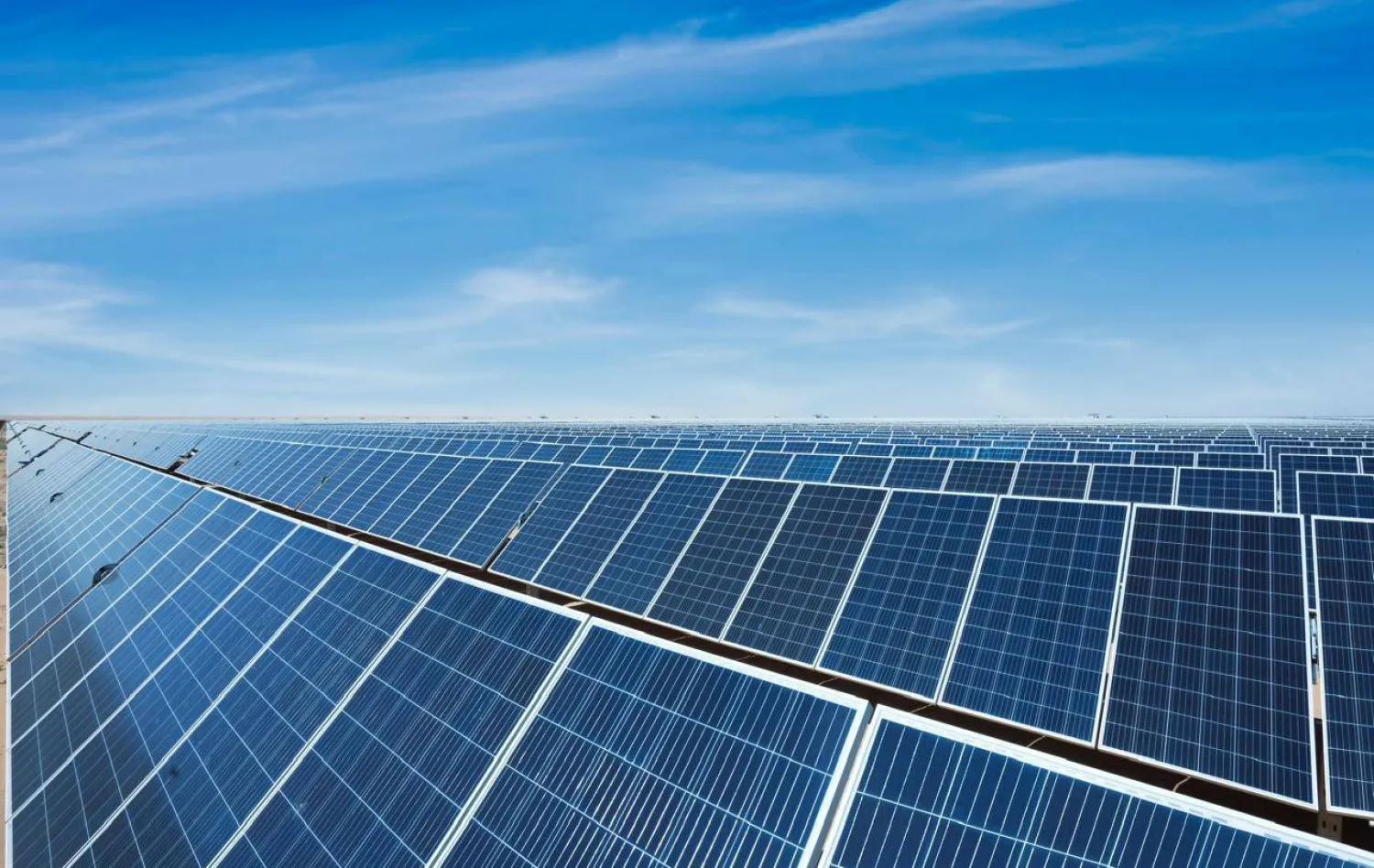
An aerial view of solar panels at the Yinchuan Fourth Photovoltaic Power Station in Yinchuan, in northwestern China's Ningxia Hui Autonomous Region, on August 25, 2026. (CN-STR / AFP)
TT
TT
China Says Solar Power Capacity Surpasses Coal for First Time
An aerial view of solar panels at the Yinchuan Fourth Photovoltaic Power Station in Yinchuan, in northwestern China's Ningxia Hui Autonomous Region, on August 25, 2026. (CN-STR / AFP)
China's installed solar energy capacity has surpassed that of coal-fired power for the first time, the national energy body said Tuesday, hailing the milestone.
China, the world's largest emitter of greenhouse gases that drive climate change, has pledged to peak carbon emissions by 2030 and achieve carbon neutrality by 2060.
"As of the end of July this year, China's installed solar power capacity reached 1.286 billion kilowatts," the National Energy Administration (NEA) said.
"For the first time, photovoltaic installed capacity surpassed coal-fired power, becoming the largest power source category in China," it added.
The country's coal-fired power installed capacity, the energy body said, stood at 1.285 billion kilowatts.
Solar generation rose 15.5 percent on-year in the first seven months of 2026 to 802.4 billion kilowatt-hours, about one-eighth of the country's total, the NEA said in another statement.
It did not detail in these statements what the total generation of coal-powered energy was for the first seven months of this year.
The NEA said China's installed solar power capacity and power generation "have maintained a steady trend of rapid growth", with it playing an "increasingly prominent role" in guaranteeing electricity supply and driving the energy transition.
Coal has been China's key power generation source for decades and a key driver of its planet-warming emissions.
But the country's coal-fired power generation fell by nearly two percent in 2025, despite rising energy demand in the world's largest emitter, data reviewed by AFP showed in February.
It marked the first decline in six years, with some analysts saying it was the first time on record that coal generation dropped at the same time as power demand rose.
China has seen an explosive growth in its renewable installation, with coal's share in its energy mix edging down in recent years.
The country installed a record 315 gigawatts of solar power and 119 gigawatts of wind power capacity last year -- over 80 percent of total newly installed power generation capacity, according to the China Electricity Council.
Oil Extends Gains, Stocks Drop as Trump Issues Fresh Iran Warninghttps://english.aawsat.com/business/5313276-oil-extends-gains-stocks-drop-trump-issues-fresh-iran-warning
An oil pumpjack at Lake Maracaibo in Cabimas, Venezuela, January 27, 2026. (Reuters)
TT
TT
Oil Extends Gains, Stocks Drop as Trump Issues Fresh Iran Warning
An oil pumpjack at Lake Maracaibo in Cabimas, Venezuela, January 27, 2026. (Reuters)
Oil prices extended gains Tuesday amid fears of a fresh bout of military exchanges between the United States and Iran following a flare-up at the weekend and Donald Trump's warning that he will hit the country "hard".
The latest bout of strikes between the foes has further stoked worries about inflation that has put pressure on central banks to hike interest rates, which has in turn jolted equity markets.
After six months of war, the conflict remains at an impasse, with Tehran keeping the strategic Strait of Hormuz closed and Washington continuing a counter-blockade of Iranian ports.
The United States carried out strikes on an Iranian island in the waterway on Sunday, with Tehran quickly retaliating by attacking US military targets in the Middle East.
The exchange raised fears of a return to major hostilities, with the US president vowing to respond.
"We're going to hit them hard," Trump said, according to a Fox News reporter who spoke to him briefly. "There will be a response."
US officials said it hit rocket launchers on the island of Larak to prevent Tehran planting mines in the strait, while Iran targeted US forces in Jordan and the United Arab Emirates. The UAE denied reports of the attack.
The exchange of fire came after weeks of relative calm, with the Trump administration recently pivoting to "economic warfare".
US Treasury Secretary Scott Bessent said: "We are going to continue exerting pressure, and we've had very good discussions here already."
He told reporters at a G20 meeting in North Carolina that a turning point in the pressure campaign could come "within weeks or months".
Both main crude contracts rose Tuesday, extending the previous day's jump of more than two percent.
"The calibrated nature of the initial actions suggests neither side is actively seeking a return to sustained conflict, but stalled talks and the strategic importance of keeping the Strait open leave the situation vulnerable to further escalation," said National Australia Bank's Rodrigo Catril.
Trump will be meeting oil refining executives on Tuesday in a bid to tame soaring US domestic gas prices that have been a political headache for his Republican Party heading into November's midterm elections.
Stocks mostly fell, with traders now awaiting the release of key data this month ahead of the Federal Reserve's policy meeting on September 16.
Tokyo, Hong Kong, Seoul, Shanghai, Sydney, Singapore and Wellington were all down, though Taipei, Manila and Jakarta rose.
The jobs and consumer price index reports could play a major role in whether the bank hikes rates, with bets on an increase surging after boss Kevin Warsh's hawkish speech on Friday.
Expectations for elevated inflation and rising borrowing costs pushed the yield on 10-year US Treasuries to their highest level since January 2025.
That has bled into Asia, with 10-year Japanese government bond yields touching a 30-year high on Monday.
In company news, fast-fashion giant Shein fell more than nine percent on its long-awaited Hong Kong trading debut, having raised US$1.7 billion in a high-profile initial public offering.
And shares in MediaTek soared nearly 10 percent after US tech giant Nvidia announced it has injected US$3.5 billion into the Taiwanese chipmaker.
لم تشترك بعد
انشئ حساباً خاصاً بك لتحصل على أخبار مخصصة لك ولتتمتع بخاصية حفظ المقالات وتتلقى نشراتنا البريدية المتنوعة