


Al Akaria Riyadh Land Cleared, Returning Strategic Asset to Development

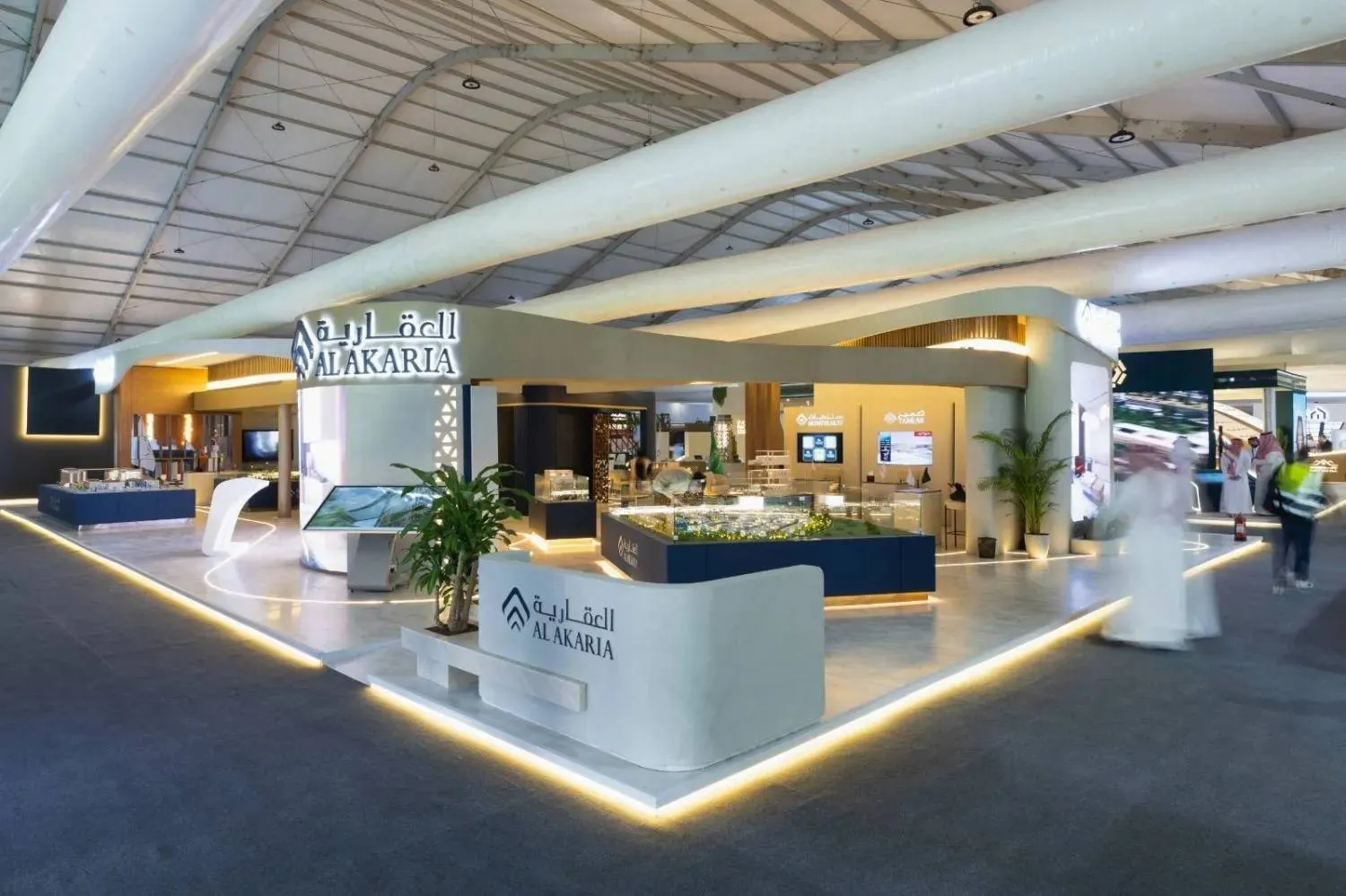
Al Akaria participates in the Cityscape Global exhibition (Company handout)
TT

Al Akaria Riyadh Land Cleared, Returning Strategic Asset to Development

Al Akaria participates in the Cityscape Global exhibition (Company handout)

Lifting regulatory restrictions on real estate assets marks an important stage in the investment cycle, allowing owners to regain flexibility in managing and developing their properties.

Saudi Real Estate Co. (Al Akaria), which is majority-owned by Saudi Arabia’s Public Investment Fund, said restrictions had been lifted on a plot of land it owns in Riyadh’s northern Al-Arid district.

Experts said the move gives the company a wider range of investment options, although its economic value will ultimately depend on management’s ability to develop or invest the land in ways that generate future returns.

The company received the property registration deed issued by the Real Estate Registry, lifting restrictions on the 30,000-square-meter plot, which has a book value of 98.4 million riyals ($26 million).

The move transforms the property from an asset unavailable for development into one that can be used as part of the company’s investment strategy.

Sulaiman Al-Hamid Al-Khalidi, a financial and economic expert and member of the Saudi Economic Association, told Asharq Al-Awsat that the decision had renewed attention on one of the most important assets in Al Akaria’s portfolio and raised questions about whether it could strengthen the company’s market value in the coming period.

Greater asset management flexibility

Al-Khalidi said that although Al Akaria had confirmed there would be no immediate financial impact, the significance of the development went beyond its short-term accounting effect.

It gives the company greater flexibility in managing one of its strategic assets and allows it to benefit from the property through development, partnerships or the restructuring of its investment uses in ways that support future growth, he added.

From an investment perspective, investors do not generally view the removal of regulatory restrictions as an objective in itself, but rather as a step that can pave the way for the creation of new economic value.

The true assessment of the decision will therefore depend on management’s ability to turn the asset into a source of returns and cash flows, rather than merely regaining the right to dispose of it, Al-Khalidi said.

He said a legitimate question remained over whether the market had anticipated the development and already priced in a large part of its positive impact, particularly as investors had been following efforts to resolve the issue.

In such cases, continued momentum depends more on subsequent disclosures and implementation plans than on the announcement itself, he said.

The decision is also important for the broader property sector because it reflects stability and growth in the real estate market, he added.

Awaiting development plans

Al-Khalidi said markets reward companies not for announcements alone, but for their ability to turn developments into profits and cash flows.

The lifting of restrictions on Al Akaria’s land is therefore a positive step, but the final assessment will remain linked to the development and investment plans the company announces in the coming period, he said.

Decision supports real estate activity

Abdullah Al-Mousa, a property expert and observer, told Asharq Al-Awsat that lifting the restrictions was a positive development from a market perspective, as it returned a major real estate asset to economic use after a period of uncertainty.

When large plots become available for development or investment, they support activity in the property sector and create opportunities for new projects that can increase supply and stimulate investment, he said.

This is particularly significant when the land is strategically located in northern Riyadh, an area experiencing rapid urban growth, he added.

Al-Mousa said the real impact would not be measured merely by the removal of the restrictions, but by how quickly the asset was converted into a productive project that added value to the market.

Actual development is what affects investment volumes, employment opportunities and the diversity of real estate products, he said.

The decision is positive because it gives the company greater flexibility in managing one of its strategic assets, whether through direct development, partnerships, or other forms of investment consistent with its operational plan.

It could also increase the asset’s economic value and improve the options available to management for its future use, Al-Mousa said.

The actual financial impact, however, will depend on what the company later announces regarding its development plans, investment approach and implementation timetable.

Lifting the restrictions is a preliminary step, while economic value will be realized only when development or investment begins, he added.

Saudi Real Estate Co. announced that restrictions on the land it owns in the Al-Arid district of northern Riyadh were lifted following the issuance of a property registration deed by the Real Estate Registry.

The 30,000-square-meter plot is located within the commercial corridor between King Fahd Road and Olaya Road.

The property was among the plots mentioned in Emphasis of Matter paragraph 5/A of the company’s external auditor’s report on its condensed consolidated interim financial statements for the period ending March 31, 2026.

The paragraph stated that some company-owned plots were unavailable for use or development at the time, for various reasons related to conditions in the areas where the properties were located, or for other reasons under review by the relevant committees.

The company said it was studying the best possible uses for the land in line with its strategy and in a manner that would create added value for the company and its shareholders.

It said lifting the restrictions would have no immediate financial impact and that it would disclose any material developments in due course in accordance with applicable laws and regulations.

The company’s financial statements show that it owns land that is currently unavailable for disposal or development, with a total book value of more than 3 billion riyals.

Management is working with the relevant authorities to resolve the obstacles affecting those properties as part of a strategy to develop strategic assets and exit non-priority land holdings.

The strategy is intended to improve the efficiency of the company’s portfolio and reduce the costs associated with fees imposed on undeveloped land.


Oil Rises on Renewed US-Iran Hostilities and Threat of Red Sea Closure

Drills operate in an oil field in California (Reuters)
TT

Oil Rises on Renewed US-Iran Hostilities and Threat of Red Sea Closure

Drills operate in an oil field in California (Reuters)

Oil prices rose by more than 2% on Friday after the US and Iran stepped up attacks across the Gulf, with shipping threatened by a potential Red Sea closure on top of the restricted traffic through the Strait of Hormuz.

Brent crude futures rose by $1.77, or 2.1%, to $86 a barrel by 1158 GMT. US West Texas Intermediate futures were up $1.91, or 2.4%, at $80.86.

Both benchmarks have climbed about 13% this week, with Brent on track for a third consecutive weekly gain and WTI set for its second.

Diesel refining margins hit record highs on Friday, with low-sulphur gasoil futures touching $66.25 over Brent crude.

The Middle East is a major diesel exporter and the Hormuz closure, as well as attacks on oil refineries, have tightened fuel markets and bolstered prices globally. The broken truce between the US and Iran has resulted in a drop in oil flows out of the strait.

Iran said it launched fresh strikes on US facilities in the Middle East on Friday, including the first direct attack in Syria, after a sixth straight night of US strikes on Iranian military facilities. US Central Command said on Thursday that American forces had begun a new wave of strikes against Iran to further degrade Iranian military capabilities. "Oil security is still a critical issue," International Energy Agency Executive Director Fatih Birol said on Thursday at a Council on Foreign Relations event in Washington.

"We should be worried, and I am worried, if the situation does not improve in the next few weeks," he said.


Gold Heads for Biggest Weekly Loss in Six as Middle East War Fans Inflation Worries

16 March 2023, Bavaria, Munich: Gold bars and coins lie on the table at the Precious metal dealership Pro Aurum. (dpa)
TT

Gold Heads for Biggest Weekly Loss in Six as Middle East War Fans Inflation Worries

16 March 2023, Bavaria, Munich: Gold bars and coins lie on the table at the Precious metal dealership Pro Aurum. (dpa)

Gold was on track for its biggest weekly loss in six on Friday, as escalating US-Iran clashes lifted oil prices, adding to inflationary pressures and strengthening the case for higher US interest rates.

Spot gold was up 0.8% at $4,002.39 per ounce by 0624 GMT, having touched its lowest since July 1 earlier ‌in the day. US ‌gold futures for August delivery gained ‌0.4% ⁠to $4,006.10.

The metal has ⁠lost 3% so far this week, its largest decline since June 1, with the Middle East conflict outweighing support from softer June US inflation figures released this week.

"Gold is making tentative steps higher today after the sight of the metal slipping below $4,000 attracted some bargain hunting," said Tim Waterer, chief market analyst at ⁠KCM Trade.

However, "geopolitical risks in the Middle East ‌are still present, with inflation and yield ‌concerns being the dominant forces holding gold back," Waterer said.

Oil prices ‌have climbed about 12% this week as the escalating US-Iran conflict ‌raised supply concerns.

The surge in oil prices risks reigniting inflation worries and increasing the likelihood of interest rate hikes. Non-yielding gold typically struggles in a high-interest-rate environment, as investors gravitate towards assets offering higher returns.

Dallas Federal ‌Reserve President Lorie Logan became the first of Fed Chairman Kevin Warsh's new colleagues to ⁠call publicly for ⁠a rate hike.

Fed Vice Chair Philip Jefferson also suggested he would be open to raising rates if there is no near-term improvement in inflation.

Traders are pricing in a 73% chance of a rate hike in December, according to the CME FedWatch Tool.

Gold discounts in India widened to a one-month high this week as hopes of lower prices kept buyers on the sidelines, while premiums in China were largely steady.

Elsewhere, spot silver rose 0.6% to $55.83 per ounce, while platinum lost 1% to $1,602.02 and palladium eased 0.4% to $1,244.84. All three metals were headed for a weekly loss.


Al-Jasser to Asharq Al-Awsat: Saudi Arabia is a Vital Artery for Global Trade

One of the agreements signed at Jeddah Islamic Port. Asharq Al-Awsat
TT

Al-Jasser to Asharq Al-Awsat: Saudi Arabia is a Vital Artery for Global Trade

One of the agreements signed at Jeddah Islamic Port. Asharq Al-Awsat

Saudi Minister of Transport and Logistics Services Saleh Al-Jasser told Asharq Al-Awsat that the recent crisis involving the Strait of Hormuz demonstrated the Kingdom's strong infrastructure and substantial investments, many of which have been implemented in partnership with the private sector.

He said the crisis also highlighted the flexibility of Saudi Arabia's logistics system and its ability to respond to changing circumstances by redirecting trade flows as needed, stressing that the Kingdom serves as a vital artery for global trade.

His remarks came during the signing of several agreements at Jeddah Islamic Port, including the launch of Bahri Logistics' bonded storage zone. The facility belongs to Bahri Logistics, a business unit of Saudi shipping firm Bahri, and was inaugurated in cooperation with the Zakat, Tax and Customs Authority and the Saudi Ports Authority (Mawani).

Al-Jasser said Saudi Arabia has been undergoing a rapid logistics transformation since Crown Prince and Prime Minister Mohammed bin Salman launched the National Transport and Logistics Strategy.

He noted that the current regional crisis provides a real opportunity to assess the progress made since the strategy's launch, adding that it has clearly demonstrated the sector's enhanced preparedness.

Al-Jasser explained that before 2023, most of Saudi Arabia's trade activity was concentrated on the Kingdom's western coast, with approximately two-thirds of trade passing through eastern ports.

However, disruptions in the Red Sea during 2023 prompted the transfer of a significant share of Saudi trade to the eastern coast. With the emergence of the latest regional crisis, trade has now been redirected back to the western coast.

He stressed that this logistical flexibility benefits not only Saudi Arabia's own trade but also that of neighboring countries, adding that reforms implemented across the sector are now beginning to produce tangible results.

Commenting on the newly established truck logistics zone, Al-Jasser said it reflects the speed of response and the integrated coordination between the transport sector, customs authorities, and the private sector.

He explained that the sharp increase in the number of ships and trucks created the need for the facility, which is designed to improve logistics efficiency, particularly as operational capacity has expanded significantly.

The new zone will streamline truck entry and exit procedures, provide a safer and more organized environment for truck drivers, improve traffic management, and reduce congestion caused by the tens of thousands of trucks entering Jeddah Islamic Port each day.

Al-Jasser also announced the signing of seven contracts for new logistics zones at the port.

Among them is the largest overseas investment by Chinese company JD Logistics, which will establish operations inside the port.

Another agreement covers a logistics project in the Al-Khumrah area south of Jeddah, while five leading Saudi companies have also signed agreements to develop additional logistics zones.

He noted that the number of logistics zones across Saudi ports has now reached 34, supported by approximately SAR15 billion in private-sector investments.

Saudi Ports Authority (Mawani) President Suliman Al-Mazroua told Asharq Al-Awsat that additional investments are expected in the Al-Khumrah area as part of a major economic zone designed to attract further investment, noting that several promising opportunities are currently under development.

Al-Mazroua said the real value of logistics hubs lies not simply in serving as cargo transit points, but in the integrated services they provide, transforming Saudi ports into value-added platforms that enhance the competitiveness of global supply chains.

He explained that shipping companies increasingly choose to call at Jeddah Islamic Port because of the value-added services offered by its logistics centers, which remain the port's primary competitive advantage.

Al-Mazroua added that Jeddah Islamic Port has evolved beyond being merely a point of arrival and departure for ships. It has become a preferred destination for international shipping companies thanks to its advanced logistics infrastructure.

Saudi Arabia now operates 34 logistics centers, including 17 located within Jeddah Islamic Port itself, underscoring the port's central role in the Kingdom's national transport and logistics network.

The newly inaugurated bonded logistics zone is Bahri's first fully integrated logistics facility of its kind. It offers a range of advanced logistics solutions that support Saudi Arabia's ambition to establish itself as a global logistics hub capable of attracting cargo, facilitating international trade, and strengthening global supply chains.
