


2 Killed in West Bank after Israel Strikes Lebanon, Gaza

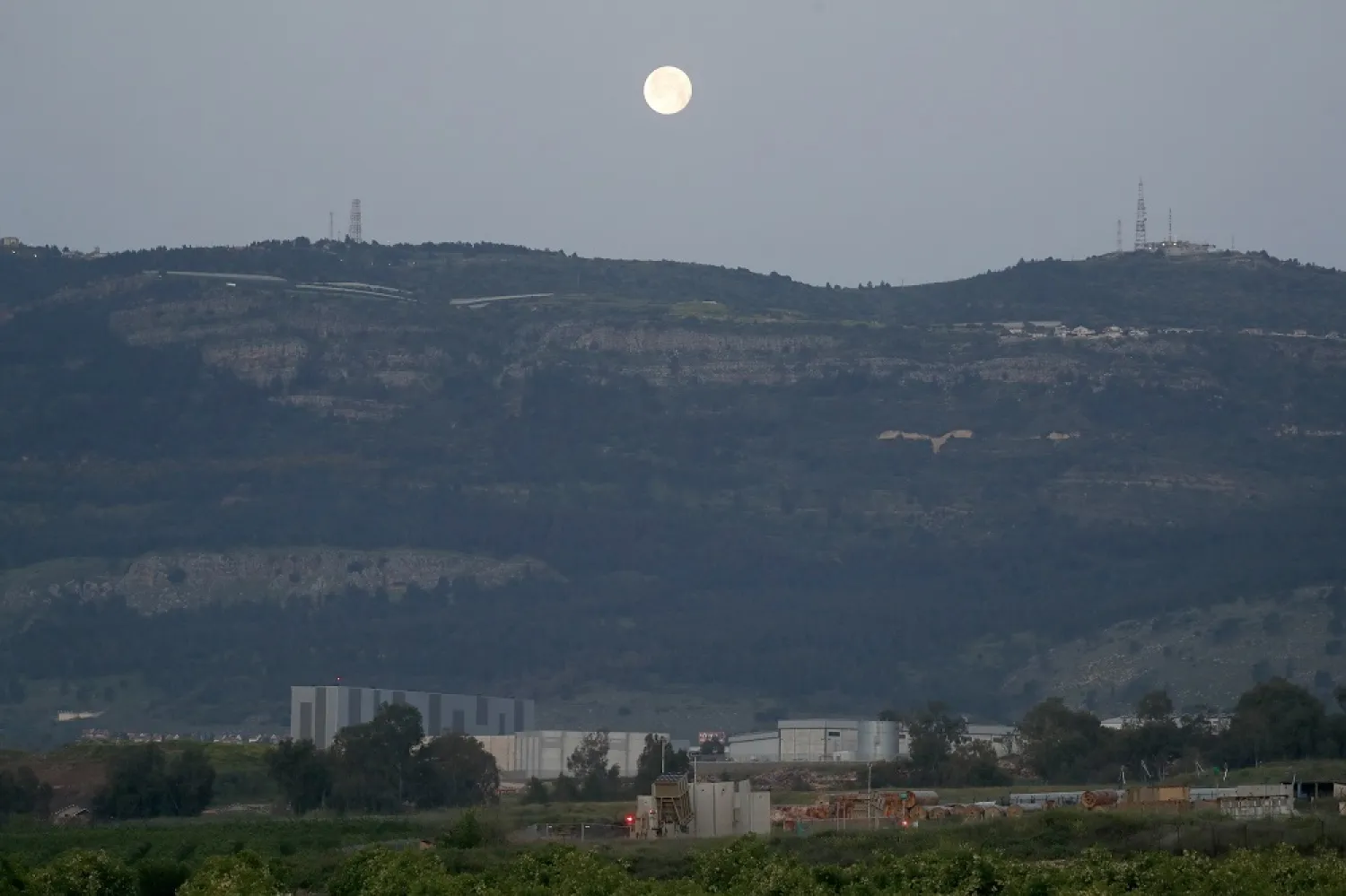
Israeli Iron Dome, air defense system, deployed near the town of Kiryat Shmona near the Israel -Lebanon border, 07 April 2023. (EPA)
TT

2 Killed in West Bank after Israel Strikes Lebanon, Gaza

Israeli Iron Dome, air defense system, deployed near the town of Kiryat Shmona near the Israel -Lebanon border, 07 April 2023. (EPA)

Israel unleashed rare airstrikes on Lebanon and bombarded the Gaza Strip on Friday, an escalation that sparked fears of a broader conflict after days of violence over Jerusalem’s most sensitive holy site.

Later in the day, there were signs that both sides were trying to keep the hostilities in check. Fighting on Israel's northern and southern borders subsided after dawn, and midday prayers at the Al-Aqsa Mosque in Jerusalem passed peacefully. But a Palestinian shooting attack in the Israeli-occupied West Bank killed two women near an Israeli settlement just hours later — a grim reminder of the combustible situation.

The early morning Israeli strikes followed an unusually large rocket barrage fired at Israel from southern Lebanon — what analysts described as the most serious cross-border violence since Israel’s 2006 war with Lebanon’s Hezbollah. The violence erupted after Israeli police raided the Al-Aqsa Mosque in Jerusalem earlier in the week, sparking unrest in the contested capital and outrage across the Arab world.

The Israeli strikes seemed designed to avoid drawing in Hezbollah, the Iran-backed group that Israel considers its most immediate threat. The Israeli military said its warplanes struck infrastructure belonging to Palestinian militants that it accused of firing the nearly three dozen rockets that slammed into open areas and northern Israeli towns on Thursday. Nonetheless, the Israeli military said it believed the Palestinian militants acted with the knowledge of Hezbollah, which holds sway over much of southern Lebanon.

There were no reports of serious casualties, but several residents of the southern Lebanese town of Qalili, including Syrian refugees, said they were lightly wounded.

“I immediately gathered my wife and children and got them out of the house,” said Qalili resident Bilal Suleiman, who was jolted awake by the bombing.

A flock of sheep was killed when the Israeli missiles struck an open field near the Palestinian refugee camp of Rashidiyeh, according to an Associated Press photographer. Other airstrikes hit a bridge and a power transformer in the nearby town of Maaliya and damaged an irrigation system providing water to orchards.

In the Gaza Strip, Israel's military pounded what it said were weapons production sites and underground tunnels belonging to Hamas, the group ruling the Palestinian enclave. Residents inspected the damage left after Israeli strikes — including to a children’s hospital in Gaza City, according to the Palestinian Health Ministry.

After the retaliatory strikes, Israelis living along the southern border returned home from bomb shelters. Most missiles that managed to cross into Israeli territory hit open areas, but one landed in the nearby town of Sderot, sending shrapnel slicing into a house.

There were no reports of casualties on either side of the southern border.

The Israeli military said everyone wanted to avoid a full-blown conflict. “Quiet will be answered with quiet,” said spokesman Lt. Col. Richard Hecht.

Tensions remained high in the region. In the West Bank, the Palestinian shooting attack near an Israeli settlement in the Jordan Valley killed two sisters in their 20s and seriously wounded their 45-year-old mother, Israeli medics and officials said. The three victims were residents of the Israeli settlement of Efrat, near the Palestinian city of Bethlehem, said Oded Revivi, the mayor of the settlement.

The girls' father was driving in a car behind his wife and daughters and witnessed the attack, Revivi added. Medics said they dragged the unconscious women from the smashed car that appeared to have been pushed off the road.

The Israeli military said it was searching for those behind the attack, setting up roadblocks in the area. No militant group immediately claimed responsibility. But Hamas spokesman Hazem Qassem hailed the attack “in retaliation for the crimes committed by Israel in the West Bank and the Al-Aqsa Mosque.”

Jerusalem's holy site of Al-Aqsa, a tinderbox for Israeli-Palestinian conflict, sits on a hilltop sacred to both Muslims and Jews. In 2021, an escalation also triggered by clashes at the compound spilled over into an 11-day war between Israel and Gaza’s Hamas rulers.

Over 130,000 worshippers poured into the compound for midday prayers on Friday, which ended without incident.

Before dawn prayers, chaos had erupted at one of the entrances to the esplanade as Israeli police wielding batons descended on crowds of Palestinian worshippers, who chanted slogans praising Hamas as they tried to squeeze into the site. An hour later, according to videos, people leaving the prayers staged a large-scale protest on the limestone courtyard, with Palestinians raising their fists and shouting against Israel. Israeli police forced their way into the compound, inflaming tensions during the Islamic holy month of Ramadan.

Police did not comment on the earlier beatings, but said security forces entered the holy compound after prayers in response to “masked suspects” who threw rocks toward officers at one of the gates. Israeli authorities control access to the area but the compound is administered by Islamic and Jordanian officials.

The unrest comes at a delicate time for Jerusalem's Old City, which on Friday was teeming with pilgrims from around the world. The Christian faithful retraced the route Jesus is said to have taken for Good Friday, Jews celebrated the weeklong Passover holiday, and Muslims prayed and fasted for Ramadan.

The current round of violence began Wednesday after Israeli police twice raided the Al-Aqsa Mosque — in one case fiercely beating Palestinians, who responded by hurling rocks and firecrackers. That led Thursday to rocket fire from Gaza and, in a significant and unusual escalation, the barrage from southern Lebanon and the Israeli retaliation.

Lebanon's Foreign Ministry said Friday it had instructed the country's mission to the United Nations in New York to submit a complaint to the UN Security Council against the “deliberate Israeli bombing and aggression” in the south, which it condemned as “a flagrant violation of Lebanon’s sovereignty.”

Even as a tense calm took hold along the Lebanese and Gaza borders, the West Bank remained volatile. Violence has surged to new heights there in recent months, with Palestinian health officials reporting the start of 2023 to be the deadliest for Palestinians in two decades.

Nearly 90 Palestinians have been killed by Israeli fire in the West Bank since the start of the year, according to an Associated Press tally. During that time, 16 people have been killed in Palestinian attacks on Israelis — all but one of them civilians. Israel says most of the Palestinian victims have been militants. But stone-throwing youths protesting police incursions and people not involved in the confrontations have also been killed.



Iraqi Confusion Over Allegations of US Warning of Sanctions

The Coordination Framework faces a dilemma after nominating Nouri al-Maliki for Prime Minister (INA)
TT

Iraqi Confusion Over Allegations of US Warning of Sanctions

The Coordination Framework faces a dilemma after nominating Nouri al-Maliki for Prime Minister (INA)

Iraqi Foreign Minister Fuad Hussein said that the authorities have received an oral message from Washington, “clearing and explicitly” hinting at possible sanctions if former prime minister Nouri al-Maliki was named to head the new government.

The Iraqi Ministry of Foreign Affairs said in a statement on Thursday that Hussein, who also serves as Deputy Prime Minister, had discussed in a televised interview the nature of cooperation and joint work with the US, particularly with regard to the formation of the upcoming government, without addressing the threat of sanctions, which led to “confusion in media coverage.”

The ministry stated that the US message included two main points. The first referred to the possibility of imposing sanctions on “certain individuals and institutions” if the largest bloc in parliament held onto its current nominee for the PM’s post, while the second addressed the standards for joint cooperation, mainly the nature of the upcoming government.

The ministry’s clarifications come amid increasing US warnings against selecting al-Maliki to head the government. The US State Department affirmed that Washington’s position is “firm and resolute,” and that his selection would force Washington to reassess its relationship with Iraq.

The Coordination Framework, which includes ruling Shiite parties, is divided over al-Maliki’s nomination, and attempts are being made to persuade him to withdraw his candidacy to preserve the unity of the alliance.

The Sunni Sovereignty Alliance, led by Khamis al-Khanjar, expects al-Maliki to take the initiative to withdraw his nomination to spare the country economic sanctions.

Fahd al-Rashed, a senior figure in the Sunni alliance, told Shafaq News that al-Maliki is expected to step aside given “his concern for the country’s interests.”

“We have no objection to al-Maliki personally,” al-Rashed added, “but we fear the repercussions of US reservations over the candidate, including threats of economic sanctions.”


Israeli Settlers Kill 19-year-old Palestinian-American

Mourners carry the body of Palestinian-American Nasrallah Muhammad Jamal Abu Siyam, 19, who according to the Palestinian Health Ministry was shot by settlers on Wednesday night, during his funeral in the West Bank village of Mukhmas, east of Ramallah, Thursday, Feb. 19, 2026. (AP Photo/Nasser Nasser)
TT

Israeli Settlers Kill 19-year-old Palestinian-American

Mourners carry the body of Palestinian-American Nasrallah Muhammad Jamal Abu Siyam, 19, who according to the Palestinian Health Ministry was shot by settlers on Wednesday night, during his funeral in the West Bank village of Mukhmas, east of Ramallah, Thursday, Feb. 19, 2026. (AP Photo/Nasser Nasser)

Israeli settlers in the occupied West Bank shot and killed a Palestinian-American during an attack on a village, the Palestinian Health Ministry and a witness said Thursday.

Raed Abu Ali, a resident of Mukhmas, said a group of settlers came to the village Wednesday afternoon where they attacked a farmer, prompting clashes after residents intervened. Israeli forces later arrived, and during the violence armed settlers killed 19-year-old Nasrallah Abu Siyam and injured several others.

Abu Ali said that the army shot tear gas, sound grenades and live ammunition. Israel's military acknowledged using what it called “riot dispersal methods” after receiving reports of Palestinians throwing rocks but denied that its forces fired during the clashes, The Associated Press said.

“When the settlers saw the army, they were encouraged and started shooting live bullets,” Abu Ali said. He added that they clubbed those injured with sticks after they had fallen to the ground.

The Palestinian Ministry of Health confirmed Abu Siyam's death from critical wounds sustained Wednesday afternoon near the village east of Ramallah.

Abu Siyam’s killing is the latest in a surge in violence in the occupied West Bank. Israeli forces and settlers killed 240 Palestinians last year, according to the United Nations Office for the Coordination of Humanitarian Affairs. Palestinians killed 17 Israelis over the same period, six of whom were soldiers. The Palestinian Authority’s Wall and Settlement Resistance Commission said Abu Siyam was the first Palestinian killed by settlers in 2026.

Mukhmas and its surrounding area — most of which lies under Israeli civil and military administration — have become a hot spot for settler attacks, including arson and assaults, as well as the construction of outposts that Israeli law considers illegal.

The Israeli military said late Wednesday that unnamed suspects shot at Palestinians, who were later evacuated for medical treatment. It did not say whether any were arrested.

Abu Siyam's mother told The Associated Press that he was an American citizen, making him the second Palestinian-American to be killed by Israeli settlers in less than a year.

A US embassy spokesperson said they “condemn this violence."

Palestinians and rights groups say authorities routinely fail to prosecute settlers or hold them accountable for violence.

UN says Israel's acts in West Bank may be ethnic cleansing

The UN human rights office on Thursday accused Israel of war crimes and said practices that displace Palestinians and alter the demographic composition of the occupied West Bank “raise concerns over ethnic cleansing.”

The Office of the High Commissioner for Human Rights, citing findings collected November 2024 to October 2025, said Israel was engaged in “concerted and accelerating effort to consolidate annexation” while maintaining a system “to maintain oppression and domination of Palestinians.”

Residents of Palestinian villages and herding communities have been increasingly displaced as Israeli settlements and outposts expand. Since the start of the Israel–Hamas war, the Israeli rights group B’Tselem says about 45 Palestinian communities have been emptied out completely amid Israeli demolition orders and settler attacks.

Additionally, the office said Israeli military operations in the northern West Bank “employed means and methods designed for warfare” including lethal airstrikes and forcibly transferring civilians from their homes. It also said Israel “forbade” residents from returning to their homes in northern West Bank refugee camps. The operation, which Israel said was aimed against militants, displaced tens of thousands of Palestinians.

The report also accused Palestinian security forces of using unnecessary lethal force in the same areas, killing at least eight people, and noted that the Palestinian Authority had engaged in “intimidation, detention and ill-treatment of journalists, human rights defenders and other individuals deemed critical of its rule.”

Neither Israel’s Foreign Ministry nor the Palestinian Authority responded to requests for comment. Israel has repeatedly accused the UN rights office of anti-Israel bias.

Last year, the UN human rights monitor warned of what it called “an unfolding genocide in Gaza” with “conditions of life increasingly incompatible with (Palestinians’) continued existence.” Their report on Thursday also warned of demographic shifts in Gaza raising concerns of ethnic cleansing.

Report finds imprisoned Palestinian journalists were tortured

The Committee to Protect Journalists said that dozens of Palestinian journalists who were detained in Israel during the war in Gaza experienced conditions including physical assaults, forced stress positions, sensory deprivation, sexual violence and medical neglect.

CPJ documented the detention of at least 94 Palestinian journalists and one media worker during the war, from the West Bank, Gaza and Israel Thirty are still in custody, CPJ said.

Half of the journalists, the report found, were never charged with a crime and were held under Israel’s administrative detention system, which allows for suspects deemed security risks to be held for six months and can be renewed indefinitely.

Israel’s prison services did not immediately respond to a request for comment about the report, but rejected a similar report in January about conditions for Palestinian prisoners as “false allegations,” contending it operates lawfully, is subject to oversight and reviews complaints.

UN development chief says removing Gaza rubble will take 7 years

The vast destruction across Gaza will take at least seven years just to remove the rubble, according to the United Nations Development Program.

Alexander De Croo, the former Belgian prime minister who just returned from Gaza, said that the UNDP had removed just 0.5% of the rubble and people in Gaza are experiencing “the worst living conditions that I have ever seen.”

De Croo said 90% of Gaza’s 2.2 million people live in “very, very rudimentary tents” in the middle of the rubble, which poses health dangers and a danger from exploding weapons.

He said UNDP has been able to build 500 improved housing units, and has 4,000 more that are ready, but estimates the true need is 200,000 to 300,000 units. The units are meant to be used temporarily while reconstruction takes place. He called on Israel to expand access for goods and items needed for reconstruction and the private sector to begin development.


Yemen PM Announces Comprehensive Reform Plan with Saudi Support

Zindani government holds first meeting after ministers return to Aden (Saba News Agency)
TT

Yemen PM Announces Comprehensive Reform Plan with Saudi Support

Zindani government holds first meeting after ministers return to Aden (Saba News Agency)

Yemen’s new government convened its first cabinet meeting on Thursday in the temporary capital Aden, with Prime Minister Shayea al-Zindani presiding after ministers completed their return to the country to resume duties, in what officials cast as the start of a hands-on push to stabilize security, revive services and shore up a battered economy with broad Saudi backing.

The meeting coincided with remarks by Presidential Leadership Council member Abdulrahman al-Mahrami, who warned against unrest in Aden, in an apparent reference to attempts led by elements of the dissolved Southern Transitional Council. “We will not allow any attempts to destabilize public order or drag our city into chaos or futile conflicts,” he said.

At the cabinet’s first meeting following its return to Aden, Zindani stressed that “there is no room for any government member to remain outside the country,” affirming that the government would be present on the ground, living among the population and addressing their daily needs, in a move aimed at restoring public trust and strengthening direct government performance.

The Yemeni prime minister, who also retains the foreign affairs portfolio, said his government would enter a new phase of field-based work from Aden, emphasizing that the next stage would rely on direct engagement with citizens, enhancing the effectiveness of state institutions and achieving tangible improvements in services and economic and security stability.

He said improvements in some basic services in recent weeks were not temporary, but the result of disciplined measures and practical reforms, alongside significant Saudi support, which he said had once again proven to be a pillar of the Yemeni state and a key partner in achieving peace and ensuring stability. He added that Saudi moves in support of the Yemeni people were consistent with international law.

Zindani said the government was working to ensure the sustainability of service delivery so that citizens feel a real and lasting difference, not a fleeting improvement, noting that the coming phase would include serious steps to combat corruption, enhance transparency and enforce the law as key pillars for building effective state institutions.

Reforms on all fronts

On the economic front, Zindani announced that the government would present a realistic 2026 budget for the first time in years, giving top priority to the regular payment of public-sector salaries as a legal and moral obligation.

Measures would also be taken to curb inflation and contain the erosion of citizens’ purchasing power, thereby easing living burdens.

On the security and military fronts, he said the government was committed to removing all military camps from Aden and other cities and to unifying military and security decision-making under the state’s authority, to strengthen stability and prevent multiple centers of influence.

He stressed the importance of respecting rights and equality for all citizens, and of not allowing calls that promote chaos or threaten public order.

Regarding the southern issue, the prime minister expressed confidence that south-south dialogue would open a genuine window to address it, calling on southerners to abandon the rhetoric of treason and avoid fueling strife and grudges, and to entrench a culture of tolerance and move beyond past conflicts.

He said southerners are the ones concerned with determining their present and future through dialogue, away from the imposition of individual or factional will, stressing there was no room to politicize or diminish the southern issue, which he described as a national cause concerning all Yemenis.

On the peace track, Zindani said the state retained all options to restore its institutions if the Houthis remained intransigent, while affirming that the internationally recognized government continues to extend its hand for peace and to end the Houthi coup, alongside efforts to launch a broad process of reconstruction, development and modernization.

Gradual work

Upon his arrival at Aden International Airport, Zindani said the government’s return to the country represents a practical commitment to shoulder national responsibilities and directly address accumulated challenges facing citizens, particularly amid difficult economic conditions and the repercussions of the ongoing war.

In his first interview after being sworn in as prime minister, Zindani said his government would soon relocate to Aden, noting that being inside the country was not a symbolic step but a prerequisite for effective decision-making and restoring the regular functioning of state institutions.

Speaking to Asharq Al-Awsat, he said the current phase “does not tolerate broad rhetoric,” but requires gradual work to rebuild trust and restore institutional rhythm, stressing that improving living conditions, services, and economic recovery are urgent priorities.

He justified retaining the foreign affairs portfolio as necessary to complete organizational and diplomatic reforms he had previously begun.

Zindani said his cabinet was formed based on professional criteria, away from quota-based arrangements, with a focus on competence, specialization and national balance.

Economically, he adopted what he described as a realistic tone, avoiding quick promises, and said recovery requires restructuring financial administration, controlling resources, enhancing transparency and activating oversight.

He said unifying political and military decision-making would enable state institutions to enforce the law, make accountability possible and give the government a more cohesive negotiating position in any upcoming peace process with the Houthis.

No tolerance for unrest

In support of Zindani’s government, Presidential Leadership Council member Abdulrahman al-Mahrami said security and stability in Aden would remain a non-negotiable priority.

He stressed that no attempts would be allowed to undermine public order or drag Aden into chaos and futile conflicts.

In a statement on his official X account, he reaffirmed that Aden’s security and stability will remain a priority and the government will accept no compromise or negligence.

"We will not allow any attempts to destabilize public order or drag our city into chaos or futile conflicts, without detracting from the political path of the south and its cause," he said.

He added: “We look forward to a South-South dialogue sponsored by Riyadh. It is a historic opportunity that we value and hold on to, and we thank the Kingdom’s leadership for it. We also affirm our full support for the government headed by Dr. Shayea al-Zindani, urging all its members to provide services and improve living conditions in a way that citizens can feel.”

Al-Mahrami pledged to follow up on performance “with care, transparency and responsibility,” calling on “everyone to unite, reject rumors, strengthen the spirit of national responsibility and stand together to protect the capital and safeguard state institutions.”

He added: “We trust that all understand the importance of preserving security and stability as the foundation for government and institutional work and the provision of services, away from political direction or exploitation by any party to harm people’s lives and increase their suffering, without detracting from our just cause.”