


Red Sea Global Reveals New Adventure Sports Company for Saudi Kingdom

Red Sea Global Reveals New Adventure Sports Company for Saudi Kingdom
TT

Red Sea Global Reveals New Adventure Sports Company for Saudi Kingdom

Red Sea Global Reveals New Adventure Sports Company for Saudi Kingdom

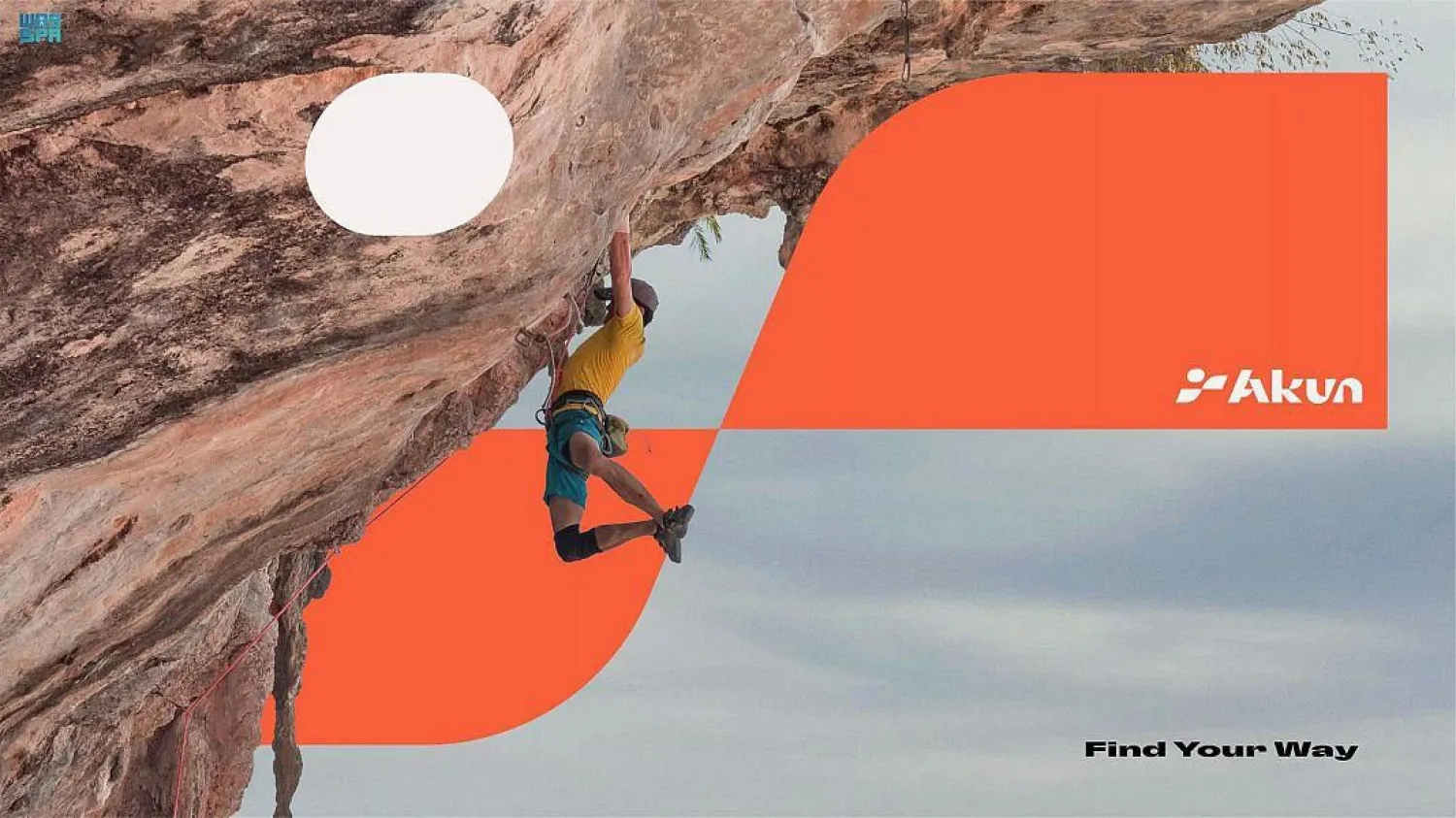
Red Sea Global (RSG), the developer behind the world’s most ambitious regenerative tourism destinations, the Red Sea and Amaala, has launched Akun, a new adventure sports brand that creates authentic and unique experiences for guests at RSG destinations.

Akun operates in line with the responsible ethos of the group, state news agency SPA reported. Akun comes from Arabic meaning “to be”. It is deeply connected to the ambition of empowering guests to find their way. The brand reflects a mission to encourage people to live meaningfully, where every day is different.

“Akun will operate and manage adventure and sports experiences at RSG destinations, including gravel, mountain, fat tire and electric biking, plus trail running and hiking through diverse natural trails. Guests can choose from climbing, scrambling, and a wide selection of thrilling action sports for both beginners and athletes. Akun will also be closely connected to the local communities in each destination, working to develop conservation and cultural trails, and telling the incredible stories of these ancient lands. Akun’s formation comes after the developer’s transformation into Red Sea Global last year, which came with an ambition to establish a series of RSG-owned subsidiary businesses to support the evolution of its developments. WAMA and Galaxea were the first two subsidiary businesses to be announced back in February," said John Pagano, Group CEO of Red Sea Global.

“Combined with WAMA and Galaxea, our water sports and diving brands, we can now offer a full trio package of sporting experiences ahead of our first guests arriving at the Red Sea this year. Aligning with these brands and our broader company vision, Akun will operate with sustainability at its core and in line with our regenerative ambitions to protect and enhance the local environment. WAMA is responsible for offering invigorating water sport adventures, from stand-up paddleboarding through the destination’s mangrove forests, to sailing the Red Sea’s soft swells, while Galaxea will offer diving experiences that let guests explore the rich marine life below the water."

Akun has already signed two initial partnership deals with operators Bungy New Zealand and Air Sports Group, which will both assess the enormous capacity for adventure tourism at RSG destinations.

Air Sports Group will carry out a 13-week on-site technical assessment to ascertain the air sports potential at both Amaala and the Red Sea, with sports including skydiving, paragliding, paramotoring, and hot air ballooning. Bungy New Zealand will focus on developing the overall adventure tourism plan and concept designs for individual guest experiences.

“Through such partnerships with leading international experts, we are confident that we can successfully unlock the potential of our land, sea and skies, welcoming guests to find their way in this new adventure playground,” added Rosanna Chopra, Executive Director-Destination Development at Red Sea Global.



AlUla Manara Team Hosts Lyrid Meteor Shower Observation

The event utilized AlUla’s exceptionally clear skies and low light pollution - SPA
TT

AlUla Manara Team Hosts Lyrid Meteor Shower Observation

The event utilized AlUla’s exceptionally clear skies and low light pollution - SPA

AlUla Manara team hosted an educational astronomy evening yesterday near the iconic Arch Rock, aimed at promoting astrotourism and scientific awareness. The event utilized AlUla’s exceptionally clear skies and low light pollution to provide residents and visitors with an immersive celestial experience, SPA reported.

The evening featured the Lyrid meteor shower, an annual phenomenon caused by debris from Comet Thatcher entering Earth's atmosphere. Under expert guidance, attendees observed the shower and used advanced telescopes to explore the cosmos.

The program included interactive scientific discussions on the historical role of astronomy in navigation and timekeeping, as well as its contributions to modern science.

This initiative is part of AlUla’s strategic effort to become a premier global destination for astrotourism. By blending education with entertainment, AlUla Manara continues to showcase the governorate’s unique natural landscape and foster a deeper connection between the community and the universe.


Norway Plans to Ban Social Media Use by Children Under 16

FILE PHOTO: Instagram, TikTok, Snapchat, YouTube, Facebook, Twitch and Reddit applications are displayed on a mobile phone ahead of new law banning social media for users under 16 in Australia, in this picture illustration taken on December 9, 2025. REUTERS/Hollie Adams/Illustration/File Photo
TT

Norway Plans to Ban Social Media Use by Children Under 16

FILE PHOTO: Instagram, TikTok, Snapchat, YouTube, Facebook, Twitch and Reddit applications are displayed on a mobile phone ahead of new law banning social media for users under 16 in Australia, in this picture illustration taken on December 9, 2025. REUTERS/Hollie Adams/Illustration/File Photo

Norway said on Friday it would present a bill in parliament by year-end to ban children from using social media until they turn 16, making technology companies responsible for the task of age verification.

Several European nations seeking to rein in children's ⁠use of social media ⁠after Australia took the lead with a world-first ban on under-16s last December.

"We are introducing this legislation because we want a childhood where ⁠children get to be children," Reuters quoted Prime Minister Jonas Gahr Stoere as saying in a statement.

"Play, friendships, and everyday life must not be taken over by algorithms and screens. This is an important measure to safeguard children's digital lives."

The government did not say ⁠which ⁠applications would be targeted.

Australia's ban covers Meta apps such as Instagram and Facebook as well as TikTok, Snapchat, Google's YouTube and Elon Musk's X, formerly Twitter.

Norway will introduce its bill in parliament by the end of 2026, the minority Labour government said.


'Cretaceous Kraken' Prowled the Seas During the Age of Dinosaurs

An artist's reconstruction of a finned octopus of the species Nanaimoteuthis haggarti that reached a length estimated at up to 18.6 meters (61.02 feet) and lived about 86 to 72 million years ago during the Cretaceous Period, released on April 23, 2026. Yohei Utsuki/Department of Earth and Planetary Sciences, Hokkaido University/Handout via REUTERS
TT

'Cretaceous Kraken' Prowled the Seas During the Age of Dinosaurs

An artist's reconstruction of a finned octopus of the species Nanaimoteuthis haggarti that reached a length estimated at up to 18.6 meters (61.02 feet) and lived about 86 to 72 million years ago during the Cretaceous Period, released on April 23, 2026. Yohei Utsuki/Department of Earth and Planetary Sciences, Hokkaido University/Handout via REUTERS

The Kraken is a huge tentacled sea monster from Norse folklore that drags ships and sailors down into the deep. During the age of dinosaurs, new research shows, there existed a creature as close to a real-life Kraken as you could possibly get - an enormous octopus that prowled the seas as an apex predator.

Scientists said fossils of beaks - the soft-bodied invertebrate's hard jaw structure - indicate that an octopus species named Nanaimoteuthis haggarti that lived about 86 to 72 million years ago during the Cretaceous Period ranged from 22 to 61 feet (6.6 to 18.6 meters) long.

"These animals were remarkable. With their large bodies, long arms, powerful jaws and advanced behavior, they represent what could be described as a real 'Cretaceous Kraken,'" said paleontologist Yasuhiro Iba of Hokkaido University in Japan, lead author of the research published on Thursday in the journal Science.

"For roughly the past 370 million years, marine ecosystems have been thought to be dominated by large vertebrate predators - first fishes and ⁠sharks, then marine ⁠reptiles and later whales. Our study shows that giant invertebrates, namely octopuses, also functioned as apex predators in the Cretaceous sea," Reuters quoted Iba as saying.

Iba said Nanaimoteuthis haggarti is one of the largest invertebrates on record.

"Until now, the largest-known invertebrate has been the modern giant squid, which can reach about 12 meters (39 feet) in total length," Iba said.

The intense wear observed on the beaks is consistent, the researchers said, with repeated crushing of hard structures such as bones and shells, indicative of a predator that hunted large fish, shelled tentacled creatures, clams and other sizable prey.

"In the largest specimens, about 10% of the ⁠total jaw length appears to have been lost due to wear. This is more severe than what is typically seen in modern octopuses and cuttlefishes that feed on hard prey," Iba said.

The beaks were shaped like those of certain deep-sea octopuses alive today that swim with the help of fins, leading the researchers to conclude that these Cretaceous octopuses also bore fins.

The numerous beak fossils studied in the research came from Japan and Canada's Vancouver Island. The researchers reexamined previously known specimens and discovered new fossils as well.

The researchers also studied the beaks of a close relative called Nanaimoteuthis jeletzkyi that lived about 100 to 72 million years ago. It was not quite as big, ranging from 9 to 25 feet (2.8 to 7.7 meters) long, but also was an active predator.

Because octopuses are soft-bodied animals, they seldom fossilize well. The beak, the only rigid part of the octopus body, is made of a hard and durable material ⁠called chitin, also found in ⁠the exoskeletons of crabs, lobsters and insects.

Guided by modern-day octopus anatomy, the researchers were able to estimate the size of the Cretaceous octopuses based on the dimensions of the beaks.

"Octopuses are not simply biting predators. They use long, flexible arms to capture prey and powerful jaws to process it. As body size increases, their ability to control large prey with their arms and to process it with their jaws also increases," Iba said.

"In addition, octopuses are among the most intelligent invertebrates. In our fossils, the jaws show asymmetric wear, suggesting lateralized behavior - favoring one side over the other, something like handedness. This indicates not only strength, but also advanced and flexible behavior," Iba said.

These octopuses shared the Cretaceous seas with other large predators including marine reptiles called mosasaurs and plesiosaurs that reached up to around 50 feet (15 meters) long as well as sharks rivaling today's great white in size.

"These giant octopuses likely occupied the same ecological tier and may have competed with marine reptiles and sharks within the same ecosystem," Iba said. "Their existence changes how we view ancient oceans. Instead of ecosystems dominated solely by vertebrate predators, we now see that giant invertebrates such as octopuses also occupied the very top of the food web."