


Self-Censorship: Silencing the Voice to Stay Alive

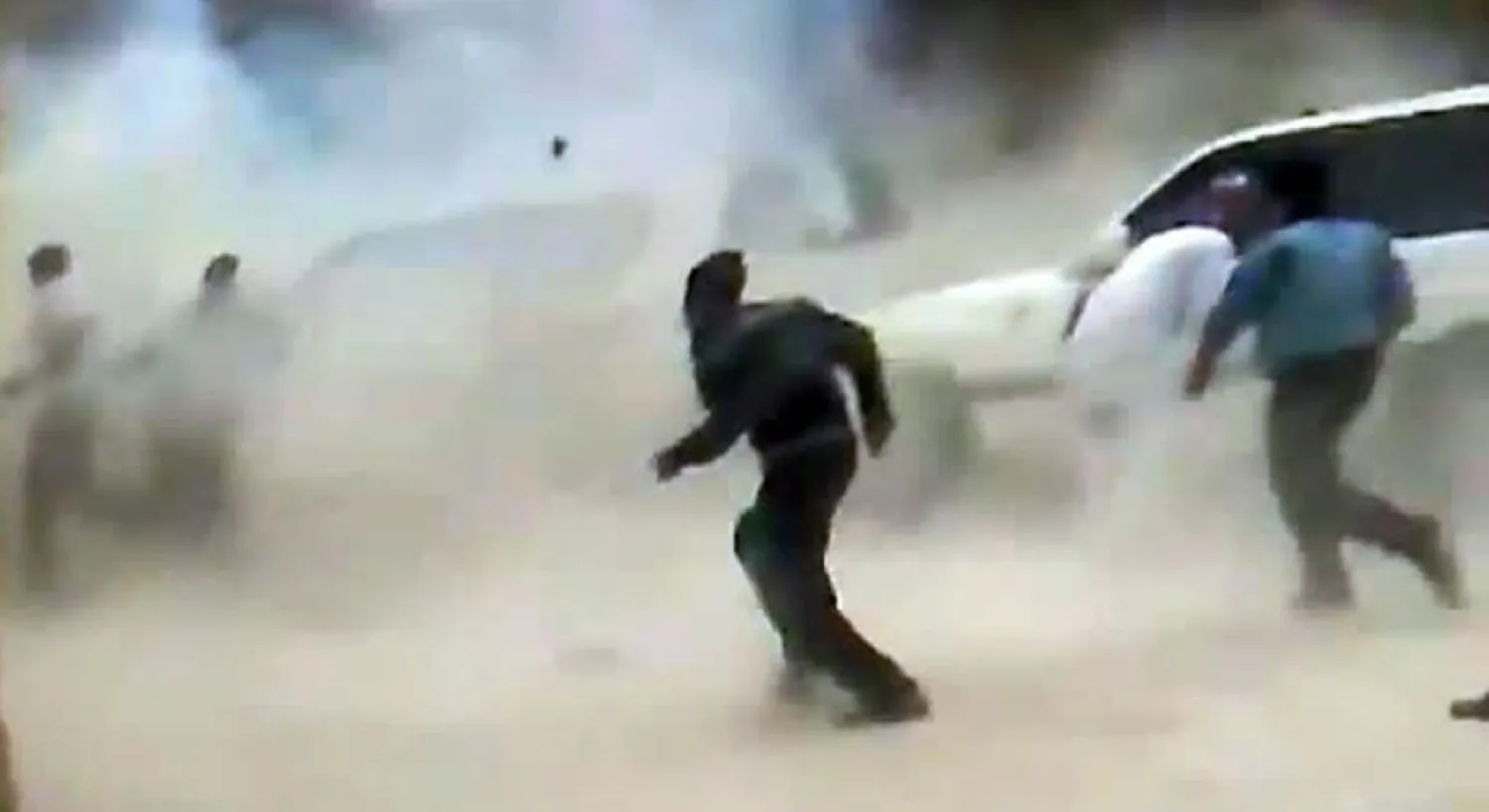
Much of the footage coming out of Syria has been shot on mobile phones by citizen journalists. (AFP)
TT

Self-Censorship: Silencing the Voice to Stay Alive

Much of the footage coming out of Syria has been shot on mobile phones by citizen journalists. (AFP)

Journalism is a profession of relaying facts and documenting the news whether through the lens of a mobile phone during an Arab Spring demonstration or an in-depth report that uncovers corruption at European banks or a blog that speaks of the suffering of a hungry town in Africa.

It is a difficult profession wherever it may be. It is rife with dangers, red lines and challenges. The journalist makes major sacrifices in exchange for publishing his work, which may expose his family to danger and end his life.

The circle of freedom of the press has become smaller today and the faces of censorship have increased. They may change from one region to the other, but they have in all cases hindered publication and doubled the violations. We now comfortably receive the news through a quick google search or a tour of twitter. What if we however stopped for a moment and thought of the army of reporters, those journalists under fire or behind bars, wherever they may be. Who documents their journey? Who defends their rights? Who will restore their silenced voice?

Faces of censorship

I tried to find the answers to my questions. I did not imagine that I would find most of them on Manhattan’s 7th avenue in central New York. Up in a skyscraper, on the 11th floor specifically, lies the Committee to Protect Journalists (CPJ). Formed by a number of journalists in 1981 to protect their colleagues, the committee is one of the most prominent defenders of freedom in the world. It is exerting efforts for a world where journalists can work without fear or threats in all corners of the globe. These are noble goals that may be impossible to achieve in our time. The most important product of the committee is its annual guide, “Attacks on the Press.” The book monitors the greatest challenges that journalists have faced throughout a year. The 2017 edition focused on the “new face of censorship.”

“We chose to highlight the new faces of censorship in this year’s edition because it is a serious issue as different parts of the world are witnessing a decrease in press freedom, especially in countries that have been known for their freedom, such as Canada, the United States, United Kingdom, Kenya and others.” This is the answer I received from CPJ’s Communications Officer Kerry Paterson when I sat down with her over cup of coffee at her office away from the hustle and bustle of the street.

Paterson spoke to Asharq Al-Awsat about the change in the concept of censorship. She believes that the term now has a broader meaning that has made it more vague. The threat to withdraw ads from newspapers in Kenya is a form of censorship, the blocking of websites by some governments is also a form of censorship, threats to journalists is also another form. The most disconcerting censorship however, is “self-censorship” that some journalists may have to practice out of fear for their lives, she explained.

New definition of the journalist

The turbulent political climate in most parts of the world has forced journalists to work in dangerous conditions, especially in conflict zones. Paterson revealed that 88 percent of journalists who were killed in the field over the past year were locals, not foreign correspondents.

CPJ’s annual survey said that 36 journalists lost their lives in war since the beginning of the year. In 2016, 48 journalists were killed around the world and 259 were imprisoned. Sevety-two journalists were killed in 2015 and 61 in 2014.

The widening of the scope of Middle Eastern conflicts, the importance of spreading information and the diversity of sources have also altered the concept of journalism and the journalist. In this regard, Paterson said that “we have become flexible in our definition of the journalist.”

“For example, the reporter who practices accurate and independent journalistic work, but whose only outlet is his Facebook page as a result of his country’s restrictions, is considered a journalist,” she added.

She gave the example of a journalist who used to work at a radio station in the Congo, who when the station closed its doors, decided to carry a megaphone and roam the streets of his town to report the news. He died while doing his job.

CPJ is a research-based organization that offers services to journalists in every sense of the word, whether in providing financial, medical or even judicial aid or even helping them escape a conflict zone after receiving threats.

Paterson referred me to her colleague Sahrif Mansour when I asked her about specific cases in the Middle East.

Glimpse inside the Middle East

Self-censorship is the product of fear. Fear from the punishment of governments and terror from death threats that the journalist receives from extremist organizations in the Middle East, such as ISIS and its ilk. This is indirect censorship that forces the reporter to stop his writing out of fear for his life.

In the Middle East, specifically after the Arab Spring, the region witnessed for the first time several outlets to exchange information and news in the region. In the countries of the Arab Spring, the citizens took the decision to risk their lives to spread their opinions and what they see and hear about issues that ignited their revolutions. This is how Mansour, CPJ’s Middle East and North Africa coordinator, took me back to 2011 in describing the atmosphere at the time.

Mansour told Asharq Al-Awsat that the revolution led to the birth of the citizen journalist and media activist. They did not receive any professional support or training to work in journalism, but many of them took the risk and some of them paid the price.

According to Mansour, over 100 journalists were killed in Syria, most of them youths, while covering demonstrations or developments linked to the armed conflict in their country. The same can be said of Iraq, Libya and Yemen. Several of the activists and journalists who were killed were working in media that was broadcast on the internet and that depended on volunteers who had not received prior training or who did not have any experience in covering wars.

Life line

CPJ does not offer training courses, even though it tries despite poor resources, but it works on saving journalists’ lives. The committee intervenes when traditional methods are useless, especially when dealing with non-government parties, such as armed factions. In the Middle East, said Mansour, CPJ focuses on helping journalists who are in danger, whether through offering any form of medical or legal help or financial aid to allow them to leave conflict areas. Some of the support could take the form of facilitations to obtain a residency for those seeking to immigrate to the US or Europe where they may continue to carry out their journalistic work.

CPJ’s role is not limited to preserving the lives and security of the journalists in the real world, but it also offers protection in the virtual world and the internet. Mansour said that the committee intervenes when a journalist is hacked or if his social media accounts are blocked, suspended or compromised.

In regards to the safety of journalism, he revealed that CPJ is in the process of launching a daily report on the operation to liberate Syria’s Raqqa from ISIS.

“We will work on raising awareness and issuing special safety alerts on areas that journalists should avoid,” Mansour said. CPJ will also explain the types of precautions that should be taken should journalists report from these areas. These precautions include knowing where the nearest hospital or the closest evacuation route is. CPJ has helped over 120 Syrian journalists, who were forced to leave their country and it helped them settle down in their new location.

Loss of security

These challenges may discourage a journalist no matter how much he may believe in his cause. These challenges also have psychological effects as well. Mansou explained that several journalists, especially those who covered conflict zones suffer from post-traumatic stress disorder (PTSD) and other forms of psychological disturbances caused by their work in violent zones.

Despite the challenges, the phenomenon of citizen journalists distinguished the countries of the Arab Spring. The journalist may choose a pseudonym or a blogger activist may choose to write with caution out of fear of losing everything, but they still persevere.



Iraq’s Dreams of Wheat Independence Dashed by Water Crisis 

A drone view shows a circular wheat field in the desert of Basra, Iraq, November 27, 2025. (Reuters)
TT

Iraq’s Dreams of Wheat Independence Dashed by Water Crisis 

A drone view shows a circular wheat field in the desert of Basra, Iraq, November 27, 2025. (Reuters)

Iraqi wheat farmer Ma'an al-Fatlawi has long depended on the nearby Euphrates River to feed his fields near the city of Najaf. But this year, those waters, which made the Fertile Crescent a cradle of ancient civilization 10,000 years ago, are drying up, and he sees few options.

"Drilling wells is not successful in our land, because the water is saline," al-Fatlawi said, as he stood by an irrigation canal near his parched fields awaiting the release of his allotted water supply.

A push by Iraq - historically among the Middle East's biggest wheat importers - to guarantee food security by ensuring wheat production covers the country's needs has led to three successive annual surpluses of the staple grain.

But those hard-won advances are now under threat as the driest year in modern history and record-low water levels in the Tigris and Euphrates rivers have reduced planting and could slash the harvest by up to 50% this season.

"Iraq is facing one of the most severe droughts that has been observed in decades," the UN Food and Agriculture Organization's Iraq representative Salah El Hajj Hassan told Reuters.

VULNERABLE TO NATURE AND NEIGHBORS

The crisis is laying bare Iraq's vulnerability.

A largely desert nation, Iraq ranks fifth globally for climate risk, according to the UN's Global Environment Outlook. Average temperatures in Iraq have risen nearly half a degree Celsius per decade since 2000 and could climb by up to 5.6 C by the end of the century compared to the period before industrialization, according to the International Energy Agency. Rainfall is projected to decline.

But Iraq is also at the mercy of its neighbors for 70% of its water supply. And Türkiye and Iran have been using upstream dams to take a greater share of the region's shared resource.

The FAO says the diminishing amount of water that has trickled down to Iraq is the biggest factor behind the current crisis, which has forced Baghdad to introduce rationing.

Iraq's water reserves have plunged from 60 billion cubic meters in 2020 to less than 4 billion today, said El Hajj Hassan, who expects wheat production this season to drop by 30% to 50%.

"Rain-fed and irrigated agriculture are directly affected nationwide," he said.

EFFORTS TO END IMPORT DEPENDENCE UNDER THREAT

To wean the country off its dependence on imports, Iraq's government has in recent years paid for high-yield seeds and inputs, promoted modern irrigation and desert farming to expand cultivation, and subsidized grain purchases to offer farmers more than double global wheat prices.

It is a plan that, though expensive, has boosted strategic wheat reserves to over 6 million metric tons in some seasons, overwhelming Iraq's silo capacity. The government, which purchased around 5.1 million tons of the 2025 harvest, said in September that those reserves could meet up to a year of demand.

Others, however, including Harry Istepanian - a water expert and founder of Iraq Climate Change Center - now expect imports to rise again, putting the country at greater risk of higher food prices with knock-on effects for trade and government budgets.

"Iraq's water and food security crisis is no longer just an environmental problem; it has immediate economic and security spillovers," Istepanian told Reuters.

A preliminary FAO forecast anticipates wheat import needs for the 2025/26 marketing year to increase to about 2.4 million tons.

Global wheat markets are currently oversupplied, offering cheaper options, but Iraq could once again face price volatility.

A person walks along the edge of uncultivated farmland on the outskirts of Najaf, where dry soil stretches across fields left unplanted due to water shortages, in Najaf, Iraq, November 29, 2025. (Reuters)

Iraq's trade ministry did not respond to a request for comment on the likelihood of increased imports.

In response to the crisis, the ministry of agriculture capped river-irrigated wheat at 1 million dunams in the 2025/26 season - half last season's level - and mandated modern irrigation techniques including drip and sprinkler systems to replace flood irrigation through open canals, which loses water through evaporation and seepage.

A dunam is a measurement of area roughly equivalent to a quarter acre.

The ministry is allocating 3.5 million dunams in desert areas using groundwater. That too is contingent on the use of modern irrigation.

"The plan was implemented in two phases," said Mahdi Dhamad al-Qaisi, an advisor to the agriculture minister. "Both require modern irrigation."

Rice cultivation, meanwhile, which is far more water-intensive than wheat, was banned nationwide.

RURAL LIVELIHOODS AT RISK

One ton of wheat production in Iraq requires about 1,100 cubic meters of water, said Ammar Abdul-Khaliq, head of the Wells and Groundwater Authority in southern Iraq. Pivoting to more dependence on wells to replace river water is risky.

"If water extraction continues without scientific study, groundwater reserves will decline," he said.

Basra aquifers, he said, have already fallen by three to five meters.

Groundwater irrigation systems are also expensive due to the required infrastructure like sprinklers and concrete basins. That presents a further economic challenge to rural Iraqis, who make up around 30% of the population.

Some 170,000 people have already been displaced in rural areas due to water scarcity, the FAO's El Hajj Hassan said.

"This is not a matter of only food security," he said. "It's worse when we look at it from the perspective of livelihoods."

At his farm in Najaf, al-Fatlawi is now experiencing that first-hand, having cut his wheat acreage to a fifth of its normal level this season and laid off all but two of his 10 workers.

"We rely on river water," he said.


Report: Assad Returns to Ophthalmology, His Family Lives in Russian Luxury  

Bashar al-Assad with his wife, Asma, walk with their children in the northern Syrian city of Aleppo in 2022. (Former Syrian presidency Facebook page/AFP/Getty Images)
TT

Report: Assad Returns to Ophthalmology, His Family Lives in Russian Luxury  

Bashar al-Assad with his wife, Asma, walk with their children in the northern Syrian city of Aleppo in 2022. (Former Syrian presidency Facebook page/AFP/Getty Images)

A year after his regime was toppled in Syria, Bashar al-Assad's family is living an isolated, quiet life of luxury in Moscow.

A friend of the family, sources in Russia and Syria, as well as leaked data, helped give rare insight into the lives of the now reclusive family who once ruled over Syria with an iron fist.

Bashar now sits in the classroom, taking ophthalmology lessons, according to a well-placed source.

“He’s studying Russian and brushing up on his ophthalmology again,” a friend of the Assad family, who has kept in touch with them, told The Guardian.

“It’s a passion of his, he obviously doesn’t need the money. Even before the war in Syria began, he used to regularly practice his ophthalmology in Damascus,” they continued, suggesting the wealthy elite in Moscow could be his target clientele.

The family are likely to reside in the prestigious Rublyovka, a gated community of Moscow’s elite, according to two sources with knowledge of the situation. There they would rub shoulders with the likes of the former Ukrainian president Viktor Yanukovych, who fled Kyiv in 2014 and is believed to live in the area, according to The Guardian.

The Assads are not wanting for money. After being cut off from much of the world’s financial system by western sanctions in 2011 after Assad’s bloody crackdown on protesters, the family put much of their wealth in Moscow, where western regulators could not touch it.

Despite their cushy abode, the family are cut off from the elite Syrian and Russian circles they once enjoyed. Bashar’s 11th-hour flight from Syria left his cronies feeling abandoned and his Russian handlers prevent him from contacting senior regime officials.

Assad fled with his sons out of Damascus in the early hours of December 8, 2024, as Syrian opposition fighters approached the capital from the north and the south. They were met by a Russian military escort and were taken to the Russian Hmeimim airbase, where they were flown out of the country.

Assad did not warn his extended family or close regime allies of the impending collapse, instead leaving them to fend for themselves.

A friend of Maher al-Assad, Bashar’s brother and a top military official, who knows many former members of the palace said: “Maher had been calling Bashar for days but he wouldn’t pick up.”

“He stayed in the palace until the last second, opposition fighters found his shisha coals still warm. It was Maher, not Bashar, who helped others escape. Bashar only cared about himself.”

“It’s a very quiet life,” said the family friend. “He has very little, if any, contact with the outside world. He’s only in touch with a couple of people who were in his palace, like Mansour Azzam [former Syrian minister of presidency affairs] and Yassar Ibrahim [Assad’s top economic crony].”

‘Irrelevant’ to Putin

A source close to the Kremlin said Assad was also largely “irrelevant” to Putin and Russia’s political elite. “Putin has little patience for leaders who lose their grip on power, and Assad is no longer seen as a figure of influence or even an interesting guest to invite to dinner,” the source said.

In the first months after the Assads’ escape, his former regime allies were not on Bashar’s mind. The family gathered in Moscow to support Asma, the British-born former first lady of Syria, who had had leukemia for years and whose condition had become critical. She had been receiving treatment in Moscow before the fall of the Assad regime.

According to a source familiar with the details of Asma’s health, the former first lady has recovered after experimental therapy under the supervision of Russia’s security services

With Asma’s health stabilized, the former dictator is keen to get his side of the story out. He has lined up interviews with RT and a popular rightwing American podcaster, but is waiting for approval from Russian authorities to make a media appearance.

Russia appears to have blocked Assad from any public appearance. In a rare November interview with Iraqi media about Assad’s life in Moscow, Russia’s ambassador to Iraq, Elbrus Kutrashev, confirmed that the toppled dictator was barred from any public activity.

“Assad may live here but cannot engage in political activities ... He has no right to engage in any media or political activity. Have you heard anything from him? You haven’t, because he is not allowed to – but he is safe and alive,” Kutrashev said.

Assad children dazed

Life for the Assad children in contrast seems to continue with relatively little disruption, as they adjust to a new life as Moscow elite.

The family friend, who met some of the children a few months ago, said: “They’re kind of dazed. I think they’re still in a bit of a shock. They’re just kind of getting used to life without being the first family.”

The only time the Assad family – without Bashar – have been seen together in public since the end of their regime was at his daughter Zein al-Assad’s graduation on June 30, where she received a degree in international relations from MGIMO, the elite Moscow university attended by much of Russia’s ruling class.

A photograph on MGIMO’s official website shows the 22-year-old Zein standing with other graduates. In a blurry separate video from the event, members of the Assad family, including Asma and her two sons Hafez, 24, and Karim, 21, can be seen in the audience.

Two of Zein’s classmates who attended the ceremony confirmed that parts of the Assad family were present, but said they kept a low profile. “The family did not stay long and did not take any pictures with Zein on stage like other families,” said one of the former classmates, speaking on condition of anonymity.

Hafez, once groomed as Bashar’s potential successor, has largely withdrawn from public view since posting a Telegram video in February in which he offered his own account of the family’s flight from Damascus, denying they had abandoned their allies and claiming it was Moscow that ordered them to leave Syria.

Syrians quickly geolocated Hafez, who took the video while walking the streets of Moscow.

Hafez has closed most of his social media, instead registering accounts under a pseudonym taken from an American children’s series about a young detective with dyslexia, according to leaked data. The children and their mother spend much of their time shopping, filling their new Russian home with luxury goods, according to the source close to the family.


Rebuilding the Army: One of the Syrian Govt’s Greatest Challenges

Soldiers and police officers from the former Syrian regime handing in weapons last year to new security forces in Latakia, Syria. (Ivor Prickett for The New York Times)
TT

Rebuilding the Army: One of the Syrian Govt’s Greatest Challenges

Soldiers and police officers from the former Syrian regime handing in weapons last year to new security forces in Latakia, Syria. (Ivor Prickett for The New York Times)

When opposition factions in Syria came to power a year ago, one of their first acts was to dismiss all of the country’s military forces, which had been used as tools of repression and brutality for five decades under the rule of Bashar al-Assad and his family.

Now, one of the biggest challenges facing the nascent government is rebuilding those forces, an effort that will be critical in uniting this still-fractured country.

But to do so, Syria’s new leaders are following a playbook that is similar to the one they used to set up their government, in which President Ahmed al-Sharaa has relied on a tightknit circle of loyalists.

The military’s new command structure favors former fighters from Sharaa’s former Hayat Tahrir al-Sham group.

The Syrian Defense Ministry is instituting some of the same training methods, including religious instruction, that Sharaa’s former opposition group used to become the most powerful of all the factions that fought the Assad regime during Syria’s civil war.

The New York Times interviewed nearly two dozen soldiers, commanders and new recruits in Syria who discussed the military training and shared their concerns. Nearly all spoke on the condition of anonymity because the Defense Ministry bars soldiers from speaking to the media.

Several soldiers and commanders, as well as analysts, said that some of the government’s rules had nothing to do with military preparedness.

The new leadership was fastidious about certain points, like banning smoking for on-duty soldiers. But on other aspects, soldiers said, the training felt disconnected from the needs of a modern military force.

Last spring, when a 30-year-old former opposition fighter arrived for military training in Syria’s northern province of Aleppo, instructors informed roughly 1,400 new recruits that smoking was not permitted. The former fighter said one of the instructors searched him and confiscated several cigarette packs hidden in his jacket.

The ban pushed dozens of recruits to quit immediately, and many more were kicked out for ignoring it, according to the former fighter, a slender man who chain-smoked as he spoke in Marea, a town in Aleppo Province. After three weeks, only 600 recruits had made it through the training, he said.

He stuck with it.

He said he was taken aback by other aspects of the training. The first week was devoted entirely to Islamic instruction, he said.

Soldiers and commanders said the religious training reflected the ideology that the HTS espoused when it was in power in Idlib, a province in northwestern Syria.

A Syrian defense official, who spoke on the condition of anonymity because he was not authorized to speak publicly, said the government had not decided whether minorities would be allowed to enlist.

Syria’s leaders are relying on a small circle of trusted comrades from HTS to lead and shape the new military, several soldiers, commanders and recruits said.

The Syrian Defense Ministry did not respond to a detailed list of questions or repeated requests for comment.

After abolishing conscription, much hated under the Assad regime, the new military recruited volunteers and set qualifications like a ninth-grade education, physical fitness and the ability to read.

But soldiers who had fought with the opposition in the civil war were grandfathered into the ranks, even if they did not fulfill all the criteria, according to several soldiers and commanders.

“They are bringing in a commander of HTS who doesn’t even have a ninth-grade education and are putting him in charge of a battalion,” said Issam al-Reis, a senior military adviser with Etana, a Syrian research group, who has spoken to many former opposition fighters currently serving in the military. “And his only qualification is that he was loyal to Ahmed al-Sharaa.”

Former HTS fighters, like fighters from many other factions, have years of guerrilla-fighting experience from the war to oust the Assad dictatorship. But most have not served as officers in a formal military with different branches such as the navy, air force and infantry and with rigid command structures, knowledge that is considered beneficial when rebuilding an army.

“The strength of an army is in its discipline,” Reis added.

Most soldiers and commanders now start with three weeks of basic training — except those who previously fought alongside Sharaa’s group.

The government has signed an initial agreement with Türkiye to train and develop the military, said Qutaiba Idlbi, director of American affairs at the Syrian Foreign Ministry. But the agreement does not include deliveries of weapons or military equipment, he said, because of American sanctions remaining on Syria.

Col. Ali Abdul Baqi, staff commander of the 70th Battalion in Damascus, is among the few high-level commanders who was not a member of the HTS. Speaking from his office in Damascus, Abdul Baqi said that had he been in Sharaa’s place, he would have built the new military in the same way.

“They aren’t going to take a risk on people they don’t know,” said the colonel, who commanded another opposition group during the civil war.

Some senior commanders said the religious instruction was an attempt to build cohesion through shared faith, not a way of forcing a specific ideology on new recruits.

“In our army, there should be a division focused on political awareness and preventing crimes against humanity and war crimes,” said Omar al-Khateeb, a law graduate, former opposition fighter and current military commander in Aleppo province. “This is more important than training us in religious doctrine we already know.”

*Raja Abdulrahim for The New York Times