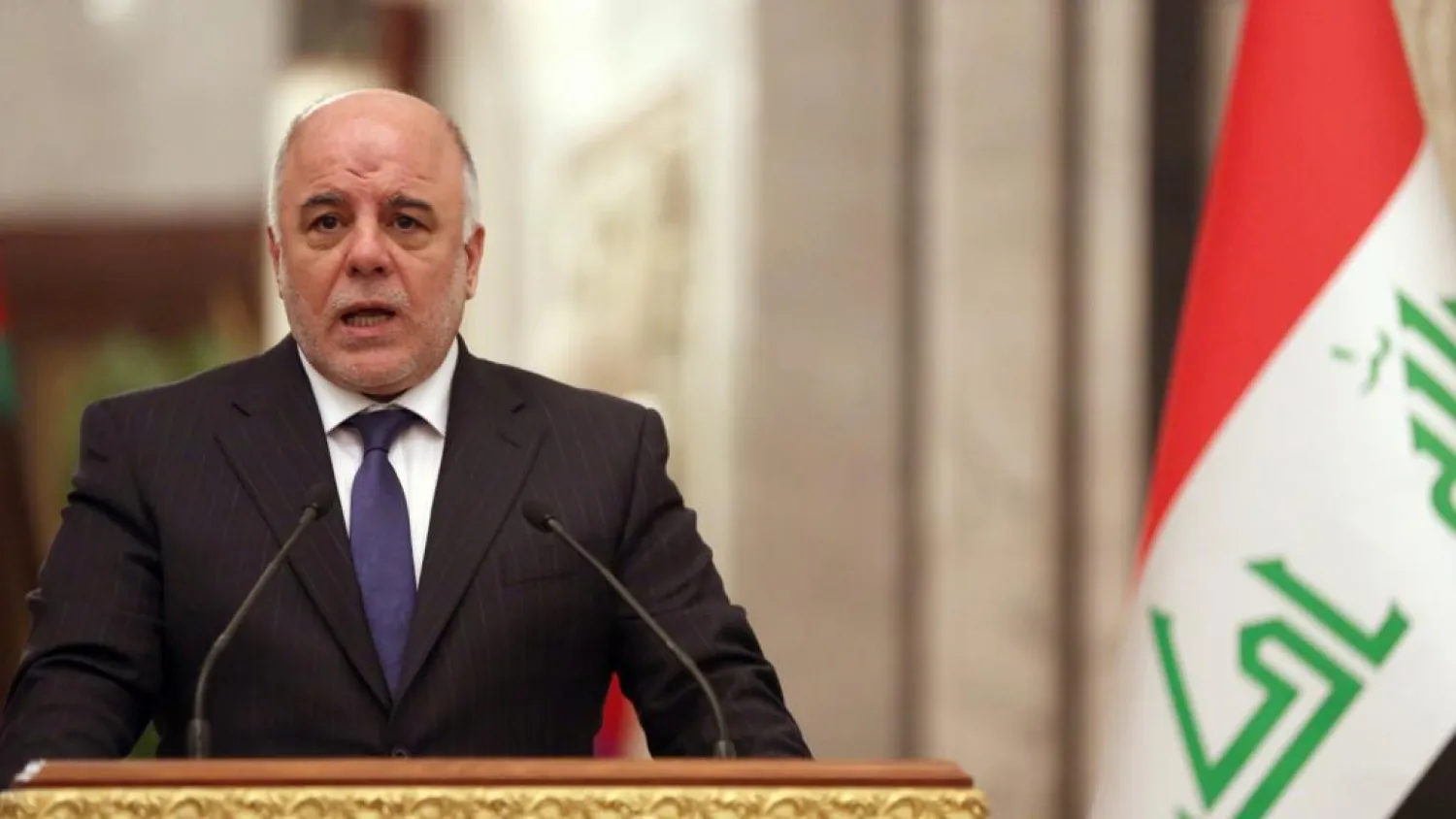
Political Turmoil in Iraq’s Dawa Party ahead of Next Year's Elections

Iraqi Prime Minister Haidar al-Abadi. (Reuters)
TT

Political Turmoil in Iraq’s Dawa Party ahead of Next Year's Elections

Iraqi Prime Minister Haidar al-Abadi. (Reuters)

Iraq’s Islamic Dawa Party will run in the upcoming legislative elections with two different electoral lists, said informed sources.

The first will be led by Prime Minister Haidar al-Abadi and the second by Vice President and party Secretary General Nouri al-Maliki.

Up until recently, there was speculation on whether the party will split into two competing wings in the upcoming general elections. Yet, as the sources indicated, these theories have now been realized with both Maliki and Abadi's unwillingness to head to the elections within a unified coalition.

Senior officials from the Dawa and State of Law Coalition tried to unify the ranks of the party in preparation for the May elections, however both Maliki and Abadi held their ground and announced they will wage the elections with two separate lists.

One of the sources did not rule out the possibility that the two leaders would form a parliamentary alliance after the elections, but that depends on whether either side wins any seats at parliament.

For weeks now, it has been reported that Abadi intends to form a “Liberation and Construction” electoral list. Sources also stated that his future depends on the result of the power struggle between him and former PM Maliki.

Maliki's leadership may weaken amid Abadi's growing popularity following the military victories over ISIS, his firm position on the Kurdistan independence referendum and federal government's control over the Kirkuk province, sources explained.

Those same sources are not underestimating Maliki’s clout, who still has a chance of winning over the party given that he still enjoys good ties, which he forged during his term in office between 2006 and 2014, with many of its senior officials who are still loyal to him.

With that, and given the history of rifts within the Dawa, observers believe that the party is facing huge political turmoil as a result of Abadi and Maliki's intentions to run with two different electoral lists. This inevitably means that the party will be splitting into competing wings, with the potential formation of rivalries in the future.


Al-Alimi Says Will Not Allow Forceful Fait Accompli in Yemen’s Hadhramaut, al-Mahra

Yemen’s Presidential Leadership Council Chairman Rashad al-Alimi meets with members of the advisory body (SABA)
TT

Al-Alimi Says Will Not Allow Forceful Fait Accompli in Yemen’s Hadhramaut, al-Mahra

Yemen’s Presidential Leadership Council Chairman Rashad al-Alimi meets with members of the advisory body (SABA)

Yemen’s Presidential Leadership Council Chairman Rashad al-Alimi on Saturday set out firm red lines against any attempts to impose a new military reality in the eastern provinces of Hadhramaut and al-Mahra, warning that developments there are not a political disagreement but a calculated course of unilateral steps that challenge the foundations of the transitional phase.

Speaking at an expanded meeting with the council’s advisory body, al-Alimi said protecting civilians is a core responsibility of the state, adding that the political leadership formally requested the intervention of the Saudi-led coalition supporting legitimacy, which he said responded immediately to contain the escalation, prevent bloodshed, and restore the situation to its natural course.

According to official media, al-Alimi reviewed developments in the eastern provinces, saying the state had acted with “a high degree of responsibility” in dealing with what he described as a dangerous escalation driven by military moves by the Southern Transitional Council, aimed at imposing a fait accompli by force and undermining the foundations of the transitional phase, foremost among them the transfer of power declaration and the Riyadh Agreement.

He stated that the escalation in Hadhramaut had expanded from administrative decisions into military movements, which included the districts of Ghayl Bin Yamin, Al Shihr, and Al Dis Al Sharqiya. He added that claims of fighting terrorism had been used as a pretext to alter the balance of power on the ground.

Al-Alimi stressed that counterterrorism is an exclusive responsibility of state institutions, warning that any actions outside this framework do not contain extremism but instead create dangerous security vacuums that threaten social cohesion and civil peace.

He also pointed to accompanying humanitarian violations, citing field and rights reports documenting civilian casualties and attacks on public and private property, as well as the erosion of the Yemeni state’s legal standing.

Coalition move and mediation support

Al-Alimi briefed the advisers on the outcomes of a meeting of the National Defense Council, which concluded that the escalation constituted a clear breach of the transitional references and an act of rebellion against legitimate state institutions, underscoring the state’s duty to protect civilians, impose de-escalation, and prevent bloodshed.

He stated that the political leadership, acting on the council’s recommendations, submitted a formal request to the coalition, seeking legitimacy to take immediate measures to protect civilians in Hadhramaut. The joint forces command responded promptly, he added, in a bid to prevent bloodshed and restore stability.

Al-Alimi warned that any military movements that undermine de-escalation efforts or endanger civilians would be dealt with directly, in a manner that safeguards lives and supports mediation efforts led by Saudi Arabia and the United Arab Emirates.

He stated that this included the withdrawal of Southern Transitional Council forces from camps in Hadhramaut and al-Mahra, their handover to the National Shield forces, and the enabling of local authorities to exercise their constitutional powers.

He reiterated his full support for mediation led by Riyadh and Abu Dhabi, praising the two countries’ role in supporting Yemen’s unity and stability, and welcoming the remarks by Saudi Defense Minister Prince Khalid bin Salman, which he said reflected sincere fraternal concern for restoring Yemen's state institutions.

Al-Alimi also reaffirmed that resolving the southern issue remains a firm commitment through consensus and confidence-building measures, warning against unilateral actions that serve only Yemen’s enemies. He stressed the need to keep dialogue channels open and to mobilize efforts to confront the Houthi militias backed by Iran.


Arab-Islamic Statement Rejects Link Between Israel’s Recognition of Somaliland and Attempts to Expel Palestinians

People walk along a street before the opening of polling stations for voting in the municipal elections in Hodan district of Mogadishu, Somalia December 25, 2025. REUTERS/Feisal Omar
TT

Arab-Islamic Statement Rejects Link Between Israel’s Recognition of Somaliland and Attempts to Expel Palestinians

People walk along a street before the opening of polling stations for voting in the municipal elections in Hodan district of Mogadishu, Somalia December 25, 2025. REUTERS/Feisal Omar

A growing number of countries are rejecting Israel's recognition of Somalia’s breakaway region of Somaliland as an independent nation, the first by any country in more than 30 years.

A joint statement by more than 20 mostly Middle Eastern or African countries and the Organization of Islamic Cooperation on Saturday rejected Israel's recognition “given the serious repercussions of such unprecedented measure on peace and security in the Horn of Africa, the Red Sea and its serious effects on international peace and security as a whole.”

The joint statement also noted “the full rejection of any potential link between such measure and any attempts to forcibly expel the Palestinian people out of their land.”

Israeli Prime Minister Benjamin Netanyahu’s office said Friday that he, Israeli Foreign Minister Gideon Saar and Somaliland’s president, Abdirahman Mohamed Abdullahi, signed a joint declaration “in the spirit of the Abraham Accords.”

Somalia’s federal government on Friday strongly rejected what it described as an unlawful move by Israel, and reaffirmed that Somaliland remains an integral part of Somalia’s sovereign territory.

African regional bodies also rejected Israel's recognition. African Union Chairperson Mahmoud Ali Youssouf said that any attempt to undermine Somalia’s sovereignty risks peace and stability on the continent.

East African governing body IGAD said in a statement that Somalia’s sovereignty was recognized under international law and any unilateral recognition “runs contrary to the charter of the United Nations” and agreements establishing the bloc and the African Union.

The US State Department on Saturday said that it continued to recognize the territorial integrity of Somalia, "which includes the territory of Somaliland.”


Italian Authorities Arrest 9 for Allegedly Funding Hamas Through Charities

Palestinian Hamas members secure the area as Egyptian workers accompanied by members of the International Committee of the Red Cross (ICRC) search for the remains of the last Israeli hostage in the Zeitoun neighborhood of Gaza City on December 8, 2025. (Photo by Omar AL-QATTAA / AFP)
TT

Italian Authorities Arrest 9 for Allegedly Funding Hamas Through Charities

Palestinian Hamas members secure the area as Egyptian workers accompanied by members of the International Committee of the Red Cross (ICRC) search for the remains of the last Israeli hostage in the Zeitoun neighborhood of Gaza City on December 8, 2025. (Photo by Omar AL-QATTAA / AFP)

Italian authorities arrested nine people linked to three charitable organizations on suspicion of raising millions of euros in funds for the Palestinian group Hamas, anti-terrorism prosecutors said in a statement Saturday. 

The suspects are accused of sending about 7 million euros ($8.2 million) to “associations based in Gaza, the Palestinian territories, or Israel, owned, controlled, or linked to Hamas,” the statement said. 

Among those arrested was Mohammad Hannoun, president of the Palestinian Association in Italy, prosecutors said, describing him as the “head of the Italian cell of the Hamas organization.” 

The European Union has Hamas listed on its terror list. 

According to Italian prosecutors, who collaborated with other EU countries in the probe, the illegal funds were delivered through “triangulation operations” via bank transfers or through organizations based abroad to associations based in Gaza, which have been declared illegal by Israel for their ties to Hamas. 

Interior Minister Matteo Piantedosi wrote on X that the operation “lifted the veil on behavior and activities which, pretending to be initiatives in favor of the Palestinian population, concealed support for and participation in terrorist organizations.” 

There was no immediate comment from the suspects or the associations. 

In January 202, the European Council decided to extend existing restrictive measures against 12 individuals and three entities that support the financing of Hamas and the Palestinian Islamic Jihad.