


Iraqi City of Basra Seethes over Water Crisis, Unemployment

Iraqi protesters torch government buildings in Basra. (AP)
TT

Iraqi City of Basra Seethes over Water Crisis, Unemployment

Iraqi protesters torch government buildings in Basra. (AP)

The brackish water pouring from the taps of homes in Basra has caused stomach ailments and skin rashes for thousands in the southern Iraqi city once famous for its network of freshwater canals that gave it the nickname the "Venice of the East."

The contaminated water, along with other failing city services and soaring unemployment in Basra, has fueled violent unrest since July in Iraq's oil-exporting capital, reported The Associated Press on Monday.

During a week of demonstrations, protesters set fire to government buildings and offices of Iranian-backed militias that they blame for mismanagement and profiteering while residents struggle with poverty.

"We have a treasure trove of oil beneath our feet, so how is it possible we don't have drinking water?" said Zein al-Abedein Abdullah, a 19-year-old being treated at the overcrowded Sadr Hospital after the simple act of brushing his teeth with tap water at home.

The violence in Basra is threatening to spread to other cities in southern Iraq and the capital of Baghdad, where lawmakers are locked in a political struggle over who should be the next prime minister, with Iran and the United States each supporting rival factions.

There are concerns that sustained violence could also disrupt oil production in Basra, home to 70 percent of Iraq's petroleum reserves, and at the country's main seaport of Umm Qasr on the Persian Gulf. That could lead to renewed chaos just as Iraq is emerging from a long and bloody fight against the ISIS group, said The AP.

At least 15 people were killed and 249 injured in clashes between protesters and security forces in Basra so far this week, health officials say.

Embattled Prime Minister Haidar al-Abadi, who has ordered an investigation into the violence, visited the city Monday, triggering renewed protests following a one-night hiatus.

Hundreds of protesters gathered in a central square, chanting anti-government slogans, with some calling on him to leave. Their key demands have not been addressed, and it will be an enormous challenge for the government to turn around services that are in a state of disrepair after years of neglect.

At a minimum, it will take five weeks to bring potable water to central Basra, said Governor Asaad al-Aidani on Sunday.

A combination of natural and manmade factors has created the crisis, shrinking the network of waterways that made Basra the "Venice of the East," and also diminishing the Tigris and Euphrates rivers, which nourished civilizations since antiquity and made Iraq known as the "Land Between the Two Rivers."

Streams and canals have become clogged with trash from dumping. A drop in seasonal rainfall, the use of upstream dams in Turkey, Syria and Iran, and a general crumbling of the country's infrastructure all have contributed to the acute lack of fresh water.

A salty tide from the Arabian Gulf has advanced into the marshlands north from the Shatt al-Arab waterway — the confluence of the Tigris and the Euphrates rivers that Basra depends on — and seeped into once-lush farmland.

"How is it that we have to beg for water, and we have two rivers in the city?" said Khaldoun. "This is corruption.”

The tap water is now so salty and polluted it cannot be used for cooking or washing, much less drinking, and health officials said around 35,000 people have been hospitalized for stomach illnesses in recent months. The Sadr Hospital said its emergency room was receiving 600 cases of stomach distress each day.

"This water isn't even fit enough for cleaning," said Khaldoun Faysal, 48, who rushed his wife to the hospital last week after she became violently ill from the water.

At the Faysal's home, which Khaldoun shares with the family of his 44-year-old brother Zaydoun to save money, the taps are crusty with the salt deposits from running briny water, reported The AP.

Zaydoun is being treated for a rash on his arms and torso after he showered with the water. Now, he bathes his children, ages 7 and 5, in water he buys from private brokers, stretching the family's already-tight budget.

"It's a struggle with the children because they keep trying to open the faucets to wash," he said.

Nearly every household in Basra can point to a relative who has required hospital treatment in recent months. Residents suffer regular electricity shortages and unemployment particularly among young people is high.

And tension is brewing between residents and the militias and security forces sent to pacify the city.

"There is no equivalence between the demonstrators, who are waving the Iraqi flag, and the security forces, who are waving guns," said Duhaa Mayaa, a 42-year-old woman who has started treating wounded protesters with first-aid kits she bought for herself and her two children.

Mayaa learned from a pharmacist to treat tear gas exposure with a wash of Pepsi, or with a mixture of clean water and bread yeast.

"The protesters are defending my rights, so I am contributing by treating their injuries," she said.

After protests flared in July, officials promised to hire thousands of municipal employees, but the announcement only mollified Basra for a month, until the unrest started again this week.

"Basra is my second mother," Mayaa said. "How come we can't live happily, with water and electricity, like the rest of the world?"

In Final Moments Before Truce, Israeli Strike Kills Lebanese Man’s Family

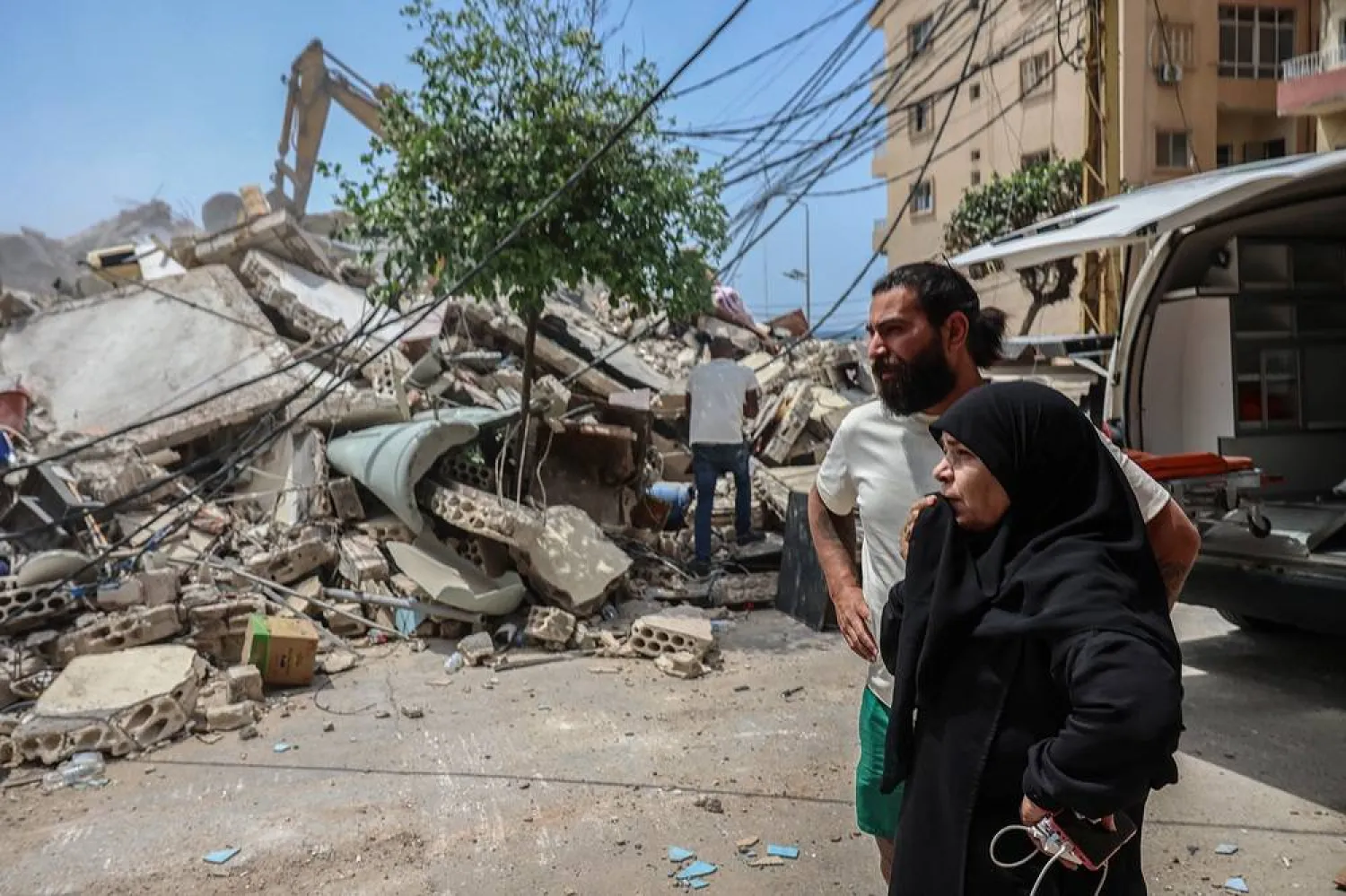
 A woman reacts as emergency personnel search for survivors at the site of an Israeli strike carried out just before a 10-day ceasefire between Lebanon and Israel, in Tyre, Lebanon, April 17, 2026. (Reuters)
A woman reacts as emergency personnel search for survivors at the site of an Israeli strike carried out just before a 10-day ceasefire between Lebanon and Israel, in Tyre, Lebanon, April 17, 2026. (Reuters)
TT

In Final Moments Before Truce, Israeli Strike Kills Lebanese Man’s Family

 A woman reacts as emergency personnel search for survivors at the site of an Israeli strike carried out just before a 10-day ceasefire between Lebanon and Israel, in Tyre, Lebanon, April 17, 2026. (Reuters)
A woman reacts as emergency personnel search for survivors at the site of an Israeli strike carried out just before a 10-day ceasefire between Lebanon and Israel, in Tyre, Lebanon, April 17, 2026. (Reuters)

Hassan Abu Khalil's family miraculously survived six weeks of war in southern Lebanon, but tragedy struck in the final minutes before a ceasefire came into force. An Israeli strike late on Thursday killed 13 of his relatives, leaving him the sole survivor.

Abu Khalil, 36, stepped out to see friends just before midnight, when a US-brokered truce between Lebanon and Israel was meant to halt fighting that had raged since March 2 between Israel and armed group Hezbollah.

“I heard a very powerful strike, and when I came ‌back to the neighborhood, ‌I found this had happened," Abu Khalil told Reuters on ‌Friday ⁠as he watched ⁠a bulldozer dig through the mountains of pulverized concrete that was once his home in the southern Lebanese port city of Tyre.

"In this building, more than 13 members of my family are missing under the rubble. What then, Israel? Just before the ceasefire, it was one massacre after another against us," he said.

Later on Friday, Lebanon's state news agency said rescue teams had recovered 13 bodies and pulled 35 wounded survivors from the ruins ⁠of the building that was hit the previous evening. It ‌reported that 15 other people were unaccounted for.

The ‌Israeli military did not immediately respond to a request for comment on the strike.

Lebanon's health ministry ‌says 2,294 people have been killed between March 2 and Thursday, when the ‌ceasefire came into force. The toll includes 177 children and 274 women.

'MY FUTURE IS GONE'

On Friday, thousands of Lebanese streamed through Tyre on the way to their southern villages. They crossed over a dirt berm that Lebanese soldiers had erected over the ruins of a main bridge ‌destroyed by Israel earlier on Thursday. Many were relieved to return to their southern villages, even if they were destroyed.

But ⁠Abu Khalil spent ⁠the first day of the ceasefire in a haze of despair, unable to eat or sleep.

He stood wringing his hands next to a bulldozer working through the ruins, his eyes locked on the gaping hole that rescuers were searching.

"Since the strike, I've been here and haven't gone anywhere. Every time they pull someone out, we run over to see what happened, who it is - my friend I grew up with, my friend's mother, my friend's father," Abu Khalil said.

He said he had been living in the United Kingdom but returned to Lebanon to be with his extended family.

"Who is left? No one is left. I wish I had never gone out for that coffee and had stayed with them," he said.

“My future is gone here. This was my life, this was my family - what now? What more is there after this?"


Can Iran Legally Impose Tolls on the Strait of Hormuz?

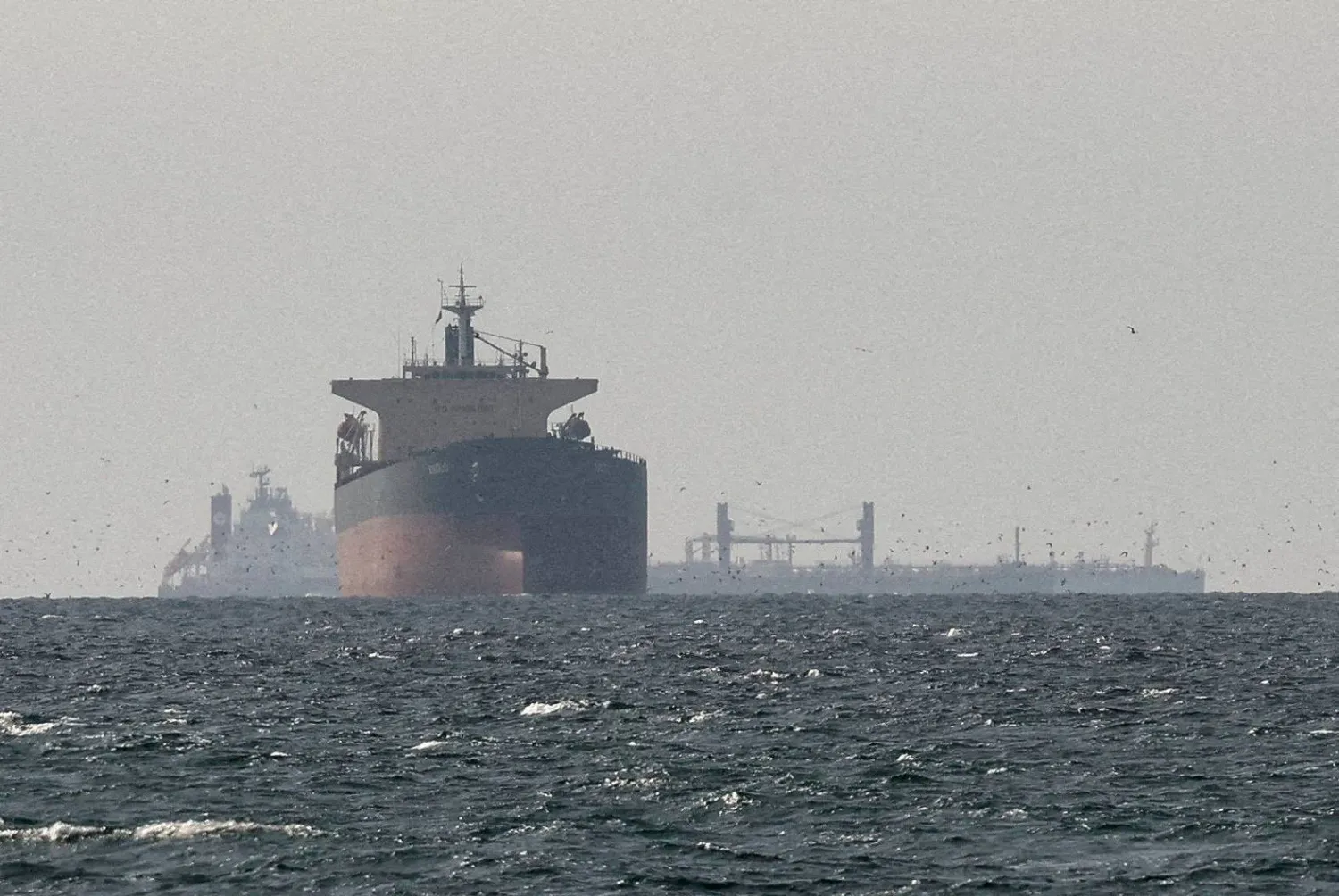
FILE PHOTO: Cargo ships in the Gulf, near the Strait of Hormuz, as seen from northern Ras al-Khaimah, near the border with Oman’s Musandam governance, amid the US-Israeli conflict with Iran, in United Arab Emirates, March 11, 2026. REUTERS/Stringer/File Photo
TT

Can Iran Legally Impose Tolls on the Strait of Hormuz?

FILE PHOTO: Cargo ships in the Gulf, near the Strait of Hormuz, as seen from northern Ras al-Khaimah, near the border with Oman’s Musandam governance, amid the US-Israeli conflict with Iran, in United Arab Emirates, March 11, 2026. REUTERS/Stringer/File Photo

Tehran has sought to tighten its grip over the Strait of Hormuz by charging tolls on vessels to ensure safe passage, in conjunction with Iran's Revolutionary Guard Corps.

The following explains law governing toll collections and actions that countries opposed to tolls might take, according to Reuters.

WHAT IS THE STRAIT OF HORMUZ?

The Strait of Hormuz is ‌a waterway connecting the Gulf with the Gulf of Oman, and located within Iran's and Oman's territorial waters. It is perhaps the world's most important energy shipping lane. About 20% of the world's oil passes through it.

The waterway is about 104 miles (167 km) long. Its width varies, and at its narrowest point provides 2-mile channels for inbound and outbound shipping, separated by a 2-mile buffer zone.

Iran effectively closed the strait following US-Israeli strikes on the country, and has demanded a right ⁠to collect tolls as a precondition to ending the war. The status of any toll collections so far could not immediately be confirmed.

WHAT LAW GOVERNS PASSAGE ON THE STRAIT?

The UN Convention on the Law of the Sea, opens new tab, sometimes known as UNCLOS, was adopted in 1982 and has been in force since 1994.

Article 38 provides vessels a right of unimpeded "transit passage" through more than 100 straits worldwide, including the Strait of Hormuz.

The treaty allows a country bordering a strait to regulate passage within its "territorial sea," up to 12 nautical miles from its border, but shall permit "innocent passage."

Passage is innocent if it is not prejudicial to a country's peace, good order and security. Military action, serious pollution, spying and fishing are not permitted. The concept of innocent passage was key to a 1949 International Court ‌of ⁠Justice case concerning the Corfu Channel, along the coasts of Albania and Greece.

Approximately 170 countries and the European Union have ratified UNCLOS. Iran and the United States have not. This raises the question of whether the treaty's rules affording freedom of maritime navigation have become part of customary international law, or bind only ratifying countries.

Experts say UNCLOS has become or is generally viewed as customary international law. Some non-ratifying countries may ⁠argue that they need not follow the treaty because they persistently and consistently object. Iran has argued that it has made such objections. The United States disputes Iran's authority to charge tolls.

HOW CAN TOLLS BE CHALLENGED?

There is no formal mechanism to enforce UNCLOS. The International Tribunal for the Law ⁠of the Sea in Hamburg, Germany, which the treaty established, and the International Court of Justice in The Hague, Netherlands could issue rulings but cannot enforce them.

Countries and businesses have other potential means to counteract tolls.

A willing state or coalition of states could ⁠try to enforce the treaty. The UN Security Council could pass a resolution opposing tolls.

Companies could redirect shipments away from the Strait of Hormuz, and have begun doing so. Countries could expand sanctions targeting financial transactions believed to benefit Iran's government, by sanctioning companies willing to pay tolls.


How China’s Weapons Transfers to Iran Have Evolved Over Decades

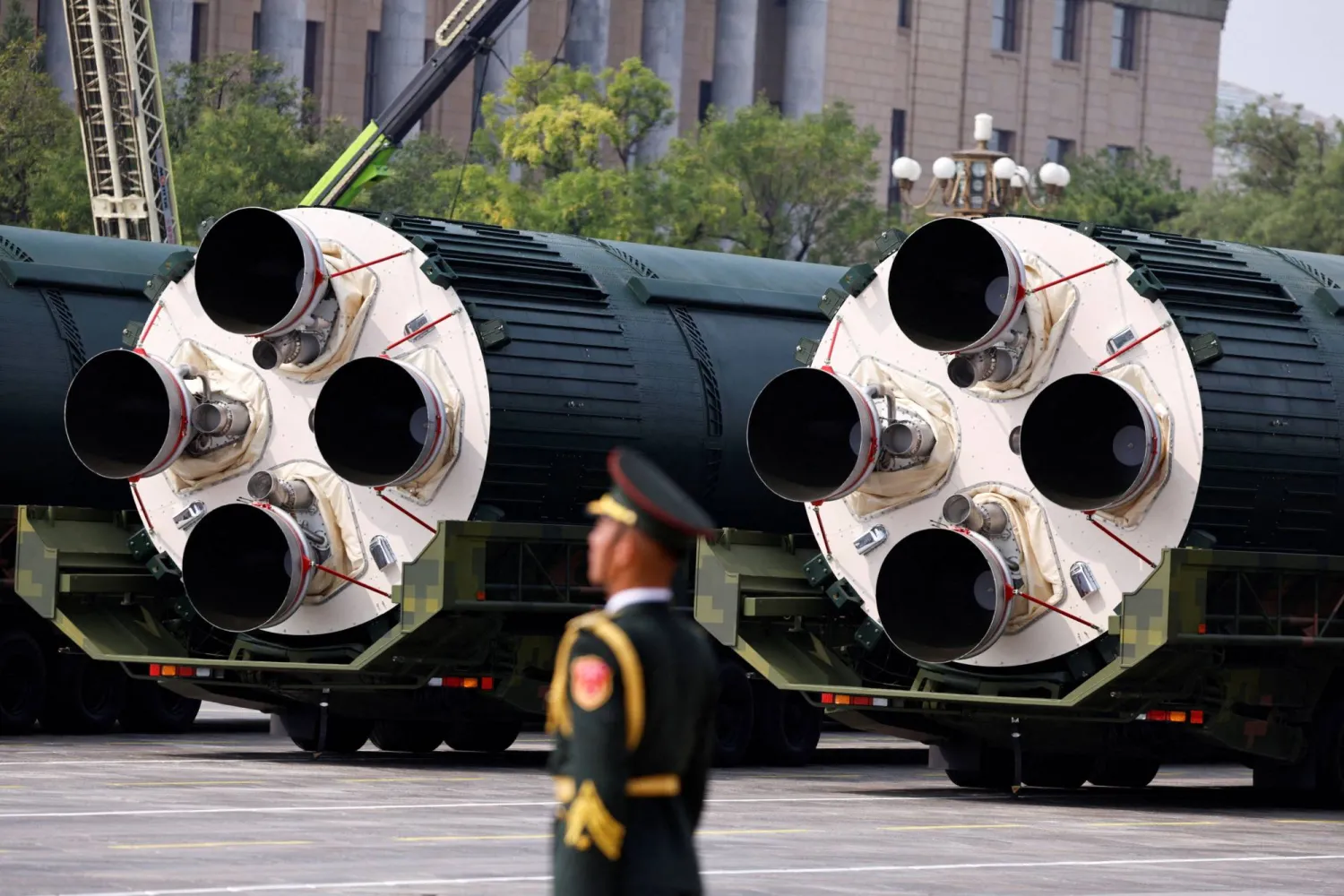
FILE PHOTO: A member of the People's Liberation Army stands as the strategic strike group displays DF-5C nuclear missiles during a military parade to mark the 80th anniversary of the end of World War Two, in Beijing, China, September 3, 2025. REUTERS/Tingshu Wang/File Photo
TT

How China’s Weapons Transfers to Iran Have Evolved Over Decades

FILE PHOTO: A member of the People's Liberation Army stands as the strategic strike group displays DF-5C nuclear missiles during a military parade to mark the 80th anniversary of the end of World War Two, in Beijing, China, September 3, 2025. REUTERS/Tingshu Wang/File Photo

Washington: David Pierson

For much of the last two decades, China has maintained a delicate balance in its military relationship with Iran, offering often indirect assistance instead of arms sales.

That approach is now drawing renewed attention after US officials said intelligence agencies were assessing whether China may have shipped shoulder-fired missiles to Iran in recent weeks. President Trump has said he would impose an additional 50 percent tariff on Chinese goods if the assessment proves accurate. China has denied the claim, calling it “pure fabrication” and has vowed to “resolutely retaliate” if the Trump administration goes through with tariffs.

The American officials said the information obtained by US intelligence agencies was not definitive. But if proven true, it would be a significant tactical change in the way Beijing supports its closest strategic partner in the Middle East.

Chinese arms sales to Iran exploded in the 1980s and have all but vanished in the last decade to comply with a United Nations embargo and US sanctions. Chinese support for Iran in recent years has instead come in the form of components that could be used in both civilian technologies as well as missiles and drones.

China has a major stake in the crisis in Iran. About a third of its total crude oil imports come from the Arabian Gulf.

Here is how China’s military support for Iran has evolved over the years:

The 1980s: The Boom Years

The outbreak of the Iran-Iraq War in 1980 coincided with major market reforms in China when the leader at the time, Deng Xiaoping, ordered state-owned companies to wean themselves off government support and instead seek commercial profit.

Chinese state-run defense companies were suddenly empowered to export their wares. That resulted in a deluge of Chinese missiles, fighter jets, tanks, armored vehicles and assault rifles being sold to Iran starting in 1982 and peaking in 1987, according to the Stockholm International Peace Research Institute.

At the same time, China sold even more arms to Iraq, resulting in a situation in which the two warring sides clashed with each other using the same Chinese weapons.

The Reagan administration opposed China’s arms sales to Iran, particularly Silkworm anti-ship cruise missiles. Tehran used the missiles in attacks in Kuwaiti waters in 1987 that struck an American-owned tanker and an American-registered tanker.

The United States responded by curbing exports of some high-technology products to China. China denied selling arms directly to Iran, but said it would do more to prevent its military exports from reaching Iran through intermediaries.

The 1990s: Technology Transfers

Following the war, Iran set out to develop its own military-industrial base with the help of China. One of its key products was the Noor anti-ship cruise missile, which had been reverse-engineered through purchases of Chinese C-802 cruise missiles.

“China played a major role in supporting Iran’s military modernization for decades, especially in developing Iran’s missile capabilities,” said Brian Hart, a fellow with the China Power Project at the Center for Strategic and International Studies.

Iran also received help from China in building missile-production facilities and even in constructing a missile test range east of Tehran, wrote Bates Gill, a longtime China expert, in the Middle East Review of International Affairs.

Under US pressure to curtail its sale of finished weapons, particularly missiles, to Iran, China began increasing exports of machine tools and components that could be used for both military and civilian purposes.

The 2000s to the Present: Dual-Use Technologies

In 2006, the United Nations imposed sanctions on Iran’s nuclear and ballistic missile programs. China voted in favor of the resolution and largely pivoted away from new, formal arms contracts with Tehran.

The shift was as much about regional strategy as it was about international law. Starting in the mid-2010s, China began deepening its strategic relationships with Gulf countries including Saudi Arabia and the United Arab Emirates, as well as Qatar.

China continued to supply Iran with dual-use technologies and materials that have helped it amass an arsenal of missiles and drones.

That included chemicals used to produce fuel for ballistic missiles and components for drones, such as radio frequency connectors and turbine blades.

But Mr. Hart said China was still “a critical form of support, given Iran’s reliance on ballistic missiles and drones to attack US and Israeli forces and other countries in the region.”

The US Treasury Department has sanctioned Chinese and Hong Kong front companies it says were set up to source parts and ingredients for ballistic missiles and drones for Iran.

Suspicions are also growing that Iran is using its access to China’s BeiDou satellite navigation system, an alternative to the US-owned Global Positioning System, for military purposes. Last month, a US congressional agency said BeiDou may have been used to direct Iran’s drone and missile strikes across the Middle East.

The New York Times