Exclusive - 14 Years after Syrian Withdrawal, Lebanon Finds itself under Hezbollah Hegemonyhttps://english.aawsat.com/home/article/1698841/exclusive-14-years-after-syrian-withdrawal-lebanon-finds-itself-under-hezbollah
Exclusive - 14 Years after Syrian Withdrawal, Lebanon Finds itself under Hezbollah Hegemony
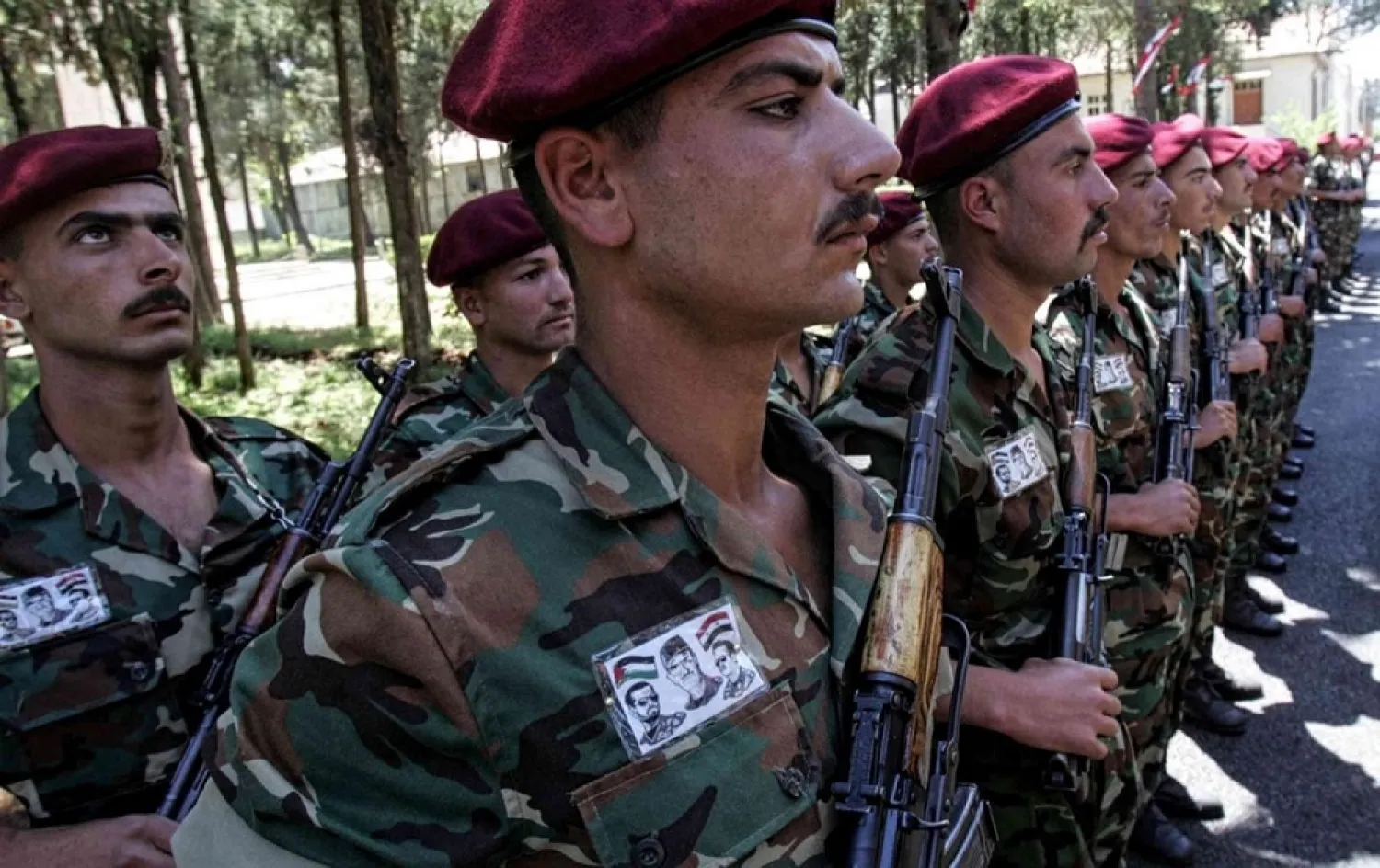
Syrian army special forces prepare to leave Lebanon in April 2005. (AFP)
Fourteen years ago, the last Syrian soldier withdrew from Lebanon marking an end to decades of hegemony over the country that still remains a contentious issue among political powers to this very day. Differences have arisen over how to remember the 29-year period, with some choosing to describe it as “guardianship” under international approval, while others insist on labeling it as occupation.
Syrian troops entered Lebanon in 1976 and withdrew in April 2005. Throughout this period, Syria seized control of all aspects of political life in its smaller neighbor, the repercussions of which persist to this day despite all the changes that have taken place in the region in 14 years.
Opponents of the Syrian regime believe that the withdrawal remains incomplete given that the situation in Lebanon now has become more precarious after control has been shifted from Damascus to Iran through Hezbollah and its allies. Regime supporters disagree and instead demand the establishment of a special ties with Damascus. Others admit that Lebanon is an open arena for all foreign alliances.
Lebanese deputy parliament Speaker Elie Ferzli said that much has been said about Lebanon’s ties with Syria and it remains a contentious issue in the country. He acknowledged that Lebanon is not an independent country, but an open arena for players in various conflicts, including Syria and Iran.
In speaking to Asharq Al-Awsat, he refused to refer to Syria’s presence in Lebanon as occupation, saying instead that it was “guardianship” through international agreement.
Former minister Abdulrahim Murad and AMAL movement MP Ali Khreis shared this view. Free Patriotic Movement MP Mario Aoun disagreed, labeling Syria’s former presence as occupation. He did however, share their demand for establishing special ties between Beirut and Damascus.
Murad and Khreis refused to discuss Syrian or Iranian meddling in Lebanon. Murad said that had Iran been involved or had Hezbollah been in control of governing Lebanon, then the situation in the country would be better than how it is now.
In contrast, former Justice Minister Ashraf Rifi said that 14 years after Syria’s withdrawal, the Lebanese state has yet to regain its full sovereignty.
“On this day, the Syrian regime army withdrew from Lebanon through the will of the people, who rose up at Martyrs’ Square. The mission will be complete once the state restores its complete sovereignty,” he declared.
This stance was echoed by political researcher Makram Rabbah, who said that the situation in Lebanon today was “more dangerous” than it was under Syrian presence because control has been shifted to Iran and its allies. He explained that Hezbollah has been “Lebanonized in a bad way through its involvement in Lebanese affairs.”
“This may pave the way for an even worse period in wake of the sanctions that are being imposed on Tehran and Hezbollah. At the moment, Lebanon is not a priority for international players,” he went on to say.
He added Hezbollah and its allies are in control of the state, the government and parliament, explaining that the party had room to maneuver by placing Foreign Minister Jebran Bassil as a front to implement its policies. This was achieved after President Michel Aoun gave the party Christian cover to carry out its agenda. This is evidenced in the way it deals with Lebanese affairs.
Ferzli acknowledged that political rivalries that are being played out in Lebanon, Syria and Iran included, have regional reach. This makes Lebanon an open ground for all forces. This was demonstrated during the long and arduous process to form a government last year.
“Let us be realistic, saying that independence is complete is far from the truth,” he told Asharq Al-Awsat. “But Lebanon regained a lot of its independence after Aoun was elected president” and it is headed on the right path through policies that are being adopted under his tenure, he added.
Moreover, MP Mario Aoun remarked that a “Syrian regime that is incapable of resolving its problem cannot meddle in Lebanon.”
“In order to interfere in Lebanon, it must have agents on the inside, which it does not,” he noted. Furthermore, he stated that even if Hezbollah enjoys “special ties with Iran, that does not mean that Tehran or the party are controlling the state.”
For his part, Ferzli noted: “There is no doubt that Hezbollah, similar to other Lebanese parties, is linked to Iran and cannot do anything to harm it. At the same time, this camp is being threatened and Israel’s occupation of some Lebanese land is still ongoing”
Murad echoed Ferzli’s stance, adding, however that Lebanon was wrong in adopting its policy of disassociation from regional conflicts, most notably the crisis in Syria, which is the country’s only window to the outside world. He therefore, called for coordination with Syria and restoring economic and trade ties with it, remarking that the situation in Lebanon during Syria’s presence was “much better” than it is now.
The normalization of ties between Lebanon and Syria has been met with rejection by Damascus’ opponents. Lebanese Forces media officer Charles Jabbour deemed such calls as an effort by the regime to regain what it lost after it no longer had authority within its country. It now has shifted its attention to Beirut where it reigned for 29 years, he charged.
Contrary to Murad, he voiced his commitment to the policy of disassociation, adding that Lebanon today was not under any hegemony.
He told Asharq Al-Awsat: “The problem in Iran is that it is supporting one camp without the other and at the expense of the authority of the state. It has not reached the level of controlling the state.”
Health Workers at the Epicenter of Congo’s Ebola Outbreak Labor with Little Pay or Resthttps://english.aawsat.com/features/5281250-health-workers-epicenter-congo%E2%80%99s-ebola-outbreak-labor-little-pay-or-rest
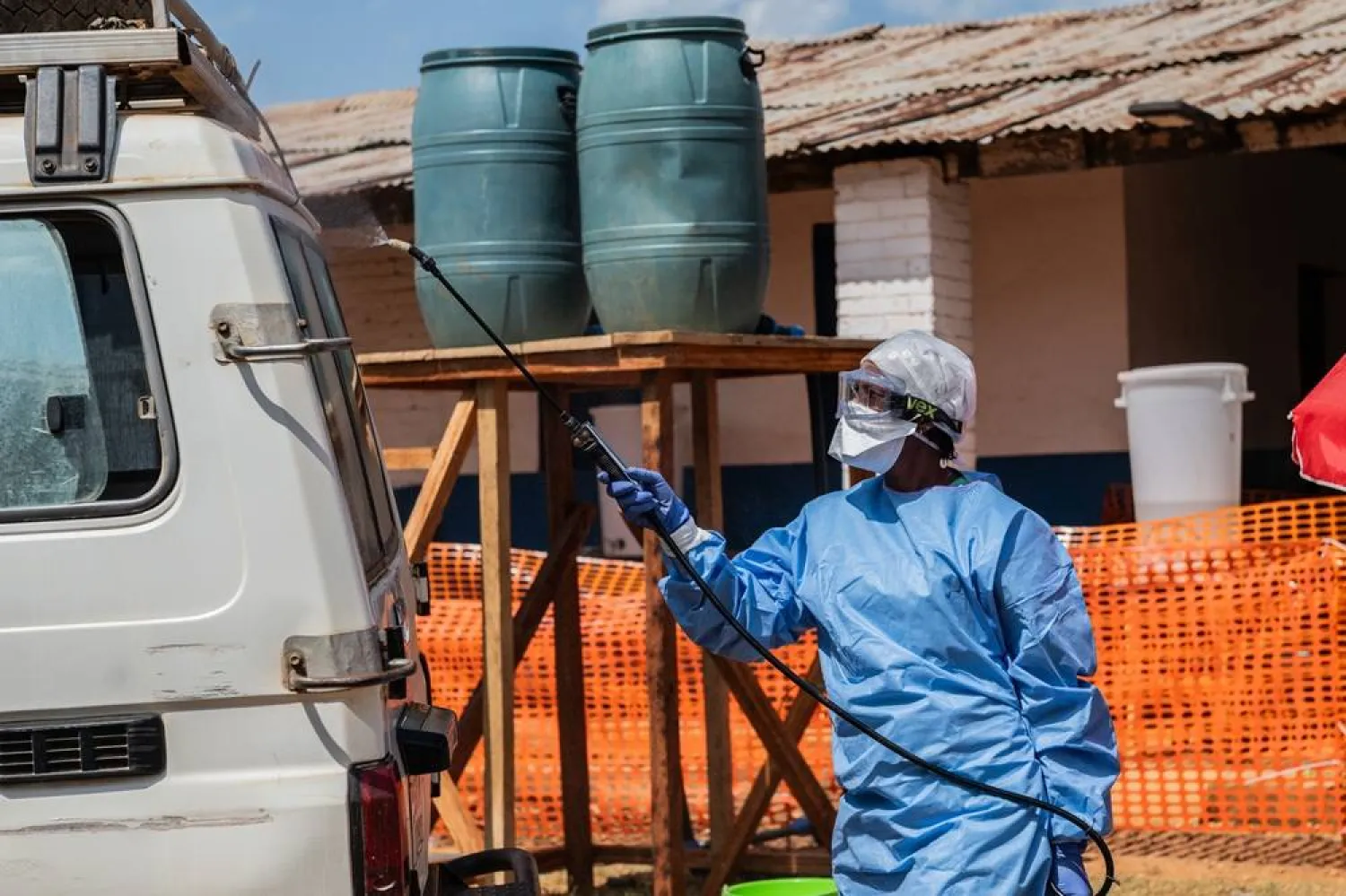
A health worker disinfects an ambulance at the Mongbwalu treatment center that transported a suspected Ebola patient in Mongbwalu, Congo, Friday, June 5, 2026. (AP)
TT
TT
Health Workers at the Epicenter of Congo’s Ebola Outbreak Labor with Little Pay or Rest
A health worker disinfects an ambulance at the Mongbwalu treatment center that transported a suspected Ebola patient in Mongbwalu, Congo, Friday, June 5, 2026. (AP)
Dr. Richard Lokudu, the medical director of Mongbwalu General Referral Hospital, has received barely any compensation for his work on the front line of one of Congo's deadliest Ebola virus outbreaks.
Lokudu and several of his colleagues work all day at the hospital treating an influx of patients. Notifications of suspected cases come even late at night.
“I have not received my allowance (and) what happened to others could happen to me as well,” Lokudu told The Associated Press. “Despite all the infection prevention and control measures we are implementing, we do not know what may happen.”
Health authorities believe the outbreak, which took the eastern region of Congo by surprise after spreading silently for weeks without detection, started in the bustling mining area of Mongbwalu in Ituri province.
Mining conditions conducive to virus spread Mongbwalu has emerged as the epicenter of the rare Bundibugyo type. The town attracts large numbers of laborers who work in large gold mines with muddy pools of gold deposits, narrow pits and caves. They live in low-income areas including crowded camps and have little access to proper health protocols.
The conditions increase the possibility of transmitting the disease, which spreads through close contact with bodily fluids of the sick and deceased such as sweat, blood, feces and vomit.
There also has been widespread skepticism regarding the disease, making the job of medical treatment more difficult for Lokudu and his colleagues, while some of the health workers and first responders have died from the disease.
“It is one thing to be far away and hear statistics being reported, but what is happening on the ground is enormous,” Lokudu said. “People are sacrificing their rest and comfort for this cause. There should be recognition that they deserve compensation. These workers should receive their salaries regularly.”
The Congolese government did not respond to a request for comment from the AP.
Minimal resources available
Congolese authorities have confirmed 452 cases including 82 deaths. On Thursday, the Central African nation recorded 71 new cases in a day, which authorities said is a sign of “active community transmission.”
The rare Bundibugyo type has no approved vaccines or treatment, so health workers have been targeting symptoms. The government said at least five people have recovered from Ebola since the outbreak was officially confirmed by Congo's Ministry of Health on May 15.
The disease “had a big head start,” according to World Health Organization Director-General Tedros Adhanom Ghebreyesus. Hospitals in the region could not test for the right type of Ebola that had begun spreading several weeks before confirmation.
Health workers are handling the disease with minimal resources as agencies have been scrambling to bring aid into the region. Masks, gloves, boots and medications were initially all in short supply.
“There has been an erosion of the health system,” said Heather Kerr, country director for the International Rescue Committee in Congo. “There has not been investment in the health system, and this has been going on for years.”
Tough conditions for health workers
“During the first week, we did not even have time to go home and eat. The second week was the same. We only eat once a day, what amounts to breakfast in the evening,” said Alice Bamuhinga, a nurse at the Mongbwalu hospital.
Even with widespread skepticism and disregard for health protocols, many in the town are becoming aware of the outbreak's grave reality.
Asero Jeanne had five children. Two died from the disease within two weeks. When her daughter became ill, the family thought it was malaria and neighbors advised them to avoid the hospital, saying “anyone who went there would die immediately,” according to Jeanne, 52.
The daughter died after three weeks of moving between hospitals and home, followed by a son who died days after. Then Jeanne became sick.
“I saw about 20 people die,” Jeanne said. “I watched them being taken to the morgue, yet God is allowing me to leave here alive. I thank the doctors.”
World Health Organization offers a plan
Tedros, the WHO director-general, on Friday launched a $518 million plan to combat the outbreak, saying “containing Ebola depends on political commitment, sustained financing, and the trust and engagement of communities.”
Efforts to contain the disease also have been hindered by the conflict between the government and Rwanda-backed M23 rebel group, in addition to attacks by extremist militants.
For health workers on the front line of Congo's Ebola outbreak, the work has become harder as the disease spreads faster than their current treatment capacity.
“Despite the alerts we receive and the teams we have on site, we lack the means to travel into the field,” Lokudu said. “As a result, there are alerts we are unable to investigate.”
How Did Tehran Enter the Palestinian Arena?https://english.aawsat.com/features/5281191-how-did-tehran-enter-palestinian-arena
A photo released by Iran's Nour News of a previous meeting between Khamenei and Sinwar
A compelling story is often enough to send a journalist in search of the man who carries it. The search becomes even more urgent when that man carries two. That was the case many years ago when I set out to find Anis Naccache.
As a young Lebanese activist, Naccache joined Fatah’s student battalion and later worked under the patronage of Khalil al-Wazir — better known as Abu Jihad — a member of Fatah’s Central Committee. My curiosity was piqued when I learned that Naccache had served as an aide to the famed Venezuelan militant Carlos the Jackal during the kidnapping of OPEC ministers in Vienna on December 21, 1975. The world had never witnessed an operation of that kind.
Carlos became an international celebrity, much to the annoyance of the man who had dispatched him on the mission — Wadie Haddad, the head of external operations for the Popular Front for the Liberation of Palestine. I suspected that speaking with Naccache might also open a path to Carlos himself. It did. But Vienna was only part of Naccache’s story.
When anti-Shah demonstrations erupted in Iran in 1978, Naccache obtained Abu Jihad’s permission to train Iranian opponents of the Shah in camps operated by Fatah in Lebanon. He would later go further. In an interview I conducted with him, he claimed that the idea of creating the Islamic Revolutionary Guard Corps (IRGC) was born during a meeting in a Beirut apartment attended by a handful of individuals. The idea was later conveyed to the leaders of the Iranian Revolution, who embraced it on the principle that regular armies could not be trusted.
After the revolution’s victory, Naccache traveled to Tehran.
One day, in a small gathering, participants discussed the danger posed by Shapour Bakhtiar, the Shah’s last prime minister, who was living in exile. Some feared that enemies of the revolution might rally around him to destabilize, or even overthrow the new regime.
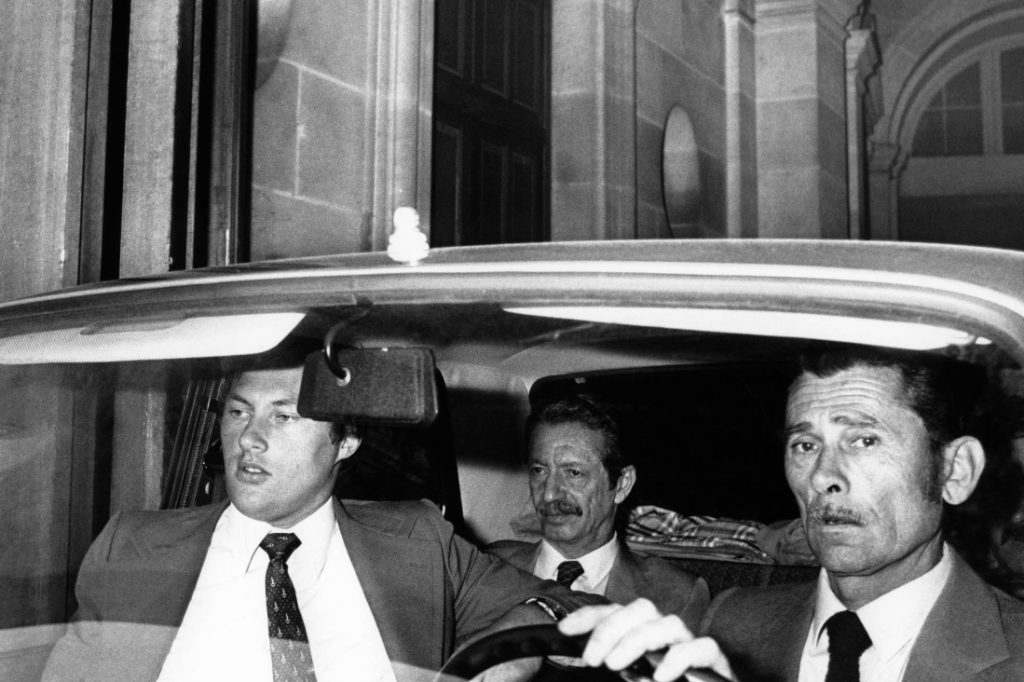
Former Iranian Prime Minister Shapour Bakhtiar in Paris the day after an assassination attempt against him in 1980 (AFP)
According to Naccache, the idea of eliminating Bakhtiar was raised. He revealed that a revolutionary court had sentenced Bakhtiar to death and that Ayatollah Ruhollah Khomeini had approved the sentence without publicly announcing it, effectively transforming it into something akin to a fatwa authorizing his killing.
Bakhtiar was living in France under heavy protection. Tehran had not yet developed teams capable of conducting foreign operations. Naccache said he volunteered for the mission with a small group. He obtained Bakhtiar’s telephone number, called claiming to be a journalist seeking an interview, and was surprised to receive an appointment. He visited the residence, conducted the interview, and studied the premises and the vulnerabilities in its security arrangements.
On July 18, 1980, Naccache and his team returned to assassinate Bakhtiar. A reinforced door prevented them from reaching their target. The operation left two policemen and a French woman dead. Naccache was wounded and arrested.
Throughout the 1980s, Iran’s demand for his release overlapped with a series of kidnappings of French nationals in Lebanon by shadowy organizations seeking to exchange them for Naccache. After ten years in prison, France eventually struck a deal and released him.
When I asked who in Iran had known about the assassination plan, he replied: “I informed Mohsen Rafighdoost, who was responsible for the Guards’ administrative staff, and Mohsen Rezaei, a member of its command.”
The Lebanese-Palestinian-Iranian overlap would emerge elsewhere. Imad Mughniyeh — known as Hajj Radwan and accused of involvement in attacks against Israelis, Americans, and Arab targets — had for a time served in Yasser Arafat’s security detail before joining Hezbollah, the centerpiece of Iran’s project in Lebanon and the wider region. Naccache told me that he had personally trained Mughniyeh at the latter’s request.
Naccache spoke with fascination and confidence about the Iranian project, and I listened carefully. He said the region would undergo profound transformations and that revolutionary Iran believed its responsibility began with “liberating the Middle East from American occupation, whether direct or disguised.”
According to him, leaders of the Revolutionary Guards believed that “the American thread” was what guaranteed the stability and survival of many regimes in the region, and that cutting that thread would transform the Middle East’s map and balance of power.
When I asked whether General Qassem Soleimani belonged to this camp, Naccache replied that he was among its leading figures and was working systematically to undermine the American presence throughout the region.
“The revolution never concealed its desire to expel America from Iran and from the region,” he said. “The first message was the seizure of the Americans in their embassy in Tehran. The second was the bombing of the Marine barracks in Beirut. Hajj Imad helped deliver other messages.”
He also argued that the program of tunnels, missiles, and drones was designed to reduce the strategic value of America’s regional allies by demonstrating that their territory was vulnerable and that alliance with Washington could not guarantee their security.
“If Israel is an American aircraft carrier,” he asked, “what remains of its prestige when every inch of it can be reached by the missiles of the Axis of Resistance?”
Naccache also maintained that Hassan Nasrallah’s personality had earned him the trust of Supreme Leader Ali Khamenei and elevated him to the role of a partner in shaping Iran’s Arab policies, particularly in countries bordering Palestine.
“Nasrallah and Soleimani,” he underlined, “are closest to the Leader’s heart.”
Perhaps the most striking thing I heard from Naccache was his prediction that “the major blow” was coming. “Sooner or later,” he said, “missiles will rain down on Israel from every direction. Many who emigrated there will regret their decision, and those doubts will open the door to the end of this entity.”
What I heard from Naccache was more explicit than what I later heard in the offices of Islamic Jihad, Hamas, or Hezbollah leaders, though it pointed in the same direction.
Ramadan Abdullah Shallah, the secretary-general of Palestinian Islamic Jihad, was equally convinced that the blow was coming. Khaled Mashaal was more cautious when discussing Iran’s role. Hassan Nasrallah, by contrast, never felt the need to conceal that Iran was Hezbollah’s principal source of weapons, funding, and strategic backing.
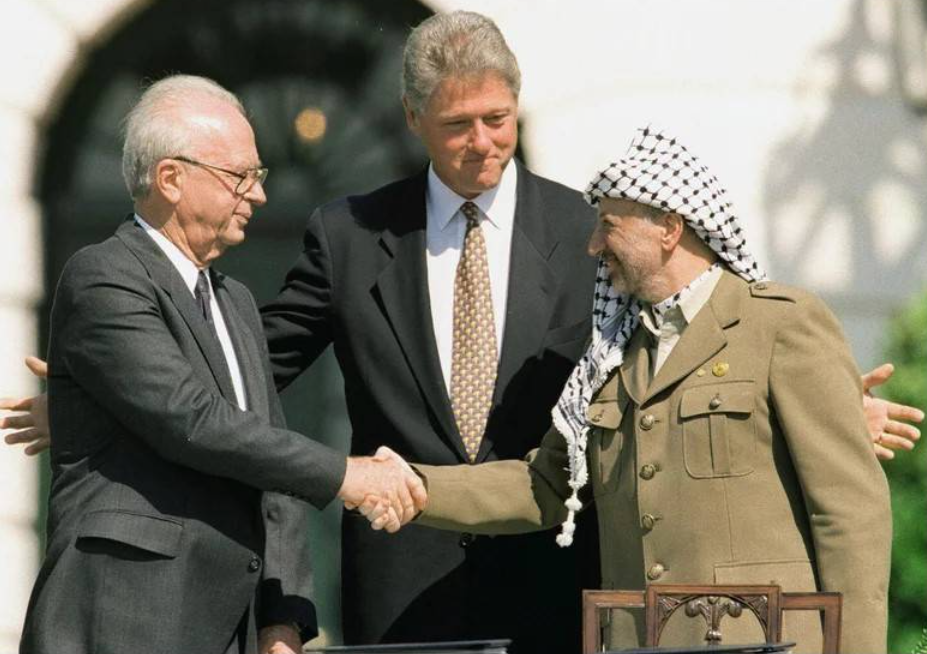
The historic handshake between Yasser Arafat and Yitzhak Rabin on the White House lawn following the signing of the Oslo Accords, under the auspices of US President Bill Clinton, in Washington in September 1993 (Getty Images)
Revolutionary Iran and the Palestinian Obsession
From the outset, Khomeini’s Iran sought influence in several regional arenas. None preoccupied it more than the Palestinian arena. Yasser Arafat, however, had no intention of placing the Palestinian cause in the custody of Iran’s revolutionary regime. Nor was he prepared to hand Palestinian decision-making to any power on earth.
To preserve the independence of that decision, he forged alliances, fought battles, and moved from one capital to another, resisting those who sought to turn Palestine into a bargaining chip in negotiations with the great powers. His long struggle with Syrian President Hafez al-Assad belonged to that category. “Palestine is a cause for me,” Arafat used to say. “For Assad, it is a card to be played.”
Arafat quickly concluded that the Iranian Revolution lacked what he described to some aides as “realism, careful calculations, and restraints.” He felt that some of its leaders were guided by illusions, particularly in their underestimation of both the United States and the Soviet Union.
Nor was he prepared to place the Palestinian revolution under the guardianship of Khomeini’s revolution. He sensed that the new Iran would soon find itself in conflict not only with its neighbors but with more distant powers as well.
Arafat’s appearance in Tehran six days after the revolution’s victory was historic, but it did not lead him to pledge allegiance to Khomeini as others did. He kept his distance.
When Iranian revolutionaries seized American hostages in the US embassy in Tehran, Arafat explored the possibility of mediation. Tehran rejected the idea. It reacted similarly when he attempted to mediate after the outbreak of the Iran-Iraq War. Iran therefore began searching for other Palestinian allies. In time, it also contributed to weakening Arafat’s authority. Then came a development larger than Khomeini’s Iran could comfortably tolerate.
On September 13, 1993, the Oslo Accords were signed. Yasser Arafat shook hands with Israeli Prime Minister Yitzhak Rabin on the White House lawn under the sponsorship of President Bill Clinton. Arafat had unleashed a second geopolitical earthquake, the first having been launched by Anwar Sadat.
His legitimacy remained intact. His image was inseparable from the first bullet fired by Fatah in the mid-1960s, an act widely credited with reviving the Palestinian cause. Iran felt threatened. It feared losing the bridge through which it hoped to reach the Sunni street and mobilize it against the “Great Satan,” not merely against Israel.
Tehran therefore intensified its investment in Palestinian Islamic Jihad and Hamas. Arafat’s calculations diverged not only from Iran’s but also from those of the so-called camp of “steadfastness and confrontation.”
The hostility directed toward him became intense.
During an interview in Damascus, Ahmed Jibril, secretary-general of the Popular Front for the Liberation of Palestine–General Command, accused Arafat of treason. I asked whether he had ever sent someone to assassinate him.
“No,” Jibril replied, “but every morning I turn on the radio hoping to hear of the birth of a Palestinian Islambouli.”
He was referring to Khalid Islambouli, the man who assassinated Egyptian President Anwar Sadat.
“I Have Lived Longer Than I Expected”
If Iran failed to draw Arafat beneath its mantle, it had greater success among Palestinian Islamists. Dr. Fathi Shiqaqi, the founder and secretary-general of Palestinian Islamic Jihad, opened the first window. The story began when Shiqaqi was a student at Zagazig University in Egypt. During the upheavals of 1978, fellow students asked him to prepare a ten-page paper on the events unfolding in Iran. The assignment captivated him.
He immersed himself in Islamic sources, Khomeini’s writings, and Muslim Brotherhood thought. He emerged convinced that the revolution in Iran was Islamic rather than sectarian.
Instead of a ten-page report, he produced a booklet titled Khomeini: The Islamic Solution and the Alternative. The booklet drew the attention of Egyptian authorities, who imprisoned him. He would later be jailed again and eventually leave Egypt secretly. He was arrested by Israeli authorities in Gaza in 1983 and again in 1986 before being deported from Palestine in August 1988.
The Israelis failed to appreciate that expelling Shiqaqi would strengthen his relationship with Iran and Hezbollah. Tehran welcomed him warmly. Khomeini received him in 1988 and pledged support for Islamic Jihad in both arms and funding. Thus Islamic Jihad became Iran’s first significant breakthrough into the Palestinian arena.
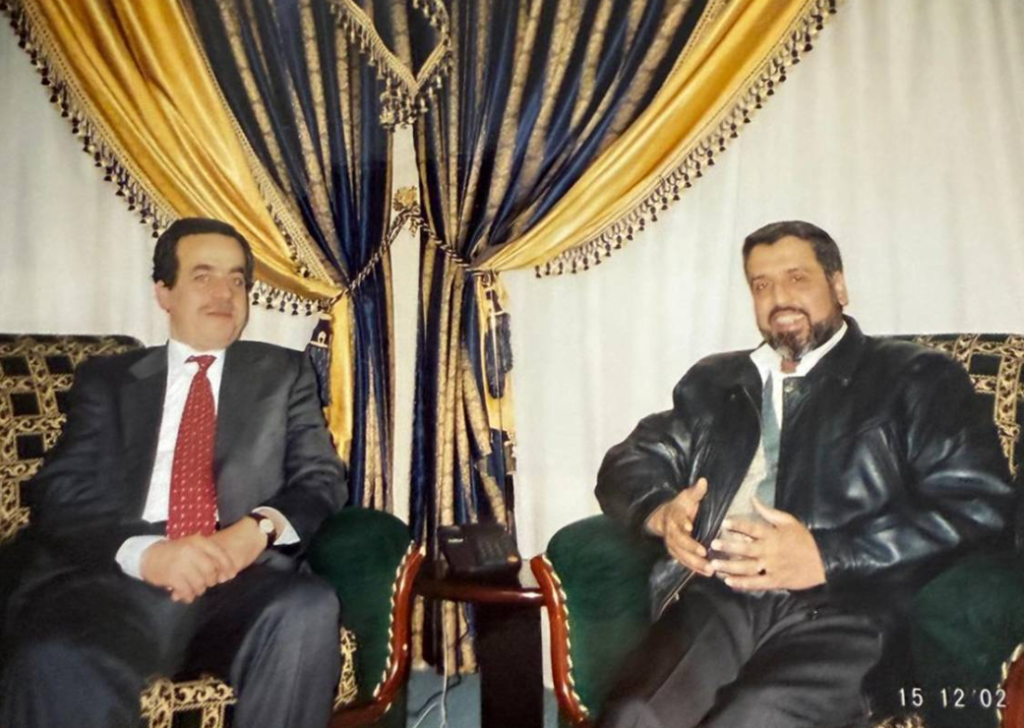
Ghassan Charbel, Editor-in-Chief of Asharq Al-Awsat, during an interview with the late Islamic Jihad leader Ramadan Shalah in December 2002 (Asharq Al-Awsat)
Following the Arafat-Rabin handshake, Shiqaqi contacted Ramadan Abdullah Shallah, who would later succeed him as leader of the movement. At the time, Shallah was living in the United States and pursuing an academic career.
“The time has come,” Shiqaqi told him. Shallah later explained to me that the phrase signaled a decision “to go further in jihadist action.” The era of suicide bombings was approaching.
On January 22, 1995, Islamic Jihad carried out a devastating double suicide attack at Beit Lid near Tel Aviv, killing 20 Israeli soldiers. Rabin vowed to punish those responsible, even if they were beyond Israel’s borders. It was widely understood that he had ordered Shiqaqi’s assassination. Only days later I visited Shiqaqi in his modest apartment in Damascus. “I am still young,” he said immediately. “It is not yet time for my memoirs. We still have much work ahead of us.”
When I asked about Rabin’s threats, he dismissed them.
“I believe I have lived longer than I expected,” he replied. “The blood of martyrs produces more fighters and escalates the confrontation. We are not concerned by such threats. In the end, as Imam Ali said, destiny is the guardian of life’s appointed term.”
The phrase stayed with me. So did the feeling that our first interview might also be our last. Israel does not easily forgive those who target its soldiers. Mossad’s reach is long, and Rabin was not a man likely to leave such a challenge unanswered.
On October 26, 1995, Mossad found Shiqaqi in Malta and killed him as he returned from Libya.
Ramadan Shallah later told me that Israeli intelligence had penetrated Libyan security and discovered the alias Shiqaqi was using: Ibrahim al-Shawish, a secret known only to Shiqaqi and Shallah.
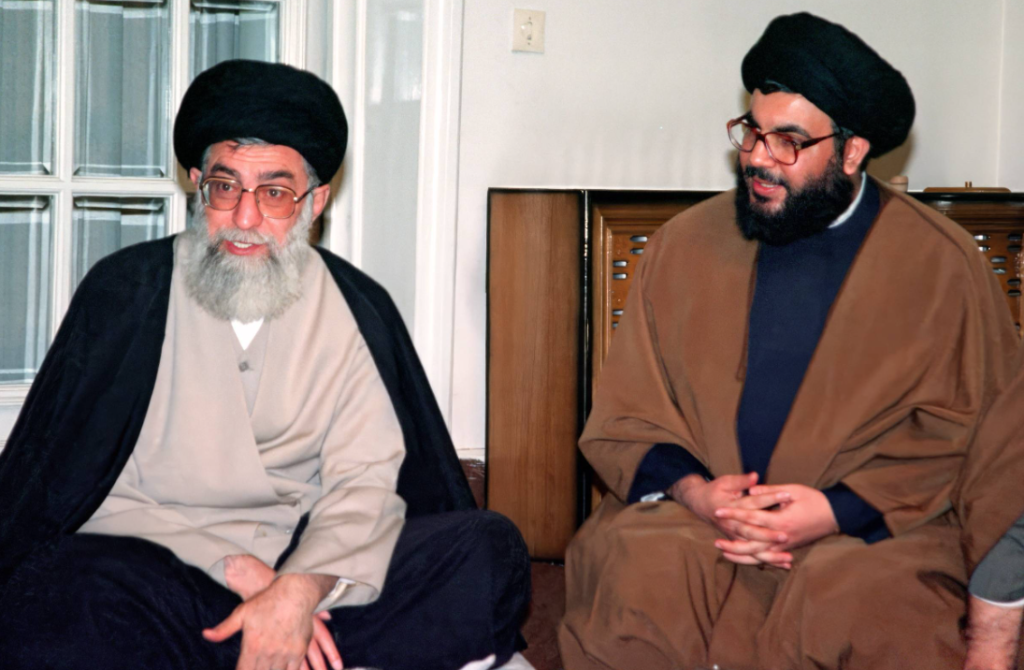
Hassan Nasrallah and Ali Khamenei (Office of the Iranian Supreme Leader)
"If He Lives, He Will Become the Khomeini of the Arabs"
In Beirut, Hezbollah Secretary-General Hassan Nasrallah learned of Shiqaqi's assassination and immediately traveled to Damascus. He met Shallah and advised the movement to select a new secretary-general, just as Hezbollah had done after Israel assassinated its secretary-general Abbas al-Musawi, and to announce the successor's name in the statement mourning the previous leader.
According to Shallah, Nasrallah argued that doing so would help preserve the morale of the resistance camp. But, he added, Nasrallah did not interfere in the selection process itself, as that was an internal Islamic Jihad matter and the movement's allies trusted its choices.
Shallah also recalled that Shiqaqi greatly admired Nasrallah: "I was visiting Beirut at the end of 1989 when Dr. Fathi, may he rest in peace, returned from a Hezbollah event at which Nasrallah had spoken. At the time, Nasrallah was not yet secretary-general but a resistance official. Dr. Fathi spoke about him with tremendous admiration. I expressed surprise at the extent of his admiration, and in the presence of several brothers he said: 'If this man lives long enough, he will become the Khomeini of the Arabs.'"
I asked Shallah which model Palestinian factions drew upon when they began carrying out suicide operations. He replied that they had been inspired by the model pioneered by the Lebanese resistance when Abu Zaynab carried out the bombing of the Marine barracks in Beirut.
Hamas and the Road to Tehran
Despite Iran’s successes with Islamic Jihad, its greatest achievement was drawing Hamas into its regional program, exploiting the movement’s need for weapons and funding. Tehran had long sought an opening. Israel inadvertently provided one.
In late 1992, after members of the Qassam Brigades kidnapped and killed an Israeli officer, Israel deported roughly 415 Palestinian activists from Gaza and the West Bank, most of them affiliated with Hamas. Among them were future leaders such as Abdel Aziz al-Rantisi and Ismail Haniyeh.
Lebanon refused to receive them, and the deportees remained for months in the border area of Marj al-Zohour, transforming their tent encampment into a center for meetings, prayers, lectures, and solidarity visits.
The Revolutionary Guards and Hezbollah quickly seized the opportunity. They supplied food, medicine, and shelter. As relationships developed, they trained some of the deportees in explosives, secure communications, and combat tactics. Iran saw in Hamas a prize far larger than Islamic Jihad because of its much broader popular base. The relationship did not begin smoothly.
Some Hamas figures remained wary of Iran because of Sunni-Shiite sensitivities. Others hesitated to accept Iranian funding for fear that it would tie the movement to a political agenda rooted in Iran’s revolutionary worldview.
Over time, those reservations faded. Iranian support became institutionalized. When Hamas seized control of Gaza in June 2007 and expelled the Palestinian Authority, Tehran and Hezbollah recognized a major opportunity.
For Soleimani and Nasrallah, an autonomous Gaza offered the possibility of integrating Hamas into the concept of the “unity of fronts” and preparing it to participate in the long-awaited “major blow.”
The relationship would face serious tests, particularly after Hamas leaders left Syria rather than support Bashar al-Assad’s campaign against the uprising. Iranian and Syrian circles attacked Khaled Mashaal, accusing him of abandoning the resistance camp.
Iran reduced its support, though it never entirely severed assistance to the Qassam Brigades. Differences also emerged over Iran’s role in Yemen and allegations of Shiite proselytization there.
Yet Soleimani and Nasrallah remained committed to preserving the Palestinian component of the Axis of Resistance.
Gradually, relations recovered. Soleimani rewarded Hamas with an extensive program of financing, weapons transfers, local arms production inside Gaza, and advanced training. In 2012, Yahya Sinwar — released from an Israeli prison the previous year — was elected to Hamas’ political leadership in Gaza. Five years later he became head of the movement in the territory.
That same year, Ismail Haniyeh succeeded Khaled Mashaal as chairman of Hamas’ Political Bureau after Mashaal had held the post for twenty-one years.
The military wing gained increasing influence, particularly through Sinwar’s close relationship with the Qassam Brigades and their commander, Mohammed Deif.
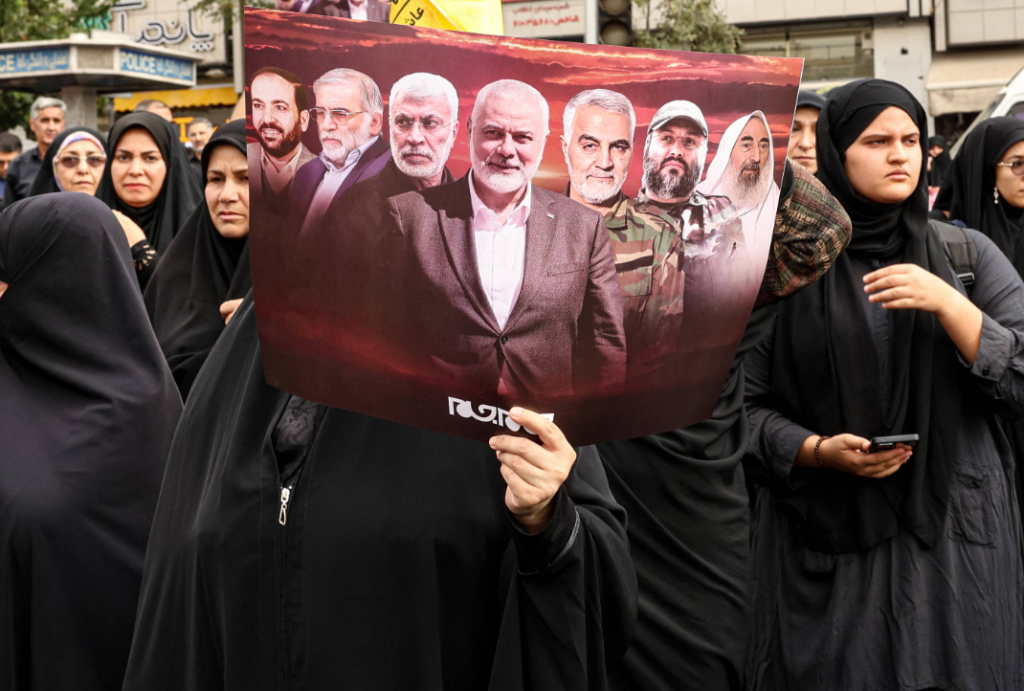
An Iranian woman holds a poster featuring Ismail Haniyeh during his funeral procession in Tehran. The poster also depicts Qassem Soleimani, Abu Mahdi al-Muhandis, Fathi Shiqaqi, Sheikh Ahmed Yassin, Imad Mughniyeh and Mohsen Fakhrizadeh (AFP).
Sinwar’s Flood
On October 7, 2023, Sinwar and Deif realized their ambition. They launched what they called “Al-Aqsa Flood.” The following day, Hezbollah found itself under pressure to respond to the message sent by the architects of the operation and joined what it termed the campaign to support Gaza.
The world was startled by Israel’s vulnerability in the opening hours, especially after it became clear that the attack had left more than a thousand Israelis dead and scores taken hostage. But after the initial shock, Israel’s war machine awakened and opened multiple fronts.
Benjamin Netanyahu viewed the operation as bearing unmistakable Iranian fingerprints. The retaliation was severe, from Hezbollah in Lebanon all the way to Iran’s Supreme Leader himself. Sinwar’s Flood altered the face of Gaza and Lebanon. It also contributed to the downfall of Bashar al-Assad’s regime.
For the first time, American strikes hit Iranian nuclear facilities. Israeli aircraft dominated the skies over Tehran, while Iranian missiles struck targets inside Israel.
The Iranian roar eventually erupted into war, one that unsettled the region, rattled the global economy, and whose consequences remain unresolved.
Lebanese-Born US Envoy Michel Issa Arrives with High Expectationshttps://english.aawsat.com/features/5280966-lebanese-born-us-envoy-michel-issa-arrives-high-expectations
During his Senate confirmation hearing, Issa outlined the contours of his policy, setting out several themes that later became central to his performance
Lebanese-Born US Envoy Michel Issa Arrives with High Expectations
During his Senate confirmation hearing, Issa outlined the contours of his policy, setting out several themes that later became central to his performance
When the new US ambassador to Lebanon arrived in Beirut, he did not need a learning period or special State Department training before taking up his first diplomatic post after a brief retirement from the world of business and automobiles.
Ambassador Michel Issa knows Beirut and the rest of Lebanon better than he knows the corridors of the State Department, with which he had no connection before President Donald Trump appointed him.
Issa was returning to the city where he was born, and to a country he had carried with him on a journey from Lebanon to France and then the United States.
Today, he is coming back as the representative of the world’s most powerful country at one of the most sensitive moments in Lebanese-US relations.
From the moment Issa was appointed US ambassador to Lebanon, it was clear his selection was no routine decision inside the US administration. Washington did not send a traditional career diplomat to Beirut, nor a former security official.
It chose a veteran businessman and banker with deep Lebanese roots and a direct relationship with Trump.
But more importantly, Issa’s appointment came as Lebanon was passing through a historic turning point.
The country was trying to emerge from the worst economic and financial crisis in its modern history, while the repercussions of the war on the southern front and the future relationship between the Lebanese state and Hezbollah dominated international and regional discussions.
More than one message
Many saw Issa’s selection as carrying multiple messages.
“On one hand, Washington wanted to send a figure who knows Lebanon from the inside and understands its complex makeup,” his friend, Lebanese lawmaker Fouad Makhzoumi, said.
“On the other hand, it wanted to rely on a man who has the personal confidence of the US president and can convey the White House’s direction directly to one of the most complicated arenas in the Middle East.”
Among the notable steps that accompanied Issa’s move into diplomacy was his decision to renounce Lebanese citizenship before taking up his duties as US ambassador, aimed at removing any potential legal or political ambiguity over dual allegiance.
From Bsous to Wall Street
Michel Issa was born in 1955 in the Lebanese capital, Beirut, but traces his roots to the town of Bsous in the Aley district, in the Mount Lebanon governorate.
He grew up in Lebanon during the years of relative stability that preceded the civil war, and received his school education in Beirut before his family left the country as part of the Lebanese emigration wave of the 1970s.
France was his first stop. There, he continued his studies in economics and finance, and his professional identity began to take shape. He earned a DEUG (Diplôme d'Études Universitaires Générales) in economics from Paris Nanterre University and also studied at the Graduate School of Banking Studies in Paris.
In the late 1970s, he moved to the United States, the country where he would build his career and achieve his biggest successes.
Finance and banking
For decades, Issa worked in finance and banking, moving between prominent international institutions.
He held executive posts at well-known banks and investment firms, gaining broad experience in debt management, corporate restructuring, investments, and financial markets.
In American finance, he built a reputation as a man able to handle complex files, manage risk, and find solutions to financial crises.
Over the years, his name became known in economic and investment circles, especially in New York, where he settled and built a wide network of professional relationships.
Entering Trump’s circle
Perhaps the most intriguing part of Issa’s biography is his relationship with Trump. He was not merely a political supporter of the US president.
US media reports have described him as close to Trump and as one of his golf partners. Their relationship goes back years before they both entered direct political work.
When Trump announced Issa’s nomination as US ambassador to Lebanon, he used striking words to describe him, praising his broad financial experience and his career in business and international trade.
In Beirut, as in Washington, that relationship is not viewed as a secondary detail.
“An ambassador who has a direct channel to the White House has a wider margin of movement than what is usually available to traditional diplomats,” Makhzoumi said. “For that reason, Issa’s appointment gained added importance in Beirut.”
He said Issa “does not represent only the State Department, but also carries the confidence of the US president himself.”
For Lebanon, that relationship gives the post a different weight. Every message Issa conveys or position he announces, is read as closer to the political mood of the White House than to a routine diplomatic view.
An ambassador under scrutiny
From his first weeks in Lebanon, Issa found himself drawn into files that went beyond traditional diplomacy. He took part in meetings on the future of US support for the Lebanese army, economic reform files, and international efforts to consolidate stability along the southern border.
During his Senate confirmation hearing, Issa outlined the contours of his policy, setting out several themes that later became central to his performance.
He spoke of the importance of supporting Lebanon’s “legitimate” institutions, strengthening economic reforms, and “empowering the state to extend its authority” across all its territory.
Those positions were welcomed by some Lebanese forces, while drawing reservations and criticism from others who saw them as an extension of the traditional US approach toward Lebanon.
But what made his presence different from many of his predecessors was his Lebanese background.
Issa speaks Arabic fluently, understands the details of Lebanese political life, and knows the fine distinctions among its forces, parties, and sects. These elements give him a greater ability to read the local scene.
At the same time, that background has made him a target of greater scrutiny. Every statement he makes is sometimes read from two angles, that of the US ambassador and that of the Lebanese who knows the details of the country where he serves.
A very private life
Away from politics and diplomacy, Issa appears different from the stereotypical image of many financiers. Sport plays an important role in his life.
Official information says he was an international athletics competitor in his youth, before his interest later shifted to other sports, most notably tennis and golf.
That sporting background also reveals an important side of his character. Discipline, competition, and the pursuit of results are qualities many link to his long career in finance.
Golf also played a role beyond personal hobby. It became one of the bridges that connected him to Trump, who is known for his passion for the sport.
At the family level, unlike many public figures, Issa is careful to keep his family life out of the spotlight. Available information about his wife and two sons is extremely limited, reflecting a clear desire to separate his private life from his public work.
Between Lebanese roots and US interests
In reality, Issa stands at the intersection of two parallel paths. The first is personal, beginning in the neighborhoods of Beirut and the town of Bsous more than half a century ago. The second is political and professional, leading him to the heart of the US administration.
Perhaps the uniqueness of his experience lies in combining these two paths. He understands the complexities of the Lebanese system, but is tasked with implementing policies set in Washington, not Beirut.
Makhzoumi said Issa is “clear, bold, and transparent.”
“He wants Lebanon, and we are betting on his Lebanese origins and on what he is trying to do, because it leads us toward a better Lebanon,” Makhzoumi said. “He is building good relations with everyone, and that is the reason for the ambassador’s strength.”
“Lebanon exists in areas where Israel is on one side, and Syria is on the other, and it has the Palestinian file. Here, there is also the distinctive Christian presence in the region,” he added.
“All of this creates a unique case. But if there is no one to convey the picture to the White House, as Ambassador Issa does, that will not happen.”
“Ambassador Issa can speak directly with those who make decisions in the United States, and this gives us a point of strength. We can build on it to obtain a better understanding in the US of the Lebanese position.”
لم تشترك بعد
انشئ حساباً خاصاً بك لتحصل على أخبار مخصصة لك ولتتمتع بخاصية حفظ المقالات وتتلقى نشراتنا البريدية المتنوعة