Two PKK Leaders Killed Near Sulaymaniyah

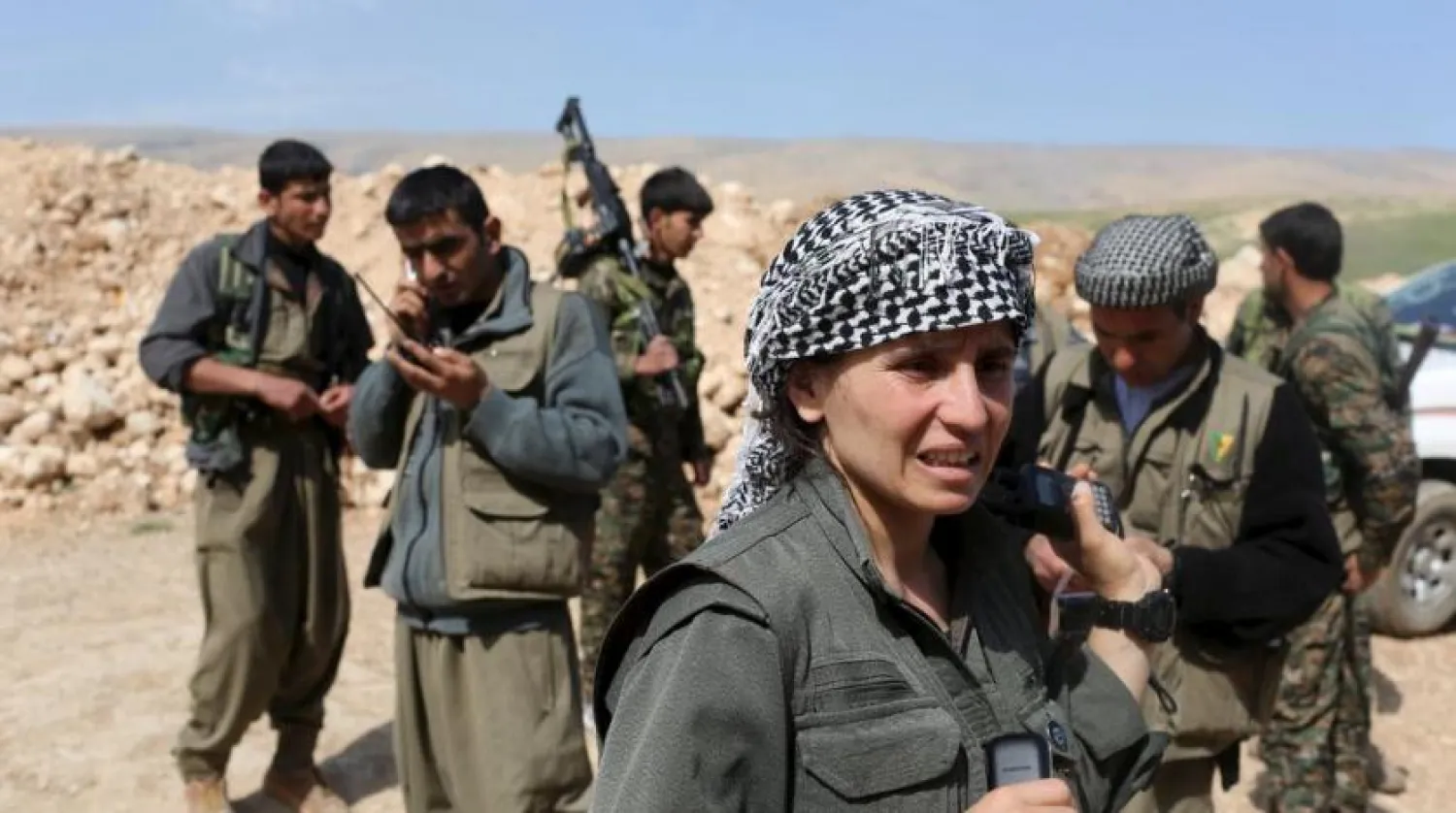
Kurdistan Workers Party (PKK) fighters are pictured in Sinjar, northwest Iraq, on March 11, 2015. Asmaa Waguih/Reuters
TT

Two PKK Leaders Killed Near Sulaymaniyah

Kurdistan Workers Party (PKK) fighters are pictured in Sinjar, northwest Iraq, on March 11, 2015. Asmaa Waguih/Reuters

Two senior Kurdistan Communities Group (KCK) were killed while on Mount Azmar overlooking the city of Sulaimaniyah, Kurdistan Region’s Asayesh (Security) announced on Tuesday following an investigation.

In its statement on Tuesday, the committee said that they were killed in a vague explosion on Oct.15, demanding that the Patriotic Union of Kurdistan command provide justifications regarding the incident.

Initially, Sulaimaniyah's security forces labeled it an explosion and did not allow media to go to the scene. On Tuesday, they provided more details, stating that it was a targeted killing of senior PKK members.

“On October 15, 2019, between hours 17:10 to 17:15, two senior cadres of the Kurdistan Worker’s Party (PKK) named Jameel and Demhat, atop Mount Azmar in a tourist location among civilians, were barbarically targeted,” Kurdistan Region’s Asayesh Agency announced in a statement on Tuesday.

Following “sophisticated and dense investigations” on the “crime scene”, they uncovered the identity of the targeted to be members of the KCK, an umbrella group under which PKK and its affiliated groups fall.

“While they had gone into that area without notifying the relevant authorities of the Kurdistan Region, they were targeted by a Turkish drone while among civilians and in the city of Sulaimaniyah at a tourist location,” added the Asayesh.

The statement called on the legislative and executive regional authorities to clarify the ramifications of the incident and announce them transparently.

PUK spokesman Latif Sheikh Omer stated that the incident has security prospects. Analysts said that the operation has likely been conducted by a grenade that was closely thrown at the two men since the operation can’t be carried out by a drone.


Israel Says Commercial Goods Not Entering Gaza Over Hamas Tax Dispute

 Palestinians inspect a building destroyed in an Israeli airstrike late Saturday in Zawaida, central Gaza Strip, Sunday, Oct. 11, 2026. (AP)
Palestinians inspect a building destroyed in an Israeli airstrike late Saturday in Zawaida, central Gaza Strip, Sunday, Oct. 11, 2026. (AP)
TT

Israel Says Commercial Goods Not Entering Gaza Over Hamas Tax Dispute

 Palestinians inspect a building destroyed in an Israeli airstrike late Saturday in Zawaida, central Gaza Strip, Sunday, Oct. 11, 2026. (AP)
Palestinians inspect a building destroyed in an Israeli airstrike late Saturday in Zawaida, central Gaza Strip, Sunday, Oct. 11, 2026. (AP)

Israel on Thursday said commercial goods usually delivered into Gaza by private merchants had not entered the beleaguered territory for days because of Hamas threats and a taxation scheme, an accusation the group rejected.

Despite a fragile ceasefire observed since October 2025, the Gaza Strip remains engulfed in a severe humanitarian crisis and the alleged dispute between Hamas and merchants threatens to further cut off supplies to the territory.

Gaza, a tiny territory surrounded by Israel, Egypt and the Mediterranean Sea, has been under blockade even before Hamas's October 7, 2023 attack sparked the most recent war.

But COGAT, the Israeli defense ministry agency responsible for civilian affairs in the Palestinian territories, said it told senior international officials that merchants had suspended coordination for the entry of goods into Gaza "until further notice" because of what it described as Hamas coercion.

In a letter to international representatives involved in implementing the ceasefire, COGAT said merchants reported that Hamas demanded about 10,000 shekels ($3,200) for every truck into Gaza and that traders sell around 30 percent of goods in cash instead of bank transfers.

The agency also cited reports that Hamas security personnel had arrested the son of a merchant who refused to comply with the demands, prompting traders to suspend operations out of fear for their safety.

Hamas rejected the allegations in a letter addressed to mediators including Egypt, Qatar and Türkiye, saying it "categorically" denied imposing taxes or government fees on commercial trucks.

It said it had not collected taxes or fees on commercial activity in the past three years of war because of the humanitarian and economic conditions in Gaza.

Hamas said the 10,000-shekel figure referred to a "voluntary community initiative" by Gaza's businesspeople to put money into a "national fund" for relief projects, while the transaction requirement was to inject "cash liquidity" into the territory.

COGAT said the private sector accounted for roughly half of all trucks entering Gaza each week and warned the suspension could undermine the ceasefire agreement.

COGAT said Israel had not initiated the suspension of coordination, but the merchants.

Nickolay Mladenov, the Gaza representative of the US-backed Board of Peace tasked with implementing the ceasefire, said he had received COGAT's letter and condemned reported "threats and coercion" against merchants.

"Such practices are unacceptable and must end immediately," Mladenov wrote on X, adding that interference in supply chains increased the suffering of Gaza's civilians.

The International Organization for Migration (IOM) last week called for Israel to ease the "constraints" on the entry of critical supplies into Gaza.


Aoun Urges Rubio to Pressure Israel to Halt Attacks on Southern Lebanon

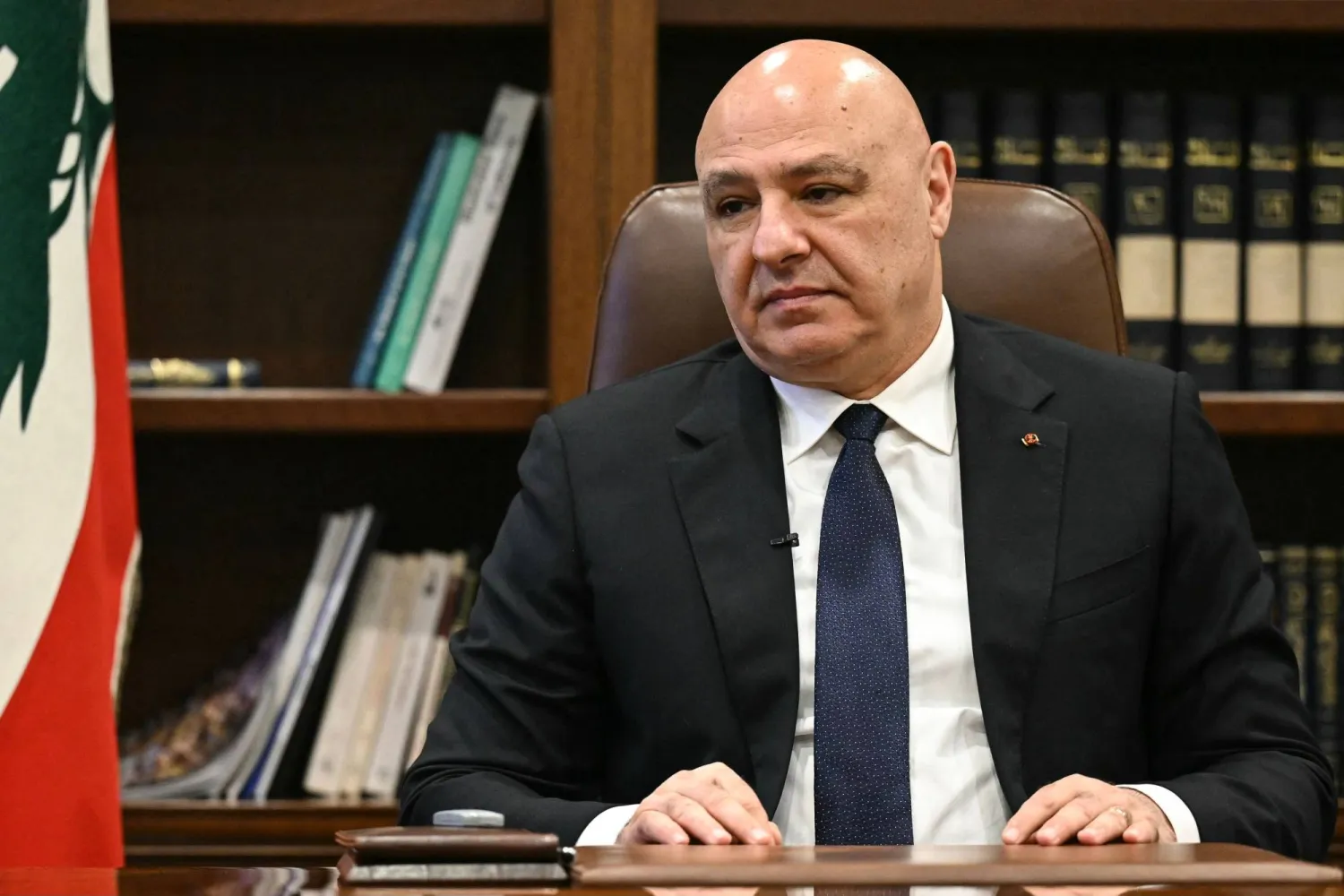
Lebanese President Joseph Aoun speaks during an interview with AFP at the Presidential Palace in Baabda on September 15, 2026. (AFP)
TT

Aoun Urges Rubio to Pressure Israel to Halt Attacks on Southern Lebanon

Lebanese President Joseph Aoun speaks during an interview with AFP at the Presidential Palace in Baabda on September 15, 2026. (AFP)

Lebanese President Joseph Aoun received a phone call on Thursday from US Secretary of State Marco Rubio, during which they discussed the general situation in Lebanon and the region in light of recent developments.

The call addressed the situation in southern Lebanon amid ongoing Israeli attacks. Aoun asked Rubio to pressure Israel to halt the attacks, commit to the framework agreement, cease bulldozing and land-clearing operations, and allow farmers to access their fields.

Aoun stressed that the Lebanese Army and security forces are fully carrying out their duties in implementing decisions related to preventing armed presence, confiscating weapons and ammunition, and combating smuggling, noting that measures taken over the past few days fall within this framework.

The president stressed that judicial authorities are following up on all files referred to them, underlining zero tolerance for perpetrators and the application of laws without favoritism.

Rubio told Aoun that he should not return several hundred kilograms of explosives seized by Lebanese authorities from Hezbollah, a US official said.

"He urged Aoun to hold accountable all those who ordered, financed, and directed the shipment, and underscored that returning explosives to Hezbollah should be out of the question," the official told reporters on condition of anonymity.

A Hezbollah MP acknowledged on Thursday that a 500-kilogram shipment of explosives seized last week by Lebanese authorities belonged to the group, a rare admission by the Iran-backed party.

"The vehicle and its cargo belong to the resistance" against Israel, lawmaker Hassan Fadlallah said.

He said Hezbollah also called for the immediate release of those arrested over the seizure.

Fadlallah demanded the return of the shipment, seized on a road linking eastern Lebanon to Beirut, saying it constituted "capabilities" used by Hezbollah against Israel.

Lebanese Prime Minister Nawaf Salam has said the state will no longer tolerate any possession of "illegal weapons".

A judicial source told AFP the explosives were seized from a vehicle that was carrying 250 kilograms of TNT and 250 kilograms of the explosive C-4.

Salam has said authorities will "identify all individuals involved in this criminal operation and those who ordered it".

He said Lebanese people would be concerned by the seizure, especially since C-4 has previously been used in political assassinations in Lebanon.

At the beginning of this decade Hezbollah was accused of carrying out several political killings.

The group, which once dominated political life in Lebanon, has been weakened by two wars it waged against Israel since 2023.


Al-Malki Warns Houthis to Read Coalition Statement Carefully

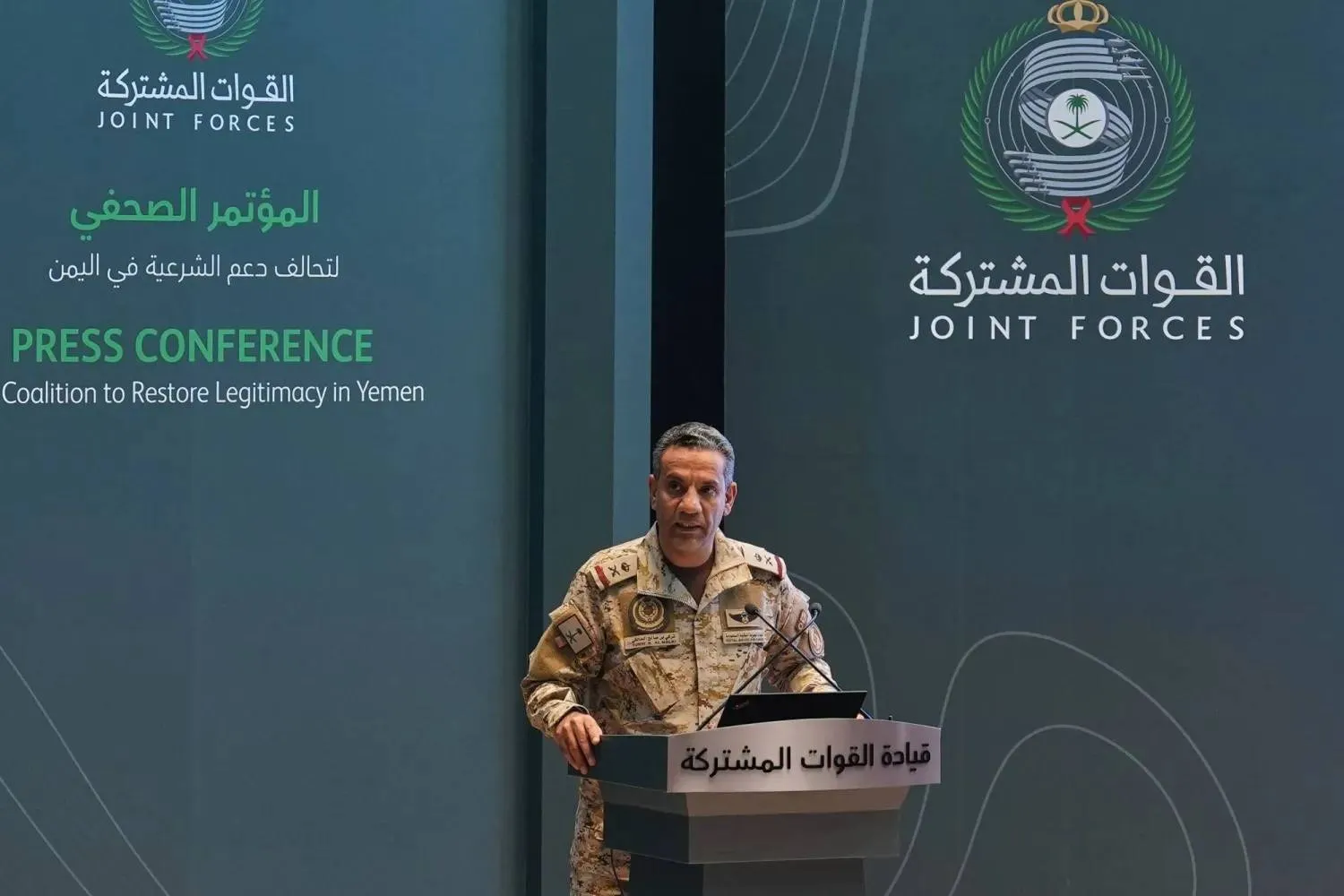
Maj. Gen. Turki al-Malki speaks during a news conference in Riyadh on Thursday (AP)
TT

Al-Malki Warns Houthis to Read Coalition Statement Carefully

Maj. Gen. Turki al-Malki speaks during a news conference in Riyadh on Thursday (AP)

Maj. Gen. Turki al-Malki, spokesman for the Arab Coalition to Support Legitimacy in Yemen, warned the Houthis against targeting civilians and civilian facilities in Saudi Arabia, saying coalition forces were fully capable of confronting missiles, drones and cruise missiles.


Speaking at a news conference in Riyadh on Thursday evening, al-Malki urged the Houthis to halt attacks on civilians and civilian infrastructure in the kingdom.


“The terrorist Houthi millitias must stop their attacks on civilians in Saudi Arabia, and they should carefully read the coalition’s statement — and between the lines,” he said.


Al-Malki said the Houthis had obtained advanced technology with the help of regional parties, enabling them to acquire ballistic missiles, attack and suicide drones and explosive-laden fast boats.


He said the development placed responsibility on the international community to prevent terrorist groups from gaining access to advanced weapons and technology.


“The leadership of the coalition’s joint forces affirms that its operations will continue to deter the terrorist Houthi millitias from attempting to target civilians and civilian facilities in Saudi Arabia and from threatening freedom of navigation in the southern Red Sea and the Bab al-Mandab Strait,” he said.


Al-Malki also reaffirmed support for Yemen’s internationally recognized government and armed forces “on all fronts,” along with round-the-clock air support for units on the ground.


19 killed, 364 injured


Al-Malki said Houthi attacks on airports in the kingdom had killed 19 people and injured 364, adding that 1,104 missiles and 1,135 drones had been launched since operations began.


He said Houthi attempts to target Islam’s two holiest mosques reflected a systematic hostile approach and amounted to a “heinous act” aimed at pilgrims and visitors.


According to al-Malki, Houthi violations since the 2022 truce included about 175 ballistic missiles, 330 drones, 2,229 projectiles launched from drones and 28,121 unidentified projectiles.


He stressed that Saudi Arabia had the intelligence capabilities to identify targets and confront threats.


“We have the capability to deal with these missiles, drones and cruise missiles,” he said.


During the news conference, al-Malki showed footage of coalition aircraft striking ballistic missile launchers, weapons depots and facilities he said the Houthis used to support military operations.


He said coalition forces had also neutralized an imminent ballistic missile attack on the kingdom.


Attacks threaten passenger safety


Al-Malki condemned Houthi attacks on civilians and civilian facilities in Saudi Arabia, including King Khalid International Airport in Riyadh, noting that thousands of passengers and civilians use such facilities every day.


He also pointed to attempted attacks on airports, ports and oil facilities in the kingdom.


Al-Malki said Houthi attacks on civilians were a flagrant violation of international norms, adding that attacks on airports “undermine the kingdom’s security, threaten international air traffic and endanger the lives of passengers of various nationalities.”


He said the coalition had destroyed 127 storage facilities in mountainous areas and a launch platform in Yemen.


Al-Malki said the Houthis had built mountain storage facilities concentrated in Sanaa, Saada and Amran, from which attacks were launched against Yemen and neighboring countries.


“The leadership of the coalition’s joint forces is working to dismantle this network and eliminate the experts and operators behind these capabilities by destroying mountain storage facilities and fixed and mobile launch platforms, based on an intelligence system operating around the clock,” he said.


Saudi defense systems on high alert


Al-Malki said the Saudi armed forces had advanced, highly combat-ready systems, including air defenses capable of intercepting threats and thwarting attempted attacks.


He said the systems were designed to protect the kingdom’s sovereignty, security, strategic assets and holy sites, as well as citizens and residents.


“We have the capability to identify the locations used by the Houthi militias, and we are working to dismantle the terrorist network and eliminate the experts involved,” he said.


Al-Malki again stressed the coalition’s strict commitment to international humanitarian law, saying it had taken all feasible precautions to avoid civilian casualties or damage while planning operations to neutralize Houthi capabilities used in attacks.