


US-British Treaty to Protect Titanic's Wreck

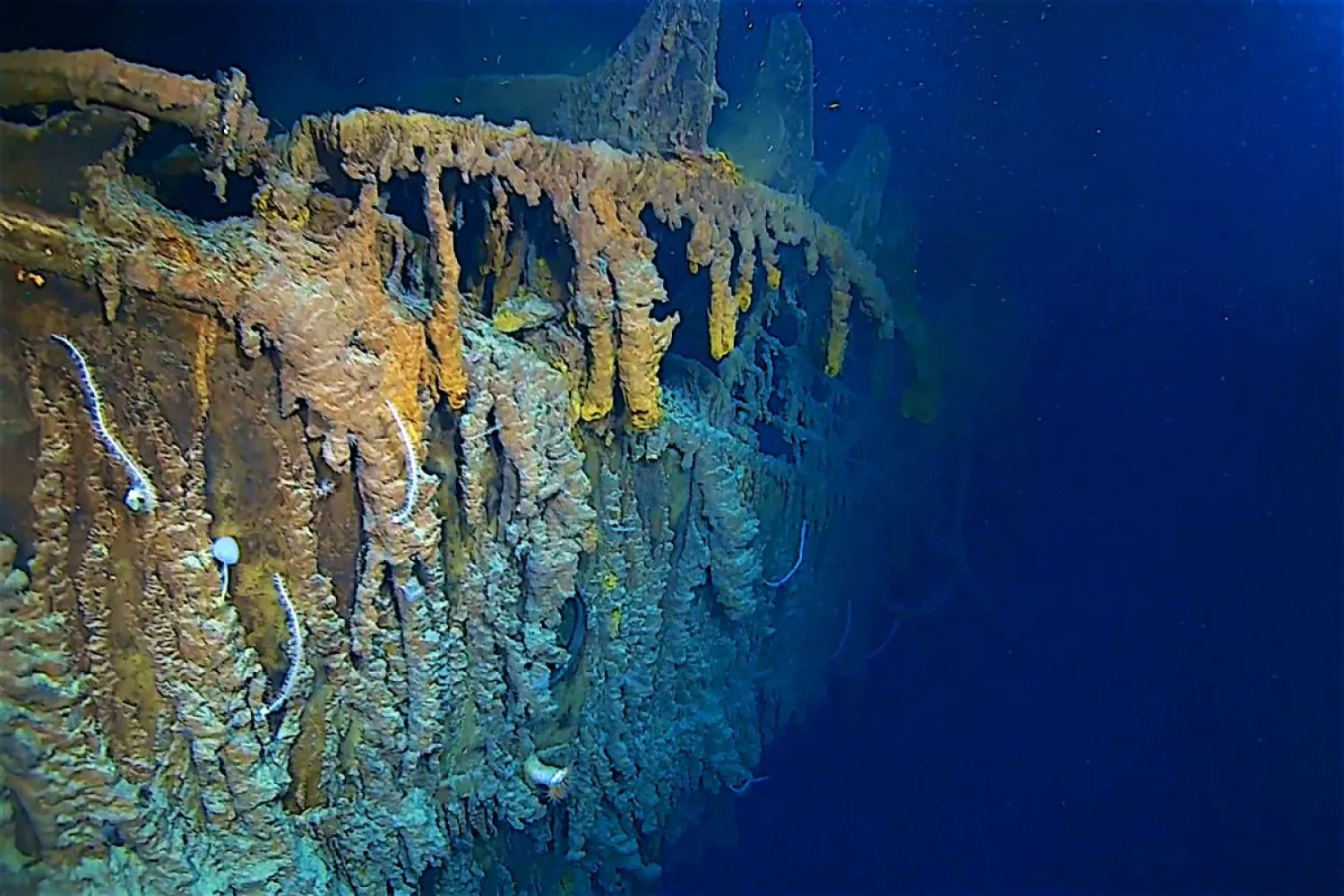
This August 2019 photo courtesy of Atlantic Productions shows the latest image of the side of RMS Titanic which rests 12,500 feet (3,810 meters) below the Atlantic Ocean, and 370 miles (595kms) south of Newfoundland, Canada. (HO / Atlantic Productions / AFP)
TT

US-British Treaty to Protect Titanic's Wreck

This August 2019 photo courtesy of Atlantic Productions shows the latest image of the side of RMS Titanic which rests 12,500 feet (3,810 meters) below the Atlantic Ocean, and 370 miles (595kms) south of Newfoundland, Canada. (HO / Atlantic Productions / AFP)

For the first time ever, the wreck of Titanic will be protected by an agreement that will restrict the work of discovery missions.

The treaty signed by the US and the UK has the power to grant or deny licenses to enter the ship and remove items found its body.

The UK Maritime Minister, Nusrat Ghani, said the agreement would ensure the site was "treated with the sensitivity and respect owed to the final resting place of more than 1,500 lives".

The plans set for the recovery of Titanic's wreck include the removal of a roof on the ship to retrieve items including the wireless system used to make the ship's final distress signals.

The US Company RMS Titanic announced it planned to use underwater robots to remove a roof on the ship so it could retrieve items including a Marconi wireless system.

The Daily Telegraph wrote that "in the few coming years, the roof is expected to collapse, which will bury the wreck forever and destroy the oldest radio in the world".

The luxury boat, which sank on April 15, 1912, after striking an iceberg, rests at over 350 miles from Canada's Newfoundland Coasts. The wreck, which sank in two pieces, has long been deteriorating due to erosion, biological activity, and deep ocean currents. However, the various expeditions that attempted to reach the boat, including those led by director James Cameron, are believed to have damaged the wreck.

The wreck has previously been given a basic level of protection by UNESCO. But, its sinking site in the international waters had formerly deprived it from any explicit protection legislations. The new treaty will provide a full protection of the famous boat.

The United Kingdom signed the treaty in 2003, but it has only come into force after its ratification by US Secretary of State Mike Pompeo in November last year.



Meet the Baby Koala Hiding in Its Mom’s Pouch at a Florida Zoo’s New Outback Habitat

This photo provided by the Palm Beach Zoo Conservation Society Clearance shows a koala named Ellin and her newborn joey in a habitat at the Palm Beach Zoo Conservation Society in West Palm Beach, Fla., on Saturday, April 18, 2026. (John Towey/Palm Beach Zoo Conservation Society via AP)
TT

Meet the Baby Koala Hiding in Its Mom’s Pouch at a Florida Zoo’s New Outback Habitat

This photo provided by the Palm Beach Zoo Conservation Society Clearance shows a koala named Ellin and her newborn joey in a habitat at the Palm Beach Zoo Conservation Society in West Palm Beach, Fla., on Saturday, April 18, 2026. (John Towey/Palm Beach Zoo Conservation Society via AP)

A zoo in Florida has two reasons to celebrate — the first birth of a koala and a newly renovated habitat for the cuddly creatures is opening to the public on Saturday.

“For the zoo and for us here, it’s the very big deal,” said Amarylis Celestina, who oversees carnivores and koalas at the Palm Beach Zoo & Conservation Society in West Palm Beach, Florida. "We are trying the best that we can to help with a lot of the genetic diversity within the population that we have here in the United States. So that’s why it’s important that we do have a joey and that we were successful this year.”

The joey, born to Ellin and Sydney last fall, remains in its mother's pouch and has just recently started to become visible to zoo officials.

They continue to monitor Ellin's weight, and are providing extra food as she cares for the baby.

Meanwhile, the koala population is enjoying a renovated habitat, which includes more greenery, new perching for exercising, and solar tubes to bring in more natural light.

The changes bring a bit of the Australian outback to the zoo for koalas, which are an endangered species. They are able to move between their climate-controlled indoor exhibit and the expanded outdoor area.

“This new habitat is a milestone for our koalas,” Margo McKnight, the zoo's CEO and president said in a news release. “The deliberate design supports the voluntary, cooperative care our zoologists and koalas have developed together.”

Koalas in the US are on loan from the Australian federal government to help with conservation practices.

Koalas are generally peaceful, have a calm nature and enjoy a “slow” lifestyle. They like to climb and hop between the trees in the habitat.

The renovations are designed to help koalas express their natural behaviors, zoo officials said.


Melania Trump Is Growing the White House Honey Program with a New Beehive

 First lady Melania Trump smiles during the 113th Annual First Lady's Luncheon, Thursday, April 23, 2026, in Washington. (AP)
First lady Melania Trump smiles during the 113th Annual First Lady's Luncheon, Thursday, April 23, 2026, in Washington. (AP)
TT

Melania Trump Is Growing the White House Honey Program with a New Beehive

 First lady Melania Trump smiles during the 113th Annual First Lady's Luncheon, Thursday, April 23, 2026, in Washington. (AP)
First lady Melania Trump smiles during the 113th Annual First Lady's Luncheon, Thursday, April 23, 2026, in Washington. (AP)

What's all the buzz about?

Melania Trump on Friday announced that she is expanding the White House honey program by adding a beehive in the shape of the White House to two other beehives that have been on the south grounds since 2009.

The existing hives can swell to about 70,000 bees during peak summer months and produce 200 to 225 pounds of honey in a year, the White House said. The new hive could increase honey production by about 30 pounds, according to the White House.

The White House uses the clover honey to prepare meals, as official gifts from the president and first lady, and in donations to food kitchens.

The bees help pollinate a nearby produce garden that then-first lady Michelle Obama started in 2009 and a nearby flower cutting garden, along with vegetation on the National Mall.

The beekeeping program began in 2009 after a White House carpenter started beekeeping as a hobby on the complex.

The new hive was funded through the Trust for the National Mall, the White House said.

The hive and the base were designed by White House residence staff and hand-made by a Virginia artisan.


AlUla Manara Team Hosts Lyrid Meteor Shower Observation

The event utilized AlUla’s exceptionally clear skies and low light pollution - SPA
TT

AlUla Manara Team Hosts Lyrid Meteor Shower Observation

The event utilized AlUla’s exceptionally clear skies and low light pollution - SPA

AlUla Manara team hosted an educational astronomy evening yesterday near the iconic Arch Rock, aimed at promoting astrotourism and scientific awareness. The event utilized AlUla’s exceptionally clear skies and low light pollution to provide residents and visitors with an immersive celestial experience, SPA reported.

The evening featured the Lyrid meteor shower, an annual phenomenon caused by debris from Comet Thatcher entering Earth's atmosphere. Under expert guidance, attendees observed the shower and used advanced telescopes to explore the cosmos.

The program included interactive scientific discussions on the historical role of astronomy in navigation and timekeeping, as well as its contributions to modern science.

This initiative is part of AlUla’s strategic effort to become a premier global destination for astrotourism. By blending education with entertainment, AlUla Manara continues to showcase the governorate’s unique natural landscape and foster a deeper connection between the community and the universe.