


Syria's Assad Goes After Cousin Makhlouf

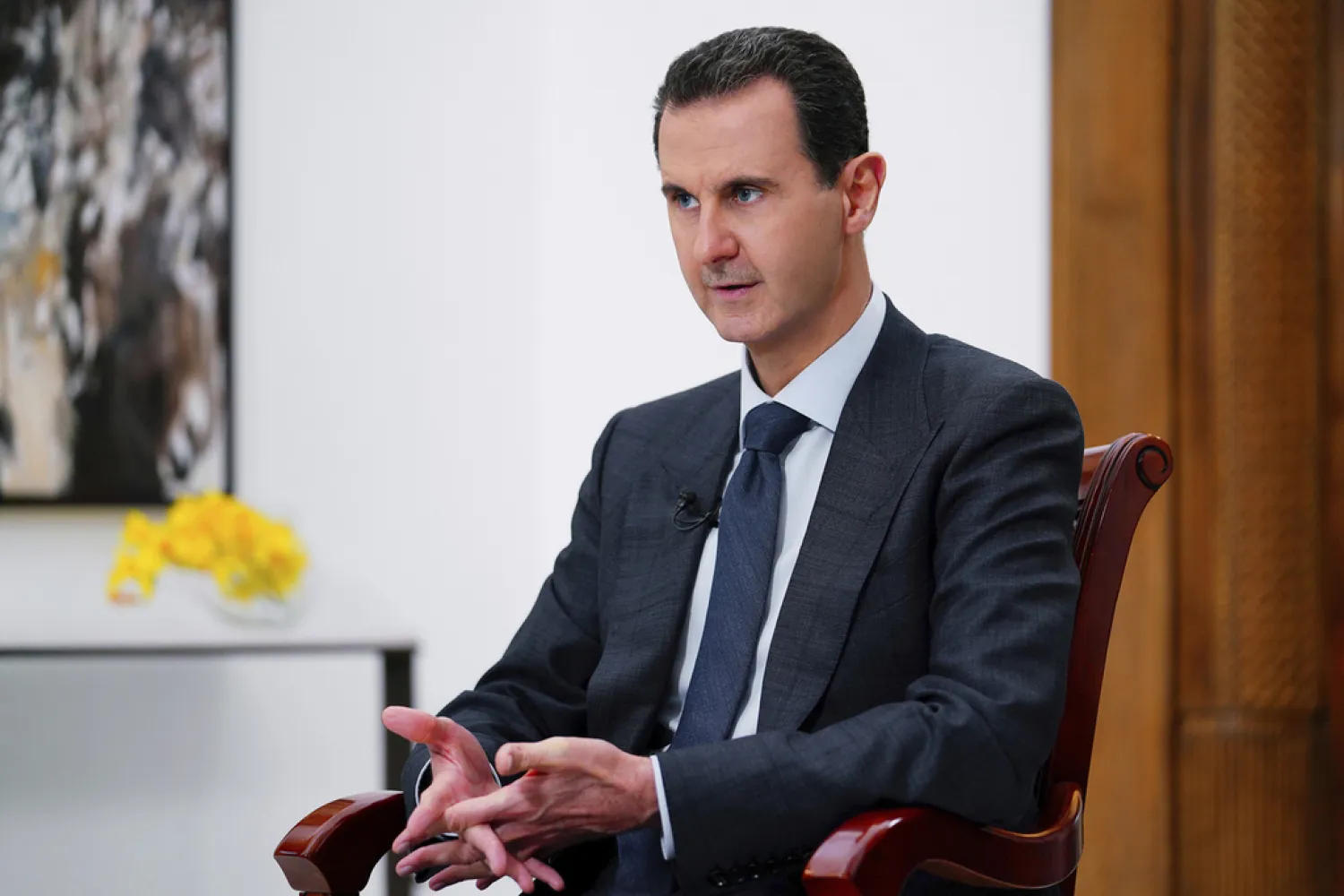
In this file photo released Monday Nov. 9, 2019 by the Syrian official news agency SANA, Syrian President Bashar Assad speaks in Damascus, Syria. (SANA via AP,File)
TT

Syria's Assad Goes After Cousin Makhlouf

In this file photo released Monday Nov. 9, 2019 by the Syrian official news agency SANA, Syrian President Bashar Assad speaks in Damascus, Syria. (SANA via AP,File)

On a summer day last year, presidential guards drove out of the charity organization founded by Syria´s wealthiest businessman and a close cousin of President Bashar Assad, carting away boxes of documents and computers. At the same time, the charity´s director was being questioned at the palace on suspicion of corruption.

The confiscated data included names of thousands of militia fighters who have supported the government in the 9-year-old civil war, including salaries they received from Al-Bustan, the charity group founded by Rami Makhlouf.

The incident last August was the opening salvo in a crackdown on Makhlouf´s power, signaling the beginning of the end of his role as the Assad family´s top financier.

The unprecedented crackdown burst into the public with a series of Facebook videos Makhlouf posted contesting the measures. It revealed a new fragility of the embattled president - and gave a rare glimpse into the intrigues of an opaque inner circle involving a powerful first lady and business rivalries.

Assad, who marks 20 years in power this month, has survived nearly a decade of war with the backing of Russia and Iran and a loyal class of businessmen. A number of those businessmen helped protect the state and economic interests by also forming their own militias.

Now the war-ravaged country faces a new level of hardship.

The Syrian pound has fallen to 1,800 to the dollar, from 50 before the war. Prices have soared, and electricity and fuel shortages are recurrent. More than 80% of the population lives in poverty. Once an oil exporter, Syria now lives on a credit line from Iran, which faces its own economic troubles.

Sanctions in place before the war mean Syria can hardly export anything, and new US sanctions threaten to further choke the country.

With the crackdown, Assad seems set on bringing the economy more firmly under his control and bolstering the state´s empty coffers.

"Rami´s potential demise is mostly a reflection of a change at the helm of the regime" - in players, not policy, said Jihad Yazigi, editor-in-chief of the Syria Report.

New actors are competing with traditional powers within the family over the shrinking resources, he said.

For instance, first lady Asmaa Assad has increasingly sought to centralize all charity work under her aegis. She heads the Syria Trust for Development, where most foreign aid for post-war reconstruction is channeled.

The Makhloufs have been the Assad family´s longtime partners. Makhlouf´s father, Mohammad, was the brother-in-law of Assad´s father Hafez and a mentor to the younger Assad. Notably, he too now appears to have been sidelined.

Rami Makhlouf rose alongside Bashar Assad, who succeeded his father in 2000. Benefiting economic liberalization, Makhlouf became an overwhelming figure in Syrian business, most importantly controlling the largest telecommunications company, Syriatel.

His name became synonymous with Assad´s power. Early in the conflict, protesters torched his companies - and Makhlouf moved out of the public eye.

Signs of cracks emerged last year. Last spring, a paper owned by Makhlouf criticized a rival businessman, Samer Foz, considered close to the first lady.

Soon after, an audit was launched against Makhlouf´s Al-Bustan charity - with the raid on its offices and interrogation of its staff, details of which were reported in Arab media and confirmed by an emigre Syrian businessman, Firas Tlass.

Tlass said the crackdown was driven by the first lady.

A career investment banker, Asmaa Assad is trying to secure her three children´s future, fearing consolidation of the family wealth in the hands of Makhlouf and his sons, who live in Dubai, said Tlass. He estimates Makhlouf´s fortune at $13 billion.

The audit was the final rupture between Makhlouf and Assad, said Tlass.

After it, Al-Bustan´s director and accountant were replaced by figures close to the palace, and the affiliated militia was integrated into the armed forces. This year, Makhlouf's assets were temporarily seized and he was banned from travel.

Makhlouf, who almost never makes public comments, responded with his Facebook videos, which shocked the country, turning the family dispute into a serialized drama.

He appeared to be banking on support from the Alawite community, from which he and the president hail, and which make the bulk of the pro-government militias he has long supported.

"It is the weakness of the regime that made it possible for such divisions to be aired in public," said Tlass, who is the son of a former defense minister and lives in exile but keeps ties with Syria.

By year´s end, the government openly named Makhlouf and other businessmen or officials in a campaign against corruption. State media, which once called them the "nationalist business class," now branded them "war profiteers." Officials spoke of billions of Syrian pounds embezzled. The government said Makhlouf owed it $180 million.

Assets were temporarily seized from Ayman Jaber, a steel and oil trader married to an Assad cousin. Also hit was Hossam Qaterji, a powerful oil trader, who facilitated oil smuggling from eastern Syria and has a militia. The first lady´s uncle, Tarif al-Akhras, a food trader, was also named.

Reports suggest most of those businessmen settled with the government and paid their dues.

Meanwhile, Russia, keen on translating its military role in Syria into economic and political gains, appears to be losing patience with the chaotic, corruption-ridden state.

So it would welcome Damascus moves to tighten control on the economy, said Vitaly Naumkin, a prominent Moscow-based Middle East expert.

Kirill Semyonov, a Syria expert with the Russian International Affairs Council, described the crackdown as a re-distribution of assets among the Assad entourage´s "military-criminal economy."

"Makhlouf has become a weak link in the chain," he told Russia´s leading business daily Kommersant. "Assad needs funds or his regime will crumble, so why not take the money from someone who can pay."


Rescue Teams Search for Survivors in Building Collapse that Killed at Least 2 in Northern Lebanon

A Lebanese flag is pictured, in the aftermath of a massive explosion, in Beirut's damaged port area, Lebanon August 17, 2020. REUTERS/Hannah McKay
TT

Rescue Teams Search for Survivors in Building Collapse that Killed at Least 2 in Northern Lebanon

A Lebanese flag is pictured, in the aftermath of a massive explosion, in Beirut's damaged port area, Lebanon August 17, 2020. REUTERS/Hannah McKay

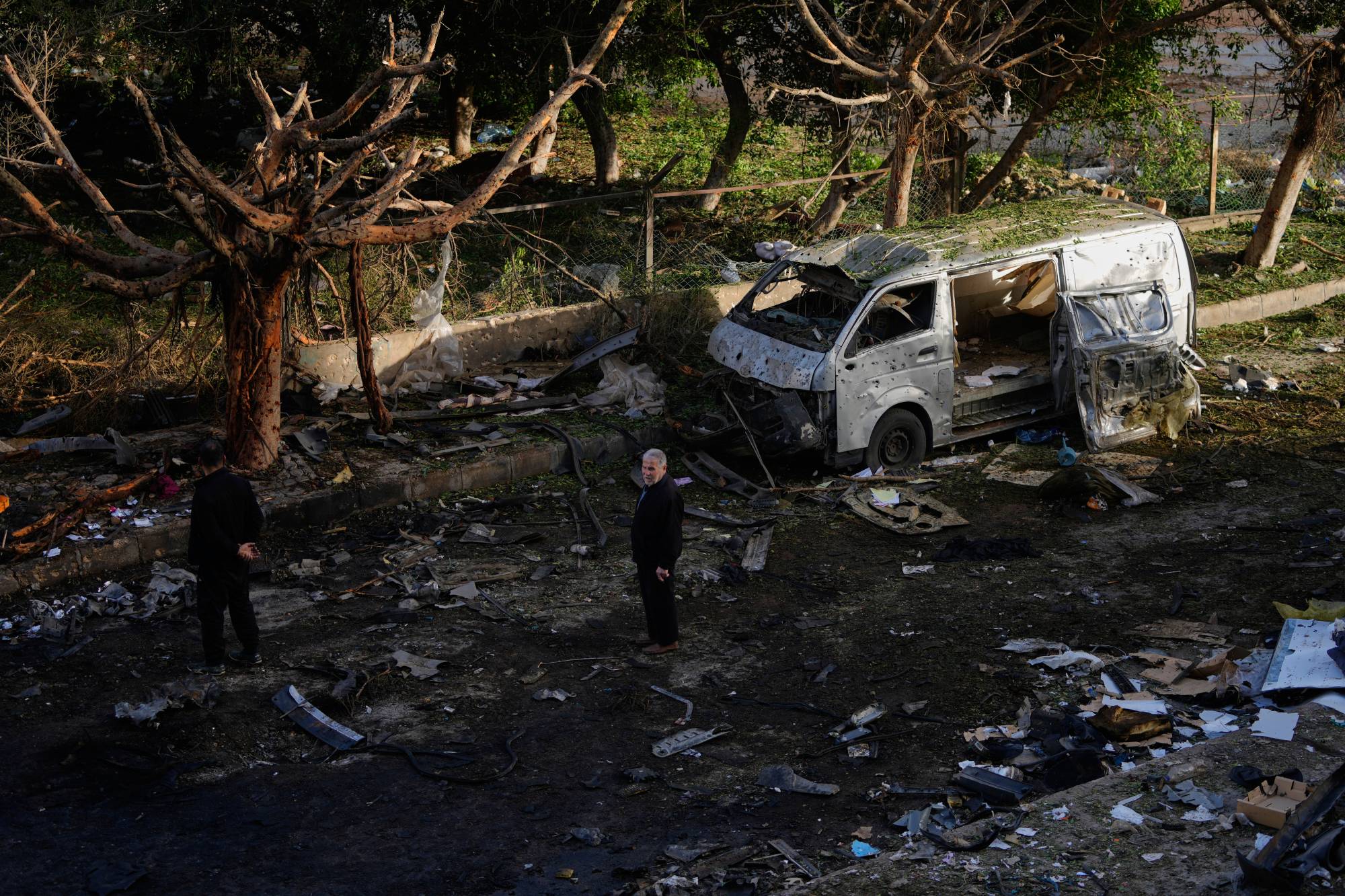
At least two people were killed and four rescued from the rubble of a multistory apartment building that collapsed Sunday in the city of Tripoli in northern Lebanon, state media reported.

Rescue teams were continuing to dig through the rubble. It was not immediately clear how many people were in the building when it fell.

The bodies pulled out were of a child and a woman, the state-run National News Agency reported.

Dozens of people crowded around the site of the crater left by the collapsed building, with some shooting in the air.

The building was in the neighborhood of Bab Tabbaneh, one of the poorest areas in Lebanon’s second largest city, where residents have long complained of government neglect and shoddy infrastructure. Building collapses are not uncommon in Tripoli due to poor building standards, according to The AP news.

Lebanon’s Health Ministry announced that those injured in the collapse would receive treatment at the state’s expense.

The national syndicate for property owners in a statement called the collapse the result of “blatant negligence and shortcomings of the Lebanese state toward the safety of citizens and their housing security,” and said it is “not an isolated incident.”

The syndicate called for the government to launch a comprehensive national survey of buildings at risk of collapse.


Israel to Take More West Bank Powers and Relax Settler Land Buys

A view of Israeli settlement of Maale Adumim, in the West Bank, Sunday, June 18, 2023. (AP)
TT

Israel to Take More West Bank Powers and Relax Settler Land Buys

A view of Israeli settlement of Maale Adumim, in the West Bank, Sunday, June 18, 2023. (AP)

Israel's security cabinet approved a series of steps on Sunday that would make it easier for settlers in the occupied West Bank to buy land while granting Israeli authorities more enforcement powers over Palestinians, Israeli media reported.

The West Bank is among the territories that the Palestinians seek for a future independent state. Much of it is under Israeli military control, with limited Palestinian self-rule in some areas run by the Western-backed Palestinian Authority (PA).

Citing statements by Finance Minister Bezalel Smotrich and Defense Minister Israel Katz, Israeli news sites Ynet and Haaretz said the measures included scrapping decades-old regulations that prevent Jewish private citizens buying land in the West Bank, The AP news reported.

They were also reported to include allowing Israeli authorities to administer some religious sites, and expand supervision and enforcement in areas under PA administration in matters of environmental hazards, water offences and damage to archaeological sites.

Palestinian President Mahmoud Abbas said the new measures were dangerous, illegal and tantamount to de-facto annexation.

The Israeli ministers did not immediately respond to requests for comment.

The new measures come three days before Prime Minister Benjamin Netanyahu is scheduled to meet in Washington with US President Donald Trump.

Trump has ruled out Israeli annexation of the West Bank but his administration has not sought to curb Israel's accelerated settlement building, which the Palestinians say denies them a potential state by eating away at its territory.

Netanyahu, who is facing an election later this year, deems the establishment of any Palestinian state a security threat.

His ruling coalition includes many pro-settler members who want Israel to annex the West Bank, land captured in the 1967 Middle East war to which Israel cites biblical and historical ties.

The United Nations' highest court said in a non-binding advisory opinion in 2024 that Israel's occupation of Palestinian territories and settlements there is illegal and should be ended as soon as possible. Israel disputes this view.


Arab League Condemns Attack on Aid Convoys in Sudan

A general view shows the opening session of the meeting of Arab foreign ministers at the Arab League Headquarters (Reuters)
TT

Arab League Condemns Attack on Aid Convoys in Sudan

A general view shows the opening session of the meeting of Arab foreign ministers at the Arab League Headquarters (Reuters)

Arab League Secretary-General Ahmed Aboul Gheit strongly condemned the attack by the Rapid Support Forces on humanitarian aid convoys and relief workers in North Kordofan State, Sudan.

In a statement reported by SPA, secretary-general's spokesperson Jamal Rushdi quoted Aboul Gheit as saying the attack constitutes a war crime under international humanitarian law, which prohibits the deliberate targeting of civilians and depriving them of their means of survival.

Aboul Gheit stressed the need to hold those responsible accountable, end impunity, and ensure the full protection of civilians, humanitarian workers, and relief facilities in Sudan.
