Suicide Bomber Revives Fears of Terrorist Sleeper Cells in Lebanon

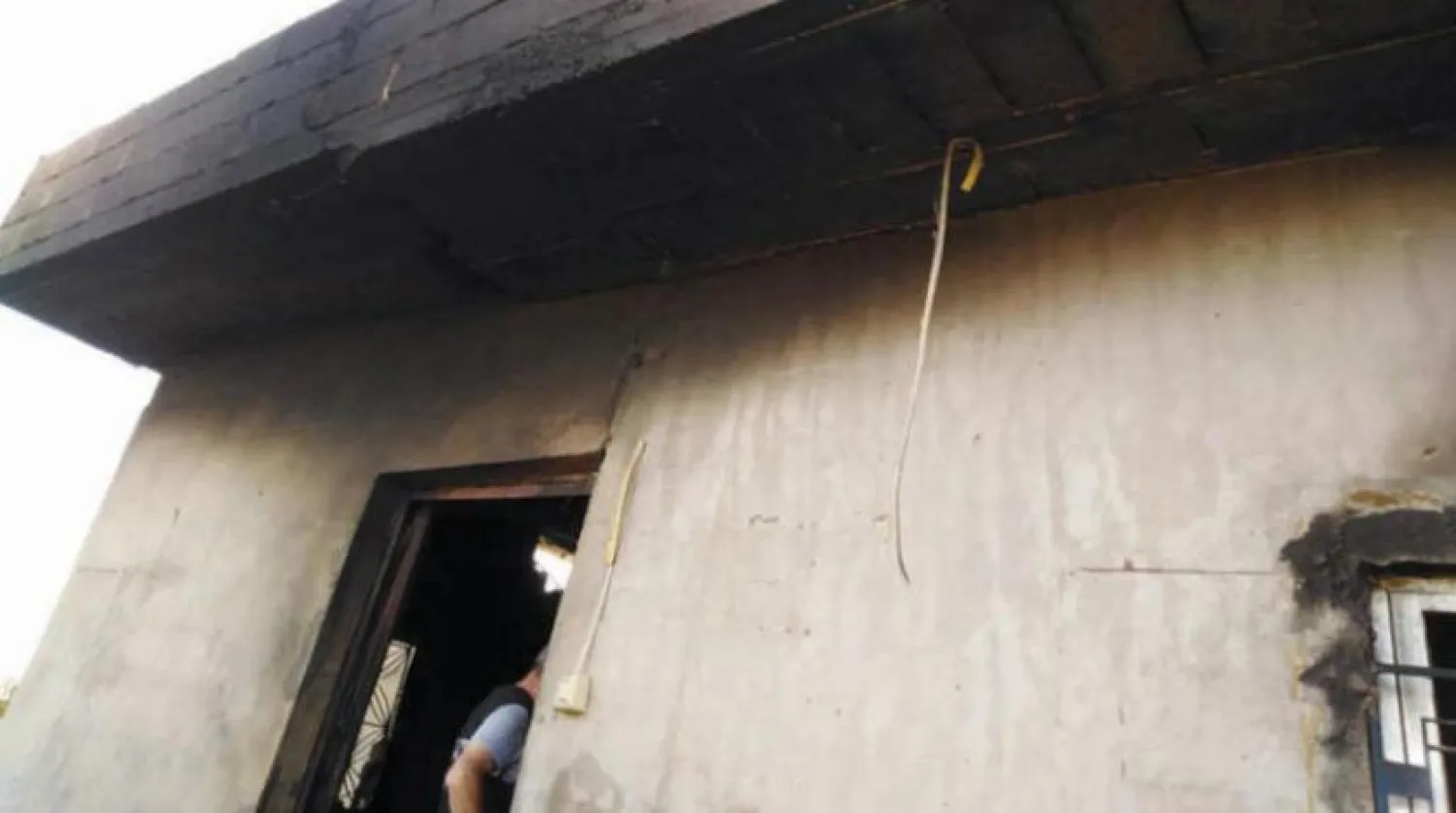
The apartment in a northern Lebanese town, where a suspect blew himself up to prevent the ISF from arresting him (NNA).
TT

Suicide Bomber Revives Fears of Terrorist Sleeper Cells in Lebanon

The apartment in a northern Lebanese town, where a suspect blew himself up to prevent the ISF from arresting him (NNA).

A suicide bombing carried out by a suspect in a security incident that killed three people in the town of Kaftoun in northern Lebanon last week renewed fears of sleeper cells belonging to extremist organizations that could exploit the tense situation in the country to revive their activities.

Those fears, however, are rejected by security sources, who stressed that the “success achieved by the Lebanese authorities in terms of proactive security is still effective and possesses the full ability to maintain stability.”

On the night of Aug. 21, four people driving a car without a license plate opened fire at three members of the municipal guard in the northern town of Kaftoun, killing them instantly, before fleeing to an unknown destination.

Subsequently, the joint security force in the Beddawi Palestinian refugee in northern Lebanon handed over one of the wanted people to the Lebanese authorities at dawn on Sunday.

On Monday, a force from the Intelligence Bureau of the Internal Security Forces raided an apartment occupied by displaced Syrians in an area in the North, with the aim to arrest a suspect in the crime. But the wanted man detonated himself with explosives before the forces could arrest him.

The National News Agency (NNA) reported that the ISF cordoned off the area and confiscated two laptop computers from the apartment. It added that a number of people were arrested during raids in several refugee camps across the North.

Judicial sources told Asharq Al-Awsat that the wanted person who blew himself up was a 40-year-old Syrian, who had previously served a prison sentence on charges of belonging to ISIS.

“The other suspect, who was handed over to the Lebanese authorities at dawn on Sunday, also had extremist tendencies,” according to the sources.

They added that the investigations into the Kaftoun crime showed the presence of two other vehicles that accompanied the suspects’ car. One of those cars transported the perpetrators to a safe place. The sources asserted that they “were planning to carry out a terrorist act before they clashed with the municipal guards, who prevented them from executing their operation.”

Head of the Middle East Center for Studies, Dr. Hisham Jaber, said sleeper cells were usually “present, and they wake up when they find opportunity or a security vacuum.”

But he asserted that these factors “are not available in Lebanon, due to the constant vigilance of the services.”

Jaber, a retired Lebanese Army brigadier general, noted that Lebanon “has succeeded since 2014 in proactive security,” referring to the concerted efforts by “the security services to exchange information in an integrated manner.”


Egyptian Foreign Ministry to Asharq Al-Awsat: No Obstacles Hindering Dutch Embassy Operations

Egyptian Foreign Minister Badr Abdelatty meets his Dutch counterpart, Tom Berendsen, on the sidelines of the UN General Assembly last September (Egyptian Foreign Ministry)
TT

Egyptian Foreign Ministry to Asharq Al-Awsat: No Obstacles Hindering Dutch Embassy Operations

Egyptian Foreign Minister Badr Abdelatty meets his Dutch counterpart, Tom Berendsen, on the sidelines of the UN General Assembly last September (Egyptian Foreign Ministry)

Egypt has seen no obstacles to the Dutch embassy's operations in Cairo, a Foreign Ministry spokesperson said on Friday, after the mission closed to the public until further notice.

“Temporary measures by diplomatic missions to suspend public access are routine and do not signal any disruption to embassy operations,” ministry spokesperson Ambassador Nader Zaki told Asharq Al-Awsat.

“We have seen nothing hindering the Dutch embassy's work,” he said.

Zaki said Egypt was fully committed to protecting foreign embassies and diplomatic missions on its territory in line with international agreements governing diplomatic relations.

He pointed to a phone call about a week earlier between Egyptian Foreign Minister Badr Abdelatty and his Dutch counterpart, Tom Berendsen, in which the two discussed embassy security following incidents involving Egypt's mission in the Netherlands.

Zaki said diplomatic missions in Cairo enjoyed greater security and protection than those in many other capitals and were free to operate without interference, “unlike the treatment of some of our embassies.”

The Dutch embassy announced on Thursday that its Cairo premises would remain closed to the public until further notice as a precautionary measure.

In a Facebook statement, the embassy said the Dutch Foreign Ministry had ordered the closure “in light of demonstrations taking place in front of the (embassy) building.”

People with scheduled appointments would be contacted or notified as soon as possible about rescheduling, it said, adding that the “temporary closure would not affect the services provided by VFS Global in Cairo.”

The move followed diplomatic exchanges over the protection of Egypt's embassy in The Hague.

On Oct. 13, Egypt's Foreign Ministry said Abdelatty had discussed with Berendsen the need to safeguard the Egyptian mission under the 1961 Vienna Convention on Diplomatic Relations and the principle of reciprocity.

The call came days after videos circulated on social media showing an opponent of the Egyptian authorities displaying offensive placards targeting them in the presence of Dutch police officers.

The ministers also discussed the detention of an Egyptian citizen in the Netherlands. Abdelatty sought details of the incident and called for his swift release, the ministry said.

About a week ago, dozens of Egyptians protested outside the Dutch embassy in Cairo, demanding the release of Ahmed Nasser, deputy chairman of the unofficial Union of Egyptian Youth Abroad, following his detention in the Netherlands.

Nasser is a prominent opponent of displaying offensive placards outside Egyptian embassies abroad.


Yemeni, Int’l Efforts Underway to Open Route into Besieged Taiz Within Days

Government efforts to open a route for humanitarian aid deliveries in Taiz (local media)
TT

Yemeni, Int’l Efforts Underway to Open Route into Besieged Taiz Within Days

Government efforts to open a route for humanitarian aid deliveries in Taiz (local media)

Yemeni government officials are working with local authorities and humanitarian organizations to open a road through one of the main entrances to the city of Taiz to deliver urgently needed relief supplies to the province, which is under siege by Houthi militias.

The operation is expected to take place in the coming days.

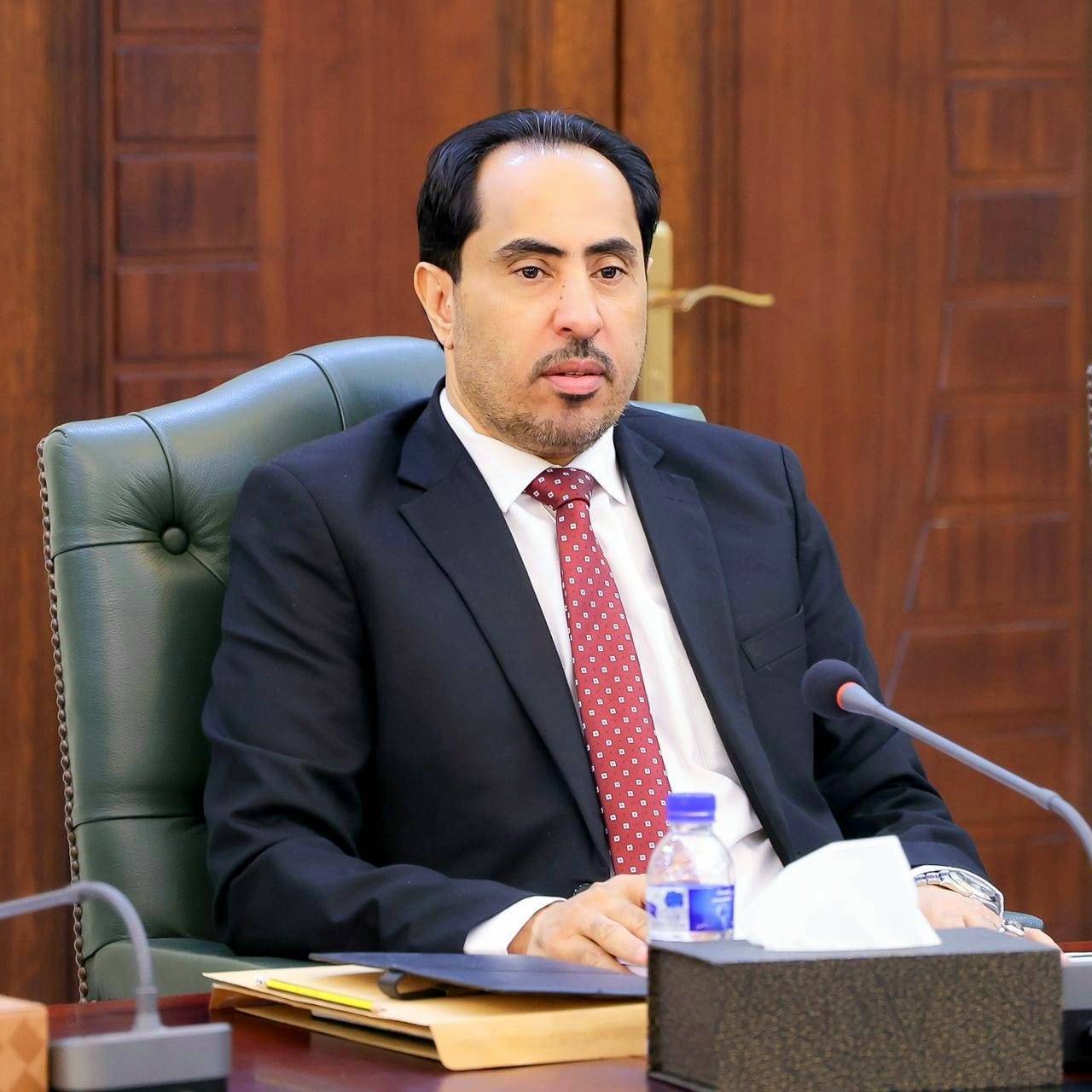
Nayef al-Bakri, Yemen's Minister of Youth and Sports and head of the Committee for Popular Mobilization and Government Support for the Armed Forces, told Asharq Al-Awsat in a telephone interview that the committee was making every effort, in coordination with international partners, to assist residents trapped in Taiz.

He said a relief convoy being prepared would carry fuel, medicines and other essential supplies, while additional convoys would be dispatched to provinces and areas affected by Houthi attacks.

Bakri said what troubled the militias most was the exceptional resilience and loyalty to their country demonstrated by the people of Taiz.

He praised the city's men, young people and women for their sacrifices in the face of the siege and Houthi attacks, saying the world had witnessed powerful images of women in Taiz, including one carrying the body of her son killed in the fighting and another purchasing weapons for the resistance.

He said these images reflected the city's unwavering loyalty and determination to defend religion and country.

Asked how the aid would reach Taiz, Bakri said the committee was in constant contact with the provincial governor and was exploring routes and access points to deliver available supplies, including fuel, medicines and other humanitarian necessities.

He said discussions were also underway with the International Committee of the Red Cross (ICRC) about its potential role in facilitating the delivery of aid, adding that efforts to secure access were continuing.

Bakri said Hadramout province would send aid donated by its residents to Taiz. The committee had also sent letters to the King Salman Humanitarian Aid and Relief Center (KSrelief), requesting additional assistance for the province.

He noted that the center was already providing extensive programs and continued support across Yemen's provinces.

Bakri said Yemen was witnessing a broad community mobilization to support people affected by the war, particularly as more than 200,000 families had been displaced.

He praised the solidarity shown among Yemenis across different provinces in sheltering displaced families and meeting their needs.

He said the government and local authorities were fulfilling their responsibilities toward displaced families alongside community-led initiatives and humanitarian efforts undertaken by the committee.

Nayef al-Bakri, Yemen's Minister of Youth and Sports and head of the Committee for Popular Mobilization and Government Support for the Armed Forces

On assistance to other provinces, Bakri said the committee, in cooperation with local authorities in Aden, had carried out a relief campaign for residents of Al-Subaiha, Al-Mudaraba and Ras al-Ara, particularly families whose areas had come under missile fire and Houthi attacks.

He said a relief convoy had been dispatched two days earlier, while preparations were underway for additional convoys in coordination with the governor of Lahj to support people affected in Al-Mudaraba district and surrounding areas.

Bakri said relief efforts also extended to Al-Dhale province, where the committee was coordinating with the governor to provide assistance to families affected by the fighting in Murais, Qataba and frontline areas.

He said the committee's work had both community and humanitarian dimensions, focusing on supporting families and provinces suffering from the consequences of the war and Houthi attacks.

"The committee is expanding its relief operations in the coming days to include districts along the western coast, particularly Mawza, Al-Waziya and Mokha, which are experiencing large waves of displacement as a result of military operations and Houthi attacks," Bakri said.

He added that the assistance would also reach displaced people's camps in Aden and Lahj provinces, in coordination with international organizations and government agencies responsible for displaced populations.

"In Shabwa province, the committee is arranging relief convoys to support districts witnessing military confrontations," Bakri said.

He said preparations were also underway to organize and dispatch a convoy from Al-Mahra province to Al-Jawf, while several provinces continued providing support to the battlefronts in Marib.

Bakri stressed that Yemenis from all walks of life, including displaced people, were participating in the “Dawn of Yemen” battle and joining various battlefronts.

Turning to Saudi support, Bakri said the Kingdom played an important role in assisting Yemen as a whole.

He praised the efforts of the joint forces and KSrelief in delivering aid to people affected by the conflict.

He also emphasized the importance of assistance delivered to Aden with the support of the joint forces and KSrelief, saying it had helped families affected by the fighting and eased the consequences of the war.


Terrorist Attack on Church in Jordan's Karak Leaves Dozens Dead, Wounded

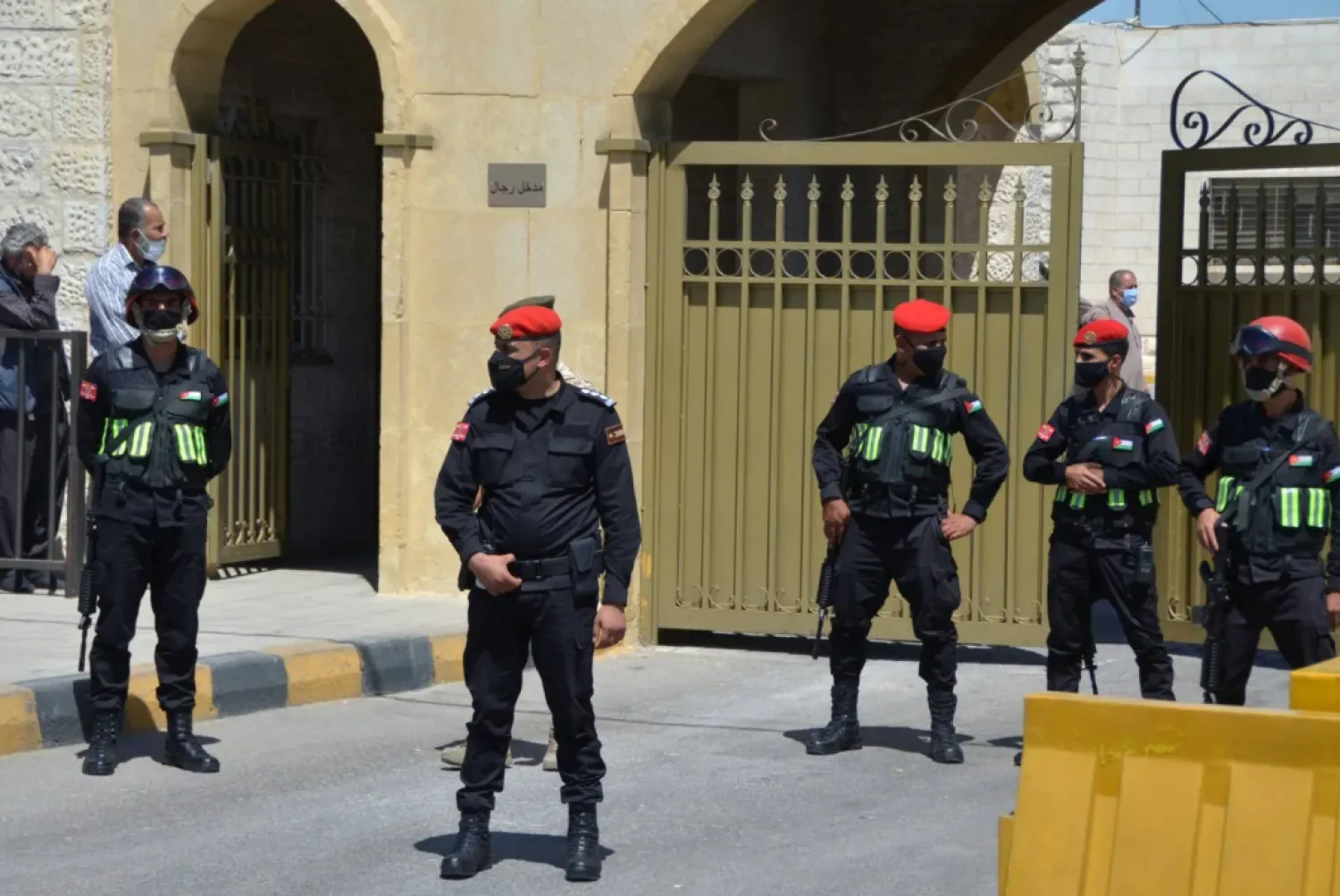
Jordanian security personnel in the capital, Amman (Reuters/File Photo)
TT

Terrorist Attack on Church in Jordan's Karak Leaves Dozens Dead, Wounded

Jordanian security personnel in the capital, Amman (Reuters/File Photo)

Jordan's King Abdullah II vowed to impose the "harshest penalties" on those responsible for an attack on a church in Karak, southern Jordan, that left dozens of people dead and wounded.

The king visited people injured in the "terrorist attack" and checked on their condition, according to the Jordan News Agency.

The Jordanian monarch stressed the need to confront the perpetrators of the terrorist attack in Karak with the harshest penalties, expressing confidence that those who believed their treacherous bullets could divide Jordanians would see their efforts fail. He reaffirmed the strength and unity of the Jordanian people.

In a post on X, the king said: "All Jordanians, from the north of the country to the south, share the same land and stand united, and no act of treachery will divide them."

King Abdullah offered condolences to the families of those killed and wished the wounded a speedy recovery.

"Every Jordanian life is precious, and we will deal with an iron fist with anyone who attacks this country," he said.

In Hamoud village in Karak Governorate, about 150 kilometers south of the capital, Amman, two gunmen opened fire indiscriminately with automatic rifles, killing several people and wounding dozens, some critically.

The village is home to the Christian Al Halasa clan, one of the largest Christian clans in the governorate.

Surveillance footage from outside the church, widely circulated online, showed the two gunmen carrying out the attack. A third armed man also appeared in the footage but apparently did not manage to fire his weapon.

Eyewitness Account

An eyewitness described to Asharq Al-Awsat the horrifying scenes experienced by people near the church.

At approximately 2:15 p.m. local time in Amman, two armed men entered and opened fire. Bloodshed quickly engulfed the area, with bodies lying outside the church before the scene of the massacre extended into the church's nave.

One eyewitness, who had been standing at the church entrance, said he initially struggled to comprehend what was happening.

He realized the gravity of the attack only when a bullet missed him and struck his cousin, who was standing beside him, in the chest. His cousin died in his arms.

The witness described being overwhelmed by shock and confusion as his cousin died in his arms while his mother remained inside the church.

Realizing that death surrounded the building, he rushed through gunfire coming from every direction in an attempt to rescue his mother, even if it meant sacrificing his own life.

"The shooting went on for a long time, and no one managed to stop the two gunmen," he said.

The scenes described by the eyewitness were documented in dozens of videos circulated on social media.

The attack was unprecedented in Jordan, targeting members of the Christian community in Karak, a governorate known for its tradition of coexistence between Muslims and Christians.

Who Were the Attackers?

Jordanian Interior Minister Mazin Al Farrayeh subsequently declared that the country was confronting "a terrorist operation carried out by a group of extremists who committed a horrific act."

Public Security Director Maj. Gen. Obaidallah Maaytah later announced that the death toll had risen to seven, with 27 people wounded.

The church had been receiving mourners attending a funeral service for a member of the clan and was crowded with people paying their respects.

The gathering made it easier for the attackers to inflict a large number of casualties among villagers who traditionally come together for such occasions.

Sources told Asharq Al-Awsat that the two attackers, who fled the scene, were residents of Karak Governorate and adherents of extremist takfiri ideology.

They were reportedly aware of the location and timing of the funeral service, indicating that the attack had been premeditated.

The sources confirmed that the identities of the two attackers had been established and that security forces were continuing to search for them and other suspects believed to be involved in a terrorist cell.

They added that entrances and exits to the governorate had been secured to prevent the suspects from escaping.

Maj. Gen. Maaytah confirmed that authorities possessed information about the perpetrators of the terrorist attack but said it was premature to disclose the suspects' names.

He also declined to set a deadline for their arrest.

"We cannot specify a timeframe for concluding the operation because it depends on the nature of the situation," he said.

This is not the first time Karak has experienced a terrorist attack.

Residents still recall the events at Karak Castle in December 2016, when security forces pursued ISIS members who subsequently barricaded themselves inside the historic fortress, where weapons had been concealed.

During that incident, hostages were held inside the castle, and the operation lasted more than 15 hours.

According to the account, 14 people, including security personnel, civilians and a foreign tourist, were killed, while many others near the castle were wounded. All four militants involved in the attack were also killed.