


Saudi Arabia’s Turki al-Faisal Accuses Israel of ‘Hypocrisy’

Saudi Prince Turki al-Faisal
TT

Saudi Arabia’s Turki al-Faisal Accuses Israel of ‘Hypocrisy’

Saudi Prince Turki al-Faisal

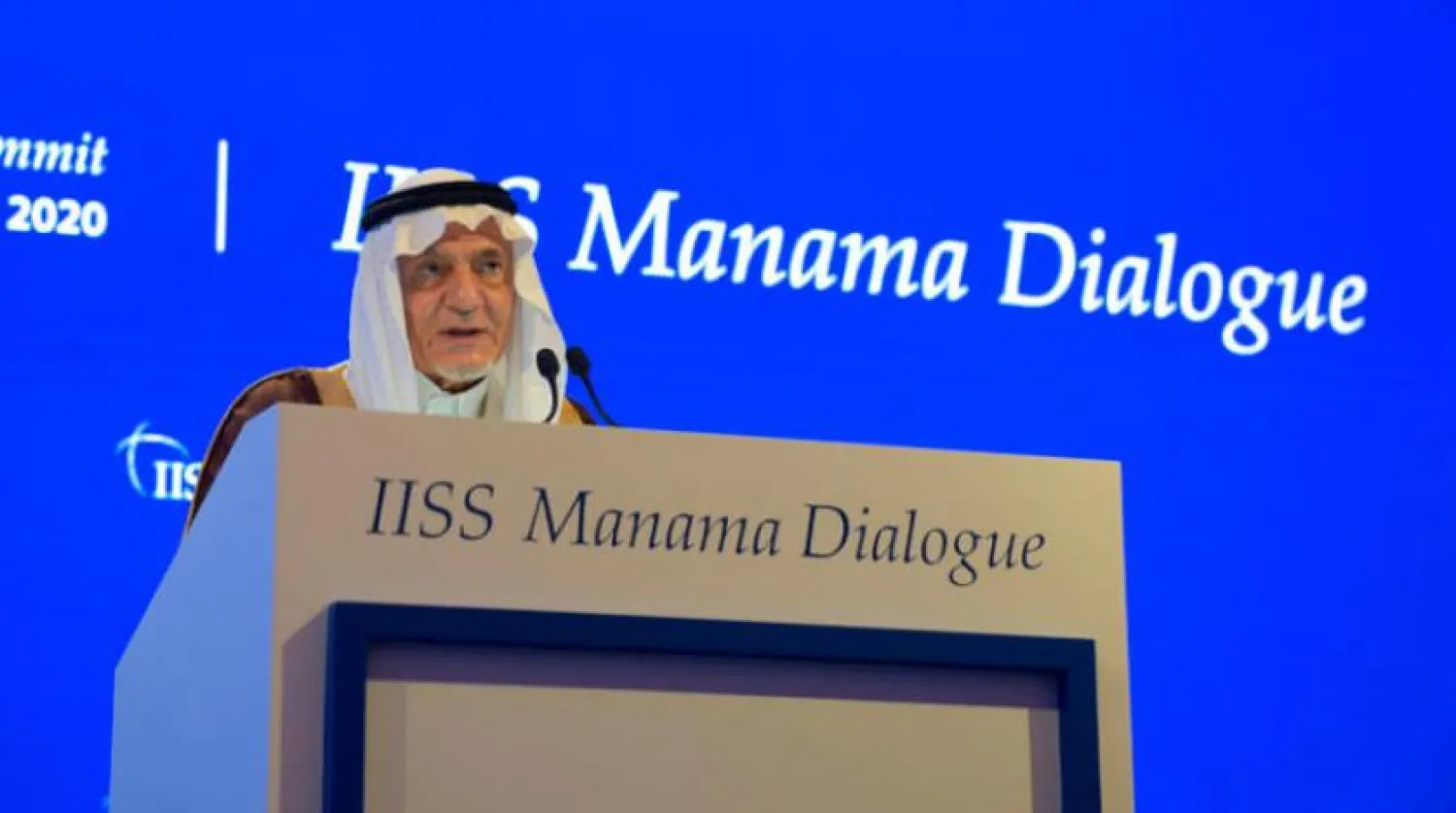
A prominent Saudi prince has harshly criticized Israel during a security summit held in Bahrain’s capital.

Prince Turki al-Faisal, Saudi Arabia’s former intelligence chief, accused Israel of being a hypocrite, pointing to its undeclared arsenal of nuclear weapons.

His remarks were made during the International Institute for Strategic Studies (IISS) Manama Dialogue, which was remotely attended by Israel’s Foreign Minister Gabi Ashkenazi.

Prince Turki opened his remarks by contrasting what he described as Israel’s perception of being “peace-loving upholders of high moral principles” versus what he described as a far-darker Palestinian reality of living under a “Western colonizing” power.

Israel has “incarcerated (Palestinians) in concentration camps under the flimsiest of security accusations,” he stressed.

“They are demolishing homes as they wish and they assassinate whomever they want.”

The Kingdom’s former ambassador to the US and UK reiterated his country’s official position that the solution lies in implementing the Arab Peace Initiative, a 2002 Saudi-sponsored deal that offers Israel full ties with all Arab states in return for Palestinian statehood on territory Israel captured in 1967.

Referring to the Abraham Accords — the normalization agreements Israel signed with the United Arab Emirates and Bahrain — the Saudi royal said, “You cannot treat an open wound with palliatives and painkillers.”

He concluded his speech by calling on Israel to “grab the extended hand of peace and end this tragic charade.”

“Only then, we can get together to face the other colonizing power that boasts about its control of four Arab capitals,” in reference to Iran.

Prince Turki noted that his statements represent his personal opinion, casting aspersions on the peace agreements signed by Gulf States with Israel.

Ashkenazi, for his part, expressed regret for the comments of the Saudi representative.

“I don’t believe that they reflect the spirit and the changes taking place in the Middle East,” he said.

“I rejected his remarks and emphasized that the ‘blame game’ era is over. We are at the dawn of a new era. An era of peace,” he later tweeted.

“The Abraham Accords do not come at the expense of the Palestinians - they are an opportunity. I call on them to change their minds and enter direct negotiations with us without preconditions,” the minister added.

Meanwhile, Saudi Foreign Minister Prince Faisal bin Farhan told AFP on Saturday that the kingdom’s position remained resolute.

“We’ve been quite clear that in order for us to proceed with normalization, we will need to see a settlement of the Palestinian dispute and the formation of a viable state of Palestine along the lines envisioned in the 2002 Arab Peace Initiative,” he noted in an interview in Manama.

Asked whether that effectively ruled out the establishment of ties with Israel any time soon, he said he was “optimistic that there is a path towards a resolution between the Palestinians and Israelis”.



Saudi, Malaysian FMs Discuss Bilateral Ties 

Saudi Minister of Foreign Affairs Prince Faisal bin Farhan bin Abdullah. (EPA file)
TT

Saudi, Malaysian FMs Discuss Bilateral Ties 

Saudi Minister of Foreign Affairs Prince Faisal bin Farhan bin Abdullah. (EPA file)

Saudi Minister of Foreign Affairs Prince Faisal bin Farhan bin Abdullah held telephone talks on Tuesday with his Malaysian counterpart Mohamad Haji Hasan.

They discussed bilateral relations between their countries, the latest developments, and issues of common interest.


Saudi Crown Prince Receives Letter from President of Tanzania

Prince Mohammed bin Salman bin Abdulaziz Al Saud, Saudi Crown Prince and Prime Minister. (SPA)
TT

Saudi Crown Prince Receives Letter from President of Tanzania

Prince Mohammed bin Salman bin Abdulaziz Al Saud, Saudi Crown Prince and Prime Minister. (SPA)

Prince Mohammed bin Salman bin Abdulaziz Al Saud, Saudi Crown Prince and Prime Minister, received on Tuesday a letter from Tanzania’s President Samia Suluhu Hassan on bilateral relations between their countries.

The message was received by Saudi Vice Minister of Foreign Affairs Waleed Elkhereiji during a meeting in Riyadh with Tanzanian Minister of Foreign Affairs and East African Cooperation Mahmoud Thabit Kombo.

During the meeting, the diplomats reviewed relations between their countries and ways to strengthen and develop them in all fields.


Saudi Arabia Condemns Israel’s Approval of New West Bank Settlements 

A general view of the Israeli Amihai settlement in the north of the occupied West Bank on December 14, 2025. (AFP)
TT

Saudi Arabia Condemns Israel’s Approval of New West Bank Settlements 

A general view of the Israeli Amihai settlement in the north of the occupied West Bank on December 14, 2025. (AFP)

Saudi Arabia condemned on Tuesday Israel’s approval of the construction of 19 settlements in the occupied West Bank in violation of relevant UN resolutions.

A Foreign Ministry statement reiterated the Kingdom’s call on the international community to assume its responsibility to end these violations.

It renewed its unwavering support for the Palestinian people and its continued efforts to establish an independent Palestinian state according to the 1967 borders, with East Jerusalem as its capital, in line with the Arab Peace Initiative and international resolutions.