Arar Border Crossing Expected to Generate $Bln in Revenues for Iraqhttps://english.aawsat.com/home/article/2682226/arar-border-crossing-expected-generate-bln-revenues-iraq
Arar Border Crossing Expected to Generate $Bln in Revenues for Iraq
The Arar border crossing is expected to generate one billion dollars in revenues to Iraq.
The Arar border crossing between Iraq and Saudi Arabia will help revive the Iraqi economy and generate some 1 billion dollars in revenues in 2021, said the crossing’s director.
In press statements on Sunday, Habib Kadhim al-Ali said the crossing was officially open for trade and will also be open for travelers after coronavirus restrictions on international travel are lifted.
“Relevant departments have completed all their requirements for the full operation of the border crossing, at full capacity and around the clock,” Ali explained.
He said that all material entering through the border must be officially authorized, meaning they must have an official import permit. No material is allowed to enter without a license or certificate of origin.
The border crossing will become a “huge institution and provide great job opportunities for the residents of Anbar and Karbala provinces, in particular, and for Iraqis in general,” he added.
Customs clearance, transportation companies and the establishment of a commercial exchange area will all take place within Iraqi territory, he continued. “This is a unique experience and will be carried out by Iraqi employees, which will increase job opportunities.”
Revenues will be high and will increase in the coming days, Ali noted, stressing that the border crossing will become a gateway for the Arab Gulf states and Egypt to export their products and goods to Iraq.
The State Company for Iraqi Fairs and Commercial Services has launched the Iraqi fairs and import licenses through the Arar border crossing, he said.
The director said the company will start practicing commercial activity and entering the consignments as soon as the goods are shipped from Saudi Arabia, which has been very flexible to avoid any delays and ease the flow of work.
Saudi Energy Minister Says Kingdom Remains Reliable, Flexible Supplierhttps://english.aawsat.com/business/5280546-saudi-energy-minister-says-kingdom-remains-reliable-flexible-supplier
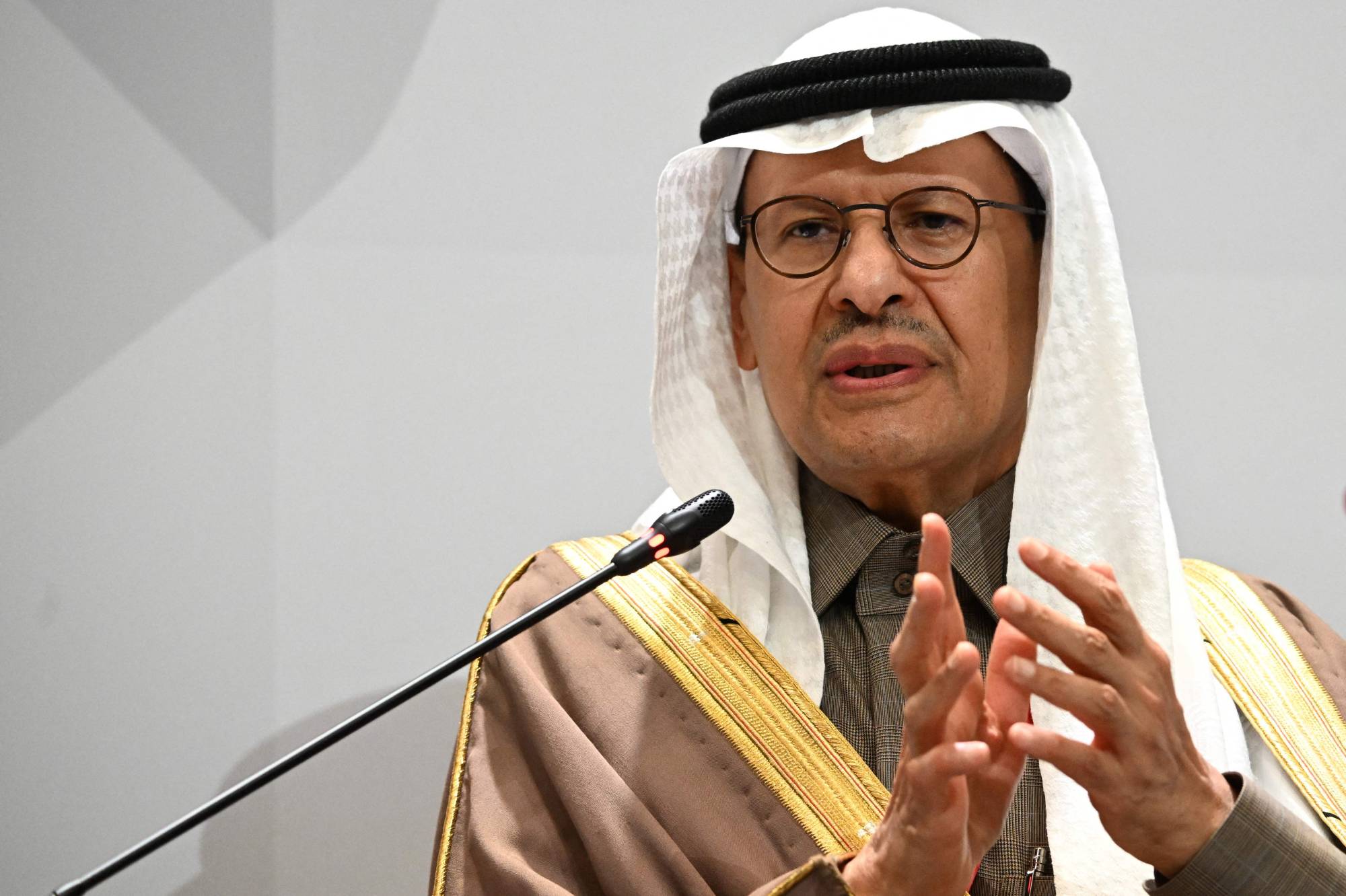
Saudi Arabia's Minister of Energy Prince Abdulaziz bin Salman al-Saud attends the St. Petersburg International Economic Forum (SPIEF) in Saint Petersburg on June 4, 2026. (Photo by Olga MALTSEVA / AFP)
Saudi Energy Minister Says Kingdom Remains Reliable, Flexible Supplier
Saudi Arabia's Minister of Energy Prince Abdulaziz bin Salman al-Saud attends the St. Petersburg International Economic Forum (SPIEF) in Saint Petersburg on June 4, 2026. (Photo by Olga MALTSEVA / AFP)
Saudi Energy Minister Prince Abdulaziz bin Salman seized the spotlight at a high-level dialogue session held during the 2026 St. Petersburg International Economic Forum, breaking a strategic silence that had become a focus of questions and a gauge for global market expectations.
Speaking on Thursday, he delivered carefully calibrated messages to the energy sector, stressing that the world urgently needs stability in energy markets and declaring with confidence that the Kingdom is a flexible energy supplier, was, and will remain so under all circumstances.
In his remarks during a special session at the forum, where the Kingdom is taking part as “main guest of honor” as the two countries mark the centenary of diplomatic relations, Prince Abdulaziz acknowledged that current geopolitical events in the Middle East were distracting attention and obstructing focus on Saudi Arabia’s strategic priorities, foremost among them the goals of Vision 2030.
He described the situation as a source of considerable frustration.
Even so, he sent a strong message of reassurance to global markets, saying in a firm tone that it was their duty, and that of every Saudi citizen, to defy this difficult environment and continue to pursue their ambitions.
The Kingdom has the capability and confidence to address challenges and demonstrate its economic and operational resilience, he added.
He pointed to what he described as the success of Saudi Arabia’s infrastructure and logistics system in turning tragedies into opportunities, and in managing the Hajj season with unprecedented success despite the surrounding regional turmoil.
On the partnership with Moscow, the Saudi Energy Minister announced the signing of 30 new cooperation agreements between the private sectors in the two countries across fields including industry, education, tourism, and energy.
Saudi Arabia's Minister of Energy Prince Abdulaziz bin Salman al-Saud attends the St. Petersburg International Economic Forum (SPIEF) in Saint Petersburg on June 4, 2026. (Photo by Olga MALTSEVA / AFP)
Prince Abdulaziz said the Kingdom will sign agreements across various fields and that there are no limits or restrictions on joint cooperation.
He added that the strategic mindset in Riyadh and Moscow had moved beyond being merely “producers of oil or gas” to “manufacturing and supplying energy in its comprehensive sense,” including hydrocarbons and the export of electrons.
In an explanation of his earlier position, which had kept oil traders on edge, Prince Abdulaziz said he had deliberately remained silent during the period that witnessed one of the most severe global energy crises.
A minister is required to maintain his composure and not panic, because panic makes a person lose control of the narrative, he explained.
He moved on to express his intention to maintain silence, because silence amid many unknowns is a message and a humble acknowledgment that reality is changing quickly, and is a form of respect for oneself and for others.
He concluded his assessment of current market conditions with a pointed remark reflecting the scale of uncertainty clouding the global scene.
“The situation we’re going through now does make a point here, which is the world needs every molecule of energy, and every form of stabilization to this energy, because without energy security, you will lose sustainability,” the Saudi minister said.
“There are so many moving parts, there are so many unknowns, there are things that you think have become a reality, but then you wake up in the next morning and the reality is no longer a reality.”
Novak says the market faces a 12 million barrel shortfall
For his part, Russian Deputy Prime Minister Alexander Novak described the current crisis in the international oil market as unprecedented, with no parallel even in the 20th century.
Novak said Russia would deal with the Western sanctions imposed on it with flexibility and complete calm, given its position as a key supplier of energy resources to the international market.
He warned of a large, hidden shortfall in global supply, estimated at about 12 million barrels per day that are currently not reaching the market.
He said global markets had not yet felt the full impact of the energy crisis caused by the Middle East conflict because the situation was being managed through withdrawals from surplus reserve inventories.
Novak cautioned that if the conflict continues and Gulf states delay increasing production, the market will face an acute and immediate physical shortage of supplies within a few months.
In his analysis of the producers’ alliance, Novak stressed that the OPEC+ agreement remains a key driver of energy market direction.
He said its members control more than 50% of global production and more than 40% of total exports, adding that the agreements have proven highly efficient at curbing volatility and reducing market fluctuations.
Novak said current data gave countries an opportunity to accelerate compliance, describing the existing approach as a “standard and normal course” that allows countries that had previously exceeded their quotas for any reason to implement compensation plans for their earlier overproduction more quickly.
On Russia, Novak said technical analytical calculations to determine Russia’s maximum production ceiling are continuing in cooperation with the companies concerned, and would be discussed with partners by the end of 2026.
He expected Moscow to effectively reach its assigned production levels this year under the agreed quotas, despite current output being slightly lower than at the start of the year because several refineries were undergoing “emergency and unscheduled maintenance.”
Expectations of strong demand
OPEC Secretary General Haitham Al Ghais said the organization expects robust oil demand growth and would not change its estimates despite the conflict in the Middle East and the closure of the Strait of Hormuz.
“Despite all the commentary out there that oil demand is declining, we have not registered signs of that yet,” Al Ghais said.
“We still see robust demand growth at 1.2 million barrels a day for this year,” he said.
He also said investment in the oil sector should not be affected by "one-off events" that may occur anywhere in the world.
Egyptian Minister of Petroleum and Mineral Resources Karim Badawi told the session that renewable energy is a top priority to reduce dependence on natural gas. He said Egypt is working hard to increase electricity generation from wind and hydropower to secure a sustainable energy mix.
Markets hold their breath before the Sunday marathon
The remarks made at the forum on Thursday carry major significance as a prelude and practical indicator of the direction of leading producers ahead of decisive oil-related meetings next Sunday.
That day will see three consecutive meetings, beginning with OPEC’s administrative conference, followed by the 66th meeting of the Joint Ministerial Monitoring Committee, or JMMC, which is responsible for monitoring compliance levels, consensus, and the approval of current compensation plans.
Investors are closely watching the 41st ministerial meeting of the OPEC+ alliance. Informed sources said the alliance is likely to approve an additional gradual increase in its targets for next July.
OPEC Secretary General: Oil Demand to Remain Robust, No Change to Estimateshttps://english.aawsat.com/business/5280513-opec-secretary-general-oil-demand-remain-robust-no-change-estimates
OPEC Secretary General Haitham Al Ghais attends the St. Petersburg International Economic Forum (SPIEF) in Saint Petersburg on June 4, 2026. (Photo by Olga MALTSEVA / AFP)
OPEC Secretary General: Oil Demand to Remain Robust, No Change to Estimates
OPEC Secretary General Haitham Al Ghais attends the St. Petersburg International Economic Forum (SPIEF) in Saint Petersburg on June 4, 2026. (Photo by Olga MALTSEVA / AFP)
OPEC expects robust oil demand growth and is not changing its estimates, Secretary General Haitham Al Ghais said on Thursday at the St. Petersburg International Economic Forum, despite the Middle East conflict and closure of the Strait of Hormuz.
"Despite all the commentary out there that oil demand is declining, we have not registered signs of that yet," Reuters quoted Al Ghais as saying.
"We still see robust demand growth at 1.2 million barrels a day for this year," he said.
He also said that investments in the oil industry should not be affected by "one-off events" that happen anywhere in the world.
"We need to invest well ahead of time to be prepared for the demand that we see in the future," he said.
Egypt Plans to List More State-owned Companies, Replace In-kind Subsidies with Cashhttps://english.aawsat.com/business/5280495-egypt-plans-list-more-state-owned-companies-replace-kind-subsidies-cash
Egypt Plans to List More State-owned Companies, Replace In-kind Subsidies with Cash
Headquarters of the Central Bank of Egypt in downtown Cairo (Asharq Al-Awsat)
Egypt aims to list four to five state-owned companies on the Cairo stock exchange before the end of the year as part of its state asset sales strategy, Prime Minister Mostafa Madbouly said on Thursday.
The government also plans to shift from in-kind subsidies to cash subsidies during the coming financial year, as part of efforts to improve the targeting of social support, Madbouly said at a press conference, Reuters reported.
It does not aim to reduce the monetary value of subsidies but rather ensure they reach those entitled to receive them, he added.
More than 60 million people receive subsidised essential commodities through state-run outlets, while at least 10 million others benefit from subsidised bread.
لم تشترك بعد
انشئ حساباً خاصاً بك لتحصل على أخبار مخصصة لك ولتتمتع بخاصية حفظ المقالات وتتلقى نشراتنا البريدية المتنوعة