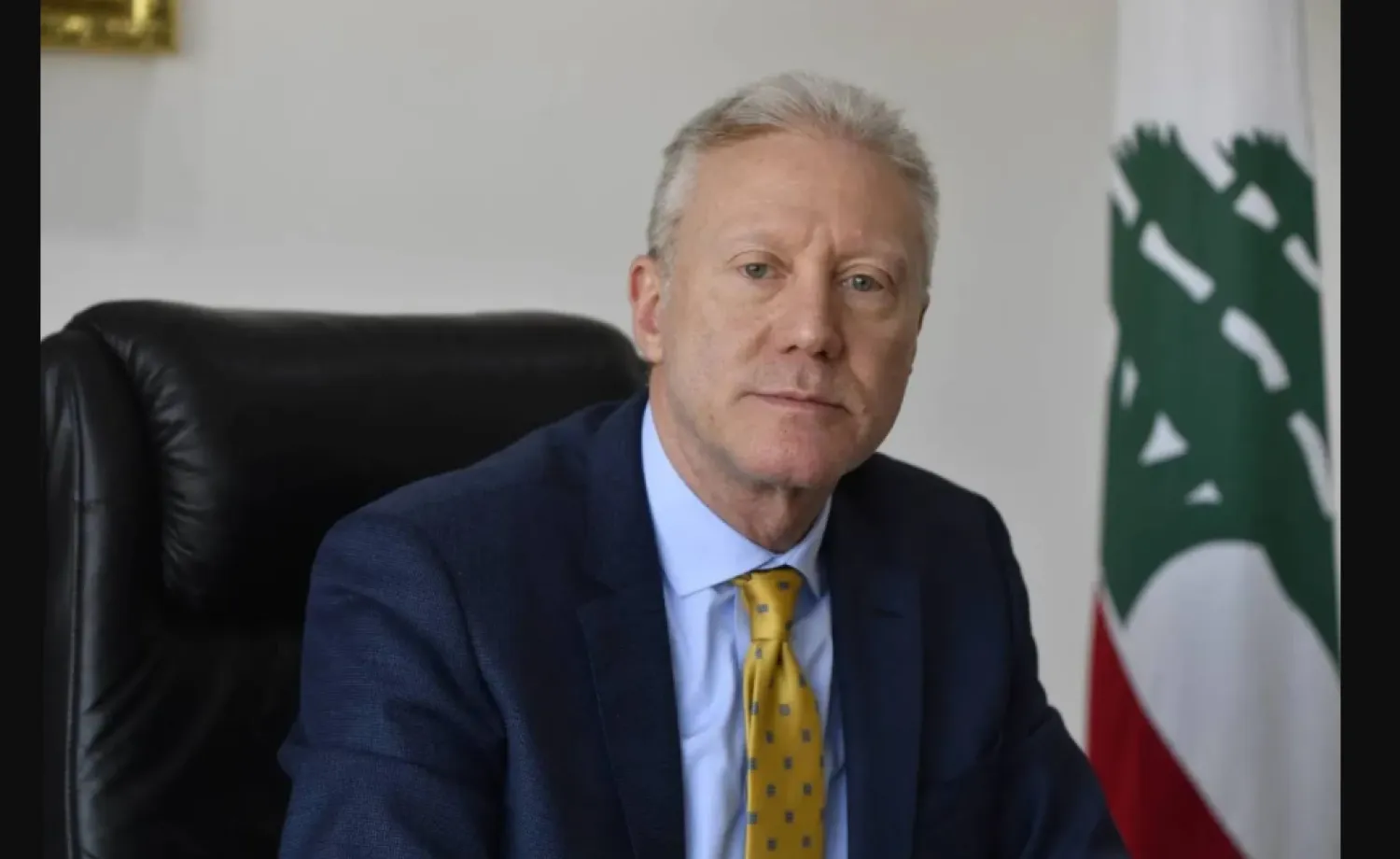
Lebanese former minister of culture, professor of international relations and former United Nations envoy to Libya Ghassan Salame said the political and economic impact of the novel coronavirus pandemic on our daily lives has dwarfed all other issues.
“We are living in an ailing world in every meaning of the word. The pandemic coincided with a time of great imbalance in the global system. Its outbreak accelerated several changes in international relations that had already begun,” he told Asharq Al-Awsat in an interview.
“It also kicked off changes to that very system, especially in ties between China and the United States,” he noted.
Moreover, the pandemic exposed the “vast laziness” in the West that had already affected its trade and financial relations with China. It is now forced to acknowledge that it has a geopolitical problem with China as well, said Salame.
The coronavirus battle is still ongoing and a new variant of the virus was detected as the vaccine was being rolled out. What conclusions can be drawn from the pandemic?
I believe we are living in a sick and ailing world in both the metaphorical and literal sense. Literally, we are experiencing an unprecedented pandemic. Metaphorically, the global system in which we live in is also sick. I hope that the new year will be one of recovery. However, the imbalance in the global system is so multifaceted and deep that the recovery will take years.
On the individual level, some people want to forget that the pandemic is among us and others are concerned with every minute detail of their lives. The pandemic has affected our daily lives and the lives of humanity. It has also had social impacts.
Such as?
It has left over 1.7 million people dead. This is a small number because it does not take into account people who were killed by the virus without others realizing it. It has infected 70 million people and those are just the registered figures. The real figures are actually much greater. A friend of mine, who is a specialist, told me that over 300 million people had caught the virus.
What about the economy?
There has been a massive impact: India has lost a quarter of its annual production. Whatever global growth we had predicted for this year transformed into a 7 to 9 percent recession. The wealthy countries of the West are trying to compensate those who were impacted economically. They have spent in nine months at least triple what they did in addressing the 2007 global economic crisis. I believe trillions more will be spent and that will take years to make up.
We have also realized things we had not previously paid attention to. We noticed just how fragile the tourism sector is. Countries that are dependent on tourism were dealt very heavy blows. It will take years for people to grow accustomed to traveling again.
The pandemic has also made some people even wealthier. Jeff Bezos, Amazon chief, doubled his fortune and managed to hire thousands of people to deliver products to people at home. The pandemic is the single most significant development of 2020 that all other events seem trivial.
But vaccines have been developed…
True, but we are not certain of their long-term effect. We are not certain of the effectiveness of the vaccine if the virus mutates. We are also uncertain if billions of people around the world will be able to have access to the vaccine before the virus infects them. This is a race between the vaccines and the virus, especially since we have yet to find a medicine to treat this disease. There is no guarantee that we will not be struck by another pandemic. So, the world has been upended by the pandemic. The results are monumental and ongoing for the foreseeable future despite the vaccines.
What about the greater picture, such as China? Some believe that China’s rise was already on the table and that the pandemic only accelerated this issue. Second, the pandemic has also raised questions about democratic systems, especially since China attempted to promoted itself as having the best example in how to handle pandemics.
The issue of China has been posed for a while, which is why we should approach it calmly. The country kicked off rapid change 30 years ago and has managed in three decades to end the poverty of millions of Chinese people, transforming the country into a major market. Most significantly it is the factory of the world. Throughout that time, the world approached China away from geopolitical considerations, but that changed some five or six year ago. Attention then shifted to its military spending.
Some observers began to ask: Are you aware of China’s military spending? Have you noticed that it was the first country to build an aircraft carrier? Did you note that it developed artificial islands that can rapidly be transformed into military bases?
I also would like to ask: Did you notice that a war broke out between China and India for the first time in decades? Did you notice that for the first time, China reacted firmly in Hong Kong and against democratic trends?
But Chinese President Xi Jinping had spoken of the priority he sets on the military…
When the Chinese president says that he wants his country to be the strongest military in the world by 2050, then many countries will be worried. They know that China does not make empty promises. Japan has increased its military budget and is buying 150 of the latest F-35 model and India is bolstering its border security, while demands for the US to withdraw from its Asian bases have waned.
Addressing China’s geopolitical rise began before the pandemic. The pandemic only gave a demagogical angle to the issue when US President Donald Trump spoke of the “Chinese virus”. He uttered those words just as the US was beginning very critical trade negotiations with China. Those talks began when the West sensed that globalization, which it had benefited from for a long time, was now becoming more beneficial to non-western countries. That sense began to emerge in the West even though no one was openly talking about them. Then came Trump, who said that he wanted to review trade relations with China because it was benefiting more than globalization that the West was.
Years before the pandemic, the West had started to negatively view globalization. Then the pandemic happened and China showed its superiority in sending out medical support to and containing the outbreak in Wuhan. It again proved that globalization allows China to boost its image and control over the global system in a way that the West can no longer keep up. The same West realizes that the United States’ share of the global economy shifted from 45 percent in post-WWII 1945 to 17 percent today.
Demographically, the number of white men dropped from 30 percent in the early 20th century to less than 17 percent today. Therefore, there is a sense that globalization allowed western companies to reduce production costs through shifting production to China and Asia. They ended up opening a new market for western products – China. But globalization began to come at a price, which was costlier than the benefits.
Then the pandemic happened, and demonstrated all of this…
The pandemic established a new concept, that of health sovereignty – meaning modern countries discovered that they had erred during globalization when they had sought lower production costs at the expense of local production of medicine. Of the first dozen coronavirus vaccines that were produced, five were made in China. This achievement will be highlighted even further when dozens of countries will procure the Chinese vaccines given their low prices. France suddenly discovered that it does not produce its face masks and that its Panadol pills are made in India. This will all change after the pandemic. Many countries will reconsider their view of globalization and address their weaknesses that it laid bare.
What about the difference between democratic nations and totalitarian ones? Did the pandemic change the rise in populism?
During the 1990s and for a first time in history more than half of the people in the world shifted from living under a totalitarian state to a democratic one. However, at the beginning of the 21st century, this began to change. First, because the number of countries embracing democracy began to drop. Many countries witnessed military coups or totalitarian coups through elections. Second, the growth of populism in democratic systems. The technological revolution helped populism infiltrate the heart of democratic life in several countries, such as Hungary, the US and Brazil.
The cyber revolution also helped spread populism, but it also helped the excessive meddling in the affairs of other countries. We will obviously witness more cyberwars in the coming months and years. They will stoke tensions between major powers and weaken trust between world leaders.
Can we say that democratic countries are ill?
Quality of life in democratic countries is dropping, but does that mean they are incapable of addressing such crises as the pandemic while totalitarian ones can? I’m not sure of the answer. I believe that Asian countries were more efficient, regardless of their system of rule, such as South Korea, Vietnam, Laos and Taiwan. They do not have the same system as China, but they managed to tackle the pandemic better than democratic countries.
So where lies the problem?
The problem is that the pandemic demands that governments, in countries such as Britain, France and Italy, impose restrictions on public freedoms. The foundations of these democratic countries are built on such freedoms. I believe these countries will, however, be able to return to their freedoms once the pandemic is over. Concluding that totalitarian countries are more capable maybe a hasty theory, but it is plausible and worth debating.
A debate that raged between democratic and totalitarian countries before the pandemic was which system was more efficient in pushing forward social and economic development. China, with its capitalist one-party rule, said that it was the best in terms of development.
Totalitarian countries can impose limits on freedoms during the pandemic because they had done so even before the outbreak. When they impose restrictions on freedoms, democratic countries violate the foundation on which they are built. Western countries will debate for years to come over how soon they will be able to restore their democracies or keep in place the pandemic restrictions.
What about the US? How did the pandemic impact its role?
I believe the US presidential election was decided by the pandemic. It was not decided because the pandemic happened, but because how poorly President Trump handled it. He alleged that life will return to normal by April and that the virus was not dangerous. He then politicized mask-wearing and allowed large gatherings without health precautions. The Trump administration’s mismanagement of the pandemic cost him the election.
This shows us an important lesson that role of people in the course of history is marginal. Forces have an impact on history, not individuals. In this case, Trump’s individual behavior was the antithesis of this. Had he acted differently, he would have secured reelection. The result of the election was all up to Trump himself.
What about your statement that Joe Biden’s election is the third chapter of a book we have already read?
Biden has introduced new faces to his administration, but most of the figures are familiar. We have seen them twice under the Bill Clinton and Barack Obama administrations. Have there only been two democratic administrations in the post-Cold War era? A Clinton administration and an Obama administration. Now Biden’s team is a third chapter of a book we have already read. Will he be able rectify the errors of his predecessors?
What errors?
Clinton was very dismissive of the Soviet Union and Boris Yeltsin. He failed in building a relationship based on trust with the new Russia and we are still paying the price of that to this very day. There is real anger in Russia in the way the West, especially the US, dealt with Russia after the collapse of the Soviet Union. We are paying the price of this at the United Nations Security Council. We are paying the price of this in Libya, Syria and other countries. Has the new Democratic administration reviewed this historic error, or will it be a copy of its predecessors?
The same goes to China and the intervention in wars in Iraq in 2003 and Libya in 2011. Has there been anyone in America in the past four years who has said: “If I were to return to power, then I will not commit the same mistakes as the previous Democratic administrations.” This is the first question posed to Biden.
And the second?
“Have I realized that the world has changed and that we are no longer in 1990 and that the US is no longer the leader or the sole leader of the global system?” Several countries have started to meddle in the affairs of their neighbors. Some countries are working daily on developing their military. Turkey is embroiled in four wars, so is Iran.
Is there anyone in this administration who has carried out this review? Is there anyone who has reviewed America’s position in a world that is vastly changed, not because of Trump, but because the entire system has changed? It is naïve to blame Trump alone for this change.
When you look at the core of issues, there was an issue with Trump’s character, such as his provocative tweets and his sudden sacking of officials. This personality, however, came back and managed to garner the votes of 60 million Americans. He has a real popular base. This figure tried to achieve something with North Korea, opened the trade file with China and did not launch a new war in the world.
I fear that the new administration will say that the past four years have been a break and that it will return things to how they were before, such as with the climate agreement, World Health Organization and the Iran nuclear deal.
Is that possible internally?
If this is the main focus of the new administration, I believe it will fail because the majority of the US Supreme Court is conservative and Republicans make up the majority of Congress.
What about Europe as it deals with Brexit, populism and immigration?
Let’s say it bluntly, those who believe that Brexit would lead to the break up of the European Union have been proven wrong. The evidence is immense, first, other countries did not follow suit in quitting the union. Moreover, and in a first, Germany accepted demands by France, Spain and others, for the EU to take out loans to tackle the economic impact of the pandemic. In other words, the pandemic helped reinforce the financial strength of the union. In Britain, recent figures showed that supporters of Brexit have dropped.
So, the EU succeeded in spite of the enormity of the pandemic challenge. It overcame the first phase of the pandemic and now is faced with the challenge of taking decisions unanimously. Such decisions demand consensus on central issues. If some countries lean further towards populism and the curbing of freedoms, such as Poland and Hungary, then this basis of consensus will undoubtedly be obstructed.
What about the relationship between Europe and the US?
Europe will be taking a more hostile approach towards Chin after the pandemic. America was already following such a path, but Europe was not prepared for it. Now, after my recent visit to Germany and the change in French President Emmanuel Macron’s rhetoric, there are concerns that China may invest its financial and economic capabilities in geopolitics. We have seen the concern over China’s purchase of a port in Greece and Algeria. The US and Europe are almost seeing eye-to-eye on China. Perhaps the most telling sign of this shift is the European Parliament’s vote over the Uighur issue.
Is the position towards Russia different?
Macron has a real desire to build a strategic relationship with Russia. He made this point clear in September 2018, but nothing has been achieved on the ground. There is also the gas pipeline that Germany is building with Russia and that the US opposes. The Biden administration and Europe may differ over Russia, but they share common positions over China.
At the beginning of the pandemic UN chief Antonio Guterres called for a coronavirus truce in conflict-ravaged countries, such as Libya and Syria. How do you assess the response to the call?
He was right to make the plea, but the response fell short of expectations. First, the Security Council took weeks and weeks to take a decision over this issue. Why? It is clear. Confronted with the pandemic, we must pause and assess what is more dangerous and what the fighters are facing. Why the delay? Because the US wanted to remind China and underline its lack of trust in the WHO. The situation at the Security Council politicized the pandemic and as a result, the response to Guterres’ call was more complicated.
What about the resolution of conflicts?
No country complied. But the pandemic did impose itself on fighters. Notice in Libya, how both sides were in denial over the severity of the pandemic. That was until the fighters started to become infected. This led to a gradual ceasefire and the 5+5 meeting in Geneva that cemented it. The pandemic played a role, no doubt in that. Had the fighters pushed ahead with the war, then we would have had a real massacre on our hands. If you were not killed by your enemy’s bullet, then the virus will get you. So you were confronted with two choices: A bullet from the other side of the divide, or a virus from your close ally.
What about the future of UN agencies after the pandemic?
The pandemic was a major challenge, but the greatest challenge lies ahead in the years to come. Several UN agencies will be demanded to provide much more than they had done before. The World Food Program is an example. It needs billions to feed the poor all over the world. The refugee program needs a budget to address millions of refugees. The WHO and UNICEF play central roles. They all demand budgets worth billions of dollars. Where will they come from? They come from all countries of the world, but in reality, they are provided from western countries. Here lies the challenges, if these wealthy countries, especially the western ones, need the money to address their own economic recessions, massive unemployment, secure vaccines and medical and hospital needs, will they offer additional dozens of billions of dollars to address the impact the pandemic has had on poor countries?
I believe wealthy countries will use their money for their own needs. Capable countries will be unable to finance UN agencies, which will be a major challenge to the UN.
Politically, what about relations between major powers?
The ties are bad. I hope that they will improve under the Biden administration. The Security Council practically plays no role in global crises, as we have seen in Nagorno-Karabakh and the dispute between China and India. The UN is playing a practically nonexistent role in several conflicts, such as Syria or the demarcation of the marine border between Lebanon ad Israel. That is a classic situation where the UN can play a central role, but it was filled by the US. The UN’s role in global peace and security weakened due to the disputes between major countries.
Libya seems to be headed on a new path. What is your assessment of the situation?
Libya presents a unique case in which the UN is in a hurry to lead a settlement process. Several countries want to play that role, but the UN mission has managed to keep itself on top despite the great challenges. I am proud. I say that without hesitation. I am proud of what we have achieved in the past two years in very difficult conditions. We brought together under the same roof Presidents Abdul Fattah al-Sisi and Recep Tayyip Erdogan. We arranged the Berlin conference on January 19 and all countries involved in Libya made important pledges. They left it up to the Libyans to implement them. After great difficulty, we managed to reach resolution 2510.
What about the execution?
When it came to implementation, developments took a wrong turn. Some sides sought to obstruct the implementation of the Berlin conference. Fighting erupted over Tripoli, then the pandemic happened. It was only until the summer that the Berlin conference decisions, which I proudly oversaw, began to be implemented. Is the implementation taking place at the pace I want? No. Can the fighting erupt again? Yes. Can foreign meddling return to the way it was before the Berlin summit? Yes. Have the mercenaries pulled out as we wanted? No. Have all roads been reopened? No.
What are the positives?
If you compare the situation now in Libya to the way it was months ago, then it is better. Flights have resumed between cities, roads have reopened, the displaced have returned home, the central bank board met for the first time in three years and political dialogue was launched in Tunisia. All of these developments point to one thing: The Libyans have grown more aware.
Military offensives were launched and have failed. They realize the need for political understanding. They are also aware that any such understanding should take place through the UN because it has no oil or business ambitions in the country. As opposed to other countries, the UN cares about the Libyans themselves, not just their wealth. Furthermore, there is a realization among the many meddling countries that no single one of them is capable of coming out on top and of solely controlling Libya. They must agree to share influence.
There are weak signs that the we are headed in the right direction in Libya. It will take time, but despite the obstacles I am optimistic that Libya will get itself out of the mess it has gotten itself into.
What about Lebanon? Reports speak of poverty, immigration, no government and the end of the Taif Accord.
Let me just say that the actual implementation of the Taif Accord has ended. Some aspects of the accord, such as its institutional parts, establishing the troika and sectarian elements – such as weakening some sects and strengthening others – were implemented. This implementation of the Taif is behind us. Is there a need for a more loyal implementation of the accord or is there a need to come up with a substitute agreement? I support the first idea. I believe that the Taif Accord, in its essence, helped end the civil war that claimed the lives of 170,000 Lebanese people. I will not so easily abandon it. However, I believe that the actual implementation of the accord tarnished the spirit of the agreement. If you ask me to choose between a more loyally implemented Accord with some amended articles, or search for a purer alternative, I would choose the former.
You said that the “Lebanon intifada” exposed the sectarian leaders. How?
The main political class and opinion polls say so. The political elite has lost a lot of its popular base. The Lebanese were shocked with just how much the political class undermines them. They were shocked with the collapse of the banking sector. They have stood helpless as they life’s savings evaporated and they were no longer able to pay for their children’s education. They were shocked again with the Beirut port explosion. French President Macron toured the streets of Beirut, while not a single Lebanese politician can go to a restaurant without being humiliated and kicked out. The political class has become aware of just how much they are reviled by the people. The surveys that are carried out and not published reveal this as well.
What about the formation of the government?
The government could have been formed before we even finish this interview. However, there are two obstacles. The first is the dramatic drop in popularity of the majority of the country’s leaders. They are therefore, using this time to boost their support among their sectarian base instead of acting swiftly to reach an understanding that can halt the tragic collapse of the country.
The second is that these leaders know that as soon as they form a government, it will be bombarded with international demands and pressure to take unpopular austerity measures. It will be demanded to carry out fundamental reforms in the finance and banking sectors. This will not take place before the real detailed facts and figures of the state’s finances throughout the past 60 years are revealed. Several politicians fear the close scrutiny for obvious reasons.
This is why they continue to evade Macron’s pressure and remain in a state of denial of the need for a swift agreement with the International Monetary Fund. The government should have been formed soon after the Diab government resigned in August just after the horrific port blast.
My fear is that the growing poverty among Syrian and Palestinian refugees and the Lebanese people themselves will push them to rely further on their sectarian leaders. They will need to turn to someone who will support them. I fear that this crisis will only help these leaders rise up again by helping those in need, who are willing set aside their anger in order to survive.