


Houthis Smuggle Security Officer Accused of Killing Yemeni Woman in Ibb

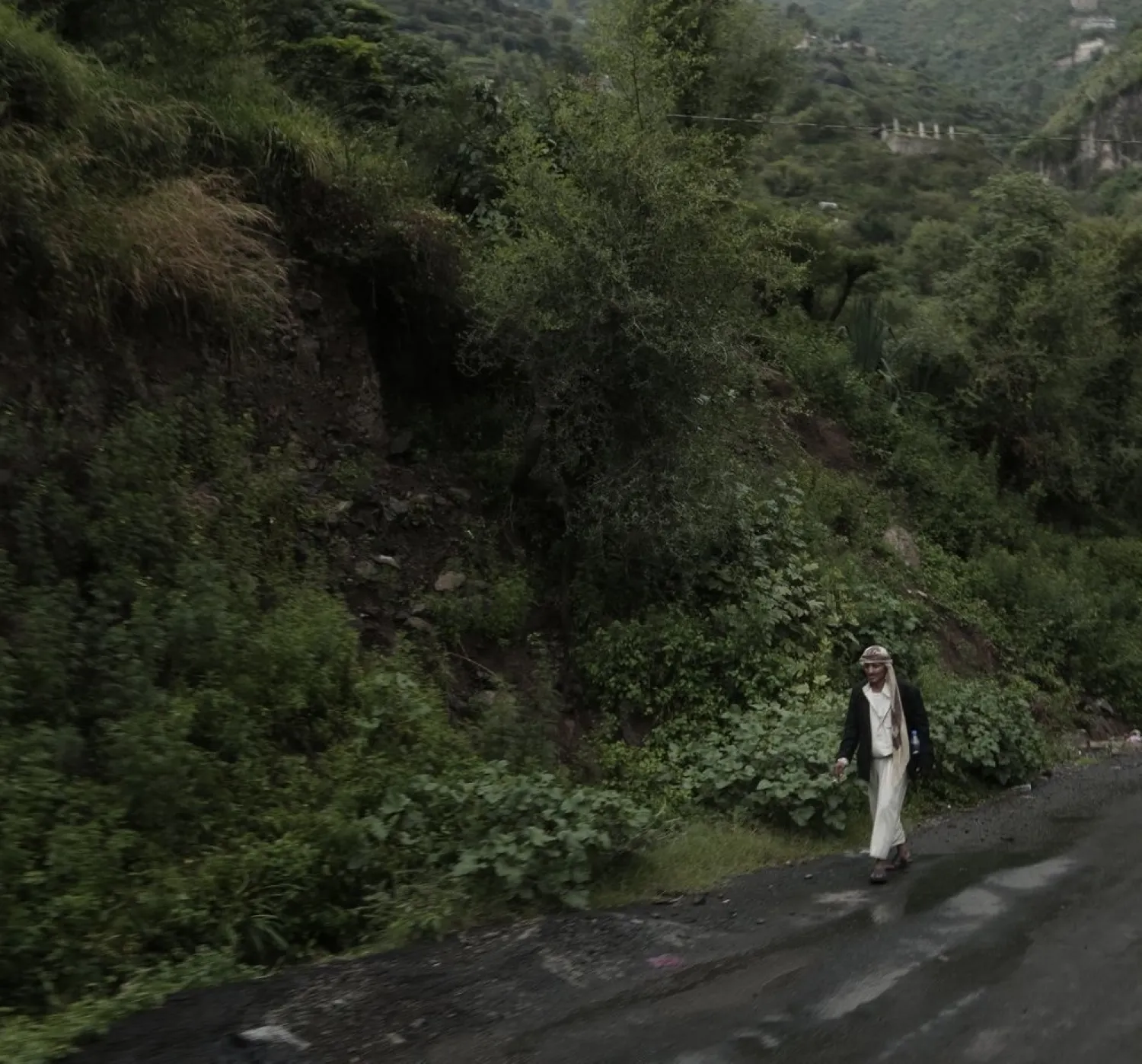
A man walks down a road in Ibb, Yemen, on Aug. 3, 2018. (AP)
TT

Houthis Smuggle Security Officer Accused of Killing Yemeni Woman in Ibb

A man walks down a road in Ibb, Yemen, on Aug. 3, 2018. (AP)

The Iran-backed Houthi militias in Yemen have smuggled the prime suspect in the murder case of Khitam al-Ashary, who was beaten to death in her home in Odain town, located in the central governorate of Ibb, local sources reported.

In an attempt to divert public attention from the murder, the Houthis continued to wage arrest campaigns against citizens and activists in Odain.

Although Houthis announced forming a probe committee to look into Ashary’s death, local sources said that the militias were never serious about holding the perpetrators accountable for their crime.

Gunmen involved in the incident were arrested only to later be secretly transferred outside Ibb.

Desperate attempts to conceal the raging security chaos in Houthi-run areas have failed against the backdrop of reports documenting hikes in crimes such as murder, harassment and suppression of freedoms.

More so, eye witnesses to Ashary’s killing were forced to change their testimonies, local sources told Asharq Al-Awsat. The victim’s family has also doubted the integrity of investigations spearheaded by the Houthis.

Ahmed al-Ashary, the victim’s brother, has voiced concerns about Houthi efforts to bury the case through pressuring the victim’s family members.

In a Facebook post, he conveyed pessimism towards the coroner’s report and warned that the Houthis are trying to tamper with facts.

The medical report stated that his sister suffered from a “growing swelling in the neck area with paresthesia in the limbs” as a result of blunt force trauma.

Locals in Odain reported Houthi gunmen, in the last few days, have carried out widespread arrest campaigns against the town’s youth and activists who condemned Ashary’s murder.

Houthis justified the arrests by saying that the condemnation of the murder seeks to undermine security and stability.

Dozens of those who stood in solidarity with Ashary’s family were harassed by Houthi gunmen, and at least 15 were arrested.

Murad al-Banna, a media activist, was arrested for exposing the crime on social media platforms.



Gaza Struggles to Pull Bodies From Rubble as Storms Rock Damaged Buildings

A general view of a residential building damaged during the war, in Gaza City, December 14, 2025. REUTERS/Dawoud Abu Alkas
TT

Gaza Struggles to Pull Bodies From Rubble as Storms Rock Damaged Buildings

A general view of a residential building damaged during the war, in Gaza City, December 14, 2025. REUTERS/Dawoud Abu Alkas

Authorities in Gaza warned on Monday that more war-damaged buildings may collapse because of heavy rain in the devastated Palestinian enclave and said the weather was making it hard to recover bodies still under the rubble.

Two buildings collapsed in Gaza on Friday, killing at least 12 people according to local health authorities, amid a storm that has also washed away and flooded tents, and led to deaths from exposure.

Israel and Hamas agreed to a ceasefire in October after two years of intense bombardment and military operations, but humanitarian agencies say there is still very little aid getting into Gaza, where nearly the entire population is homeless.

Gaza Civil Defense spokesman Mahmoud Basal called on the international community to provide mobile homes and caravans for displaced Palestinians rather than tents.

"If people are not protected today we will witness more victims, more killing of people, children, women, entire families inside these buildings," he said.

Mohammad Nassar and his family were living in a six-storey building that was badly damaged by Israeli strikes earlier in the war, and then collapsed on Friday.

His family had struggled to find alternative accommodation and had been flooded out while living in a tent during a previous bout of bad weather. Nassar went out to buy some necessities on Friday and returned to a scene of carnage with rescue workers struggling to pull bodies from the rubble.

"I saw my son's hand sticking out from under the ground. It was the scene that affected me the most. My son under the ground and we are unable to get him out," Nassar said. His son, 15, died, as did a daughter, aged 18.

Gaza authorities are meanwhile still digging to recover around 9,000 bodies they estimate remain buried in rubble from Israeli bombing during the war, but they lack the machinery needed to expedite the work, spokesman Ismail al-Thawabta said.

On Monday, rescue workers retrieved the remains of around 20 people from a multi-storey building bombed in December 2023 where around 60 people, including 30 children, were believed to be sheltering.


Mother of Jailed French Journalist Asks Algerian President for Pardon

This undated handout photograph, courtesy of the Gleizes family, released on June 30, 2025, shows Christophe Gleizes, a prominent French sports journalist, at an unknown location. © So Press/RSF via AFP
TT

Mother of Jailed French Journalist Asks Algerian President for Pardon

This undated handout photograph, courtesy of the Gleizes family, released on June 30, 2025, shows Christophe Gleizes, a prominent French sports journalist, at an unknown location. © So Press/RSF via AFP

The mother of jailed French journalist Christophe Gleizes wrote a letter to Algeria's president requesting he pardon her son from his seven-year sentence on terror-related charges.

Gleizes, a sportswriter, was convicted of "glorifying terrorism" in June.

"I respectfully ask you to consider granting Christophe a pardon, so that he may regain his freedom and his family," Sylvie Godard wrote in the letter, which was dated December 10 and seen by AFP on Monday.

Gleizes's lawyers are also seeking a new trial with the country's highest court.

Gleizes was arrested in May 2024 while travelling to northeastern Algeria's Kabylia region to write about the country's most decorated football club, Jeunesse Sportive de Kabylie.

In 2021, he met the head of the Movement for the Self-Determination of Kabylie (MAK), a foreign-based group designated a terrorist organization by Algiers.

At this month's appeal hearing, Gleizes said he did not know the MAK had been listed as a terrorist organization, and asked the court's forgiveness for his "journalistic mistakes".

An Algerian appeals court upheld his sentence this month, a decision his mother called "incomprehensible".

"Nowhere in any of his writings will you find any trace of statements hostile to Algeria and its people," she wrote in her letter to President Abdelmadjid Tebboune.

Gleizes is currently France's only journalist imprisoned abroad, according to rights group Reporters Without Borders (RSF), and French President Emmanuel Macron has vowed to work towards his release.

Gleizes's jailing comes at a time of diplomatic friction between Paris and Algiers after France last year officially backed Moroccan sovereignty over the disputed Western Sahara region, where Algeria backs the pro-independence Polisario Front.


Torrential Rains and Flash Floods Kill 37 in Moroccan City of Safi

The minaret of a mosque stands behind damaged or destroyed houses following an earthquake in Moulay Brahim, Al-Haouz province, on September 9, 2023. (AFP)
TT

Torrential Rains and Flash Floods Kill 37 in Moroccan City of Safi

The minaret of a mosque stands behind damaged or destroyed houses following an earthquake in Moulay Brahim, Al-Haouz province, on September 9, 2023. (AFP)

Floods triggered by torrential rains have killed at least 37 people in the Moroccan coastal city of Safi, the Interior Ministry said Monday.

Authorities said heavy rain and flash floods overnight inundated about 70 homes and businesses and swept away 10 vehicles. The Interior Ministry reported 14 people hospitalized, AFP reported.

Local outlets reported that schools announced three days of closures. Rains also caused flooding and damage elsewhere throughout Morocco, including the northern city of Tetouan and the mountain town of Tinghir.

Safi, a city on Morocco’s Atlantic shore more than 320 kilometers (200 miles) from the capital Rabat, is a major hub for the country’s critical fishing and mining industries. Both employ thousands to catch, mine and process the commodities for export. The city, with a population of more than 300,000 people, is home to a major phosphate processing plant.

Videos shared on social media showed cars stranded and partially submerged as floodwaters surged through Safi’s streets.

Climate change has made weather patterns more unpredictable in Morocco. North Africa has been plagued by several years of drought, hardening soils and making mountains, deserts and plains more susceptible to flooding. Last year, floods in normally arid mountains and desert areas killed nearly two dozen people in Morocco and Algeria.

This week's floods came after 22 people were killed in a two-building collapse in the Moroccan city of Fez. Morocco has invested in disaster risk initiatives although local governments often do not enforce building codes and drainage systems can be lacking in some cities. Infrastructural inequities were a focus of youth-led protests that swept the country earlier this year.

__ Associated Press writer Sam Metz in Rabat, Morocco, contributed to this report.