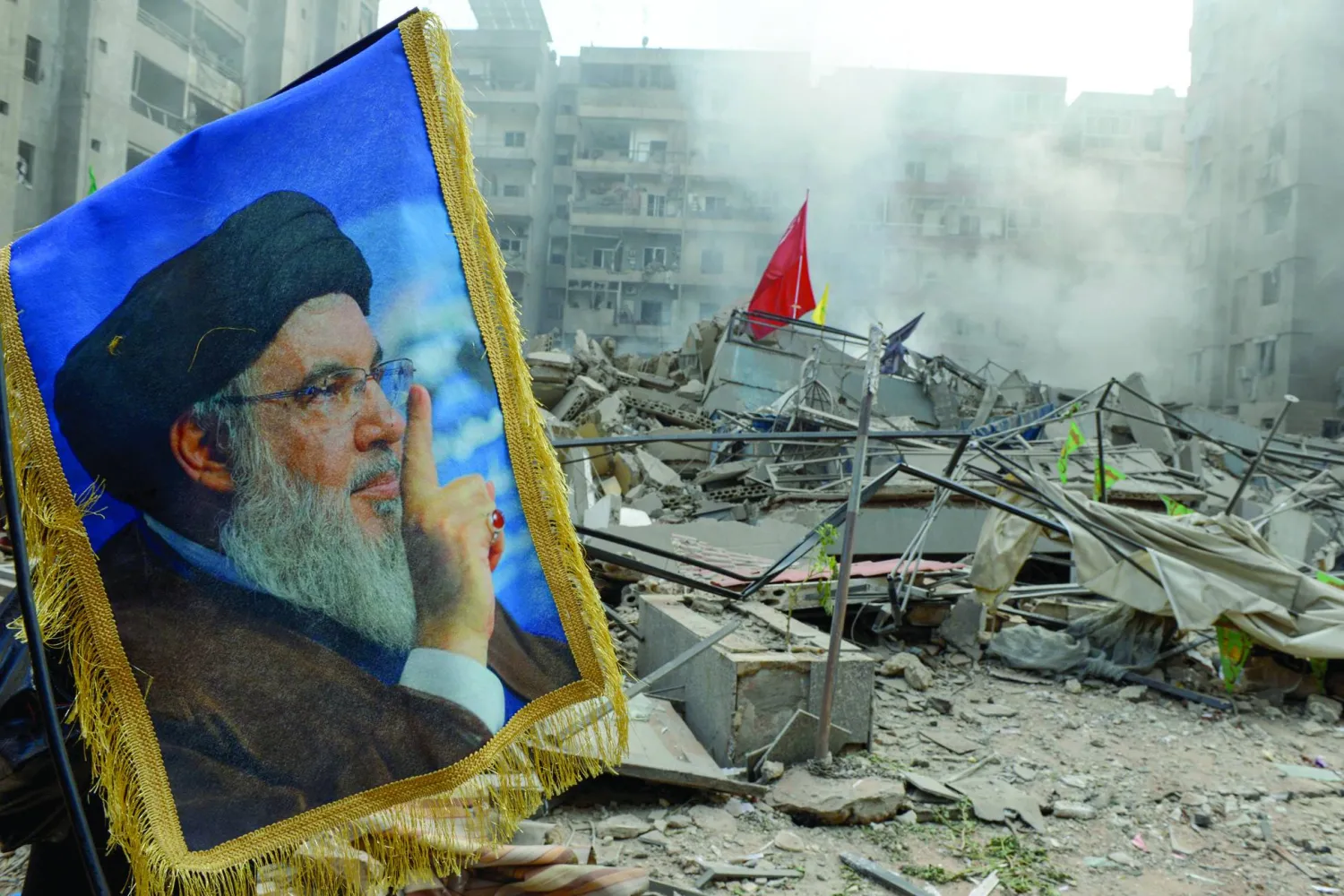
A decision by Hezbollah Secretary-General Naim Qassem to limit housing support to a three-month window has thrown a spotlight on the group’s tightening finances, after it moved from yearlong lump-sum payments to staggered installments paid once every quarter.
Qassem said Hezbollah would disburse housing allowances for February, March, and April 2026 to “everyone whose home was destroyed or rendered uninhabitable.” The payment had originally been due in early December for three months.
Instead, the party paid allowances for the previous two months and has now approved another three-month tranche, despite a 10-day delay since the disbursement was announced.
Uneven payments, lingering questions
Housing allowances are seen not only as a political signal but also as a practical test of the group’s ability to cover rent, school transfers for children, transportation costs, and the reality of prolonged internal displacement turning into a forced way of life.
Rana, who fled a southern town to Beirut, said families’ priority was no longer politics but securing a place to live.
“People are asking about rent support, about the duration, about continuity. Three months go by quickly, and after that, no one knows what will happen,” she said.
Hassan, another affected resident living in Beirut’s southern suburbs, said the announcement “eased part of the anxiety,” but added that “the issue is not just the announcement, it is the regularity of payment and whether everyone is included.”
Disparities in payouts
Behind the anxiety lies what residents describe as selective disbursement. In the previous phase, not all beneficiaries received full housing allowances, residents of the southern suburbs said, noting disparities in case outcomes.
One resident said he had received only $2,000 for four months, adding that other payments from the previous year had not reached him in full and that he did not know their fate.
Another said he received $3,000 for six months, but that talk of additional allowances had continued without clarity on how they would be completed or whether they would be paid at all.
A woman from the Haret Hreik area said: “We don’t know whether what is being paid is a full housing allowance, partial installments, or a settlement. People are talking, but there is no clear official answer.”
‘Committed’ to housing support
Hezbollah says it has “decided to secure housing,” and sources familiar with the details said the step is aimed at easing the burden on those affected in the postwar phase, especially amid rising living costs and soaring rents.
But the pledge comes amid intensifying external pressure and sanctions aimed at curbing the flow of funds to the group.
The US Department of the Treasury recently announced it had taken “action to disrupt two key mechanisms Hezbollah uses to sustain its economic stability,” namely “revenue generation in coordination with the Iranian regime and the exploitation of Lebanon’s informal financial sector.”
Opponents of Hezbollah say the issue is no longer merely political but directly linked to the group’s ability to secure liquidity to meet social obligations, foremost among them housing allowances. The real test, they argue, will be in regular payments and clarity of mechanism, not in the announcement itself.
Temporary relief
Jad Al-Akhawi, head of the Lebanese Democratic Coalition, told Asharq Al-Awsat that talk of injecting funds resembled “a morphine shot.”
“In previous periods, it was said that large sums of money entered the country, but they were not disbursed. Today, there may be limited spending, but it remains within the framework of temporary calming, nothing more,” he said.
He added that the state had pledged around $300 million, arguing that Hezbollah’s move was “an attempt to give people a dose of calm, something like morphine, until actual funding becomes available.”
He ruled out a return to previous financing patterns, particularly through institutions such as Al-Qard Al-Hasan, saying that continuation of that approach would pose “serious risks to the economy.”