

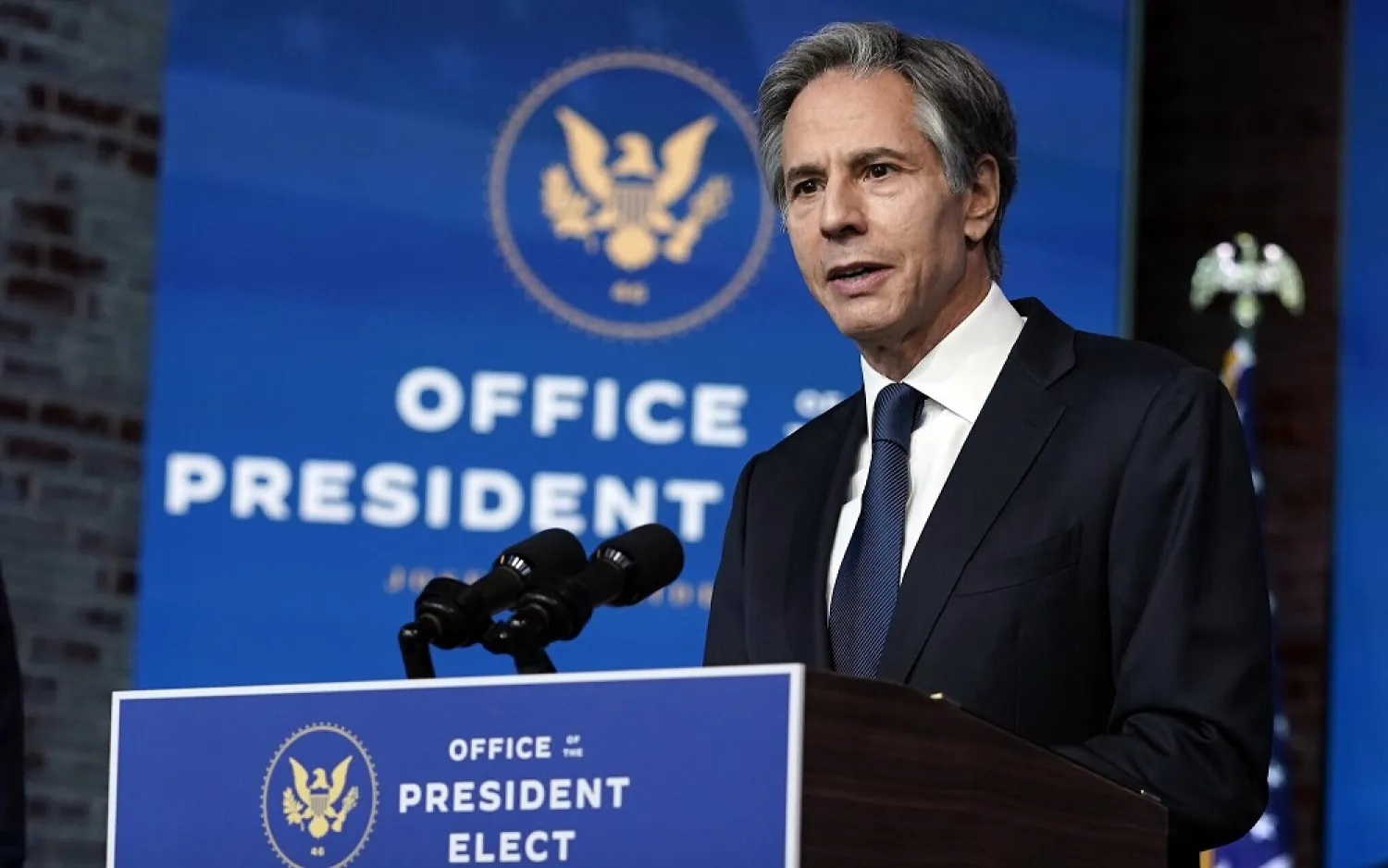

Antony Blinken, Courtly New Top US Diplomat, Preaches Humility and Intervention

Antony Blinken, speaks at The Queen theater, November 24, 2020, in Wilmington, Delaware. (AP)
TT

Antony Blinken, Courtly New Top US Diplomat, Preaches Humility and Intervention

Antony Blinken, speaks at The Queen theater, November 24, 2020, in Wilmington, Delaware. (AP)

Unfailingly calm and courteous, America's new top diplomat Antony Blinken advocates a more humble approach to build alliances but, more than his boss, has advocated military power when human rights are in question.

The 71th US secretary of state, who was easily confirmed by the Senate Tuesday, is the stepson of a Holocaust survivor and fluent French speaker who embodies diplomacy in both his image and ideals -- and also has a side passion playing rock guitar.

When President Joe Biden nominated him and at his confirmation hearing, Blinken stressed "humility" and nurturing alliances -- a sharp departure from former president Donald Trump's in-your-face "America First" approach.

"Humility and confidence should be flip sides of America's leadership coin," he said.

With an elegant mane of salt-and-pepper hair, the 58-year-old Blinken -- who goes by "Tony" -- could scarcely be more different than his hard-charging predecessor Mike Pompeo.

"He's about as mild-mannered, humble and unassuming as they come," said Robert Malley, a childhood friend of Blinken who is now president of the International Crisis Group.

"I've yet to meet anybody who recounts an episode of Tony exploding or having a fit of anger," Malley told AFP.

Blinken, a deputy secretary of state during Barack Obama's presidency, has advised Biden since his Senate days but may show different instincts from those of his longtime boss, a skeptic in recent years of military interventions.

"Superpowers don't bluff," Blinken was reported to have warned repeatedly in deliberations on Syria's war, in which Obama issued warnings but ultimately decided for a limited role.

Speaking during the last presidential campaign about the "horrific" loss of life in Syria, Blinken said: "The last administration has to acknowledge that we failed -- not for want of trying, but we failed."

"It's something that I will take with me for the rest of my days. It's something that I feel very strongly," he told CBS News.

Prominent Republicans supported him despite disagreements, including on his support of returning to the Iran nuclear accord, with Blinken at his hearing vowing continuity on key issues including Trump's hard line on China.

Formative youth abroad
Blinken's passion about preventing atrocities can be traced to his stepfather, Polish-born Samuel Pisar, one of the youngest survivors of the Holocaust, whose family was murdered.

A prominent lawyer who worked for detente between the West and Soviet Union, Pisar moved the family to Paris where Blinken studied at the prestigious Ecole Jeannine Manuel.

Malley, his classmate, said that Blinken learned to navigate the US role in the world as a young American in Paris in the wake of the Vietnam War.

"Tony believed strongly in his values and identity as an American but was living in a foreign country and therefore forced to see the world through the eyes of that foreign country at a time when the US was not the most popular," Malley said.

Blinken's biological father is a prominent investment banker and his mother, Judith Pisar, for years headed the American Center in Paris, which brought together artists.

His youth in Paris also launched Blinken's fledging musical career as he played jazz and discovered rock, quoting Pink Floyd's "Another Brick in the Wall" in his high school yearbook.

In Washington, Blinken played guitar in a Beatles cover band and used free time during the pandemic to compose his own songs, his voice uncharacteristically forceful over slow-driving 1970s-inspired rock.

His musical alter ego, ABlinken, had a modest 57 monthly listeners on Spotify before his nomination in November but has since risen above 2,500.

Belief in US mission
Blinken attended Harvard University where he wrote for The Harvard Crimson -- a review of an album from Bob Dylan's Christian phase concluded that the rock legend "is no man's lackey. He will always do and sing what he believes" -- before a brief career in law and Democratic Party politics, serving on the staff of the Senate Foreign Relations Committee when Biden served.

Blinken has repeatedly said his views were shaped by his stepfather who survived concentration camps including Auschwitz and Dachau before making a dash for his life, defying German gunfire, during a death march.

After two days hiding in the woods, the teenage Pisar heard the rumblings of a tank and, to his relief, saw not a German but an African-American soldier.

"He fell to his knees and said the only three words he knew in English that his mother had taught him: 'God Bless America,'" Blinken recalled at his confirmation hearing.

"The GI lifted him into the tank -- into America, into freedom."

"That's who we are. That's what we represent to the world, however imperfectly, and what we can still be at our best."


Lebanon Becomes an Alternate Arena for Iran’s Revolutionary Guards after Assad’s Fall

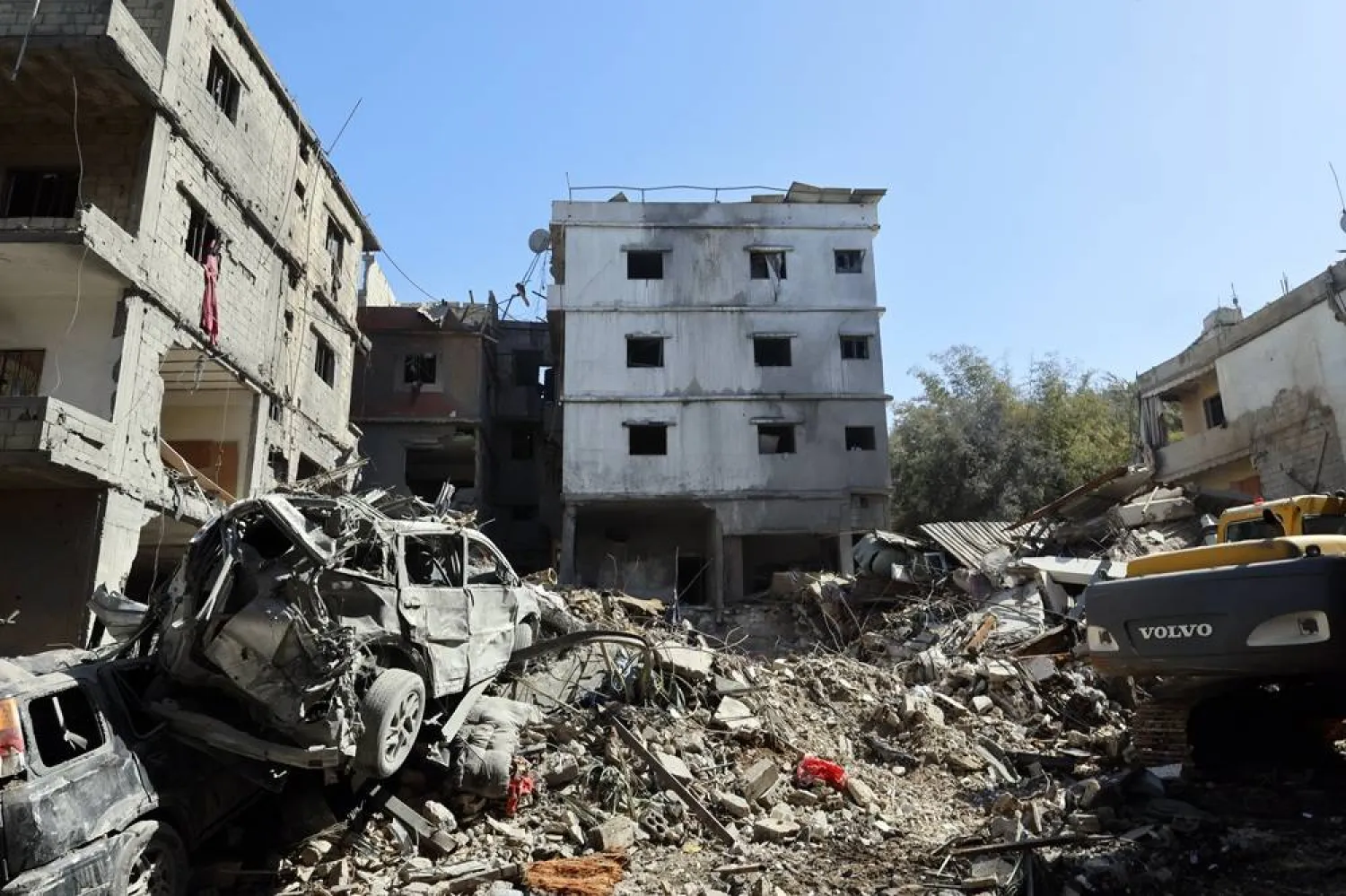
A view of a damaged building following an Israeli strike near the Rafik Hariri University Hospital (RHUH), in the Jnah District of Beirut, Lebanon, 06 April 2026. (EPA)
TT

Lebanon Becomes an Alternate Arena for Iran’s Revolutionary Guards after Assad’s Fall

A view of a damaged building following an Israeli strike near the Rafik Hariri University Hospital (RHUH), in the Jnah District of Beirut, Lebanon, 06 April 2026. (EPA)

A multi-layered structure run by Iran’s Revolutionary Guards is taking shape in Lebanon, spanning Lebanese and Palestinian arms across intertwined security, military, and political roles.

The model echoes Syria before the fall of Bashar al-Assad’s regime in 2024, raising fears that Lebanon is shifting from a traditional battleground into a more complex hub for managing conflict and influence.

As signs of this overlap grow, Israel Defense Forces Radio said on Monday that an attempted assassination on Sunday in a Beirut apartment targeted a member of the “Palestine Corps,” linked to the Revolutionary Guards’ external arm, the Quds Force.

Israel has previously said it killed several Iranian figures in Lebanon, including two strikes on “central commanders in the Lebanon Corps,” affiliated with the Quds Force and operating in Beirut. One strike hit the Ramada Hotel in Raouche.

On March 11, the Israeli military said it targeted Hisham Abdel Karim Yassin, describing him as “a senior commander in Hezbollah’s communications unit, and in the Palestine Corps of the Quds Force.”

A Palestinian source in Lebanon told Asharq Al-Awsat the Iran-linked structure resembles a parent body branching into multiple formations, with the Quds Force at its core. Local and Palestinian arms operate under different names for organizational and media purposes.

The structure extends beyond the Shiite base tied to Hezbollah, incorporating groups from other communities, including Sunni elements integrated into parallel formations similar to the Resistance Brigades, alongside carefully organized Palestinian frameworks.

“The Palestinian cover is essential,” the source said, adding that the aim is to avoid portraying Hezbollah as acting alone, instead projecting a broader alliance of Palestinian and Islamic factions to boost legitimacy and reduce Hezbollah’s domestic isolation.

Concealment

Names such as “Lebanon Corps” and “Palestine Corps” reflect composition, and are not arbitrary, the source said. The Lebanon Corps refers to Lebanese members from outside the Shiite community, while the Palestine Corps includes fighters from Palestinian factions, both Islamist groups such as Hamas and Palestinian Islamic Jihad, and non-Islamist factions.

The labels also serve as concealment tools, adopted after older structures were exposed, allowing networks to reorganize and evade monitoring.

With Iran’s reduced ability to use Syria as before, in terms of movement and deployment, the base of operations was moved to Lebanon, the source said.

Lebanon is now used as an alternative arena in practice, an advanced platform for managing confrontation, not just a support front. Its geography next to Israel, its complex environment offering multiple Lebanese, Palestinian, and Sunni covers, and an existing military structure all support this shift.

The change has moved the role from logistical support in Syria to direct operational management from inside Lebanon. The country is now treated as “the most sensitive and valuable geography in this axis,” both for confrontation with Israel and as a pivot for escalation or negotiations.

Multiple structures, unified command

Political writer Ali al-Amine said Iran-linked structures in Lebanon span multiple levels and labels but converge under the Iranian Revolutionary Guard Corps, particularly through the Quds Force.

Some groups are directly tied to the Quds Force, while others operate under a Palestinian banner, often composed of Palestinian members, each with its own role and title.

“These individuals are organizationally linked to the Revolutionary Guards, but are not necessarily Iranian,” he said. “They can be Lebanese or Palestinian, while their direct leadership reference lies within the Guards, not local frameworks.”

He added that some figures classified within Hezbollah are in fact closer organizationally to the Revolutionary Guards, highlighting overlap between Lebanese and Iranian roles.

The Palestine Corps manages ties with Iran-linked Palestinian factions, while the Lebanon Corps handles the Lebanese arena.

“What is known as the Lebanon Corps is not a traditional military force, but an administrative, coordinating and supervisory body directly linked to the Revolutionary Guards, while field execution remains with Hezbollah,” he said.

He added that the Revolutionary Guards have long maintained a direct presence inside Hezbollah through representatives across financial, security, military, and social sectors, ensuring oversight and influence. These figures typically fall under the Quds Force, responsible for operations outside Iran.

Al-Amine said Lebanon has become a primary arena for the Revolutionary Guards after Iran’s loss of the Syrian theater, explaining Tehran’s strong commitment to maintaining its influence.

“Iran will strongly defend this influence, because losing Lebanon would be a strategic blow and would directly affect its regional position,” he said.

He said a key part of the current conflict centers on Iran’s efforts to entrench its influence in Lebanon and prevent its erosion, whether through the Revolutionary Guards, Hezbollah, or affiliated networks, as it seeks to preserve its regional role and leverage.


Majid Khademi: Brief Tenure at Helm of Embattled IRGC Intelligence Ends in Assassination

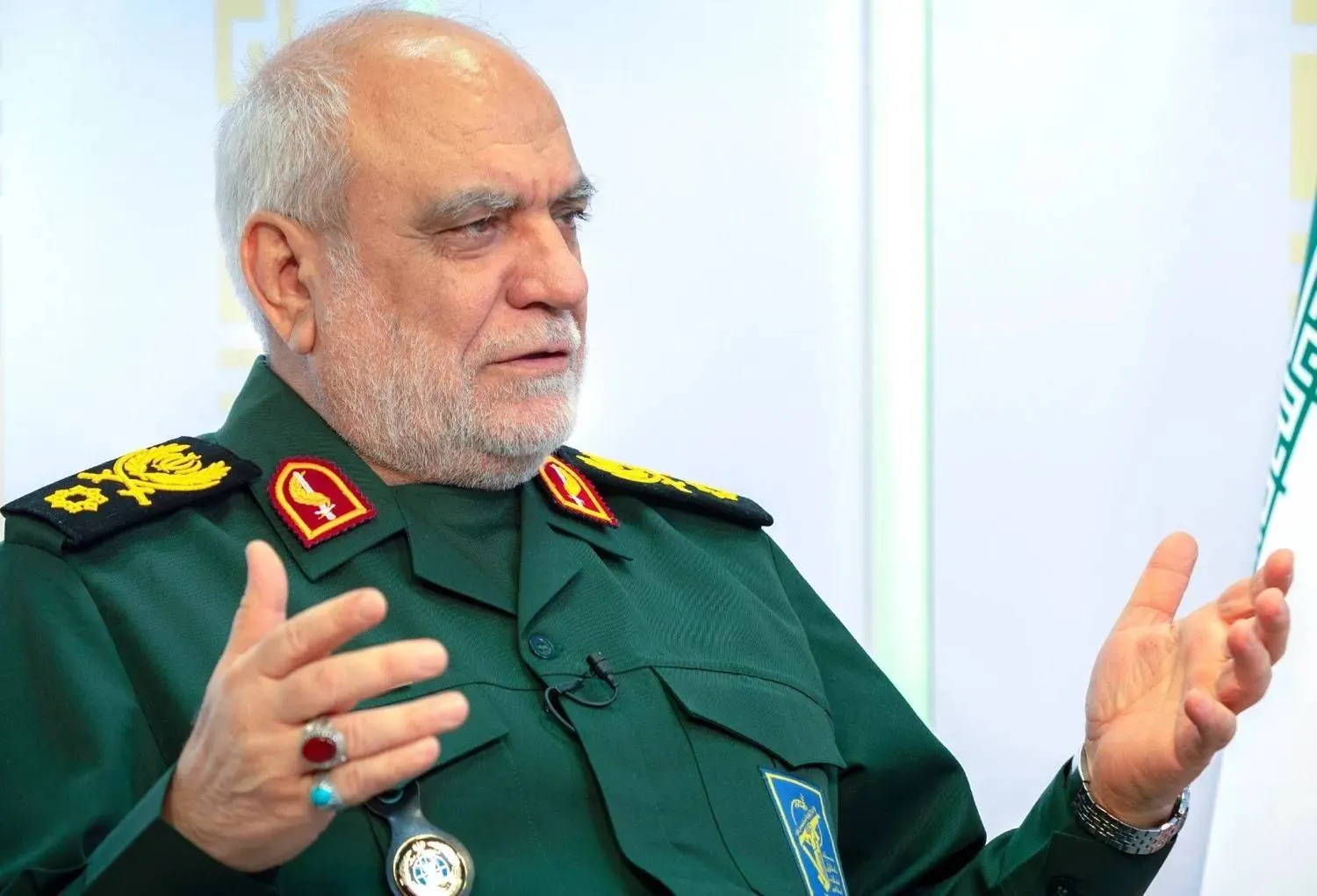
A photo published by the Iranian Supreme Leader’s website from an interview with Khademi, February 18. 
TT

Majid Khademi: Brief Tenure at Helm of Embattled IRGC Intelligence Ends in Assassination

A photo published by the Iranian Supreme Leader’s website from an interview with Khademi, February 18. 

Majid Khademi’s rise to the top of Iran’s Revolutionary Guard Corps (IRGC) intelligence apparatus was as abrupt as his fall.

During the 12-day war in June 2025, Khademi was appointed head of the IRGC Intelligence Organization following the killing of his predecessor, Mohammad Kazemi, at a time when Iran’s security establishment was under intense pressure from external strikes, internal unrest and mounting concerns over infiltration.

Less than a year later, on April 6, 2026, Israel announced it had assassinated Khademi in an air strike. The IRGC later confirmed his death.

His killing marked the second time in under a year that the head of one of Iran’s most sensitive intelligence bodies had been eliminated in a targeted strike, underscoring both the exposure of the apparatus and the strain on its ranks.

Khademi, a career security officer, was not among the IRGC’s publicly prominent figures. Unlike commanders known for battlefield roles or political visibility, he emerged from the opaque world of internal protection and counterintelligence, a domain focused on safeguarding the system from within.

His appointment reflected that background and came at a moment when the IRGC was grappling with assassinations, intelligence breaches, and operational setbacks that raised questions about its internal cohesion.

A parallel apparatus

To understand Khademi’s role, it is necessary to situate the body he led within Iran’s broader intelligence architecture. Iran operates two major intelligence services with overlapping mandates.

The Ministry of Intelligence is the state’s official civilian agency, while the IRGC Intelligence Organization has evolved into a powerful parallel structure, particularly since 2009. More closely aligned with Supreme Leader Ali Khamenei and the ideological core of the system, the IRGC’s intelligence arm operates with a mandate that blends security, political oversight and military intelligence.

Within this ecosystem, the IRGC’s Intelligence Protection Organization, where Khademi spent much of his career, plays a critical internal role. It is tasked with counterintelligence inside the corps, including preventing leaks, monitoring discipline and loyalty among personnel, and detecting infiltration before it develops into a broader crisis.

In recent years, the IRGC intelligence apparatus has expanded beyond its traditional military remit to include monitoring protests, cyberspace operations, influence campaigns and surveillance of political and social actors, alongside pursuing external adversaries.

This expansion has effectively transformed it into a hybrid political-security institution, requiring its leadership to possess detailed knowledge of the IRGC’s internal networks of loyalty and control. Khademi’s career trajectory, rooted in protection and internal oversight, aligned closely with these demands.

A closed biography

Information about Khademi remains limited, reflecting the nature of his roles. His name appears in various forms in Iranian sources, including Majid Khademi, Majid Khademi Hosseini and Majid Hosseini. He is reported to have been born in the village of Amir Hajilu, in Fasa county in the southern province of Fars. He belonged to an early generation of IRGC cadres who rose through internal security structures, particularly within the protection apparatus.

By at least 2014, Khademi was serving as a deputy to Hossein Taeb, then head of IRGC intelligence. He later held senior positions within the Intelligence Protection Organization. In May 2018, he was appointed head of intelligence protection at the Ministry of Defense.

He returned to the IRGC’s protection apparatus in 2022 as its chief, succeeding Mohammad Kazemi, who had been promoted to lead IRGC intelligence after Taeb’s removal. Following Kazemi’s killing in June 2025, Khademi was elevated to head the IRGC Intelligence Organization.

“Security contamination”: the post-Taeb phase

Khademi’s rise was closely tied to a broader reshuffle within Iran’s security establishment. In 2022, Hossein Taeb was removed from his post after a period marked by a string of security breaches, assassinations, and reported intelligence failures. His replacement, Kazemi, was drawn from the protection apparatus, signaling a shift toward tightening internal control. Khademi’s appointment to head intelligence protection formed part of this restructuring, which also affected other security bodies close to the core of power.

The changes took place amid growing concern among officials over what was described in Iranian discourse as “security contamination”, referring to infiltration, leaks and compromised networks within sensitive institutions. Statements by senior political and security figures indicated that these concerns had moved from theoretical risk to a central element of the security crisis.

Between 2022 and 2025, Khademi oversaw one of the most sensitive portfolios in the IRGC at a time when fears of infiltration were intensifying within the organization itself. Some Iranian analysts associated his rise with the camp of Mohammad Bagher Zolghadr, a senior security figure later appointed secretary of the Supreme National Security Council.

While the precise alignments remain unclear, the reshuffle was widely seen as part of an internal rebalancing within the IRGC’s conservative security current. Khademi’s advancement came during a period of shifting trust and authority within the apparatus rather than institutional stability.

His career placed him at the core of the IRGC’s internal control mechanisms, overseeing secrecy, discipline, and loyalty. His tenure at the Ministry of Defense between 2018 and 2022 added another dimension. The ministry sits at the nexus of military industries, sensitive programs and technical infrastructure, as well as the complex relationship between the IRGC, the regular army and other agencies. Its intelligence protection arm is regarded as a key component of Iran’s security system, responsible not only for personnel oversight but also for safeguarding strategic projects and documentation.

During this period, the IRGC, through networks associated with Khademi, consolidated its role in protecting institutions linked to Iran’s nuclear program. This included expanded responsibilities for securing nuclear facilities and affiliated centers, as well as protecting nuclear officials and scientists, an area long targeted by foreign intelligence operations.

His security discourse

Khademi’s public statements offer insight into his approach. In an interview published on February 18, 2026, on the official website of the Supreme Leader’s office, he framed recent unrest in Iran in explicitly security terms. He argued that the disturbances in January were not simply protests driven by economic or social grievances, but rather an organized project involving foreign intelligence services, domestic networks and coordinated mobilization through digital platforms.

He described the events as closer to a “coup attempt” than a protest movement, a characterization consistent with the narrative advanced by Iran’s leadership, including Supreme Leader Ali Khamenei. Khademi spoke of infiltration at the level of individuals and factions and alleged the involvement of at least 10 foreign intelligence agencies. He outlined what he described as staged phases of unrest, including “cognitive warfare” and digital mobilization.

He cited figures to illustrate the scale of the response by his apparatus, including the summoning of 2,735 individuals, the “advising” of around 13,000 others, and the seizure of 1,173 weapons. Central to his analysis was the role of cyberspace. He linked what he termed “cognitive warfare” to weaknesses in internet governance, which he said created vulnerabilities exploited for organization, mobilization and incitement.

He also referred to a meeting with Ali Khamenei prior to the unrest, saying the leader had stressed the importance of intelligence work and vigilance against infiltration, drawing parallels with the early years following Iran’s 1979 revolution.


Report: Europe’s Options in the Strait of Hormuz Are Few and Risky

A cargo ship in the Gulf, near the Strait of Hormuz, as seen from northern Ras al-Khaimah, near the border with Oman’s Musandam, amid the US-Israeli conflict with Iran, in United Arab Emirates, March 11, 2026. (Reuters file)
TT

Report: Europe’s Options in the Strait of Hormuz Are Few and Risky

A cargo ship in the Gulf, near the Strait of Hormuz, as seen from northern Ras al-Khaimah, near the border with Oman’s Musandam, amid the US-Israeli conflict with Iran, in United Arab Emirates, March 11, 2026. (Reuters file)

When senior officials from 40 countries met virtually this week to discuss how to bring shipping traffic back to the Strait of Hormuz, Italy’s foreign minister had a proposal. He urged them to establish a “humanitarian corridor” allowing safe passage for fertilizer and other crucial goods headed to impoverished nations.

The plan, described after the meeting by Italian officials, was one of several competing proposals from Europe and beyond that were meant to prevent the Iran war from causing widespread hunger. But it was not endorsed by the envoys on the call, and the meeting ended with no concrete plan to reopen the strait, militarily or otherwise, reported the New York Times.

European leaders are under pressure from US President Donald Trump to commit military assets, immediately, to end Iran’s blockage of the strait and tame a growing global energy and economic crisis. They have refused to meet his demands by sending warships now. Instead, they are hotly debating what to do to help unclog the vital shipping lane once the war ends.

But they are struggling to rally around a plan of action.

That partly reflects the slow gears of diplomacy in Europe and the sheer number of nations, including Gulf states, that are invested in safeguarding the strait once the war ends. Many nations involved in the talks, including Italy and Germany, have insisted that any international effort be blessed by the United Nations, which could slow action further. Military leaders will take up the issue in discussions next week.

More than anything, the struggle reflects how difficult it could be to actually secure the strait under a fragile peace — for Europe or for anyone else. None of the options available to Europe, the Gulf states and other countries look foolproof, even under the assumption that the major fighting will have stopped.

Naval escorts

French officials, including President Emmanuel Macron, have repeatedly raised the possibility that French naval vessels could help escort merchant ships through the strait after the war ends.

American officials have pushed for Europeans and other allies, like Japan, to escort ships sailing under their own countries’ flags.

Naval escorts are expensive. Also, their air defense systems alone might not be sufficient to stop some types of attacks, like drone strikes, should Iran choose to start firing again.

“What does the world expect, what does Donald Trump expect, from let’s say a handful or two handfuls of European frigates there in the Strait of Hormuz,” Defense Minister Boris Pistorius of Germany said last month, “to achieve what the powerful American Navy cannot manage there alone?”

Sweep for mines

German and Belgian officials, among others, say they are prepared to send minesweepers to clear the strait of explosives after the war.

Western military leaders aren’t convinced that Iran has actually mined the strait, in part because some Iranian ships still pass through it. So while minesweepers might be deployed as part of a naval escort, they might not have much to do.

Help from above

Another option is sending fighter jets and drones to intercept any Iranian air assaults on ships. American officials have pushed Europe to do this.

It is quite expensive and still not guaranteed to work. Iran can attack ships with a single soldier in a speedboat, and if just a few attempts succeed, that could be enough to spook insurers and shipowners out of attempting passage.

Diplomacy

Another option are negotiations and economic leverage to pressure Iran to refrain from future attacks, and deploy a variety of military means to enforce that. This effort would go beyond Europe. On Thursday, the German foreign ministry called on China to use its influence with Iran “constructively” to help end the hostilities.

This option is expensive and still not guaranteed. Negotiations seem to have done little to stop the fighting. But this may be Europe’s best bet, for lack of a better one.

What if none of that works?

Iranian officials said this week that they would continue to control traffic through the strait after the war. They have already made plans to make ships pay tolls for passing through the strait, which is supposed to be an unfettered waterway under international law.

A continued blockage risks global economic disaster. Countries around the world rely on shipments through the strait for fuel and fertilizer, among other necessities.

In some regions, shortages loom. In others, like Europe, high oil, gas and fertilizer prices have raised the specter of spiking inflation and cratering economic growth.

“The big threat right now is stagflation,” said Hanns Koenig, a managing director at Aurora Energy Research, a Berlin consultancy. “You’ve got higher prices, and they strangle the tiny growth we would have seen this year.”

*Jim Tankersley for the New York Times