WFP: 12.4 Million People Food Insecure in War-Torn Syria

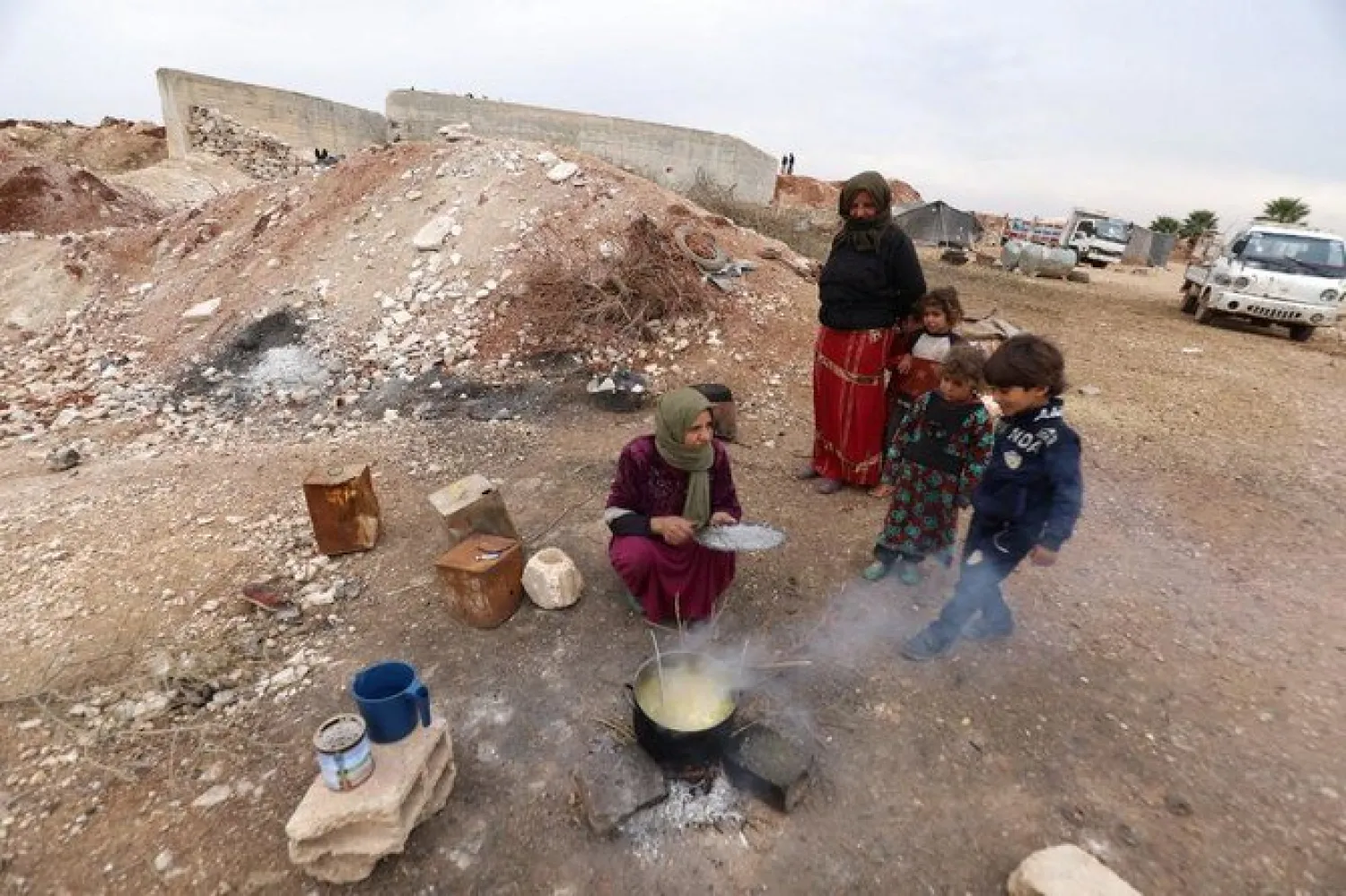
A record 12.4 million people in Syria are struggling to find enough food to eat, the World Food Program said. (File/AFP)
TT

WFP: 12.4 Million People Food Insecure in War-Torn Syria

A record 12.4 million people in Syria are struggling to find enough food to eat, the World Food Program said. (File/AFP)

A record 12.4 million people in war-torn Syria are struggling to find enough food to eat, the UN food agency has said, in an increase it described Saturday as “alarming.”

The figure means “60 percent of the Syrian population are now food insecure,” the World Food Program said, based on results of a nationwide assessment in late 2020.

It marks a sharp increase from 9.3 million people who were food insecure in May last year.

“More Syrians are slipping deeper into hunger, poverty and food insecurity than ever before,” WFP spokeswoman Jessica Lawson told AFP.

“It is alarming that a basic meal is now beyond the reach of the majority of families.”

Syria’s almost ten-year-old war has ravaged the economy and sent inflation soaring across the country.

In early 2021, food prices nationwide were 33 times higher than the five-year pre-war average, WFP says.

A dire financial crisis in neighboring Lebanon that has slowed dollar inflows and lockdowns to stem the spread of the coronavirus pandemic have further increased economic woes.

“The economic situation in Syria is putting immense pressure on families who have nothing left after years of conflict and many depend entirely on humanitarian assistance to survive,” Lawson said.

The Syrian conflict has killed more than 387,000 people and displaced millions more from their homes since starting in 2011 with the brutal repression of anti-government protests.


Lebanon Bets on US Pressure to Win Israeli Concessions

Displaced residents return to southern Lebanon (AFP)
TT

Lebanon Bets on US Pressure to Win Israeli Concessions

Displaced residents return to southern Lebanon (AFP)

US President Donald Trump announced a 10-day ceasefire between Lebanon and Israel, opening the door to direct negotiations between the two sides.

Without a truce, the war between Israel and Hezbollah would remain open-ended, bringing more destruction and displacement to southern Lebanon.

But a ceasefire alone is not enough unless it runs in parallel with Lebanese-Israeli talks and can be extended to allow time for a deal, a ministerial source told Asharq Al-Awsat.

Trump’s move also satisfied Iran by involving it in the contacts that led to the truce, while aligning with Lebanese President Joseph Aoun, who made a ceasefire a precondition for negotiations.

Washington brings Iran in

Washington drew Iran into the ceasefire in hopes of extracting concessions by pressing Hezbollah to uphold the truce and accept joining the government in direct talks, the source said.

The talks still face opposition from the Shiite duo, Hezbollah and Amal, despite mounting local and international pressure to unify behind a Lebanese delegation expected to be headed by former ambassador Simon Karam.

No meeting is expected soon between Aoun and Israeli Prime Minister Benjamin Netanyahu at the White House under Trump’s sponsorship, at least during the ceasefire.

Any such meeting should seal a comprehensive agreement, not launch negotiations, the source said.

He added that there is no need to rush. The priority is for Washington to press Israel to offer incentives that could help secure a deal. Without that, a meeting would be meaningless as long as Israeli forces remain, residents are barred from returning south of the Litani River, Lebanese prisoners are held, and towns face systematic destruction.

Under such conditions, the source asked, would a meeting simply impose a reality rejected by Aoun, who insists the timing is wrong unless Israel shows goodwill on the ground toward ending its occupation.

Separating Iran from Lebanon

The source said a ceasefire is essential to start talks, but involving Iran does not mean Lebanon will tie its fate to Tehran’s negotiations with Washington, contrary to claims by a Shiite duo source.

That source suggested Lebanon would be part of a broader US-Iran settlement that could ease tensions, without explaining how this would reassure the Lebanese.

Washington’s outreach to Iran to help resume talks in Islamabad does not mean handing Lebanon’s file to Tehran, the source said, noting strong domestic, Arab and international opposition to linking the two tracks.

He questioned how Iran can negotiate directly with the United States while Lebanon is denied the same option in the absence of alternatives.

He also asked what alternative exists, and whether Lebanon can withstand another war after Hezbollah backed Gaza and Iran without returning to the government’s authority.

He raised doubts over how returning residents can be reassured, as areas south of the Litani have been devastated and are no longer fit for living.

Residents have the right to regain stability and ease fears about their future while awaiting reconstruction, which hinges on Hezbollah accepting the state’s monopoly on arms as a core item in negotiations. In return, Washington would need to secure Israel’s withdrawal and complete border demarcation in line with the armistice.

The question remains whether the Shiite duo will continue to reject direct talks overseen by Aoun, who insists on fully liberating the south.

That puts pressure on Parliament Speaker Nabih Berri, who has voiced reservations, as Aoun and international actors continue to seek a unified Lebanese position to prevent the ceasefire from unraveling.


Aoun Says Future Deal Will Not Cede Lebanese Territory, Country No Longer ‘Arena for Anyone’s Wars’

A photograph released by the Lebanese Presidency on April 17, 2026, shows Lebanon's President Joseph Aoun delivering a televised address to the Lebanese people from the Baabda Presidential Palace, east of the capital Beirut. (Lebanese Presidency)
TT

Aoun Says Future Deal Will Not Cede Lebanese Territory, Country No Longer ‘Arena for Anyone’s Wars’

A photograph released by the Lebanese Presidency on April 17, 2026, shows Lebanon's President Joseph Aoun delivering a televised address to the Lebanese people from the Baabda Presidential Palace, east of the capital Beirut. (Lebanese Presidency)

Lebanese President Joseph Aoun said on Friday that any future deal reached by the government would not cede any ‌territory or ‌undermine Lebanon's national ‌rights, ⁠without saying whether ⁠he was referring to prospective talks with Israel.

The televised address was ⁠his first speech ‌since ‌the US brokered a ‌ceasefire to ‌end fighting between Israel and Iran-backed Hezbollah on Thursday. ‌

The text of the deal ⁠says ⁠Israel and Lebanon would hold direct talks to produce a "peace between the two countries".

Aoun said Lebanon was on the verge of a "new phase" of "permanent agreements."

"Now, we all stand before a new phase," he added, stressing "it is the phase of transition from working on a ceasefire to working on permanent agreements that preserve the rights of our people, the unity of our land, and the sovereignty of our nation."

He added that direct talks with Israel were "not a sign of weakness nor a concession... negotiations do not mean, and will never mean, giving up any right, conceding any principle, or compromising the sovereignty of this nation."

Moreover, Aoun stressed that Lebanon was no longer an "arena" for anyone's wars.

"We are confident that we will save Lebanon... we have reclaimed Lebanon and Lebanon's decision-making power for the first time in nearly half a century," he declared, adding that "today, we negotiate for ourselves... we are no longer a pawn in anyone's game, nor an arena for anyone's wars, and we never will be again."

"I hereby affirm... that there will be no agreement that infringes upon our national rights, diminishes the dignity of our steadfast people, or relinquishes an iota of this nation's soil."


Hezbollah Tallies Its Dead from Israel War, Estimates Exceed 1,000

A woman walks next to an ambulance at the site of an Israeli strike carried out before a 10-day ceasefire between Lebanon and Israel went into effect, in Tyre, Lebanon, April 17, 2026. (Reuters)
TT

Hezbollah Tallies Its Dead from Israel War, Estimates Exceed 1,000

A woman walks next to an ambulance at the site of an Israeli strike carried out before a 10-day ceasefire between Lebanon and Israel went into effect, in Tyre, Lebanon, April 17, 2026. (Reuters)

Hezbollah said its fighters would “keep their fingers on the trigger” hours after a ceasefire took effect between Lebanon and Israel, warning it would not stay silent over any Israeli violations and would not repeat its past restraint under the October 2024 ceasefire, when Israel continued attacks and assassinations against its members and commanders.

In recent hours, the Iran-backed party focused on helping large numbers of displaced people return to their homes, while tracking Israeli movements in occupied areas and preparing for a possible new confrontation at any moment.

Death toll unclear

People closely following Hezbollah said it was still counting its dead, with no final toll yet, as many fighters remain under rubble in villages and towns that saw fierce clashes, including the southern towns of Khiam and Bint Jbeil, where Israeli forces are deployed, complicating search efforts.

Some bodies are difficult to identify, while others have been taken captive.

Sources said Hezbollah would not, for now or in the near future, announce casualty figures, as it did in the previous war.

It stopped issuing official death notices after the toll passed 500 and is maintaining that approach, they said, with estimates suggesting the number is high and may exceed 1,000, particularly after heavy fighting in Khiam and Bint Jbeil.

Hezbollah statement

In a statement after the ceasefire, Hezbollah said it carried out 2,184 military operations during the 45-day battle from March 2 to April 16.

It said its drones and rocket fire struck Israeli settlements and cities from the Lebanese border to beyond Tel Aviv, up to 160 km deep.

It said its fighters conducted about 49 operations a day, adding: “The hands of these fighters will remain on the trigger, on guard against the enemy’s treachery and any violation of its commitments.”

Hezbollah lawmakers on Friday accompanied displaced residents returning to their towns and villages in the south, Bekaa Valley, and Beirut’s southern suburbs.

Hezbollah lawmaker Hassan Fadlallah said the group would accept no surrender or submission.

“This issue is settled for us. If the Americans want to give the Israeli enemy freedom of movement, and if some Lebanese officials submit and make concessions, that will have no application on the ground,” he said, warning that the ceasefire “must not become a tool for the enemy to blackmail the authorities.”

He added: “The Lebanese authorities must withdraw from direct negotiations that will only lead to submission to Israeli dictates. This threatens Lebanon’s future and fate.”

People check destruction behind posters of Hezbollah leader Naim Qassem (bottom) and a killed Hezbollah member in Beirut's southern suburbs after a 10-day ceasefire with Israel came into effect on April 17, 2026. (AFP)

‘A major defeat’

While Hezbollah and its supporters frame the outcome as a victory, security and defense analyst Riad Kahwaji told Asharq al Awsat the battlefield suggests otherwise.

“When the war began, the Israelis were in five points, while Hezbollah fighters were active along axes such as Naqoura, Kfar Kila, and Aita al-Shaab. Today, Israeli forces are deeper inside Lebanese territory,” he said.

“Israeli control has reached 10 km, compared with around 2 or 3 km before. Hezbollah lost territory, was forced to retreat, its death toll is in the hundreds, its number of captives has risen, and the scale of destruction in the south, the southern suburbs and the Bekaa is many times greater,” Kahwaji added.

He said tens of thousands have been displaced after their homes were destroyed. “This is defeat, in every sense of the word.”

Kahwaji said that even if Israeli soldiers were killed, their numbers were not comparable to Hezbollah’s losses, and that the scale of damage in Lebanon versus Israel underscored the imbalance.

“Hezbollah considers its survival and ability to fire rockets a victory, even though it has again shown it acts as an Iranian tool and entered the war in support of Iran,” he stressed.

Ready for another round

Political writer Qassem Kassir, who is closely familiar with Hezbollah’s position, offered a sharply different view, saying the group had emerged stronger than after the 2024 war.

“If we do not say it won, what is certain is that Israel failed to achieve its military and security goals. Tel Aviv was unable to target Hezbollah’s leadership. Although some commanders were killed, the number is very small compared with the previous war,” he said.

Kassir said Hezbollah had “managed the battle with precision and success” and was preparing for a possible new confrontation, unless comprehensive solutions are reached, including a full Israeli withdrawal, the return of captives, an end to attacks and launch of reconstruction.