Iraq Signs Deal to Receive Russia's Sputnik V Vaccine

A medical specialist holds a vial of Sputnik V vaccine against the coronavirus in a department store in Moscow, Russia, January 18, 2021 REUTERS/Shamil Zhumatov/File Photo/File Photo
TT

Iraq Signs Deal to Receive Russia's Sputnik V Vaccine

A medical specialist holds a vial of Sputnik V vaccine against the coronavirus in a department store in Moscow, Russia, January 18, 2021 REUTERS/Shamil Zhumatov/File Photo/File Photo

Iraq has signed an agreement with Russia to import 1 million doses of the Sputnik V coronavirus vaccine, Iraq's oil ministry said on Thursday.

Iraq, which is struggling to curb the spread of COVID-19, expects the vaccine shipment to be delivered to Baghdad within two weeks, according to a statement citing Oil Minister Ihsan Abdul Jabbar, who signed the deal.

On Tuesday, Iraq received its first 50,000 doses of the Sinopharm COVID-19 vaccine as a donation from China. Inoculations started the same day for health workers, elderly people, and members of the security forces first.

Sinopharm Group is to supply around 2 million doses of the vaccine in stages, and Iraq also has agreements to receive vaccines from AstraZeneca Plc and Pfizer.

Iraq recorded a sharp rise in COVID-19 infections last month, and has reported cases of one of the variants of the novel coronavirus.

The total number of COVID-19 cases reported in Iraq is around 714,000, including 13,507 deaths as of March 4.

Nearly two weeks ago, the government banned most travel between provinces and imposed a nationwide curfew from 8 p.m. to 5 a.m. on weekdays and for 24 hours a day on Friday to Sunday, following a sharp rise in COVID-19 infections.


Saudi Decision to Resume Exports from Lebanon Widely Welcomed in Beirut

Lebanese trucks transporting goods wait at the Masnaa border crossing with Syria. AFP file photo
TT

Saudi Decision to Resume Exports from Lebanon Widely Welcomed in Beirut

Lebanese trucks transporting goods wait at the Masnaa border crossing with Syria. AFP file photo

Lebanon has welcomed Saudi Arabia's decision to lift the ban on imports in light of the “positive steps” taken by the Lebanese government to rebuild state institutions.

The Saudi Crown Prince’s decision was widely welcomed across Lebanon, nearly five years after Saudi Arabia halted all Lebanese imports, citing at the time “the importance of taking all necessary measures to protect the security of the Kingdom and its people.”

Saudi Foreign Minister Prince Faisal bin Farhan conveyed Crown Prince Mohammed bin Salman’s directive in a phone call with Prime Minister Nawaf Salam on Wednesday.

He affirmed Saudi Arabia’s support for Lebanon’s stability, sovereignty over all its territory and the well-being of its people, as well as Riyadh’s confidence that Lebanon would take all necessary measures to ensure it is not used as a platform to harm its brothers.

Lebanese President Joseph Aoun expressed deep gratitude to Prince Mohammed bin Salman, saying the decision was “a sincere expression of the depth of Arab brotherhood that binds the two brotherly countries, and an embodiment of the wise Saudi leadership’s keenness to support Lebanon and its people during the phase of recovery and revival it is undergoing.”

“This kind step will make a tangible contribution to reviving the national economy and supporting broad segments of Lebanese producers and exporters,” Aoun said.

He added that the entire Lebanese people appreciates the decision, and “views it as a gesture that strengthens the path of Lebanese-Saudi relations rooted in the bonds of history and shared destiny.”

Salam said the decision to lift the ban on Lebanese exports reflected the depth of the brotherly and historic ties between the two countries. He said it embodied Saudi confidence in Lebanon and a shared desire to strengthen economic and trade cooperation.

Salam said the move was an important step that would support Lebanon’s economy, open new opportunities for Lebanese producers and exporters, and help promote growth and stability.

He said Lebanon looked forward to continued work and coordination with Saudi Arabia to strengthen cooperation and partnership in various fields for the benefit and prosperity of both countries.

The Saudi ban began in 2021 on agricultural product imports, then extended to all goods, and was linked to the smuggling of the drug Captagon, after smugglers and criminal networks exploited Lebanon as a platform for drug smuggling into the Kingdom.

This increased pressure on the collapsing Lebanese economy, which was already suffering from a severe financial crisis in 2019, especially with agricultural exports moving away from traditional Arab Gulf markets.

Lebanese exports to Saudi Arabia reached approximately $240 million in 2020.

Minister of Interior and Municipalities Ahmed Al-Hajjar thanked “Saudi Arabia for the decision to resume Lebanese exports.”

In a television interview, Al-Hajjar considered that “this step is the beginning of trust in Lebanese state institutions,” confirming that “the necessary measures have been taken to control border crossings.”

“We are coordinating with Saudi Arabia to control drug smuggling operations,” Al-Hajjar said.

Likewise, Minister of Foreign Affairs and Emigrants Youssef Rajji stated that “the resumption of Lebanon's exports to Saudi Arabia is a bright page on the path to restoring confidence in the Lebanese state.”

For his part, Minister of Public Works and Transport Fayez Rassamni issued a statement thanking the Saudi leadership and affirming that the resumption of Lebanese exports to the Saudi market “has highly significant dimensions and constitutes direct support for the Lebanese economy.”

“It also consolidates Lebanon's position as a reliable trade partner in the region,” he said.

Minister of Industry Joe Issa El-Khoury said that with the return of Lebanese products to the Saudi market, “returns hope for a stronger Lebanese industry, more committed, and more present in its Arab environment.”


Israel Advances in South Lebanon Toward Heights Overlooking Nabatieh, Galilee

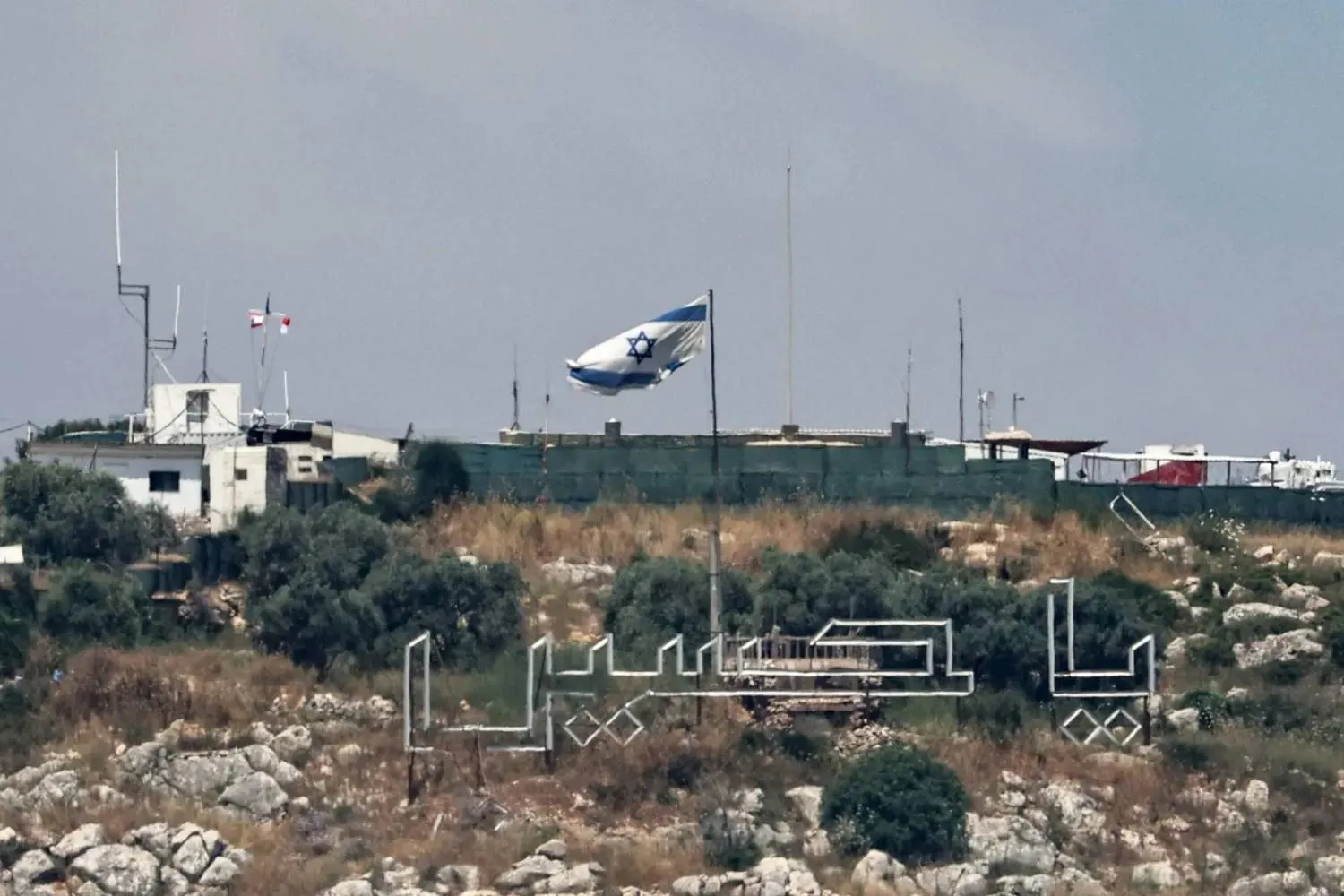
An Israeli army flag flies over the ruins of destroyed buildings in Kfar Kila, southern Lebanon (EPA)
TT

Israel Advances in South Lebanon Toward Heights Overlooking Nabatieh, Galilee

An Israeli army flag flies over the ruins of destroyed buildings in Kfar Kila, southern Lebanon (EPA)

The Israeli army pushed forward again on Thursday around the southern Lebanese city of Nabatieh, seeking to reach the strategic Ali al-Taher heights, an area it has pounded with dozens of strikes over the past two years.

Lebanese security assessments suggest the aim is to reach tunnels and facilities belonging to Hezbollah.

The move followed a similar strategic advance two weeks earlier, when Israeli forces reached the strategic Beaufort Castle east of Nabatieh before expanding around it.

Their next objective is Ali al-Taher hill, one of the last strategic heights overlooking Nabatieh from the west. The hill also overlooks Lebanese towns occupied by Israel and, in some places, has a line of sight toward settlements and towns in Galilee in northern Israel’s eastern sector.

New advance

Israeli military vehicles and bulldozers were seen at the Zafata site in Kfar Tebnit, east of Nabatieh, on the main road linking Marjayoun to Nabatieh.

Reports said Israeli forces had seized eastern and central neighborhoods of Kfar Tebnit amid widespread destruction. Local media said tanks advanced from Kfar Tebnit into Nabatieh al-Fawqa, southeast of Nabatieh city.

Security sources in southern Lebanon said the push toward Nabatieh al-Fawqa aimed to widen Israel’s “fire safety zone” and prevent Hezbollah fighters from launching drones and guided missiles at Israeli armor.

The sources told Asharq Al-Awsat the expansion was an attempt to push fighters away from the Beaufort Castle area and its surroundings, giving armored vehicles and other military vehicles room to advance toward the heights without being targeted.

The sources said reaching Zafata, a former artillery position used by Israeli forces before their withdrawal from southern Lebanon in 2000, meant the objective was to seize the Ali al-Taher heights, no more than two kilometers from the point reached.

They said taking the hill was a strategic goal for Israeli forces, given their repeated shelling of it in recent months with bunker-buster and concussion bombs, strengthening the belief that Israel seeks to enter underground facilities thought to belong to Hezbollah.

The Israeli army paved the way for the advance overnight Wednesday into Thursday with heavy airstrikes on wooded areas in Jarmaq and Kfar Rumman and on hills overlooking the area, aiming to prevent armor from being hit by guided missiles or drones.

Artillery fire also intensified across the surrounding area, a tactic usually used during attempts to push into new territory.

Israeli artillery targeted the outskirts of Qatrani in the Jezzine area near Shbeil School. Warplanes carried out four strikes on the same location.

Artillery also hit Ali al-Taher woods on the outskirts of Nabatieh al-Fawqa, the area around Al-Najdeh Al-Shaabiya Hospital in Nabatieh and the Kfar Rumman roundabout, all close to the incursion points.

Western sector

The incursion coincided with other movements that appeared to test Hezbollah’s defenses in the Mansouri area of the western sector. Two military vehicles were spotted in Mansouri after advancing from Tayr Harfa and Shama, but they quickly turned back.

Hezbollah said in two separate statements that it had targeted gatherings of Israeli vehicles and soldiers with rockets at the Rajman area near Tayr Harfa in southern Lebanon.

Local media said Israeli forces tried to advance from the Tayr Harfa-Jebbayn triangle toward the valley, in preparation for entering Majdal Zoun. The move coincided with more than 15 airstrikes on Majdal Zoun and Wadi Hassan, as well as heavy artillery fire.

Heavy clashes broke out overnight Wednesday into Thursday with Hezbollah fighters, who used rocket-propelled grenades and a loitering drone. The fighting forced Israeli forces to retreat and withdraw from the axis along which they had advanced.

Israeli artillery resumed shelling Wadi Hassan and its surroundings on Thursday morning with heavy 155 mm rounds, as warplanes and drones flew intensively over the area.

Continued shelling

In parallel, an Israeli airstrike on a residential building near Hiram Hospital in Tyre killed one person and wounded 17 others, including 10 nurses and hospital employees. Flying glass from shattered windows and doors caused the injuries.

The strike also damaged ceilings in some patient and emergency rooms and window panes, and destroyed cars belonging to doctors and employees in the hospital courtyard.

The Health Ministry’s Public Health Emergency Operations Center said Israeli strikes on Tayr Debba in the Tyre district killed nine people, including a woman, and wounded 10 others.

Operations inside Lebanon

The Israeli army said on Thursday that forces from the 91st Brigade had killed 35 Hezbollah militants over the past week as they moved near Israeli forces in southern Lebanon. It said the forces destroyed a rocket launcher hidden among trees and killed another militant in the area over the past day.

The army also said troops had seized quantities of weapons and ammunition, including rockets and RPG rounds, at various sites during ongoing military operations.

In the morning, the Israeli army said the Home Front Command had issued a precautionary directive after detecting launches from Lebanon toward northern Israel, urging people to enter protected areas when warnings are activated.


Saudi Reopening to Lebanese Exports Boosts Economic and Agricultural Hopes

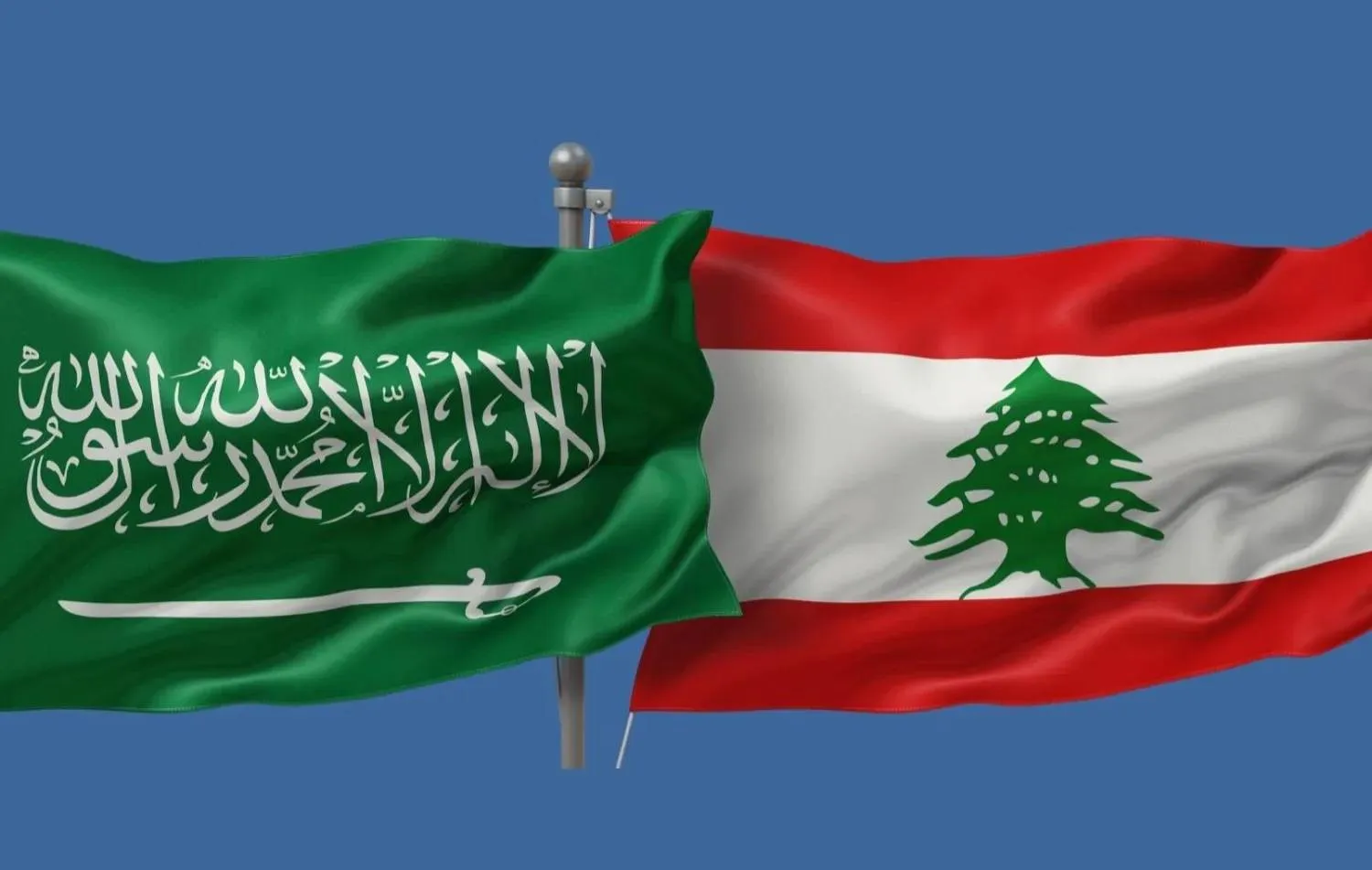
 A photo of the Lebanese and Saudi flags. (National News Agency)
A photo of the Lebanese and Saudi flags. (National News Agency)
TT

Saudi Reopening to Lebanese Exports Boosts Economic and Agricultural Hopes

 A photo of the Lebanese and Saudi flags. (National News Agency)
A photo of the Lebanese and Saudi flags. (National News Agency)

Saudi Arabia’s decision to resume receiving Lebanese exports has revived hopes among Lebanese business and farming circles for the return of one of the country’s most important foreign markets after five years of disruption that left deep scars on Lebanon’s production and export sectors.

The move is seen in Lebanon as carrying significance beyond trade. It marks a new stage in restoring confidence in the Lebanese state under President Joseph Aoun and Prime Minister Nawaf Salam, while offering a potential lifeline to sectors that have long suffered from shrinking export markets, difficulties marketing their output, and Lebanon’s prolonged economic and financial crisis.

Lebanon’s Agriculture Ministry said the decision was not merely a commercial measure, but an economic and development step of national importance.

It said the move would help Lebanese farmers remain resilient, restart the agricultural production cycle and revive sorting, packaging, marketing and export chains, directly benefiting thousands of families that depend on farming as a main source of income.

A positive shock for Lebanon’s economy

Economists say the Saudi decision will quickly feed through to Lebanon’s productive sectors, especially industry and agriculture, while helping draw more foreign currency into the country.

“The impact of this step is very good economically and politically,” economist Walid Abu Suleiman told Asharq Al-Awsat. “Economically, it is very important because Saudi Arabia was a key destination for Lebanese exports.”

He said Saudi Arabia ranked third among Lebanon's importers, with Lebanese exports to the Kingdom totaling about $240 million in 2020.

Abu Suleiman described the reopening of the Saudi market as “a positive shock for the Lebanese economy,” noting that its importance extended beyond reviving exports to supporting monetary stability in a country facing a severe shortage of foreign currency.

“This step is also very important for the monetary situation, because the more exports increase, the more foreign currency enters Lebanon,” he said. “We know the extent of Lebanon’s suffering today in preserving what remains of its dollars and hard currencies.”

He said the Saudi market’s importance stemmed not only from its size, but also from its central place in the Arab economic system.

“We must not forget that the Saudi market represents about 85% of Gulf markets,” he said. “If we improve our products and succeed in offering quality goods at competitive prices, we can obtain a larger share of this market and increase our exports.”

Abu Suleiman said Lebanese products still had significant room for growth.

“It is possible for exports to rise from about $240 million to much larger figures, because the Saudi market is very large,” he said. “The opportunities for Lebanese products remain significant if this opening is properly used.”

He said the main beneficiaries would be the industrial and agricultural sectors, especially food processing and beverage industries.

“We hope this step will be followed by practical measures, and that matters will move in the right direction, given the positive impact this would have on the Lebanese economy and on production and export sectors,” he said.

Lebanese agriculture prepares to return

In the agricultural sector, the decision was warmly welcomed because of the heavy losses farmers have suffered since the Saudi market was closed in 2021.

Ibrahim Tarshishi, head of the National Federation of Lebanese Farmers, called the decision “a historic day in the life of the Lebanese economy.”

“The Kingdom of Saudi Arabia’s decision to remove obstacles to Lebanese agricultural exports has restored economic vitality to Lebanon and reopened the channels of normal trade and communication with the Kingdom and Gulf markets after years of disruption,” he told Asharq Al-Awsat.

Tarshishi said agricultural trade ties between the two countries go back more than half a century. For decades, he said, the Kingdom was the top destination for Lebanese agricultural exports, accounting for about 50% of total Lebanese agricultural exports to Arab countries.

In a sign of preparations to restart exports, Tarshishi said the Agriculture Ministry would hold a coordination meeting bringing together customs, IDAL, chambers of commerce, monitoring companies, exporters, refrigerated truck owners and agricultural unions to set the mechanisms for resuming exports and organizing land and sea freight, as well as transit procedures into Gulf markets.

Two thousand tons a day used to head to the Gulf

Recalling trade before the Saudi market was closed, Tarshishi said Lebanon used to export more than 30 trucks a day loaded with vegetables and fruit to the Kingdom, or nearly 1,000 tons a day, in addition to about another 1,000 tons that crossed Saudi territory in transit to other Gulf countries.

He said Lebanese products in strong demand in the Saudi market included grapes, pears, peaches, plums and other seasonal fruits for which Lebanon is known. The Kingdom, he said, had been the main outlet for these products during production seasons.

Losses exceeded $1 billion

Tarshishi said the damage suffered by the agricultural sector in recent years was substantial.

Lebanon used to export agricultural products worth nearly $200 million annually, he said, meaning the sector incurred losses exceeding $1 billion over the past five years because of the closure of the Saudi market and markets linked to it.

Tarshishi said the impact of resumed exports would not stop with farmers, but would extend across a long chain of economic activities tied to agriculture.

He said the decision would help keep farmers on their land, restart sorting and packaging centers, cardboard, wood and plastic factories and the transport sector, improve prices for agricultural products and curb the oversupply that in recent years forced many farmers to sell crops below production cost.