Saudi ‘MODON’ Chief: Work is Underway to Raise Rate of Women Investors to 20% https://english.aawsat.com/home/article/2881047/saudi-%E2%80%98modon%E2%80%99-chief-work-underway-raise-rate-women-investors-20
Saudi ‘MODON’ Chief: Work is Underway to Raise Rate of Women Investors to 20%
Saudi Arabia is working to empower women investors in the industrial sector, Asharq Al-Awsat
Saudi Industrial Property Authority (MODON) Director-General Khalid Al-Salem has reaffirmed the Kingdom’s commitment to developing smart industrial cities that meet the needs of both national and foreign investors.
Today, the size of developed industrial lands in Saudi Arabia exceeds 198.8 million square meters. MODON has ensured that operations and management of industrial cities in the Kingdom are run according to the highest international standards.
In an interview with Asharq Al-Awsat, Al-Salem revealed that Saudi Arabia has successfully attracted over 4,000 industrial contracts that encompass different sectors and involve more than SR367 billion ($98 billion).
He also noted that recently signed agreements helped attract Chinese quality industries to the Kingdom.
Speaking about the role played by women in developing national industries, Al-Salem acknowledged that it was vital.
He noted that the number of Saudi women working in the industrial cities overseen by MODON had increased by nearly 120% to reach 17,000 female workers by the end of Q1 2020. This is a significant hike from the 7,860-figure recorded in 2018.
Saudi women are finding more employment as private and government bodies strive to reach qualified women across the Kingdom’s economic sectors.
As for Saudi women investors in the Kingdom’s industrial sectors, Al-Salem said they represent 1% of total investors but stressed that work is underway to raise their share to 20%. He noted that this will be achieved in partnership with both the private and public sectors.
Launching the “Industry Ladies Conference 2020” represents one of the many examples of efforts spent by Saudi authorities to support the empowerment of women investors in industrial sectors, noted Al-Salem.
He revealed that MODON is looking to transform the female-focused forum to an annual event for dealing with investment opportunities in the Kingdom and addressing challenges inhibiting the role of women in the industrial sector.
Despite MODON having come a long way in its journey to increase Saudi women participation in the Kingdom’s industrial sector, Al-Salem reaffirmed that the authority is still striving toward more women empowerment.
He added that MODON has made the industrial sector more attractive to women through innovative financing products, services and solutions that suit their important role in the national economy.
Incentives for working women include the launch of industrial oases, which are characterized by the availability of nurseries, parking spaces and medical and recreational centers.
These oases host clean industries such as medical and food industries, rubber and high-tech industries, as well as prefabricated factories supporting women entrepreneurs and small and medium enterprises, noted Al-Salem.
He added that 2021 will see the launch of small, prefabricated factories to enable women’s investments in the industrial city of Dammam, a first for the Kingdom.
Coronavirus Pandemic
MODON has successfully implemented a range of initiatives that helped in easing and limiting the fallout caused by the coronavirus pandemic, affirmed Al-Salem.
The authority has cut annual rents by 25% until 2020-end and delayed the payment of other fees for 90 days for factories, he noted, asserting that these measures fall within the Saudi initiative to support the industrial sector.
This initiative includes the exemption from fees related to engineering schemes and contracts amendment until year-end. It also comprises extending the timeframe for the construction works of factories from 24 months to 36 months, in addition to extending the operation license term until end of year.
Al-Salem added that MODON has conducted 1,557 field inspections to ensure that industrial institutions in the Kingdom are following precautionary and preventative measures designed to curb the spread of the coronavirus.
Lebanon’s Foreign Minister to Asharq Al-Awsat: Only the State Decides on Talks with Israelhttps://english.aawsat.com/interviews/5265748-lebanon%E2%80%99s-foreign-minister-asharq-al-awsat-only-state-decides-talks-israel
Lebanon’s Foreign Minister to Asharq Al-Awsat: Only the State Decides on Talks with Israel
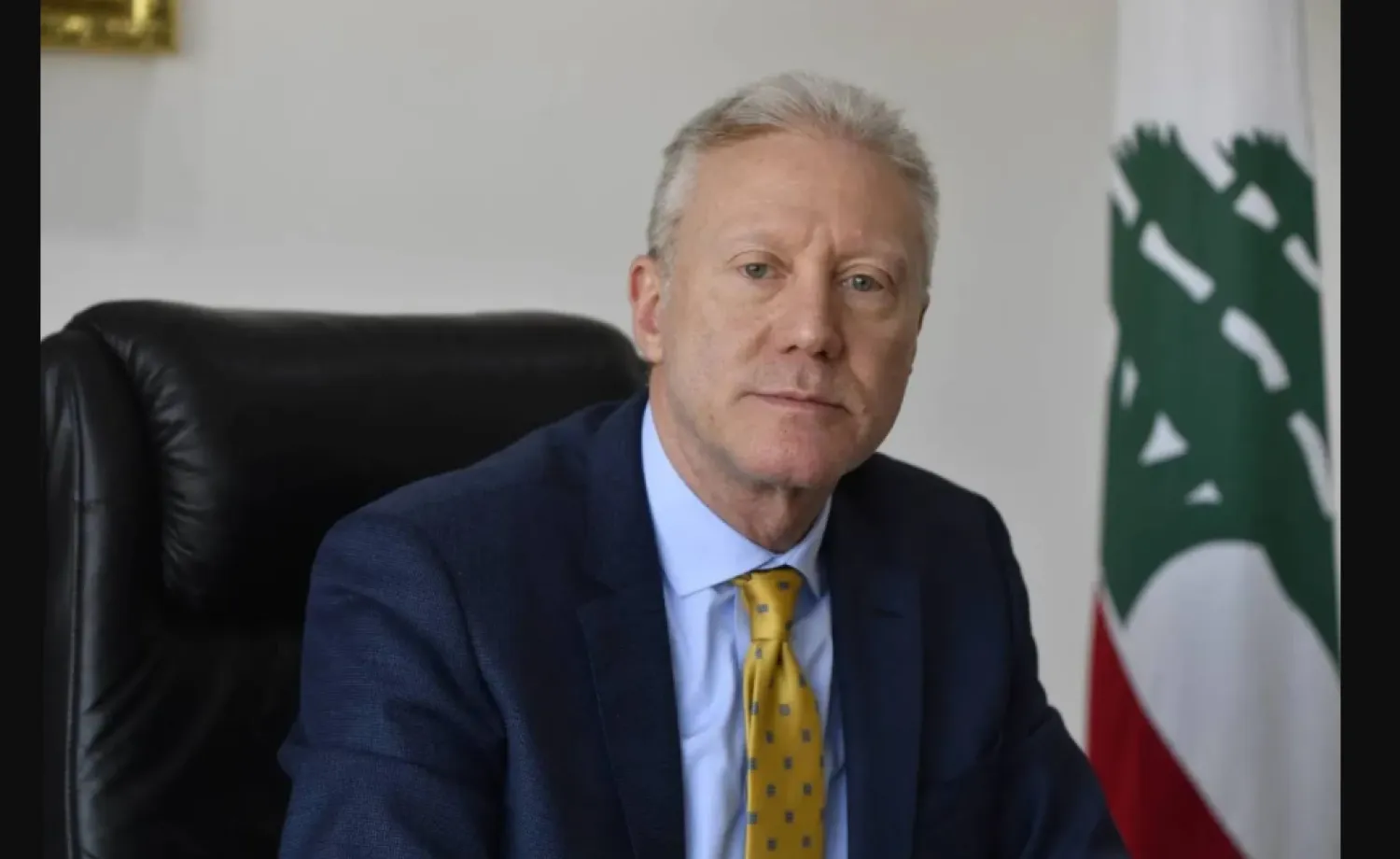
Lebanese Foreign Minister Youssef Raggi - File Photo
Lebanese Foreign Minister Youssef Raggi said Lebanon “has started to gradually reclaim its natural right to determine its own fate independently of others’ calculations,” stressing that the Lebanese state “alone holds the decision to negotiate,” and that Lebanon “is not subordinate to anyone and is not a card in the hands of any axis.”
He expressed regret that the state’s efforts to secure financial and political support for reconstruction “are being confronted by an internal party, Hezbollah, which continues to gamble with the fate of these villages and their residents in service of goals and agendas unrelated to the national interest or to the suffering of the people of the south.”
In an interview with Asharq Al-Awsat, Raggi said that “the national priority today is to fully restore sovereignty, without diminution,” adding that “there is no shame in the Lebanese state negotiating with Israel if the goal is to end the war and recover territory.”
He also condemned “what has been uncovered of roving sabotage networks linked to Hezbollah in a number of Arab countries,” while at the same time denouncing the targeting of brotherly Arab states and their security and stability.
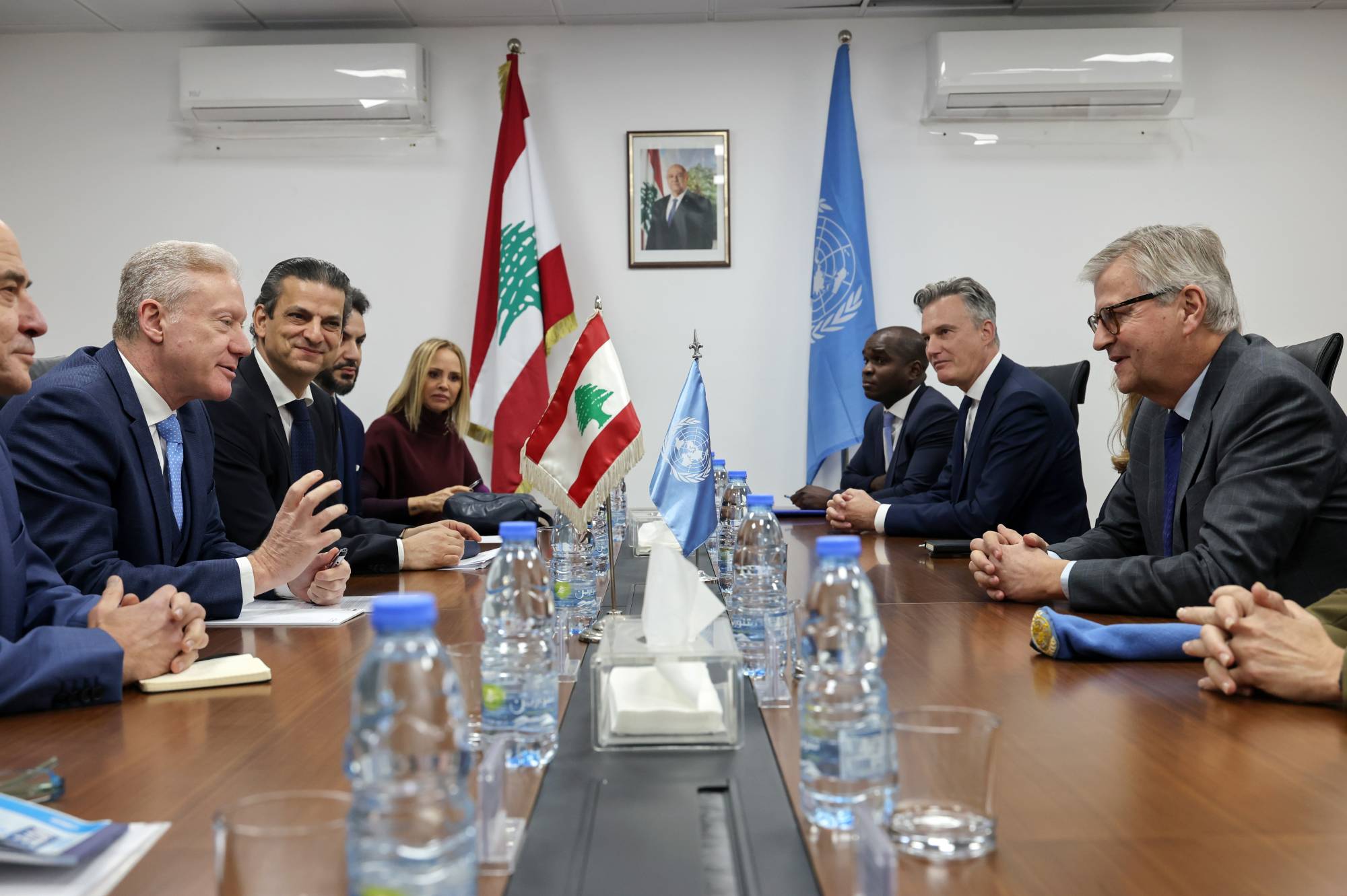
Lebanese Minister of Foreign Affairs and Emigrants Youssef Raggi (L) meets UN Under-Secretary-General for Peace Operations Jean-Pierre Lacroix (R) at the Lebanese Foreign Ministry in Beirut, Lebanon, 07 January 2026. Lacroix is on an official visit to meet Lebanon's leaders. EPA/WAEL HAMZEH
Negotiations exclusively in the hands of the state
The Lebanese ambassador to Washington, Nada Hamadeh Mouawad, held a second direct meeting with her Israeli counterpart, Yechiel Leiter, at the US State Department to discuss extending the truce and to set a date and venue for negotiations between the two delegations, in what is the first track of direct talks since 1993.
Raggi noted: “Iran dragged Lebanon into a war that was neither the choice of the Lebanese state nor of the majority of the Lebanese, but was imposed on it under an approach that treats Lebanon as a pressure card to be used at regional and international negotiating tables.”
He continued: “This led to the step taken by President Joseph Aoun to pursue a path of direct negotiations, clearly declaring that the Lebanese state alone holds the decision to negotiate, and that Lebanon is not subordinate to anyone and is not a card in the hands of any axis.” He stressed that “this step is not limited to its negotiating dimension, but lays the groundwork for restoring independent national decision-making and reinstating the concept of the state as the sole reference in war, peace, and foreign policy.”
Raggi reaffirmed that “the Lebanese track is now separate from the Iranian track,” and that “Lebanon’s interests are no longer hostage to the progress or deadlock of Iranian negotiations,” noting that “the second preparatory meeting is being held while talks related to Iran are facing stagnation and complications, which proves that Lebanon has begun to gradually reclaim its natural right to determine its own fate independently of others’ calculations.”He said: “This is a pivotal moment in Lebanon’s modern history, as it ends a long phase in which national milestones were tied to external agendas.”
No longer an arena
Raggi said: “We will no longer accept using Lebanon as an arena for settling regional scores or as a platform for military and political adventurism whose cost is borne by the Lebanese in their security, economy, and national unity.” He explained: “Experience has shown that turning Lebanon into an open arena for conflict has brought it nothing but destruction, isolation, and collapse. What is required today is to reassert its position as a sovereign state, not as a sphere of influence or a permanent front line.”
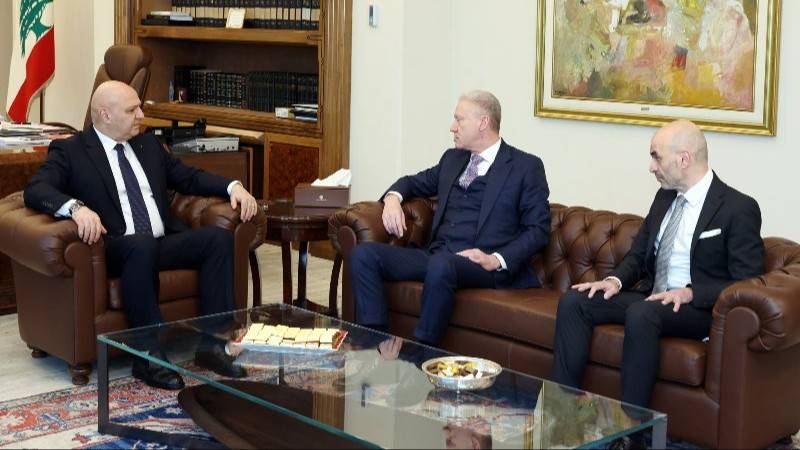
Lebanese President Joseph Aoun holding talks with Foreign Minister Youssef Raggi (Presidency)
Objectives of negotiations
On the objectives of negotiations, Raggi said that “Lebanon’s move toward negotiations is intended to address outstanding issues between the two countries, foremost among them border, security, and humanitarian matters,” stressing that “negotiation is not surrender, as some try to portray it, but a tool for defending national interests when conducted from a position of state authority and with careful calculation.”He added: “The balance of power is not measured only in weapons, but also in the legitimacy of the state, unity of the national position, international support, and the ability to use law and diplomacy to protect rights.”
He noted that “it is a grave mistake to portray Lebanon as being in a position of absolute weakness, just as it is equally wrong to portray it as being in a position of surrender. The reality is that Lebanon, if its institutions are unified, can negotiate from a clear national-interest position.”
Raggi added: “The national priority today is to fully restore sovereignty, without diminution. There is no shame in the Lebanese state negotiating with Israel if the goal is to end the war, recover territory, and secure a lasting peace that preserves the dignity of the Lebanese and prevents the recurrence of tragedies, especially for our people in the south who have paid a heavy price in lives, homes, and livelihoods.”
He continued: “The futile adventures carried out through what are called ‘proxies’ have proven that their outcome was neither liberation nor victory, but further fragmentation and weakening of the Lebanese state and depletion of its society and economy.”
Monopoly of arms
Raggi said Lebanon “has long delayed implementing governmental and constitutional decisions related to restricting weapons to the state, particularly Hezbollah’s arms, at a time when the majority of Lebanese are calling for a real state that alone holds the right to use force.” He added: “Restricting arms is not a political demand by one side against another; it is the only gateway to building a modern state, because the very concept of the state fundamentally contradicts the existence of armed groups outside its authority. A state cannot exist with two sets of arms, two sovereignties, or two decisions on war and peace.”
He pointed out that “facts have shown that weapons outside state control did not liberate occupied land, did not protect Lebanese citizens, and did not prevent destruction; rather, they deepened national losses.”
He explained: “Before the ‘support for Gaza’ war and linking Lebanon to the Iranian confrontation, the disputed border points were limited and confined to known issues, including the thirteen points, the Shebaa Farms, and the Kfar Shouba hills. After October 7, 2023, Israeli occupation expanded inside Lebanese territory at five points, and after March 2, the occupied areas widened further, while dozens of villages were destroyed and vast areas suffered devastation and displacement.”
He added: “This catastrophic outcome confirms that the logic of uncontrolled arms did not produce protection; rather, Hezbollah’s war calculus ultimately imposed the path of direct negotiations as the only way to recover what Lebanon has lost.”
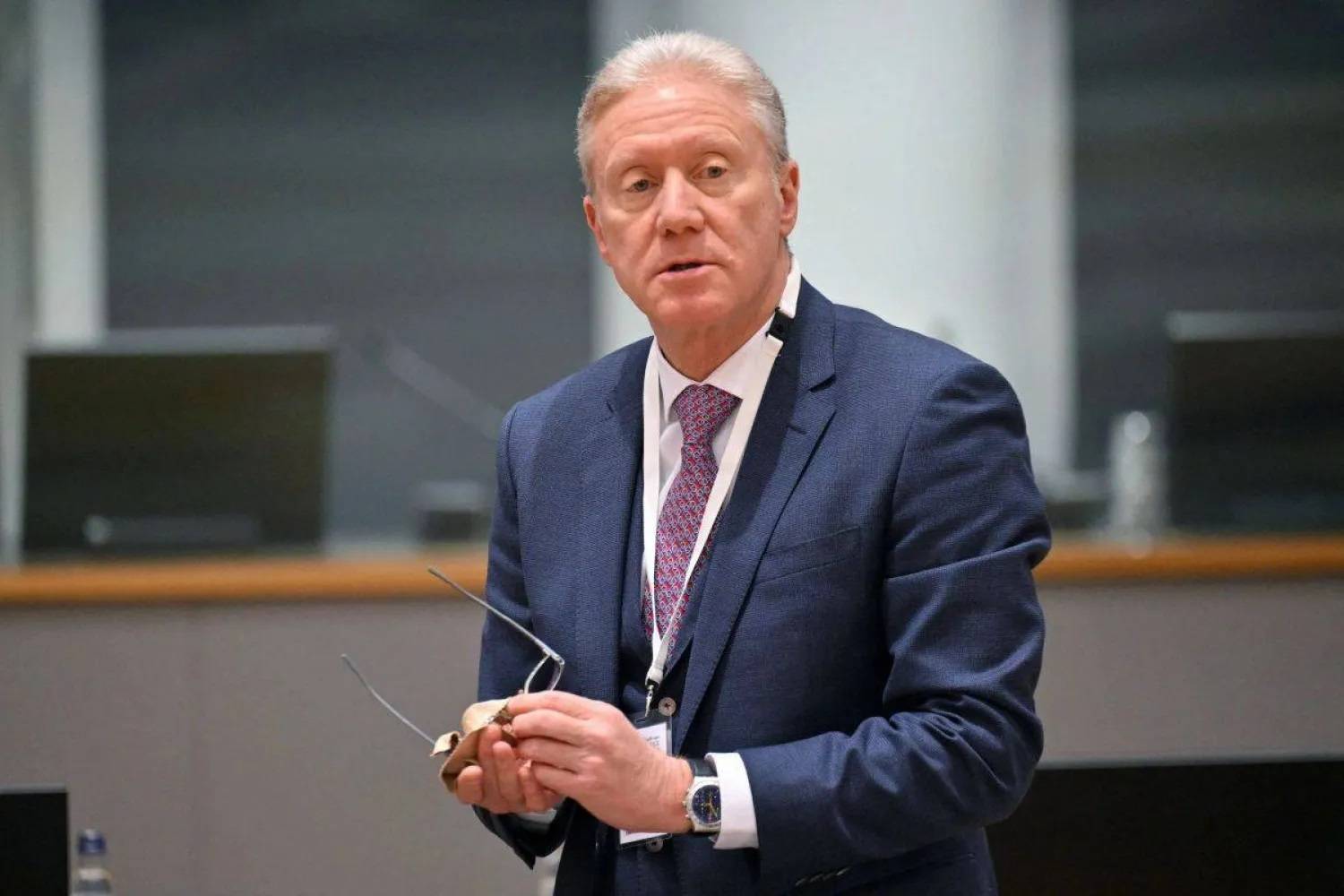
Lebanese Foreign Minister Youssef Raggi - AFP
Targeting Arab states
Raggi strongly condemned “the discovery of roving sabotage networks linked to Hezbollah in a number of Arab countries.” He said: “This behavior is another example of the nature of the cross-border Iranian project, and its danger is not limited to Lebanon’s sovereignty but also extends to the security of sister and friendly states that have long stood by Lebanon in its most difficult times.”
He added: “We have informed our friends in the concerned countries of Lebanon’s full readiness for judicial and security cooperation, to pursue those responsible for these networks and provide all necessary assistance. We also reiterate our absolute rejection of using Lebanese territory or any Lebanese entity to harm the security of any Arab or friendly country.”
Hezbollah ‘gambling with the south’
Meanwhile, Israel continues explosions in border villages in the south. Raggi said: “We are closely following developments on the ground in the south, particularly the security belt imposed by Israel. The Foreign Ministry is working through all available diplomatic channels to achieve a full Israeli withdrawal, ensure residents can return to their villages, and launch reconstruction.”
He added: “But it is regrettable that while the state seeks to secure financial and political support for rebuilding, it faces an internal party, Hezbollah, that continues to gamble with the fate of these villages and their residents in service of goals and agendas unrelated to Lebanon’s interest or the suffering of the people of the south.”
Raggi said: “The painful scene of destroyed villages in the south, and of residents who have lost their homes, livelihoods, and sense of safety, should be a moment for courageous national reassessment,” stressing that “those who caused this war and dragged Lebanon into it against the will of its people must bear their political, moral, and historical responsibility and review their calculations before it is too late.”
Raggi affirmed that “Lebanon can no longer bear others’ wars, their projects, or illusions of victory that bring only ruin.” He concluded: “The future must belong to the state, to sovereignty, and to a just peace that protects all Lebanese.”
Healey to Asharq Al-Awsat: UK Has More Jets Flying in the Region Than at Any Time in the Last 15 Yearshttps://english.aawsat.com/interviews/5257844-healey-asharq-al-awsat-uk-has-more-jets-flying-region-any-time-last-15-years
Healey to Asharq Al-Awsat: UK Has More Jets Flying in the Region Than at Any Time in the Last 15 Years
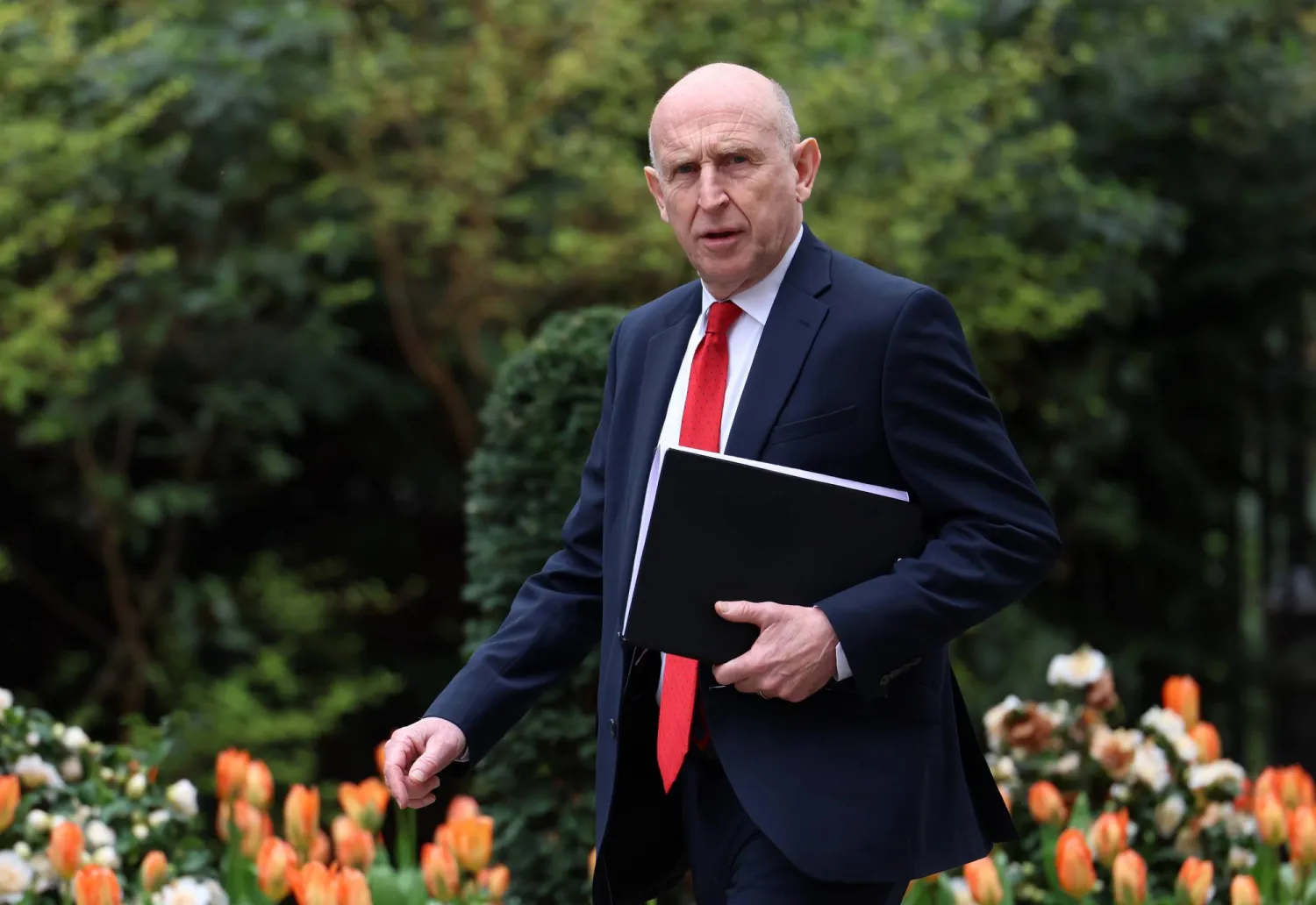
British Secretary of State for Defense John Healey arrives for a cabinet meeting at 10 Downing Street in London, Britain, 24 March 2026. EPA/ANDY RAIN
British Defense Secretary John Healey revealed Wednesday that UK pilots and aircrew have flown over 1,200 hours on defensive missions across the Middle East since the conflict with Iran erupted, saying they have now had over 80 engagements together with RAF Regiment Gunners.
In an interview with Asharq Al-Awsat following his visit to Saudi Arabia, Healey said that the UK has around 1,000 personnel in the region and an extra 500 air defense personnel in Cyprus.
“I continue to work closely with our partners in the region on what further support we can provide,” he said, lauding the UK-Saudi Arabia defense partnership which he said is “founded on mutual security interests and longstanding industrial collaboration.”
“Although our friendship is historic, it has evolved into a modern partnership that responds to contemporary challenges,” he added.
On ties between Moscow and Iran, Healey did not rule out a hidden Russian hand behind some of the Iranian tactics.
The following are the key points from the interview:
80 engagements
“UK pilots and aircrew have flown over 1,200 hours on defensive missions across the region. Together with our RAF Regiment Gunners, they have now had over 80 engagements since the conflict began,” said Healey.
“I am proud of the work that our UK Armed Forces are doing alongside our Gulf partners to help keep people safe in the region. Their dedication and professionalism is helping to save lives as Iran indiscriminately targets countries across the Gulf,” he added.
Heavy Deployment
“The UK has around 1,000 personnel deployed to the region, not including our personnel in Cyprus,” he told Asharq Al-Awsat. “Force protection is at the highest levels for UK bases in the region.”
“We have more UK jets flying in the region than at any time in the last 15 years. We are undertaking defensive counter air operations over Bahrain, Jordan, Qatar, and the UAE as well as Cyprus,” he said.
“Since January, I have deployed extra equipment and people to the region. This includes Typhoon and F-35 jets, Wildcat helicopters armed with purpose-built counter-drone Martlet missiles, a Merlin Crowsnest helicopter, providing airborne surveillance and control plus radar systems, air defense systems and counter-drone units.”
He added that there are now an extra 500 air defense personnel in Cyprus, and the warship, HMS Dragon - which is fully integrated within the layered air defense system with allies and partners - is deployed in the Eastern Mediterranean.
Defense Systems to Support the Gulf
“I continue to work closely with our partners in the region on what further support we can provide, which was the purpose of my visit (to Riyadh) this week,” Healey told Asharq Al-Awsat.
“I confirmed during my meeting with the Defense Minister, His Royal Highness Prince Khalid bin Salman Al Saud, that we will deploy Sky Sabre to the Kingdom of Saudi Arabia - an air defense system that will be integrated into Saudi Arabia’s defenses to support Saudi Arabia's efforts in repelling Iran's attacks,” he added.
He also said that Rapid Sentry – a system made up of a radar and a missile launcher – was deployed to Kuwait, and Lightweight Multiple Launchers to Bahrain.
“We have extended the operations of our jets in Qatar which are flying defensive missions every night, and through Taskforce Sabre we're ensuring UK industry steps up too. The Taskforce brings together industry who offer counter drone and air defense capabilities with governments, including Gulf partners ... to rapidly provide them with the equipment they need.”
Advanced defense partnership with Saudi Arabia
On his visit to Saudi Arabia, he said the trip was aimed at showing support “during this period of sustained and indiscriminate Iranian attacks, and also to discuss further cooperation between our nations to protect our people and our shared interests in the Kingdom. That's why I was delighted to meet with His Royal Highness Prince Khalid bin Salman to discuss recent events in the region.”
“The UK and Saudi Arabia have a close, longstanding friendship, and share a decades-long defense partnership, founded on mutual security interests and longstanding industrial collaboration.”
That friendship “has evolved into a modern partnership that responds to contemporary challenges. This really matters in times like today: it means we have the trust and the shared understanding to respond quickly and decisively when the security environment demands it. It is precisely because of that deep foundation that we are able to act as we have done, such as deploying Sky Sabre to Saudi Arabia.”
Russian-Iranian cooperation
On Russia’s role in the Iran war, Healey said: “Our assessment is that, even prior to US and Israeli strikes, Russia highly likely shared intelligence and provided training to Iran, including on things such as drone technology and operations, and electronic warfare. And our intelligence also indicates that this cooperation is ongoing.”
“No one will be surprised that Putin’s hidden hand may be behind some of the Iranian tactics and potentially some of their capabilities as well. We see an axis of aggression between Russia and Iran - two countries that menace their neighbors and that pose a threat more widely to us all.”
No assessment on targeting Europe
Healey said that there is no assessment Iran is trying to target Europe with missiles. “Even if they did, we have the resources and alliances we need to keep the UK and our allies safe from any kind of attacks, whether it's on our soil or from abroad. The UK stands ready 24/7 to defend itself and protection of forces is at the highest levels for our bases in the region.”
Spain’s FM Backs Saudi Arabia, Tells Asharq Al-Awsat that Iranian Attacks Are ‘Unjustified’https://english.aawsat.com/interviews/5255499-spain%E2%80%99s-fm-backs-saudi-arabia-tells-asharq-al-awsat-iranian-attacks-are-
Spain’s FM Backs Saudi Arabia, Tells Asharq Al-Awsat that Iranian Attacks Are ‘Unjustified’
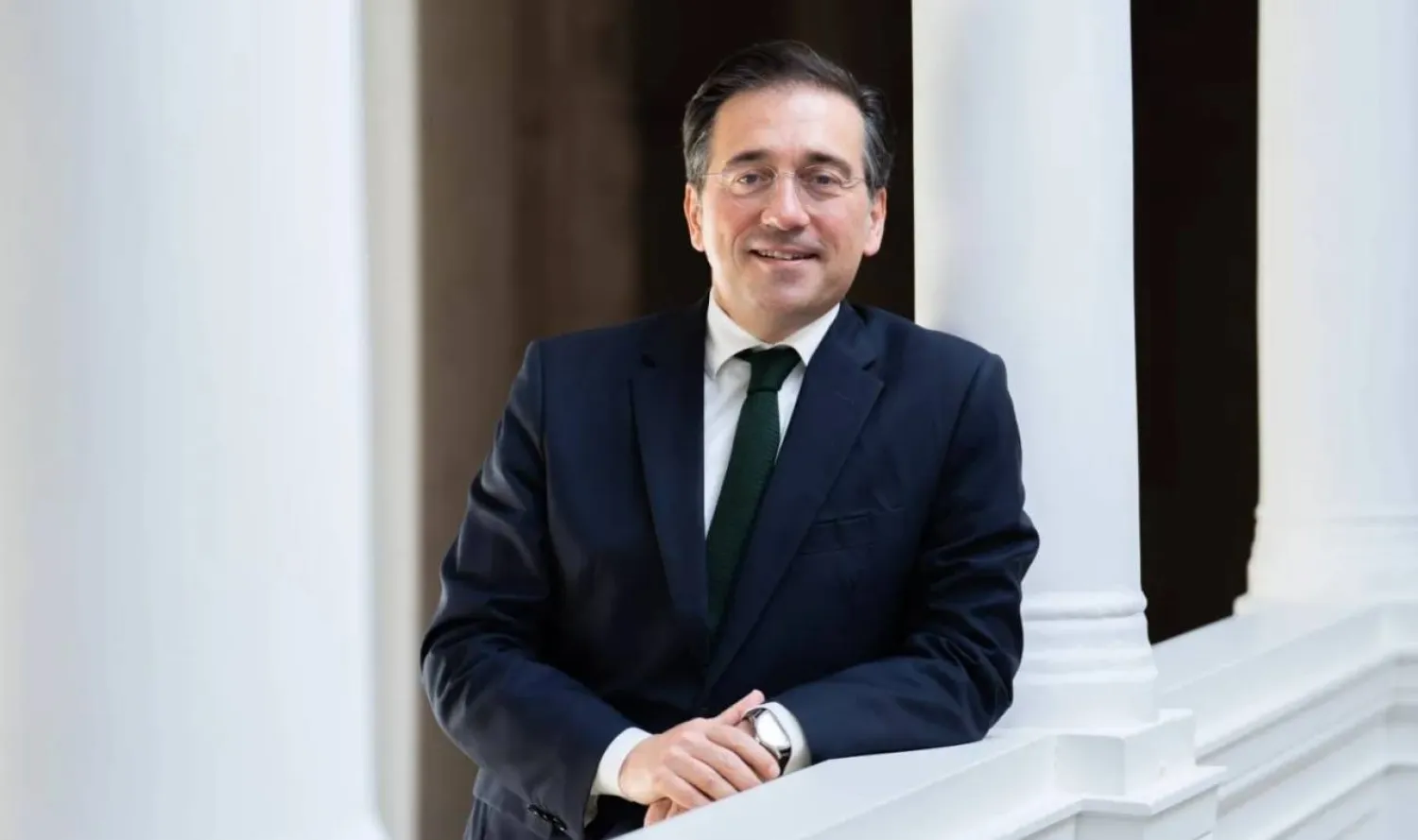
Spanish Foreign Minister Jose Manuel Albares. Photo: Foreign Ministry
Spanish Foreign Minister Jose Manuel Albares has expressed Madrid’s support to Saudi Arabia, describing Iranian attacks on the Kingdom and other countries in the Gulf as “unjustified.”
In an interview with Asharq Al-Awsat published Thursday, the minister revealed that efforts were being exerted by Spain as part of several European countries and in coordination with nations in the Middle East to de-escalate, resort to diplomacy and put an end to the US-Israeli-Iranian war.
Albares said “Spain has openly condemned” the Iranian attacks and summoned Iran’s ambassador to convey “its firm rejection of violence.”
The Spanish Foreign Ministry also “called for an immediate cessation of these attacks," he said.
“The attacks conducted by Iran are completely unjustified,” Albares told Asharq Al-Awsat, while stressing full solidarity with Saudi Arabia and other Gulf countries against the Iranian attacks.
Saudi Crown Prince Mohammed bin Salman has recently received a phone call from the Spanish Prime Minister, Pedro Sanchez, who expressed “Spain’s support and solidarity in light of the unjustified attacks that the country is suffering.”
“Spain's stance is firmly rooted in defending international law and the United Nations Charter, rather than the principle of might makes right,” said Albares.
This message has been conveyed to Saudi Arabia, Bahrain, Kuwait, the United Arab Emirates, Oman, Qatar, Jordan, Türkiye, Egypt, Uzbekistan and Azerbaijan, he added.
Call for de-escalation and negotiation
“Spain advocates de-escalation, negotiation, and respect for international law. Our voice aims to bring reason and restraint to the current situation. We cannot accept the idea of war becoming a means by which countries interact with one another or a mechanism for establishing a balance of power in the Middle East. Violence never brings peace, stability or democracy; it only creates more violence and chaos,” said the minister.
“In light of this military escalation, Spain is acting coherently in accordance with the values of peace and solidarity that define Spanish society — values that are also shared by the majority of European states. Our country makes its decisions in line with European principles, the UN Charter, and international law,” he added.
The war has already had consequences that extend beyond the Middle East. For example, it has affected Cyprus and Türkiye, he said, warning that this increases the risk of the ongoing conflict spreading beyond the region.
The minister told Asharq Al-Awsat that the war is also affecting international trade and production of energy, which have a direct impact on global economies and geopolitics.
“The unpredictable consequences of the current conflict are making the situation extremely dangerous for the security and stability of the Middle East, including the Gulf states, which are being particularly targeted,” he said in response to a question.
Countries involved in the confrontation
Albares spoke about the situation of several countries in the region, including Lebanon, which he said “is facing a dramatic situation with numbers of victims increasing daily, an overstretched medical system incapable to attend them, more than a million of displaced people, and the destruction of civil infrastructure. The life of the people of Lebanon is disappearing before their eyes.”
He said Spain has condemned the attacks carried out by Hezbollah, that are fueling the spiral of confrontation, as well as Israel's attacks. “An Israeli land invasion is already ongoing, a grave error in a country that has already endured immense suffering.”
“We cannot ignore the attacks by Israel and non-State actors on UN forces, on UNIFIL, in which Spain has a significant presence, nor the repeated violations of international humanitarian law," Albares said.
The minister also expressed concern over the situation in Gaza and the West Bank. “There is no clear vision for the future, and humanitarian aid is not reaching the area, with access blocked and NGOs and humanitarian actors prevented to operate on the ground. In the West Bank in particular, settlement expansion and settler violence continues to increase with impunity,” he said.
High-risk situation defined by an unpredictable conflict
“We are facing an escalation of violence that has already killed thousands of people and negatively impacted maritime navigation in the Strait of Hormuz, and critical energy infrastructures, with direct consequences for global energy security,” he said.
“In short, it is an extremely high-risk situation defined by an unpredictable conflict that poses a direct threat to the security and stability of the Middle East, with repercussions that can be felt across the globe,” he added.
Asked about his views of the Gulf's concern about the war’s repercussions, Albares said: “Spain fully understands the Gulf countries' concerns about the consequences of this war. This has been reflected in the diplomatic outreach that I have conducted with my counterparts in the region.”
“Increasing insecurity in countries under attack from missiles and drones without justification — attacks that Spain firmly condemns — particularly those launched by Iran, contribute to an increasingly dangerous and complex situation. In this context, Spain advocates clear de-escalation, negotiation and respect for international law, insisting that we must avoid anything that adds to the tension.”
He added that “the situation in the Strait of Hormuz is also extremely worrying, as its impact on energy security and international trade is clear.”
He stressed that the conflict has human and humanitarian dimensions, such as loss of life and displacement, warning that this could have direct consequences also in Europe. So, he called for “a responsible solution based on solidarity.”
Unified position
“The only clear thing is that a response is necessary, and in this sense, Spain supports a response based on the unity of the international community around the universal applicability and respect of International law and the UN Charter,” said Albares.
Asked to what extent the current situation is likely to explode into a broader war,” the minister said: “The consequences of the actions of Israel, as well as Iran’s response, are unpredictable. We are entering a situation that makes it difficult to determine where the escalation could lead and what the ultimate effects could be.”
لم تشترك بعد
انشئ حساباً خاصاً بك لتحصل على أخبار مخصصة لك ولتتمتع بخاصية حفظ المقالات وتتلقى نشراتنا البريدية المتنوعة