UAE Provides COVID-19 Vaccines, Food Aid to Syria

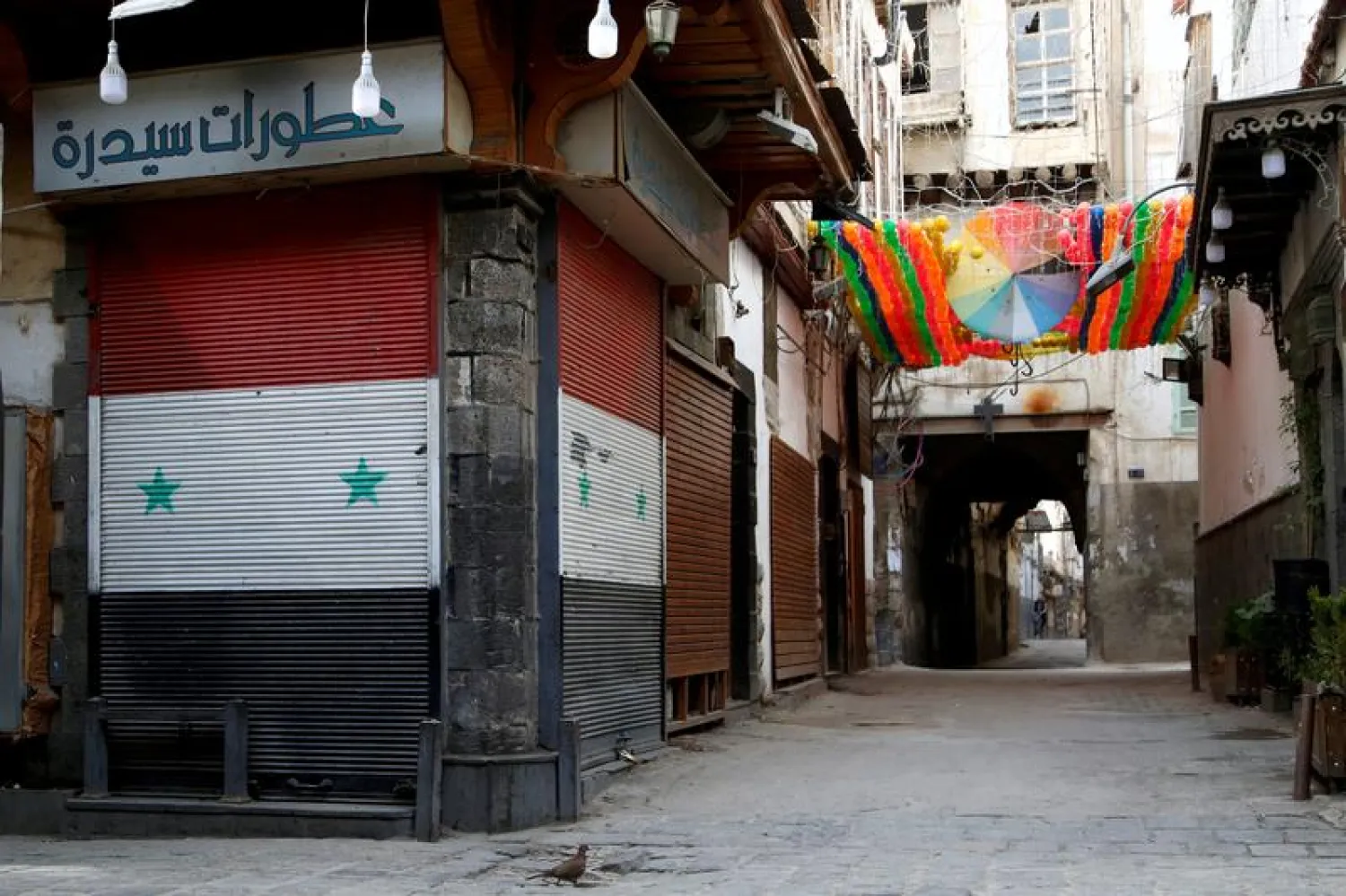
FILE PHOTO: A view shows closed shops as part of the preventive measures against the spread of the coronavirus disease (COVID-19), in the old city of Damascus, Syria March 24, 2020. REUTERS/Yamam Al Shaar/File Photo
TT

UAE Provides COVID-19 Vaccines, Food Aid to Syria

FILE PHOTO: A view shows closed shops as part of the preventive measures against the spread of the coronavirus disease (COVID-19), in the old city of Damascus, Syria March 24, 2020. REUTERS/Yamam Al Shaar/File Photo

A UAE plane has arrived in Syria carrying food items and medical aid to help the country in its fight against the coronavirus.

In 2018, the UAE reopened its embassy in Damascus after it had been closed for almost six years over the Syrian crisis.

Earlier in March, the UAE's Foreign Minister Sheikh Abdullah bin Zayed Al Nahyan said that Syria’s return to the Arab fold was “inevitable.”

However, he said that Syria had to hold talks with the US over the Caesar Act, which he described as the “greatest challenge” hindering joint work with Syria.

The aid from the UAE comes as Syria is witnessing a sharp increase in COVID-19 cases.

Last week, Damascus ordered schools and universities closed for two weeks to try limit the spread.

Syria’s health system and infrastructure have been decimated by the country’s 10-year conflict that killed about half a million people and displaced half of Syria’s population.


Gaza Factions Tighten Security with Safe Movement, Tracking Collaborators

Palestinian boys walk near a landfill, in Gaza City, February 11, 2026. REUTERS/Dawoud Abu Alkas
TT

Gaza Factions Tighten Security with Safe Movement, Tracking Collaborators

Palestinian boys walk near a landfill, in Gaza City, February 11, 2026. REUTERS/Dawoud Abu Alkas

Palestinian armed factions in Gaza have gone on heightened alert as Israel presses ahead with targeted killings of field commanders and prominent operatives from Hamas and Islamic Jihad, field sources told Asharq Al-Awsat, saying tightened security measures have thwarted several planned assassinations in recent weeks.

The sources said security measures had foiled a series of assassination attempts planned by the Israeli army in recent days and weeks.

The Israeli military has frequently cited security incidents against its forces as justification for carrying out a string of strikes inside the enclave after a ceasefire took effect. Israeli violations have killed more than 500 Palestinians in Gaza since the agreement to halt the war was announced.

Field sources also told Asharq Al-Awsat that after the killing of prominent leaders and activists, strict instructions were issued by senior commanders of the armed wings to field operatives to adopt measures similar to those in place during the two-year war.

One source said the directives included “secure movement” from one place to another, meaning movement without carrying mobile phones or other technological devices to avoid detection by Israel's artificial intelligence. He added that members had been advised to remain concealed in specific locations for extended periods, without moving, even for days or weeks.

Failed targeting operations

Another source familiar with internal communications within an armed faction in Gaza said that “thanks to the new precautions in recent days and weeks, new assassination operations have failed.”

He cited instances of Israeli strikes on targets such as tents and other sites that did not host any of the wanted individuals or others, on several occasions.

“The Israeli forces bombed two targets hours after the Rafah incident that took place last Monday, one on the same evening and the other on Tuesday afternoon, indicating an inability to identify new targets as had happened previously,” the source said.

The factional source concluded that “the number of casualties has become much lower during the current round of escalation compared with previous violations.”

Israeli airstrikes on Monday and Tuesday killed prominent field activists in the Izz al-Din al-Qassam Brigades and the Al-Quds Brigades in two assassination operations.

The first targeted three activists in the Beit Hanoun Battalion of the Izz al-Din al-Qassam Brigades, who had overseen a series of operations, including the sniper killing of several soldiers, resulting in the deaths of seven, according to an Israeli military statement during battles in the town.

They were also said to have participated in the Oct. 7, 2023, attack. A commander of the elite unit of the Al-Quds Brigades in central Gaza was also killed.

Night checkpoints to track collaborators

Asked whether other measures had been adopted to secure their members, another field source said some steps included deploying checkpoints by security forces affiliated with the Hamas-run government, as well as field operatives from the Izz al-Din al-Qassam Brigades and the Al-Quds Brigades, particularly at night, across all areas of Gaza.

The source said the night checkpoints had reduced the movement of collaborators with Israel, as well as individuals working with armed gangs that provide intelligence on the whereabouts of certain activists after tracking and monitoring them, which he said had again weakened Israeli intelligence.

“There is other discreet activity during daylight hours carried out by the factions to pursue any suspicious movements and monitor individuals suspected of cooperating with Israeli intelligence,” the source added.

He said several suspects had been detained and interrogated, and information had been extracted about personalities being tracked. The data was then passed on to the intended targets so they could change their locations, move to safe places, and abandon the technological devices they had been using.

These security measures coincided with an announcement by the “Al-Hares” platform, affiliated with the security apparatus of armed factions in Gaza, calling on residents to “assist security in strengthening the internal front by reporting any suspicious activity or movement in their vicinity.”

It added that “any unusual behavior, attempts to gather information, or movements suspected of links to collaborator gangs constitute a key element in thwarting hostile plans and supporting the resilience of our internal front.”


Hezbollah's Installment Payments for Shelter Reveal Depth of Financial Crisis

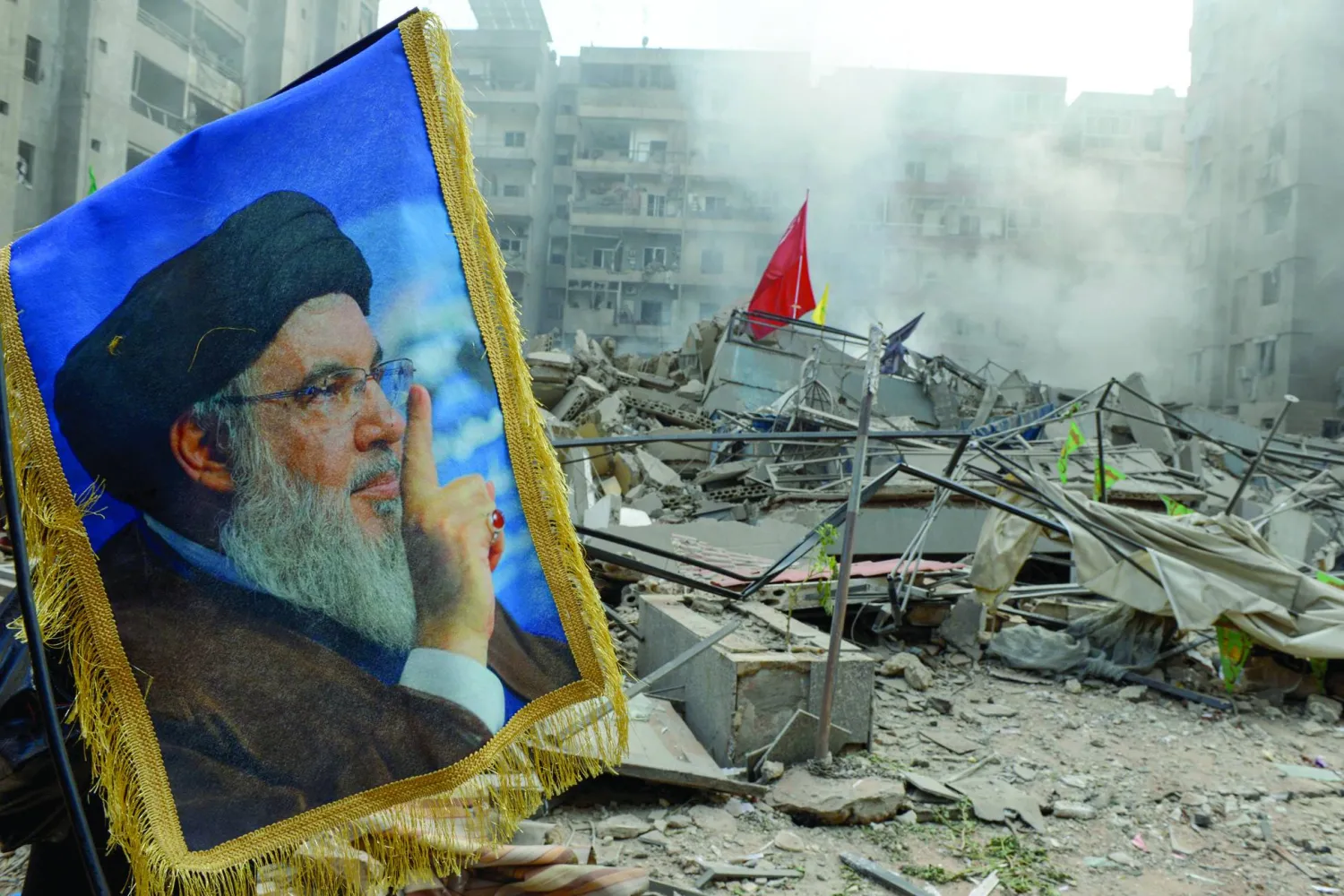
01 November 2024, Lebanon, Beirut: A picture of assassinated Hezbollah leader Hassan Nasrallah is displayed in front of rubble of flattened building caused by Israeli air raids on Beirut southern suburb. Photo: Marwan Naamani/ZUMA Press Wire/dpa
TT

Hezbollah's Installment Payments for Shelter Reveal Depth of Financial Crisis

01 November 2024, Lebanon, Beirut: A picture of assassinated Hezbollah leader Hassan Nasrallah is displayed in front of rubble of flattened building caused by Israeli air raids on Beirut southern suburb. Photo: Marwan Naamani/ZUMA Press Wire/dpa

A decision by Hezbollah Secretary-General Naim Qassem to limit housing support to a three-month window has thrown a spotlight on the group’s tightening finances, after it moved from yearlong lump-sum payments to staggered installments paid once every quarter.

Qassem said Hezbollah would disburse housing allowances for February, March, and April 2026 to “everyone whose home was destroyed or rendered uninhabitable.” The payment had originally been due in early December for three months.

Instead, the party paid allowances for the previous two months and has now approved another three-month tranche, despite a 10-day delay since the disbursement was announced.

Uneven payments, lingering questions

Housing allowances are seen not only as a political signal but also as a practical test of the group’s ability to cover rent, school transfers for children, transportation costs, and the reality of prolonged internal displacement turning into a forced way of life.

Rana, who fled a southern town to Beirut, said families’ priority was no longer politics but securing a place to live.

“People are asking about rent support, about the duration, about continuity. Three months go by quickly, and after that, no one knows what will happen,” she said.

Hassan, another affected resident living in Beirut’s southern suburbs, said the announcement “eased part of the anxiety,” but added that “the issue is not just the announcement, it is the regularity of payment and whether everyone is included.”

Disparities in payouts

Behind the anxiety lies what residents describe as selective disbursement. In the previous phase, not all beneficiaries received full housing allowances, residents of the southern suburbs said, noting disparities in case outcomes.

One resident said he had received only $2,000 for four months, adding that other payments from the previous year had not reached him in full and that he did not know their fate.

Another said he received $3,000 for six months, but that talk of additional allowances had continued without clarity on how they would be completed or whether they would be paid at all.

A woman from the Haret Hreik area said: “We don’t know whether what is being paid is a full housing allowance, partial installments, or a settlement. People are talking, but there is no clear official answer.”

‘Committed’ to housing support

Hezbollah says it has “decided to secure housing,” and sources familiar with the details said the step is aimed at easing the burden on those affected in the postwar phase, especially amid rising living costs and soaring rents.

But the pledge comes amid intensifying external pressure and sanctions aimed at curbing the flow of funds to the group.

The US Department of the Treasury recently announced it had taken “action to disrupt two key mechanisms Hezbollah uses to sustain its economic stability,” namely “revenue generation in coordination with the Iranian regime and the exploitation of Lebanon’s informal financial sector.”

Opponents of Hezbollah say the issue is no longer merely political but directly linked to the group’s ability to secure liquidity to meet social obligations, foremost among them housing allowances. The real test, they argue, will be in regular payments and clarity of mechanism, not in the announcement itself.

Temporary relief

Jad Al-Akhawi, head of the Lebanese Democratic Coalition, told Asharq Al-Awsat that talk of injecting funds resembled “a morphine shot.”

“In previous periods, it was said that large sums of money entered the country, but they were not disbursed. Today, there may be limited spending, but it remains within the framework of temporary calming, nothing more,” he said.

He added that the state had pledged around $300 million, arguing that Hezbollah’s move was “an attempt to give people a dose of calm, something like morphine, until actual funding becomes available.”

He ruled out a return to previous financing patterns, particularly through institutions such as Al-Qard Al-Hasan, saying that continuation of that approach would pose “serious risks to the economy.”



UN Agency Begins Clearing Huge Gaza City Waste Dump as Health Risks Mount

Palestinians walk near a landfill, in Gaza City, February 11, 2026. (Reuters)
TT

UN Agency Begins Clearing Huge Gaza City Waste Dump as Health Risks Mount

Palestinians walk near a landfill, in Gaza City, February 11, 2026. (Reuters)

The United Nations Development Program began clearing a huge wartime garbage dump on Wednesday that has swallowed one of Gaza City’s oldest commercial districts and is an environmental and health risk.

Alessandro Mrakic, head of the UNDP Gaza Office, said work had started to remove the solid-waste mound that has overtaken the once busy Fras Market in the Palestinian enclave's main city.

He put the volume of the dump at more than 300,000 cubic meters (390,000 cubic yards) and 13 meters (14 yards) high.

It formed after municipal crews were blocked from reaching Gaza’s main landfill in the Juhr al-Dik area - adjacent to the border with Israel - when the Gaza war began in October 2023.

The area in Juhr ‌al-Dik is now ‌under full Israeli control.

Over the next six months, UNDP plans ‌to ⁠transfer the waste to ⁠a new temporary site prepared in the Abu Jarad area south of Gaza City and built to meet environmental standards.

The site covers 75,000 square meters and will also accommodate daily collection, Mrakic said in a statement sent to Reuters. The project is funded by the Humanitarian Fund and the European Union's Civil Protection and Humanitarian Aid Operations.

Some Palestinians sifted through the garbage, looking for things to take away, but there was relief that the market space would eventually be cleared.

"It needs to be moved to a ⁠site with a complex of old waste, far away from people. There's ‌no other solution. What will this cause? It will cause ‌us gases, it will cause us diseases, it will cause us germs," elderly Gazan Abu Issa said ‌near the site.

The Gaza Municipality confirmed the start of the relocation effort in collaboration with the ‌UNDP, calling it an urgent step to contain a worsening solid-waste crisis after about 350,000 cubic meters of rubbish accumulated in the heart of the city.

'A SYMBOL OF THE WAR'

Fras Market, an historic quarter that before the war served nearly 600,000 residents with items ranging from food to clothes and household tools, has been ‌buried under garbage for more than a year.

Amjad al-Shawa, head of the Palestinian NGOs Network and a liaison with UN and international agencies, ⁠said the dump had fueled “serious ⁠health and environmental problems and the spread of insects and illnesses.”

“It is a symbol of the war that continued for two years,” he told Reuters. “Its removal may give people a sense of hope that the ceasefire (agreed last October) is moving forward.”

Shawa said the waste would be transported to a transitional site near the former Netzarim settlement in central Gaza until Israeli forces withdraw from eastern areas and municipal access to the permanent landfills can be restored.

UNDP said it had collected more than 570,000 tons of solid waste across Gaza since the war began as part of its emergency response to avert a further deterioration in public health conditions.

The number of temporary dumpsites has decreased from 141 to 56 as part of efforts in 2024-25 to remove smaller dumping sites, a UNDP report last December said.

"However, only 10 to 12 of these temporary dumping sites are accessible and operational, and Gaza’s two main sanitary landfills remain inaccessible. The environmental and public health risks remain critical," it added.