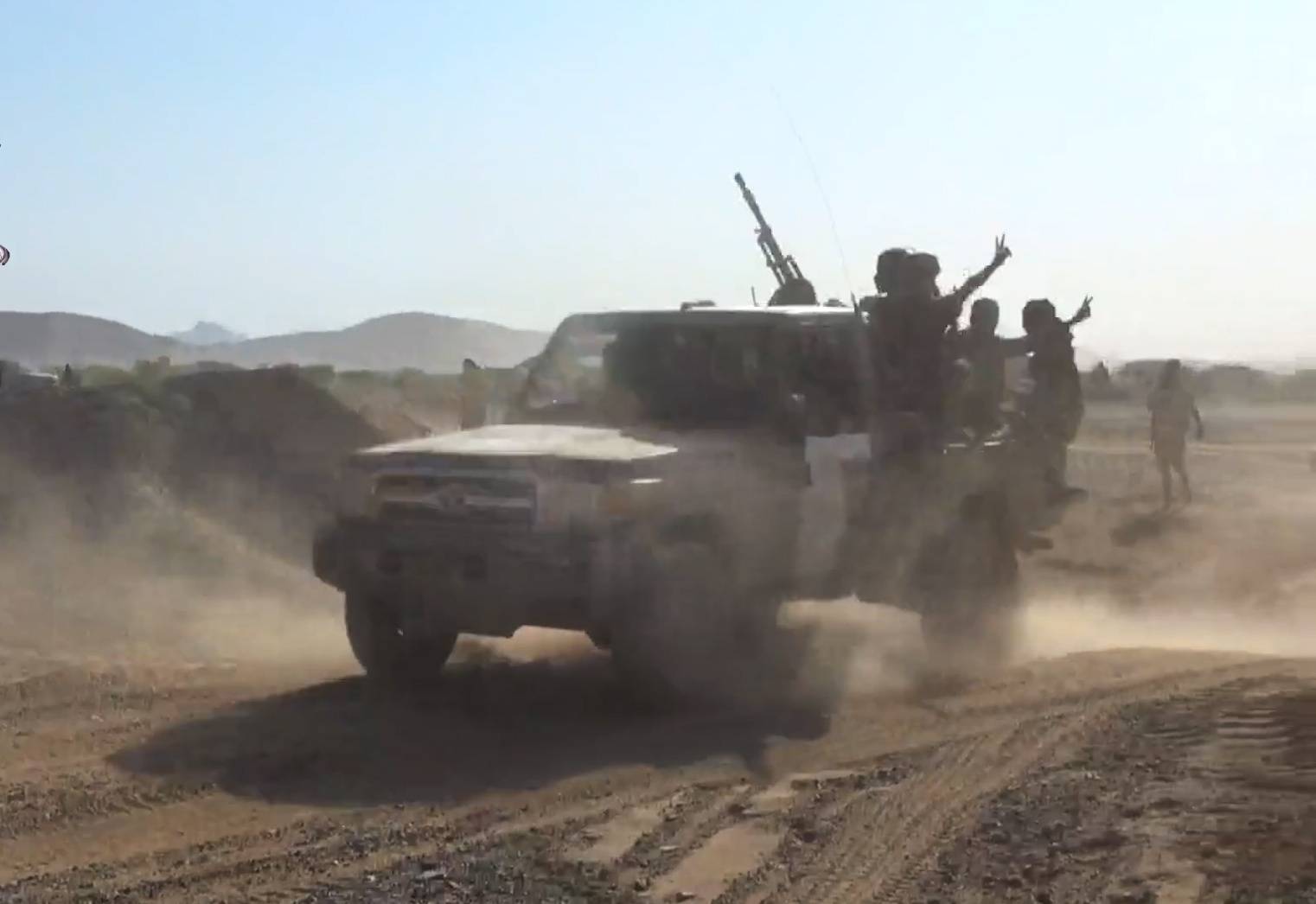
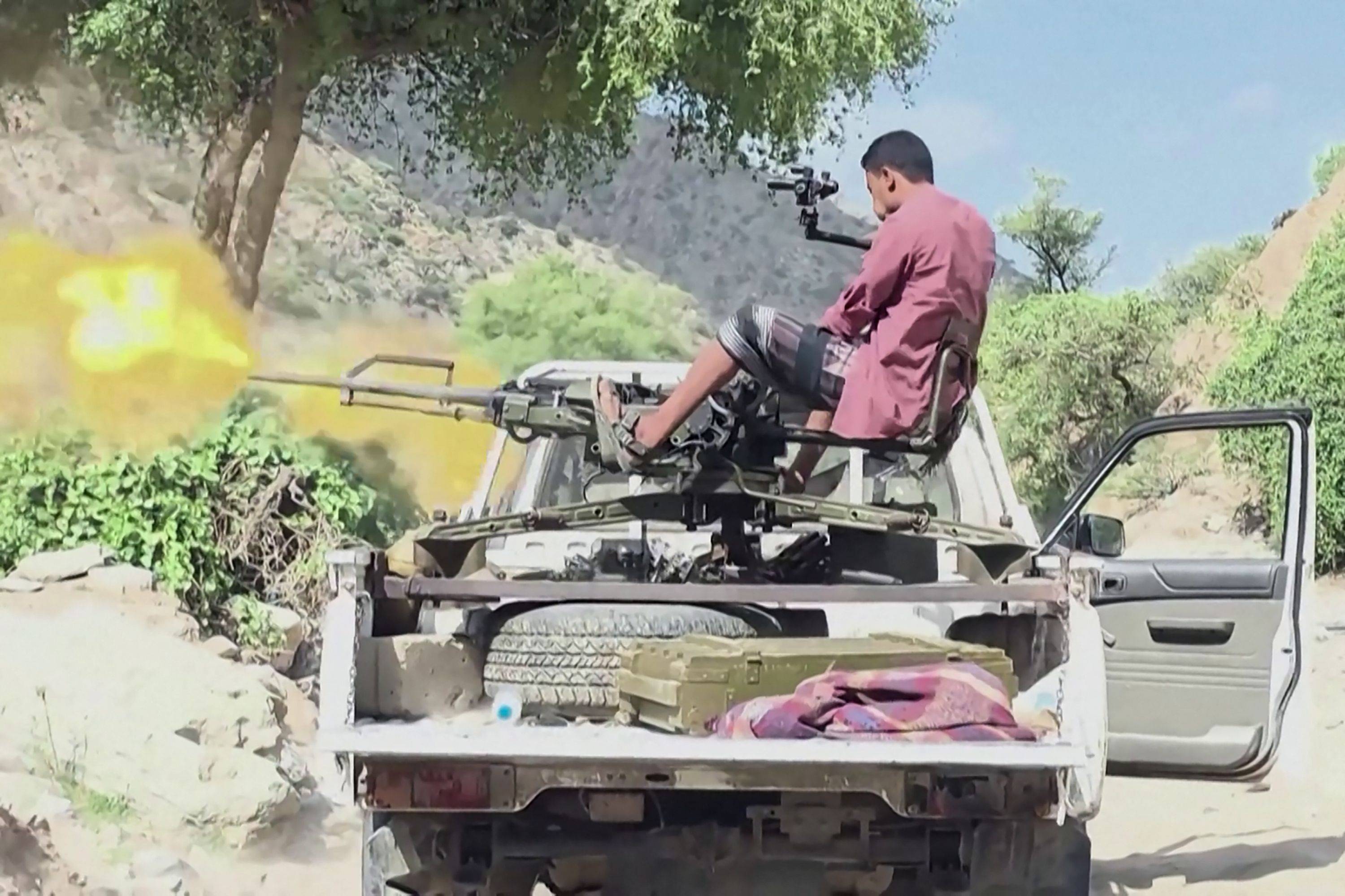
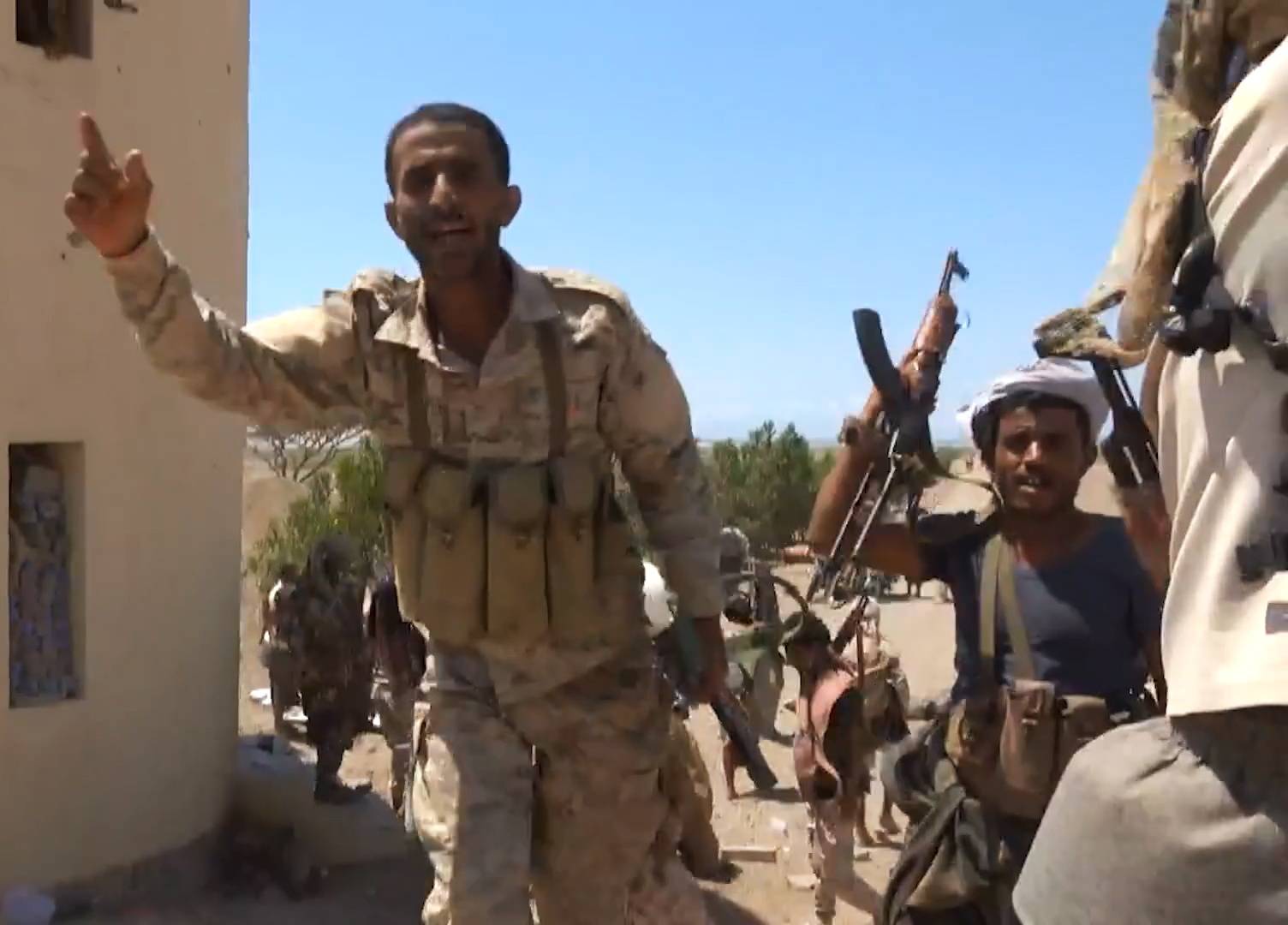
Iran Proxies in Iraq Threaten US with Sophisticated Weapons

US soldiers in Taji military base, north Baghdad (Reuters)
TT

Iran Proxies in Iraq Threaten US with Sophisticated Weapons

US soldiers in Taji military base, north Baghdad (Reuters)

The US security authorities suspect that the Iranian-backed Iraqi militias are involved in launching several drone attacks against sensitive targets inside Iraq, in an attempt to evade US defenses, according to a report by the New York Times.

Washington is grappling with a rapidly evolving threat from Iranian proxies in Iraq after militia forces specialized in operating more sophisticated weaponry, including armed drones.

Those militias have used small, explosive-laden drones that crash into their targets in late-night attacks on Iraqi bases at least three times in the past two months.

US officials reported that the bases attacked include those used by the CIA and US Special Operations units.

Iran, weakened by years of harsh economic sanctions, is using its proxy militias in Iraq to step up pressure on the US and other world powers to negotiate an easing of those sanctions as part of a revival of the 2015 nuclear deal.

Iraqi and US officials say Iran has designed the drone attacks to minimize casualties that could prompt US retaliation.

Top US commander in the Middle East Gen. Kenneth F. McKenzie Jr. told the Associated Press last month that the drones pose a serious threat, and that the military was rushing to devise ways to combat them.

A former CIA officer and top Middle East policy official at the Pentagon, Michael Mulroy said that with technology provided by Iran’s Quds Force, the drones are rapidly becoming more sophisticated at a relatively low cost.

“The drones are a big deal, one of the most significant threats our troops there face,” he said.

A senior Iraqi national security official said the drones posed a challenge but were tools, not the heart of the problem.

“This is a means of pressure,” said the official, who asked not to be identified, noting that “Iran is suffocating economically. The more it suffers the more these attacks increase.”

Iran has used proxy militias in Iraq since 2003 to influence Iraqi politics and threaten the US outside its borders.

Since late 2019, Iran-backed Iraqi militias have conducted more than 300 attacks against US interests, killing four US citizens and about 25 others, mostly Iraqis, according to a Defense Intelligence Agency assessment published in April.

In the last year, a proliferation of previously unknown armed groups emerged, some claiming responsibility for rocket attacks on US targets, reported NYT.

The increased precision of the drone strikes this year marks an escalation from the more common Katyusha rocket attacks that US officials have viewed more as harassment.

The attacks, launched from mobile launchers, have been aimed at the US Embassy in Baghdad’s Green Zone and military bases where some 2,500 forces and thousands of US military contractors operate.

Furthermore, some US analysts say that the militants are now targeting sites, even specific aircraft hangars, where sophisticated armed MQ-9 Reaper drones and contractor-operated turboprop surveillance aircraft are stationed in an attempt to disrupt or cripple the US reconnaissance capability critical to monitoring threats in Iraq.

The US used Reapers for its most sensitive strikes, including the killing of Iranian commander of al-Quds Force, Maj. Gen. Qassim Soleimani, and Iraqi commander Abu Mahdi al-Muhandis in Baghdad in January 2020.

A number of officials reported that Washington installed defenses to counter rocket, artillery, and mortar systems at installations in Iraq, however, the armed drones fly too low to be detected by those defenses.

Shortly before midnight on April 14, a drone strike targeted a CIA hangar inside the airport complex in the northern Iraqi city of Erbil, according to three US officials familiar with the matter.

No one was reported hurt in the attack, but it alarmed Pentagon and White House officials because of the covert nature of the facility and the sophistication of the strike.

A similar drone attack in the early morning hours of May 8 on the Ayn al-Asad airbase in western Anbar Province, where the United States also operates Reaper drones, also raised concerns among US commanders about militias’ shifting tactics.

The attack caused no injuries but damaged an aircraft hangar, according to Col. Wayne Marotto, a spokesman for the US-led coalition in Iraq.

Three days later, another drone struck just after midnight at an airfield in Harir, north of Erbil, that is used by the military’s highly secretive Joint Special Operations Command.

The explosive-laden drone crashed, causing no injuries or damage, coalition officials said but fueled the growing worries.

Lebanese PM to Asharq Al-Awsat: 2nd Phase of Disarmament to Begin Soon Covering Regions between Litani, Awali

Prime Minister Nawaf Salam and ambassador Simon Karam meet on Saturday. (PM's office)
TT

Lebanese PM to Asharq Al-Awsat: 2nd Phase of Disarmament to Begin Soon Covering Regions between Litani, Awali

Prime Minister Nawaf Salam and ambassador Simon Karam meet on Saturday. (PM's office)

Lebanon would have completed the first phase of the army’s plan to impose state monopoly over arms, or the disarmament of Hezbollah, by the end of the year.

Prime Minister Nawaf Salam’s office confirmed on Saturday that the first phase was close to completion.

“The first phase of the weapons consolidation plan related to the area south of the Litani River is only days away from completion,” it said.

“The state is ready to move on to the second ‌phase - namely (confiscating weapons) north of the ‍Litani River - based on the ‍plan prepared by the Lebanese army pursuant to ‍a mandate from the government,” Salam added.

The cabinet will meet at the beginning of the new year after the first phase is completed.

Salam, meanwhile, told Asharq Al-Awsat that the second phase of the disarmament will cover the areas between the Litani and Awali Rivers to its north.

The third phase will cover Beirut and Mount Lebanon and the fourth covers the Bekaa followed by remaining regions.

Lebanese sources said the army has completed most of its report on its disarmament efforts south of the Litani. It has completed the confiscation and destruction of thousands of tons of ammunition and military gear. It has discovered around a hundred military tunnels in the region.

As it stands, the army is unlikely to ask for an extension of the deadline to complete the first phase by the end of the year. It may ask for a “technical” extension for a few weeks if necessary.

Salam refused to go into the details of the government’s next step after it receives the army’s detailed report on the disarmament south of the Litani.

“The military has succeeded in imposing complete state authority over the regions from south of the Litani to the southern border, except for the areas occupied by Israel and from where it should withdraw without delay,” the PM told Asharq Al-Awsat.

He confirmed that the government will convene at the beginning of the year to assess the first phase of the disarmament, stressing that Israel must take reciprocal steps, such as ceasing its violations of the ceasefire.

This will not prevent Lebanon from moving on to the second phase of implementing state monopoly over arms, he revealed.

Progress hinges of Hezbollah’s cooperation with Lebanon’s efforts to limit possession of weapons to the state and move towards activating state institutions in the South and kick off the reconstruction process with the help of Lebanon’s friends, he added.

“Imposing state monopoly over weapons is a Lebanese need before it is an international one,” he declared.

Everyone should be concerned with facilitating the process to end the cycle of violence, he urged.

Salam met on Saturday with Simon Karam, Lebanon's top civilian negotiator on the Mechanism committee overseeing the Hezbollah-Israel truce.

Karam briefed Salam on the latest meeting of the Mechanism.

Hezbollah continues to resist calls to disarm, saying the ceasefire with Israel does not cover areas north of the Litani. Party officials continue to tie disarmament to Israel’s withdrawal from regions it occupies in the South.


Israeli Military Says Detained Suspected ISIS Militant in Syria

FILE PHOTO: Israeli military vehicles manoeuvre along the Israel-Lebanon border, as seen from northern Israel, November 24, 2025. REUTERS/Shir Torem/File Photo
TT

Israeli Military Says Detained Suspected ISIS Militant in Syria

FILE PHOTO: Israeli military vehicles manoeuvre along the Israel-Lebanon border, as seen from northern Israel, November 24, 2025. REUTERS/Shir Torem/File Photo

The Israeli military said on Saturday its forces had arrested a suspected ISIS militant in Syria earlier this week and taken him back to Israel.

In a statement, the military said that on Wednesday "soldiers completed an operation in the area of Rafid in southern Syria to apprehend a suspected terrorist affiliated with ISIS.”

"The suspect was transferred for further processing in Israeli territory," the statement said.


Report: Colombian Mercenaries in Sudan ‘Recruited by UK-registered Firms’

(COMBO) This combination of satellite images released by Planet Labs PBC on December 19, 2025, shows from top left to bottom right:- the graves near the United Nations Children's Fund (UNICEF) headquarters in El-Fasher, taken on the following dates: on October 8, 2025, on October 27, 2025, on January 15, 2025, and on December 14, 2025. (Photo by Handout / Planet Labs / AFP)
TT

Report: Colombian Mercenaries in Sudan ‘Recruited by UK-registered Firms’

(COMBO) This combination of satellite images released by Planet Labs PBC on December 19, 2025, shows from top left to bottom right:- the graves near the United Nations Children's Fund (UNICEF) headquarters in El-Fasher, taken on the following dates: on October 8, 2025, on October 27, 2025, on January 15, 2025, and on December 14, 2025. (Photo by Handout / Planet Labs / AFP)

An exclusive investigation by UK’s The Guardian has found companies hiring hundreds of Colombian fighters for Sudan’s Rapid Support Forces.

A one-bedroom flat off north London’s Creighton Road in Tottenham is, according to UK government records, tied to a transnational network of companies involved in the mass recruitment of mercenaries to fight in Sudan alongside the RSF, said the report.

Colombian mercenaries were directly involved in the RSF’s seizure of the southwestern Sudanese city of El Fasher in late October, which prompted a killing frenzy that analysts say has cost at least 60,000 lives.

“The flat in Tottenham is registered to a company called Zeuz Global, set up by two individuals named and sanctioned last week by the US treasury for hiring Colombian mercenaries to fight for the RSF,” said The Guardian.

“Both figures – Colombian nationals in their 50s – are described in documents at Companies House, the government register of firms operating in the UK, as living in Britain,” it said.

“The day after the US treasury announced sanctions on those behind the Colombian mercenary operation –December 9 – Zeuz Global abruptly moved its operation to the very heart of London. On 10 December the firm shared “new address details” Its new postcode matches One Aldwych, a five-star hotel in Covent Garden,” the report added.

Yet the first line of Zeuz Global’s new address is, confusingly, “4dd Aldwych,” which corresponds to the Waldorf Hilton hotel 100 meters away, according to The Guardian.

Both hotels said they had no link to Zeuz Global and had no idea why the firm had used their postcodes.

“It is of major concern that the key individuals the US government claims are directing this mercenary supply have been able to set up a UK company operating from a flat in north London, and even to claim that they’re resident in the UK,” said Mike Lewis, a researcher and former member of the UN panel of experts on Sudan.

When Companies House was asked if it had any knowledge of what Zeuz Global actually did, or is doing, it did not respond. The government agency would also not confirm whether the sanctioned individuals were, in fact, resident in the UK.

Contacting Zeuz proved fruitless; its website, set up in May, was labelled as “under construction” with no contact details provided.