


Further US ‘Humanitarian Concession’ in Syria Awaits Putin’s ‘Green Light’

In this handout photo provided by the US Embassy in Turkey, Linda Thomas-Greenfield, US Ambassador to the UN, examines aid materials at the Bab al-Hawa border crossing between Turkey and Syria, June 3, 2021. (AP)
TT

Further US ‘Humanitarian Concession’ in Syria Awaits Putin’s ‘Green Light’

In this handout photo provided by the US Embassy in Turkey, Linda Thomas-Greenfield, US Ambassador to the UN, examines aid materials at the Bab al-Hawa border crossing between Turkey and Syria, June 3, 2021. (AP)

The United States and its allies have presented a further concession to Russia in the hope of persuading it to vote in favor of extending the international resolution on cross border aid to Syria. The final word on whether Moscow will accept the concession ultimately lies in the hands of Russian President Vladimir Putin.

With the arrival of Joe Biden to the White House, Washington has “lowered” the level of its goals in Syria and narrowed them down to the “expansion and extension” of the cross-border aid resolution, which expires on Saturday, completely defeating ISIS and preventing its resurgence, and achieving a comprehensive ceasefire in the hope that factors on the ground would allow the launch of a peace process according to UN Security Council resolution 2254.

These goals were expressed by US Secretary of State Antony Blinken during his talks with his counterparts from the G7 and small group on Syria, Turkey, Qatar, the Arab League and European Union officials during closed door meetings in Rome on June 28.

The US has been making a marked diplomatic push in Syria, first when Blinken chaired a Security Council meeting in March and when US ambassador to the UN Linda Thomas-Greenfield visited the Syrian-Turkish border in June. Moreover, Biden informed Putin during their summit in Geneva last month that extending the cross-border resolution was a “vital issue”.

The message is clear: The extension of the resolution is a priority for the Biden administration. It wants aid to continue to flow through the Bab al-Hawa crossing in Idlib and wants to reopen the Bab al-Salam crossing between Turkey and the Euphrates Shield Operation areas in Syria and the Al-Yaarubiyah crossing between Iraq and regions east of the Euphrates River in Syria that are held by US-backed Kurdish forces.

Biden believes that Putin’s position on the cross-border aid will determine the future of bilateral contacts over Syria. Western diplomats and officials believe that Saturday’s vote will serve as an “American test” to Russia.

On the other end of the divide, Russia has rallied its allies behind one stance: No to the extension of the resolution. Moscow is demanding that aid be provided through Damascus and the Syrian government. Aid must also be discussed as part of broader issues, such as lifting western sanctions on the regime, reconstructing Syria and normalizing relation with Damascus. Moscow has hinted that ultimately, the Kremlin has the final say over the extension of the resolution that will in turn impact the course of ties with the US and affect other international issues.

Washington’s European allies want to extend the resolution, but they are also keen on providing support to Syrians inside their country and in neighboring states in an effort to “persuade” them against migrating to Europe. The migration and terrorism files have come to the forefront in Europe with the rise of right-wing governments. Moreover, offering aid to Syrians has been welcomed by civil society and leftist groups in Europe, with donations reaching some 25 billion euros in ten years.

The US was dealt a surprise when its allies Ireland and Norway submitted a resolution that calls for the opening of two border crossings instead of two. The proposal was rejected by the US that is insisting on three. Moscow is sticking to its guns and adamant on seeing crossings closed. On Wednesday, Ireland and Norway again submitted another draft resolution that calls for the reopening of the Al-Yaarubiyah crossing and extending the deal on Bab al-Hawa. The Russian delegation promptly withdrew from the meeting tackling the draft in a sign of its opposition.

The western powers and US met this withdrawal by offering another concession: removing the term Al-Yaarubiyah crossing from the draft in the hope that that would provide the necessary conditions for Russia to extend the resolution.

Prior to this week’s talks, Washington had provided incentives to Moscow in return for agreeing to the extension. They included agreeing on providing aid that would secure the “perseverance” and “early recovery” of Syrians and delivering aid through the “contact lines” that border the three main Syrian zones of influence. Other incentives include preventing the resurgence of extremist groups such as ISIS and its ilk.

Moscow, meanwhile, is continuing to escalate its stances during the negotiations on the resolution extension. It even brought in Ankara and Tehran to back its position during a meeting on Friday of the Astana guarantors.

A closing statement by the three parties did not address the cross-border aid, but it rather stressed the need to deliver relief to all Syrians throughout the country without exception or preconditions. They called on the international community, UN and its humanitarian agencies to bolster aid to Syria through developing early recovery and rebuilding vital infrastructure, such as water pipelines, power lines, schools and hospitals and the removal of landmines.

Moscow has yet to give the “green light” to these western offers. It has notably, yet to use its veto against the draft resolution. Western powers are hoping that Putin will not shut the door against Biden early on in his term and that his agreement to extend the resolution would keep the door open for future negotiations between the White House and Kremlin on other issues.


Netanyahu and Trump on Collision Course as US, Iran Agree to Halt War

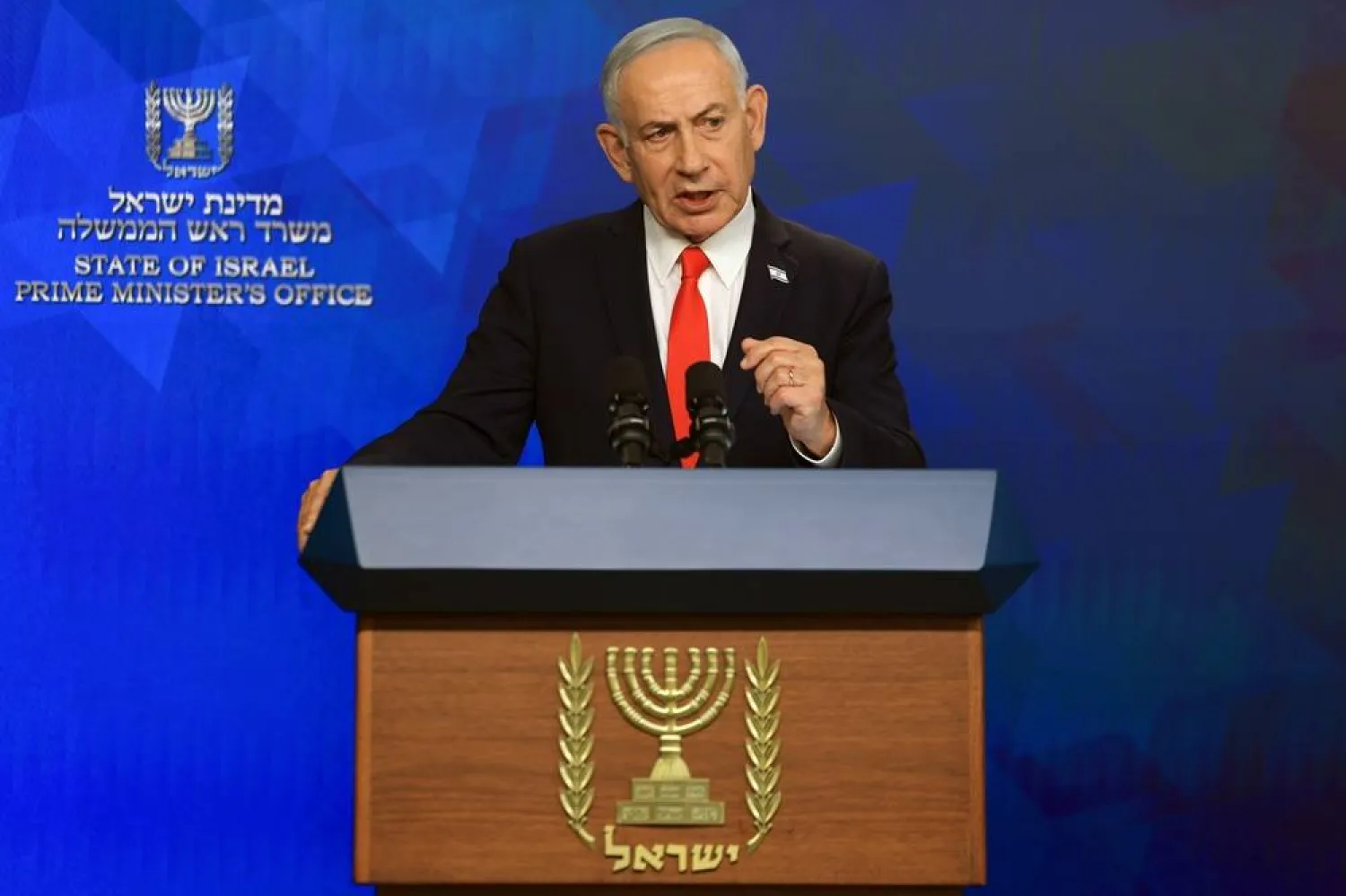
Israeli Prime Minister Benjamin Netanyahu holds a news conference in Jerusalem, 15 June 2026, following the announcement of a US-Iran mediated preliminary framework to end regional military hostilities. (EPA)
TT

Netanyahu and Trump on Collision Course as US, Iran Agree to Halt War

Israeli Prime Minister Benjamin Netanyahu holds a news conference in Jerusalem, 15 June 2026, following the announcement of a US-Iran mediated preliminary framework to end regional military hostilities. (EPA)

Benjamin Netanyahu bet that his joint war alongside Donald Trump would topple Iran's clerical rulers and bolster himself ahead of elections at home, as the architect of a US-Israeli alliance that would reshape the Middle East.

Instead, Israel's longest-serving prime minister is on a collision course with Trump as the US president seeks to extricate himself from the war, with both men's goals unmet and Israeli military operations tied down in Lebanon.

For now, Israeli officials have been cautious in public for fear of angering their most important ally, known for being prickly towards critics.

But in private conversations, the frustration is clear. The preliminary agreement is "terrible for Israel," said one senior Israeli official, giving a frank assessment on condition of anonymity. "And there is no one in the Israeli leadership who views it otherwise, from the prime minister to the chief of staff."

Washington says that over the next 60 days, when a ceasefire is in place, it will negotiate full terms that will address US and Israeli concerns, especially over Iran's nuclear program.

But Israeli officials told Reuters they thought the negotiating period under the deal was likely to be extended, tying Israel's hands from taking military action, while its concerns remain unresolved.

Netanyahu and Trump have repeatedly clashed over Israel's refusal to constrain its pursuit of Iran-backed Hezbollah in Lebanon, where a cessation of hostilities is a key Iranian demand.

At the start of the month, Trump described ‌Netanyahu as "[expletive] crazy" in ‌an angry phone call, ordering him not to strike Beirut while the US was seeking a deal with Iran.

Netanyahu called ‌off attacks ⁠that day, but ⁠struck Beirut's southern suburbs a week later, provoking Iranian missile strikes on Israel and a public rebuke of both sides from Trump.

Hours before the US and Iran announced their interim deal, Israel hit the Lebanese capital again on Sunday, after rockets were launched at Israel from Lebanon, fire Trump described as "small and meaningless".

Netanyahu said that Israel has emerged "strong and steady," with a leadership that stands firm and wise. At a press conference in Jerusalem late on Monday, he acknowledged that he and Trump have sometimes had their differences.

"He is the president of the United States, I am the prime minister of Israel. We many times see eye-to-eye and there are times when we see eye-to-eye less so. I am in charge of Israel's security interests," Netanyahu said.

Netanyahu, facing autumn elections he is projected to lose, may be more willing to defy Trump as he contends with an Israeli public that opinion polls show has grown skeptical of the US president's commitment to Israel's security.

"This is ⁠a pretty stark moment of divergence of interests," said Dan Shapiro, a former US ambassador to Israel under the Obama administration, now ‌with the Atlantic Council think tank.

"He will try to not openly oppose (the deal), so as not to get into ‌a brawl with Trump," said Shapiro. "But he will indicate Israel is not bound by it, and Israel reserves its rights."

ISRAEL SAYS IT'S NOT BOUND BY US-IRAN PACT

The memorandum of understanding between the US ‌and Iran is expected to be signed on Friday in Switzerland. While precise terms were not immediately known, mediator Pakistan said the pact called for a permanent halt to military ‌operations on all fronts, including in Lebanon.

Netanyahu said that Israel would keep its forces in southern Lebanon and maintain “freedom of action” against Hezbollah attacks.

"Iran wanted us to withdraw from it but I stood firm," he told reporters.

"We are keeping our freedom of action and we are keeping the security zone to protect (Israel's) northern citizens," he said.

The interim deal would reopen the Strait of Hormuz oil chokepoint while leaving the fate of Tehran's nuclear program to be resolved during a 60-day negotiation period towards a final deal.

Two other issues that Netanyahu and Trump had both declared as justifications for the war at its outset - curbing Iran's missile ‌program and ending its support for regional armed groups - are not thought to be on the agenda during those talks.

Three Israeli officials said Israel sees it as very likely the 60-day pact will be extended to 90 days, with the US maintaining ⁠its deployment of military assets in the region ⁠as it negotiates a broader deal.

Two other Israeli officials said that Israel was caught by surprise last week when Trump first said that a deal with Iran was close. They acknowledged that Israel has had little success in influencing the talks.

All of the officials spoke on condition of anonymity because they weren't authorized to speak publicly.

NETANYAHU UNABLE TO SELL THIS AGREEMENT TO ISRAELI PUBLIC, ANALYST SAYS

Netanyahu, who often clashed with Washington under the administrations of Democrats Barack Obama and Joe Biden, has long portrayed himself to the Israeli public as being uniquely adept in dealing with the Republican Trump.

During Trump's first term, Israel secured major policy changes from Washington, which moved its embassy to Jerusalem and backed the Abraham Accords that brought Israel formal diplomatic ties with the UAE and Bahrain.

On Iran, Trump ditched a nuclear agreement negotiated under Obama that Israel had long complained was too soft.

During elections in 2019, Netanyahu displayed massive campaign billboards in Tel Aviv and Jerusalem showing him and Trump smiling and shaking hands.

But now, the US-Iran pact undermines Netanyahu's case that a close relationship with Trump sets him apart from other candidates for prime minister, said Jonathan Rynhold, a political scientist at Bar-Ilan University, near Tel Aviv.

"(Netanyahu) will be unable to sell this agreement to the Israeli public," Rynhold said. "The best that he can hope for is that they fail to reach an agreement and the war restarts to Israel's advantage in 60 days."

According to a poll released on Friday by the Israel Democracy Institute, just 41% of Jewish Israelis think their security is a central consideration for Trump, down from 64% in March.

Eli Cohen, Netanyahu's energy minister, said that Israel would be prepared to act alone if Iran rebuilds its nuclear and missile capabilities, though he said the chances of Tehran taking that step during Trump's tenure were low.

"If Iran tries to renew its nuclear and ballistic missile programs - we will be there and act," Cohen told Israel's public broadcaster Kan.


US-Iran Deal Leaves Major Lebanon Questions Unresolved

Displaced families drive past a man holding the Hezbollah party flag as they drive along the highway through the area of Jiyyeh as they return to their home villages in southern Lebanon on June 15, 2026. (AFP)
TT

US-Iran Deal Leaves Major Lebanon Questions Unresolved

Displaced families drive past a man holding the Hezbollah party flag as they drive along the highway through the area of Jiyyeh as they return to their home villages in southern Lebanon on June 15, 2026. (AFP)

A deal between Washington and Tehran that ends the Israel-Hezbollah war leaves many issues in Lebanon unresolved, failing to mention Israel withdrawing from the country or an end to Tehran's support for the armed group.

Under US pressure, Lebanese officials have been holding direct talks with Israel aimed at reaching a separate agreement on ending the hostilities, but Beirut appeared to have been sidelined with the overnight announcement on the regional conflict.

AFP looks at the deal and the questions it raises in Lebanon.

- What does the deal involve? -

Details of the agreement to end the Middle East war on all fronts have not been made public, but Iran and mediator Pakistan have both said it includes Lebanon.

Hezbollah drew the country into the Middle East war on March 2 with rocket fire at Israel to avenge the killing of Iran's supreme leader in US-Israeli strikes.

Israel responded with airstrikes and a ground invasion that Lebanon says have killed more than 3,700 people and displaced more than one million others.

An official source told AFP that "Lebanon was not informed of the terms of the agreement or the time of the ceasefire".

Influential Lebanese parliament Speaker Nabih Berri, a Hezbollah ally and intermediary for the group, thanked Washington and Tehran for their "insistence on including... an essential and binding clause on halting the Israeli aggression on all of Lebanon".

Hezbollah on Monday had so far not claimed any fresh attacks on Israeli targets.

- Israeli withdrawal? -

Information circulating about the deal does not mention any Israeli withdrawal from south Lebanon, and Israeli Defense Minister Israel Katz on Monday said forces would remain in the country indefinitely.

Karim Bitar, a lecturer in Middle East Studies at the Sciences Po University in Paris, said that "the deal does not seem to involve Israel, which immediately meant that it wasn't a party to it... So it's very unlikely that there will be an Israeli withdrawal from south Lebanon."

Israeli forces control a strip of Lebanese territory running along the entire border.

A Western military source told AFP that Israeli forces had crossed the Litani River at several points, referring to the waterway running about 30 kilometers (20 miles) from the frontier but closer in some areas.

"Tens of thousands of Israeli soldiers" are in south Lebanon where they hold some established positions, the source said, adding that Hezbollah still had a presence there.

"It's the biggest invasion since their withdrawal in 2000," the source said, referring to Israel's previous pullout after some two decades of occupation.

Hezbollah says it sent reinforcements south of the Litani after the latest war erupted.

Under a 2024 ceasefire that followed a previous round of hostilities, Hezbollah fighters were supposed to withdraw from the area.

- What future for Hezbollah? -

Washington has pressured Lebanese authorities to disarm Hezbollah for months, but the accord makes no mention of the group.

"Iran doesn't seem to have committed to ending its support and financing for Hezbollah," Bitar said.

Military expert Riad Kahwaji said that "Hezbollah will not agree to give up arms... and this crisis will be protracted."

He said this could lead to political instability and even unrest, "especially now Hezbollah believes that through Iran it has emerged victorious from this agreement, and therefore is going to try and dictate its terms on who rules."

- Lebanon-Israel negotiations? -

Lebanon and Israel have been holding direct talks in Washington since April, seeking to end the hostilities and to separate Lebanon from the regional war.

A new round is scheduled for later this month.

Lebanese Prime Minister Nawaf Salam said Monday that "we will redouble our efforts" through the Washington negotiations "to secure a full Israeli withdrawal."

But after the Iran-US announcement, some cast doubt on the effectiveness of the bilateral negotiations.

Bitar said that "Lebanon could find itself once again as a scapegoat that pays the price both of American amateurism, Iranian cynicism, Israeli hubris and... the lack of a clear strategy from its own political class."


Lebanese Mourn Homes, Livelihoods Destroyed by Israel in Southern City

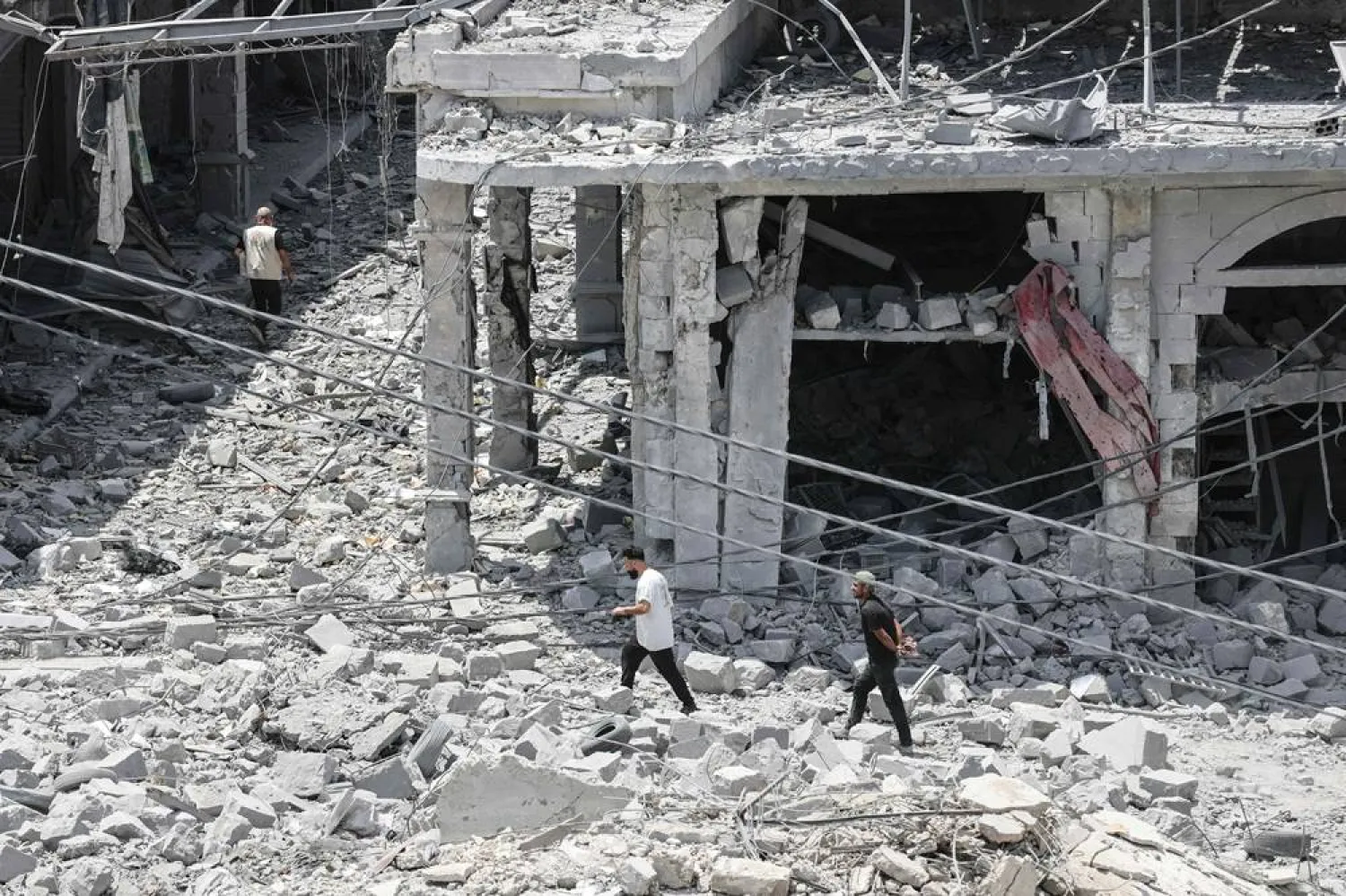
 People make their way through the rubble of a destroyed building as residents displaced by fighting return to Nabatieh in southern Lebanon on June 15, 2026. (AFP)
People make their way through the rubble of a destroyed building as residents displaced by fighting return to Nabatieh in southern Lebanon on June 15, 2026. (AFP)
TT

Lebanese Mourn Homes, Livelihoods Destroyed by Israel in Southern City

 People make their way through the rubble of a destroyed building as residents displaced by fighting return to Nabatieh in southern Lebanon on June 15, 2026. (AFP)
People make their way through the rubble of a destroyed building as residents displaced by fighting return to Nabatieh in southern Lebanon on June 15, 2026. (AFP)

When Kamal Kamal heard a ceasefire deal had been agreed between Iran and the United States, he rushed back to the southern city of Nabatieh only to find an Israeli strike had reduced his life's work to rubble.

The city, usually home to some 90,000 people before the latest war between Israel and Hezbollah erupted on March 2, was largely deserted as Israel pressed its military offensive in the area in recent days.

Kamal fought back tears as he stared stunned at the pile of rubble that used to be his roastery and warehouse for coffee and other products, after Israel pummeled the region with strikes and issued sweeping evacuation orders.

"When I opened it in the seventies, I was still a young man... now nothing is left," he said, leaning heavily on a walking stick and surveying the vast destruction.

"How my life has been spent in vain here!"

The war in Lebanon has been included in the framework deal to end the broader Middle East war.

But Lebanon's army on Monday urged displaced residents to delay their return to southern border villages, citing the "risk of Israeli violations and attacks".

Iran-backed group Hezbollah issued a similar warning.

Yet residents who have cautiously returned to Nabatieh have expressed dismay at the huge damage Israel inflicted on the city's neighborhoods and its famed market, where the roofing had collapsed and shops were devastated.

An AFP photographer also saw destruction to homes and businesses in the city, which has served as a hub of economic, social and services activity.

- 'Sorrow and grief' -

The city's municipality said in a statement that it had asked residents not to return "at the present time under any circumstances", citing the security situation.

The Lebanese army had set up a checkpoint at the entrance to the city, advising locals about the roads that they could take as intermittent artillery shelling rang out and smoke rose up.

The flow of residents to Nabatieh picked up later in the day, with people inspecting their homes and properties as heavy machinery worked to remove rubble and clear roads.

In one heavily damaged neighborhood, Rana Nasrallah surveyed her destroyed home, the rubble strewn with clothes, furniture and pot plants.

The 45-year-old had fled with her family to the coastal city of Sidon during the war.

"We grew up in this neighborhood. We used to play here as children. And here's where the older women used to sit and chat, the historic Nabatieh market before us... the landmarks that they perhaps wanted to erase," she said.

"As soon as the ceasefire was declared and before any official (Lebanese) announcement... we got going and came here. We couldn't wait any longer.

"We came to breathe in the scent of our land... even if there are no homes to shelter us and there is no work, still it's a relief for our souls."

In the face of the huge damage in Nabatieh and other south Lebanon towns and villages, including where Israeli forces have carried out sweeping demolitions, Nasrallah still expressed hope of returning permanently.

"Despite the sorrow and grief at seeing the city destroyed... we are filled with hope that we will rebuild," she said.

"Not once did we feel defeated or that we would not triumph, or that we would not return to rebuild Nabatieh."