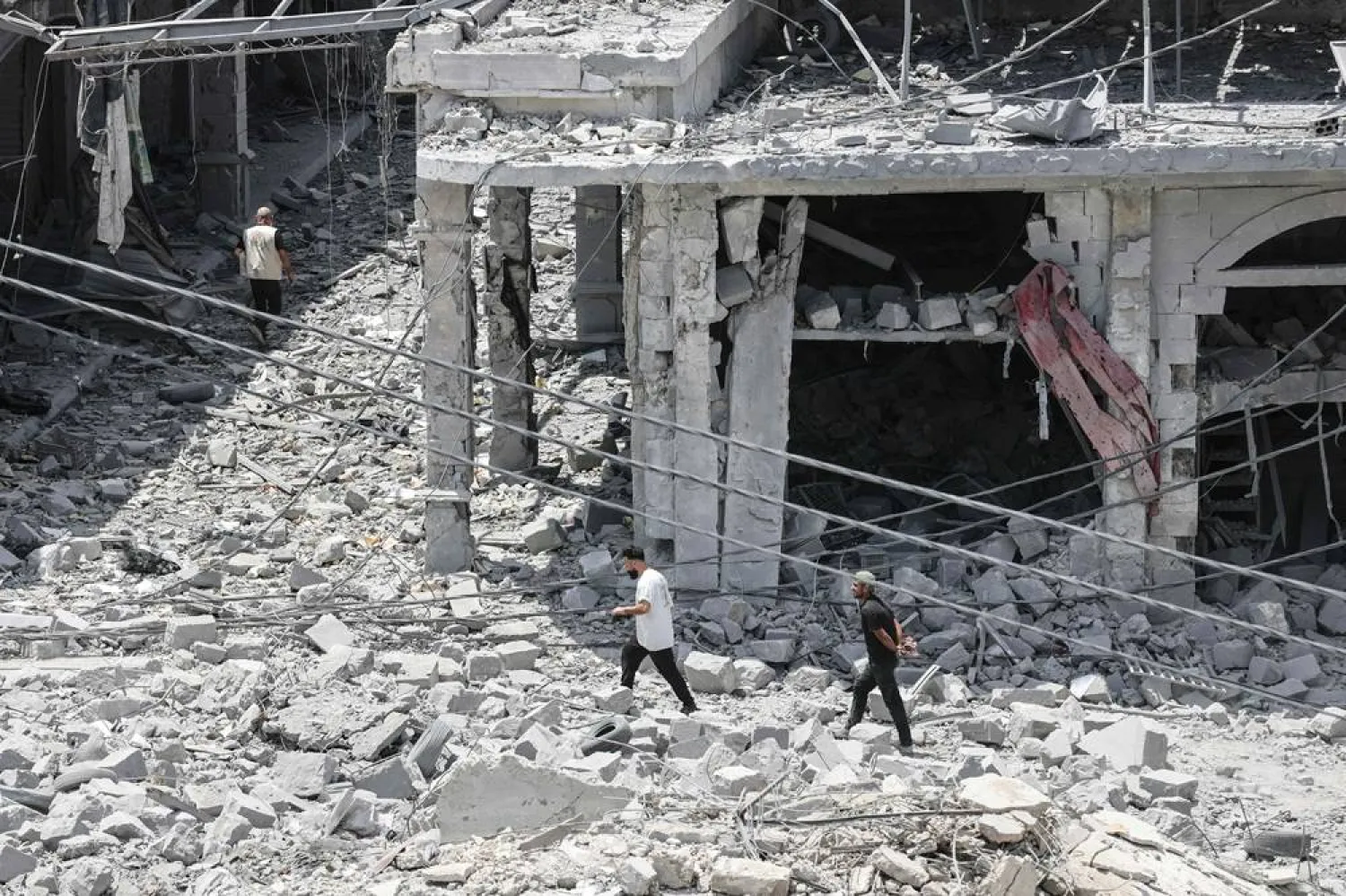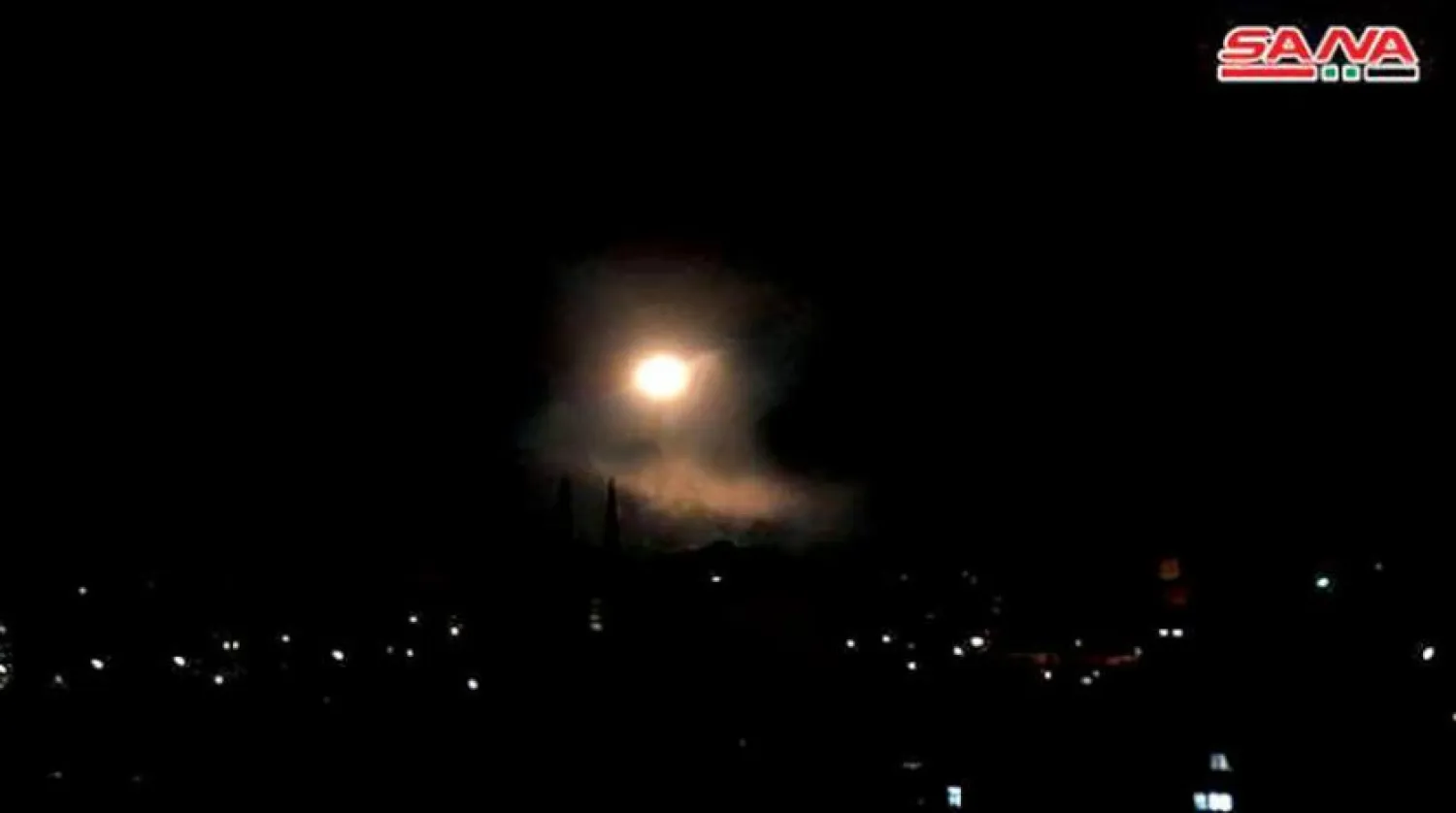

Syrian authorities announced that Israeli jets struck overnight Thursday positions near the capital Damascus and Homs. The attacks took place two days after Israel struck the outskirts of the town of Khodr in Quneitra near the Israeli-occupied Golan Heights.
The Syrian Observatory for Human Rights confirmed that at least four members of the Lebanese Hezbollah party were killed in the attack near Damascus, in what observers said was a new test for the group in Syria. The war monitor could not verify whether the casualties were Lebanese or Syrian.
What is the significance of Khodr?
State news agency SANA had reported an unnamed military source as saying that “the Israeli enemy had carried out an aerial aggression from over southeastern Beirut towards some positions near Damascus and Homs.”
The Observatory said the strikes targeted a Hezbollah arms depot and military positions in the region of Qara in the Damascus countryside that is close to Homs’ southwestern countryside.
In Lebanon, local media said two rockets landed in the border region of al-Qalamoun.
Israel has carried out dozens of strikes against Syrian regime, Iranian and Hezbollah targets in Syria in recent years. It rarely ever confirms the attacks. In an annual report last year, the military did confirm that it struck some 50 targets in Syria, without providing details.
Close to buffer zone
Some four years ago, Israel announced that it was ready to help the Druze majority town of Khodr avoid falling in the hands of armed Syrian opposition factions.
Hezbollah has instead deployed in the town and it has consequently become a valid target for Israel, which last struck it on Monday.
Located near Jabal al-Sheikh in the Golan Heights, Khodr lies some 75 kilometers southwest of Damascus in a buffer zone between Syria and Israel. It boasts some 10,000 mainly Druze residents, who have largely sided with the regime during the ongoing ten-year conflict.
Iran has been eying the regions of Mashati Khodr, hoping that its capture would allow it to tighten its control over the villages of al-Haramoun and secure new routes into southern Lebanon. In other words, it would allow it direct land access to its proxy Hezbollah, which is the dominant force in Lebanon’s South.
Western officials have said that Hezbollah holds complete control over Khodr and the surrounding areas. They noted that it was no coincidence that Israel struck the region two weeks after an exchange of fire between it and Hezbollah in the occupied Shebaa Farms in Lebanon.
Soon after the strike against Khodr, Israel dropped leaflets over Quneitra on Tuesday, warning the Syrian military against cooperating with Hezbollah.
Daraa
Local sources told Asharq Al-Awsat that the Israelis were not appearing to be sending new messages in the area.
They have occasionally struck Syrian, Iranian or Hezbollah positions, but now “the context is actually different” given the escalation in the southern region of Daraa, they added.
They explained that the regime is maintaining its pressure on Daraa in the hopes of collapsing the deal that has been place in the area since 2018.
Under the agreement, sponsored by Russia, the US and Jordan, the regime was allowed to return to the area in exchange for the withdrawal of opposition forces and for Iran to pull out its militias from borders with Israel and Jordan.
Daraa has in recent weeks come under intense attacks by the regime. The American and Jordanian sponsors appear unconcerned over the collapse of the deal, leaving the locals, regime and Russians to take up negotiations.
Regional and international powers should be concerned as a new negotiated agreement may allow Iran to play a larger role in southern Syria.
Given these talks, the Israeli strikes may be interpreted as a message to the Iranians to think twice about expanding in the region.
Tel Aviv is saying that it wants the rules of the game to remain unchanged in southern Syria regardless of the fate of the 2018 agreement.