
Lebanon Draft Electricity Reform Plan Sees Tariff Hike, 24-Hour Power by 2026

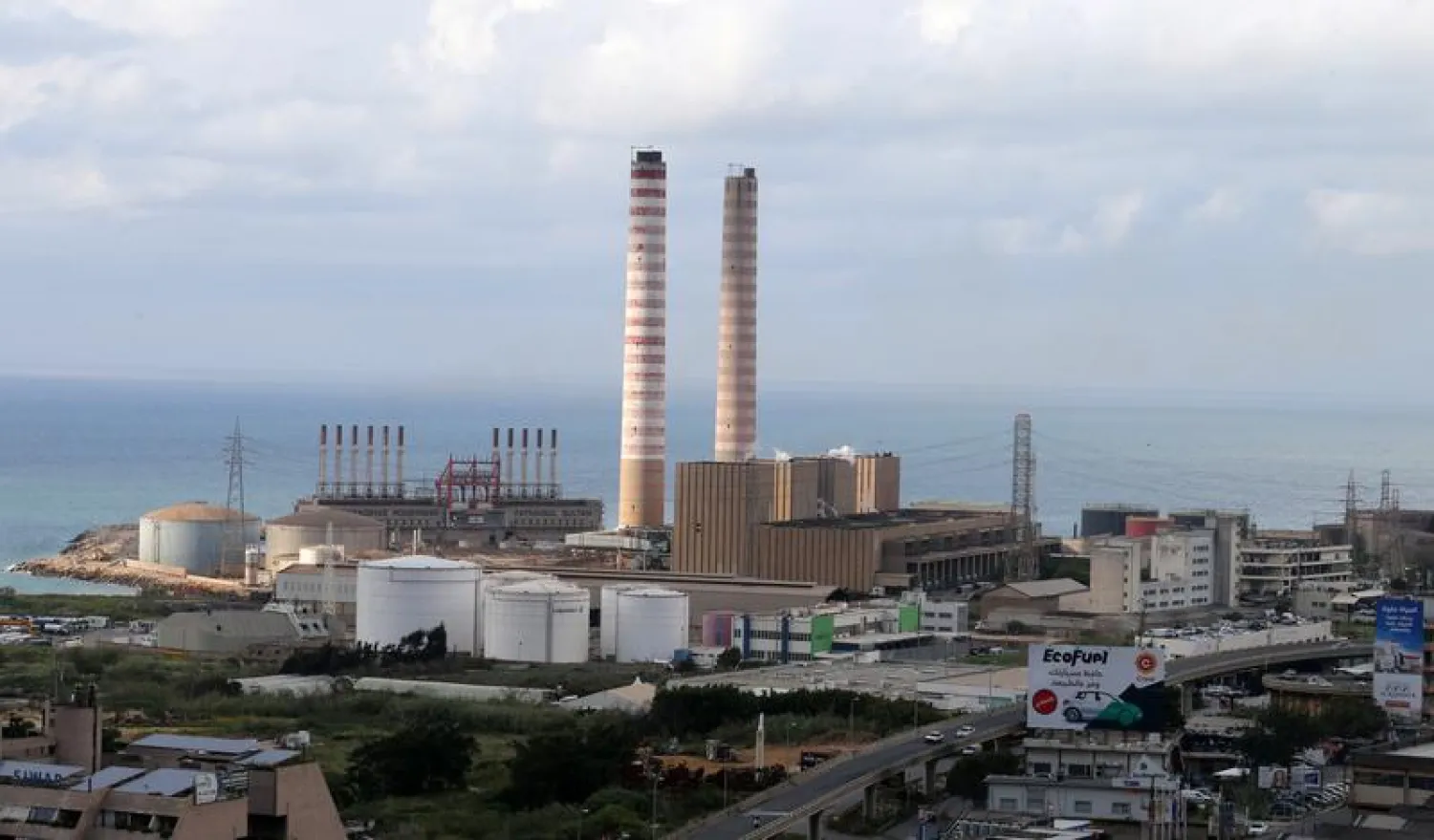
Zouk Power Station is seen in Zouk, north of Beirut, Lebanon March 27, 2019. Picture taken March 27, 2019. REUTERS/Mohamed Azakir
TT

Lebanon Draft Electricity Reform Plan Sees Tariff Hike, 24-Hour Power by 2026

Zouk Power Station is seen in Zouk, north of Beirut, Lebanon March 27, 2019. Picture taken March 27, 2019. REUTERS/Mohamed Azakir

A draft reform of Lebanon’s crippled power sector seen as vital to addressing its financial crisis envisages an “immediate” hike in electricity prices, for the first time in three decades, and $3.5 billion investment to secure 24-hour power by 2026.

The blueprint, dated February 2022 and seen by Reuters, was discussed by the government earlier this week, Reuters reported.

Energy Minister Walid Fayad has called for its approval by the government next week ahead of the first parliamentary election, in May, since a financial meltdown in 2019. He has previously said tariffs will be hiked when more power is added to the grid.

The International Monetary Fund, with which Lebanon is discussing a potential bailout programme, said last week preventing the sector’s drain on public resources was a key pillar of the country’s economic recovery. Two previous plans with similar goals have gone unimplemented however, due to political splits.

Lebanon has not had round-the-clock power since the 1990s and cash transfers to state-run utility Electricte du Liban (EDL) to cover chronic losses have contributed tens of billions of dollars to its huge public debt over three decades.

EDL’s revenue now only covers 4% of its $800 million operating costs, the draft says.

“Distribution losses account for 37 percent of energy generated in 2021, which is well above industry standards and dooms the sector to financial imbalance,” the draft says.

The plan envisions EDL breaking even by 2023 and turning profitable by 2024 by increasing bill collection, cutting technical losses and raising the “absurd” price of around 1 cent per kilowatt hour to between around 10 cents per KWH for most residential customers and 18 cents for others. Prices were last amended in 1994.

It also calls for the appointment of an Electricity Regulatory Authority (ERA) mandated by a 2002 law but never implemented due to political disagreements, and for an audit and eventual corporatization of EDL.

Lebanon can only produce 1,800 MW of power while peak demand exceeds 3,000MW. The gap is filled by expensive and polluting privately-run diesel generators for those who can afford them.

Weak governance, corruption and mismanagement are at the root of the sector’s problems, Jessica Obeid, a Lebanese energy policy consultant and non-resident scholar at the Middle East Institute told Reuters.

“Unless these are addressed, residents will not have reliable, sustainable and affordable power,” she said.

The plan envisages extending the current 3-4 hours of power per day to 8-10 hours later this year via imports of electricity from Jordan and gas from Egypt -- both deals Fayyad has said should go into force in spring. It foresees an additional 500MW of “temporary” generation added to the grid in the mid-term.

To reach round-the-clock power by 2026, the country requires a “macro‐fiscal stabilization program to... provide the comfort needed for investors to commit the sizable investment” needed for a mix of gas-fired power plants and renewables.

Such a programme requires broad political approval that has not yet been forthcoming.


Saudi Industry Ministry Concludes Ninth Licensing Round, with 24 Companies and Consortia Awarded 172 Mining Sites

Saudi Industry Ministry Concludes Ninth Licensing Round, with 24 Companies and Consortia Awarded 172 Mining Sites
TT

Saudi Industry Ministry Concludes Ninth Licensing Round, with 24 Companies and Consortia Awarded 172 Mining Sites

Saudi Industry Ministry Concludes Ninth Licensing Round, with 24 Companies and Consortia Awarded 172 Mining Sites

The Saudi Ministry of Industry and Mineral Resources announced on Wednesday the names of 24 companies and consortia that have won licenses in the ninth exploration licensing round, the largest in the Kingdom’s history to date.

The winning entities were awarded 172 mining sites, including 76 sites that advanced to a multi-round public auction, across three mineralized belts in the regions of Riyadh, Madinah, and Qassim, with total committed exploration spend of over SAR671 million during the first two years of their work programs.

This milestone comes as part of the ministry’s ongoing efforts to accelerate mineral exploration and development in the Kingdom, in line with the objectives of Vision 2030, which positions the mining sector as the third pillar of the national industrial economy, said the ministry in a statement.

The ninth round offered over 24,000 km2, spanning the Ad-Duwaihi/Nabitah gold belt in Riyadh Region, as well as the Nuqrah and Sukhaybirah/As-Safra gold belts in Madinah and Qassim regions. These areas are rich in strategic minerals, including gold, copper, silver, zinc, and nickel. The round witnessed strong interest and high-quality competition from leading local and international companies, reflecting growing confidence in Saudi Arabia’s mining investment environment and its attractiveness at both regional and global levels.

The list of winning companies includes several leading international firms and prominent local companies, namely: Desert EX Pty Ltd Company; Batin Alard for Gold Company; Royal Roads Arabia Company; Sierra Nevada Gold Inc. Company; Aurum Global Group; Brunswick Exploration Incorporated; EQLEED-INDOTAN Mining Company; Helderberg Limited Company; Rawafed Alola for Mining Company; Saudi Gold Refinery Limited Company; Arabian Discovery Mining Company; Al Ghazal Al Arabi Mining Company; Almasar Minerals Holding Limited Company; Al Tasnim Enterprises LLC Company; Arabian Gulf Skylark. The Distinguished Consortium Mining Company, Two Limited Company; Maaden Ivanhoe Electric Exploration and Development Limited Company.

Several newly formed consortia also emerged winners in the licensing round, such as Demir Engineering Ltd, Dahrouge Geological Consulting Ltd, and Kaz United Mining LLC Consortium; KENZ Global Resources Ltd, and Manahil Al Sharq Mining and Al Rayyan Mining Resources Co. Consortium; Maaden Barrick Technology Experts Co. and Andiamo Exploration Ltd Company; Shandong Gold (Beijing) Industrial Investment Co., Ltd., Development Co., Ltd., and Ajlan & Bros Company for Mining; Midana Exploration Pty Ltd and Saudi Arabian Mining Company (Maaden) Consortium; and McEwen Mining Inc. and Sumou Holding Company Consortium.

The ninth round saw 26 qualified companies participate via the electronic bidding platform. The round was conducted in several stages with the highest levels of transparency: prequalification, site selection via the platform, and a multi-round public auction for sites attracting more than one bidder.

The ministry further noted that the scale of investment commitments in this round supports the development of underexplored greenfield areas and helps unlock the Kingdom’s estimated mineral wealth of SAR9.4 trillion, thereby strengthening the resilience of mineral supply chains.

The ministry confirmed that licensing will continue through the 10th round, spanning 13,000 km2 across Madinah, Makkah, Riyadh, Qassim, and Hail. It will include new sites that extend the mineralized belts offered in the ninth round.

The ministry will announce additional exploration and investment opportunities for 2026 at the fifth edition of the Future Minerals Forum (FMF), scheduled to take place in Riyadh from January 13 to 15.

These efforts are part of the Kingdom’s comprehensive strategy for the mining and mineral industries, aimed at maximizing the value of mineral resources, attracting global investment, creating jobs, enhancing value-chain integration, and reinforcing Saudi Arabia’s position as a global mining hub, in line with the ambitions of Vision 2030, it stressed.


Expo 2030 Riyadh Awards the Main Utilities and Infrastructure Works Package

The milestone demonstrates the project’s increasing momentum as it shifts from early works to large-scale construction activity. (SPA)
TT

Expo 2030 Riyadh Awards the Main Utilities and Infrastructure Works Package

The milestone demonstrates the project’s increasing momentum as it shifts from early works to large-scale construction activity. (SPA)

In a step aimed at advancing construction activities, Expo 2030 Riyadh awarded its Main Utilities and Civil Works package to Nesma and Partners - marking a significant moment in the journey to bring to life one of the most ambitious global mega-events ever developed.

The milestone demonstrates the project’s increasing momentum as it shifts from early works to large-scale construction activity.

In a statement on Wednesday, Expo 2030 Riyadh Company said the Main Utilities and Infrastructure Works package aims to prepare the site for subsequent construction phases and supports the operational requirements of the event itself.

The scope of work includes constructing roads within the Expo site and installing essential utilities that will form the infrastructure backbone of the entire development.

Around 50 kilometers of infrastructure networks will be delivered as part of this package – including water, sewage, EV charging stations, and electrical and communication systems. Together, these works are essential to support the next stages of master plan development and allow Expo 2030 Riyadh’s experience-defining structures to take shape.

CEO of Expo 2030 Riyadh Company Talal Al-Marri said: “This milestone marks an important step in accelerating construction activities in the Expo 2030 Riyadh site. By moving early on the infrastructure that underpins the entire site, we are creating the conditions for safe, coordinated, and high-quality delivery across all future phases of development, while ensuring a lasting legacy well beyond 2030.”

“The contract has been awarded ahead of schedule to accelerate the delivery timeline as part of a phased approach that will see construction across infrastructure, buildings, and public spaces advance steadily through 2026 and into early 2027,” he stressed.

President and Chief Executive Officer of Nesma and Partners Samer Abdul Samad said: “We are proud to be entrusted with delivering this phase of infrastructure for Expo 2030 Riyadh. This project is not only about scale, but also about precision, integration, and responsibility.”

“Our focus will be on delivering high-quality infrastructure that supports the ambition of Expo 2030 Riyadh and sets a strong foundation for everything that follows,” he added.

Expo 2030 Riyadh Company has embedded high standards for quality, sustainability, innovation, worker welfare, and health and safety into the delivery of the works, reinforcing its commitment to responsible construction and creating a safe, inclusive environment for everyone involved in the program.


Saudi Arabia Closes 2025 with Historic Industrial Reform, Global Digital Leadership, Record-Breaking Economic Activity

As 2025 draws to a close, Saudi Arabia records a year defined not merely by statistical growth, but by structural transformation across every major sector. (SPA)
TT

Saudi Arabia Closes 2025 with Historic Industrial Reform, Global Digital Leadership, Record-Breaking Economic Activity

As 2025 draws to a close, Saudi Arabia records a year defined not merely by statistical growth, but by structural transformation across every major sector. (SPA)

The second half of December marked a transformative conclusion to the year for Saudi Arabia, defined by a major policy shift to empower the industrial sector, world-class recognition in digital governance, and unprecedented levels of commercial and religious tourism activity.

Industrial empowerment and economic surge

In a decisive move to boost the competitiveness of the national industry, the Cabinet approved the cancellation of the expat levy for licensed industrial establishments. This decision builds on six years of exemptions that have already driven a 56% increase in industrial GDP to over SAR501 billion and a 74% rise in industrial employment.

Global leadership in tech and health

The Kingdom’s digital transformation strategy achieved a major milestone, ranking second globally in the World Bank’s GovTech Maturity Index with a score of 99.64%, placing it in the "very advanced" category.

In healthcare, the King Faisal Specialist Hospital and Research Center (KFSHRC) was ranked first in the Middle East for oncology and orthopedics and successfully pioneered a novel 3D-printing technique to treat inner ear disorders.

The period by numbers:

SAR30.7 billion: The record value of e-commerce sales in October 2025, marking a 68% annual increase.

68.7 million: The total number of worshippers and visitors received at the two holy mosques during the month of Jumada Al-Akhira.

8 million: The number of visitors to Riyadh Season 2025 since its launch in October.

32.3%: The year-on-year growth in non-oil exports for October 2025.

11.9 million: The number of Umrah performances completed in the month of Jumada Al-Akhira.

95 tons: The quantity of seasonal seeds stored by the Kingdom, setting a new Guinness World Record.

26: The number of awards won by Saudi students at the World Artificial Intelligence Competition for Youth (WAICY), taking 1st place globally.

$160 million: The total value of development loans signed with Mauritania for water and electricity projects.

158,000 tons: The volume of citrus production in the Kingdom as the new season launches.
.9%: The annual inflation rate in Saudi Arabia for November 2025.

12,000+: The number of industrial facilities now operating in the Kingdom, up from 8,822 in 2019.

2: The number of new Dark Sky Reserves accredited in AlUla (Sharaan and Wadi Nakhlah).

As 2025 draws to a close, Saudi Arabia records a year defined not merely by statistical growth, but by structural transformation across every major sector. From welcoming record numbers of tourists and pilgrims to securing top global rankings in digital governance and industrial competitiveness, the Kingdom has effectively translated strategic planning into tangible reality.

These milestones, spanning economic diversification, technological leadership, and international diplomacy, serve as cumulative evidence of a maturing ecosystem.

With every regulatory reform implemented and every global partnership secured this year, Saudi Arabia has done more than catalogue achievements; it has systematically narrowed the distance to its ultimate goals, moving one decisive year closer to the complete realization of Vision 2030.