


Iran Exiles Claim Disrupting Tehran’s Surveillance Cameras

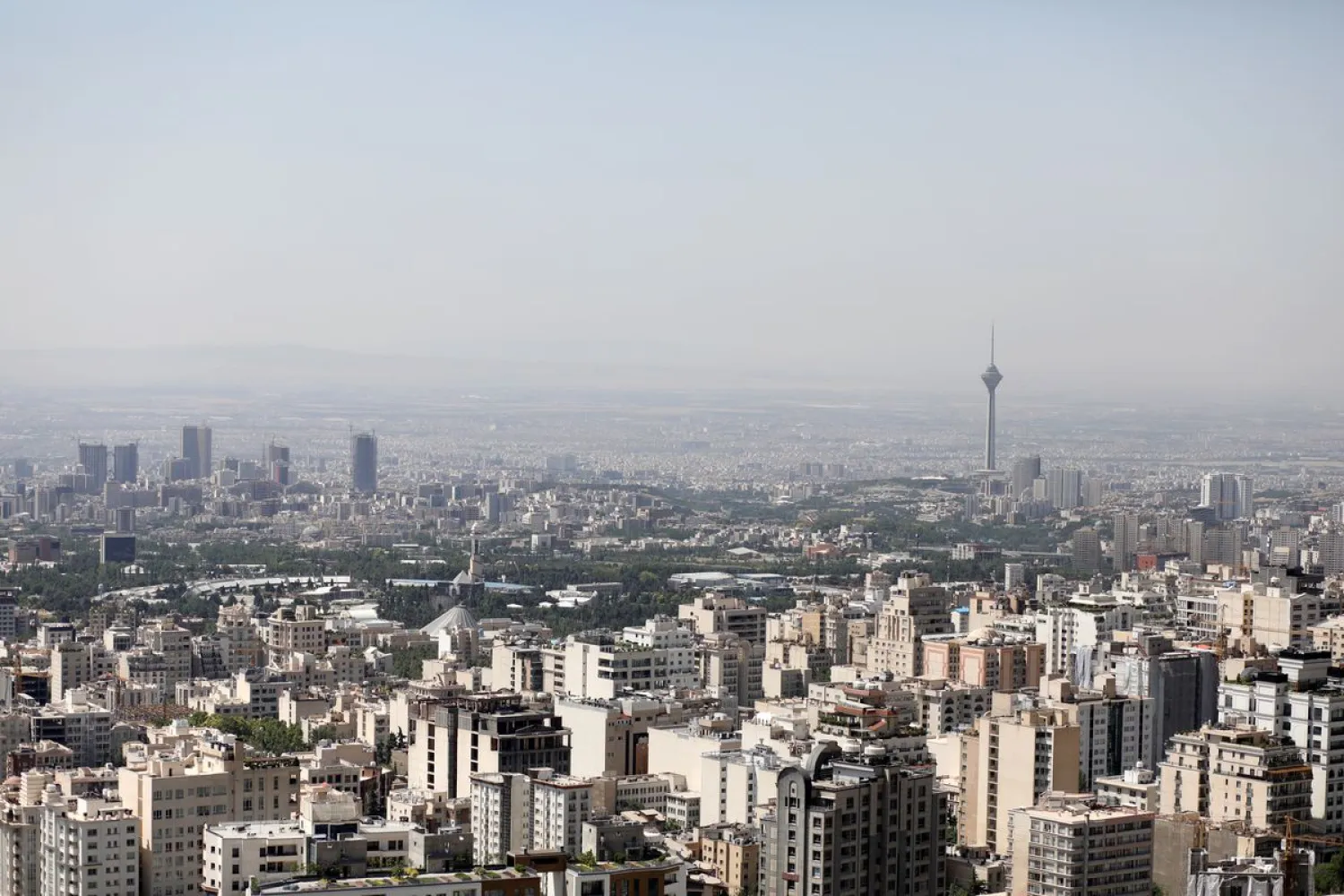
A general view of Tehran city, in Tehran, Iran June 12, 2020. Ali Khara/WANA (West Asia News Agency) via REUTERS/File Photo
TT

Iran Exiles Claim Disrupting Tehran’s Surveillance Cameras

A general view of Tehran city, in Tehran, Iran June 12, 2020. Ali Khara/WANA (West Asia News Agency) via REUTERS/File Photo

Government-run surveillance cameras around Iran's capital reportedly were "disrupted" Thursday, while an exile group claimed it hacked into over 5,000 cameras around Tehran ahead of commemoration of the death of the founder of the republic.

The Young Journalists Club, an affiliate of Iranian state television, acknowledged the disruption on Twitter after the Mujahedeen-e-Khalq claimed it penetrated the cameras, including around the mausoleum of the late Khomeini. The website for Tehran's municipality also went down, as well as "communication systems" used by the city, the report said.

The semiofficial ISNA news agency later quoted Tehran's municipality as acknowledging the hack.

The Mujahedeen-e-Khalq released a video clip it claimed showed the municipality website and others defaced with a graphic that criticized the "anti-human Khomeini." It also included an image of Supreme Leader Ali Khamenei with a red "X" over his face, as well as images of MEK leaders Massoud Rajavi and his wife, Maryam Rajavi, while calling for an "uprising until overthrow."

"Down with Khamenei, Raisi, curses on Khomeini," the graphic read.

Massoud Rajavi hasn’t been seen publicly in nearly two decades and is presumed to have died. Maryam Rajavi now runs the MEK. Khomeini, who led Iran's 1979 revolution, died June 3, 1989.

The hack comes after another cyberassault in January that saw the Rajavis and a graphic calling for the death of the country’s supreme leader played on multiple state TV channels.

In October, an assault on Iran’s fuel distribution system paralyzed gas stations nationwide, leading to long lines of angry motorists unable to get subsidized fuel for days. A cyberattack on Iran’s railway system caused chaos and train delays. Another hack leaked footage of abuses at its notorious Evin prison.

Iran, long sanctioned by the West, faces difficulties in getting up-to-date hardware and software, often relying on Chinese-manufactured electronics or older systems. Pirated versions of Windows and other software are common across Iran. That makes it easier for potential hackers to target the country.

The MEK began as a Marxist group opposing the rule of Shah Mohammad Reza Pahlavi. It claimed and was suspected in a series of attacks against US officials in Iran in the 1970s, something the group now denies.

It supported the 1979 revolution, but soon had a falling out with Khomeini and turned against the cleric. It carried out a series of assassinations and bombings targeting the young republic.

The MEK later fled into Iraq and backed Saddam Hussein during his bloody eight-year war against Iran in the 1980s. That saw many oppose the group in Iran. Although largely based in Albania, to this day the group claims to operate a network inside Iran.



WhatsApp Accuses Russia of Trying to Fully Block its Service

FILED - 21 January 2022, Berlin: The icon of Whatsapp is seen on the screen of a smartphone. Photo: Fabian Sommer/Deutsche Presse-Agentur GmbH/dpa
TT

WhatsApp Accuses Russia of Trying to Fully Block its Service

FILED - 21 January 2022, Berlin: The icon of Whatsapp is seen on the screen of a smartphone. Photo: Fabian Sommer/Deutsche Presse-Agentur GmbH/dpa

US messenger app WhatsApp, owned by Meta Platforms, accused authorities in Russia on Thursday of trying to fully block its service in order to drive Russians to a state-owned app, which it alleged was used for surveillance.

"Trying to isolate over 100 million users from private and secure communication is a backwards step and can only lead to less safety for people in Russia," WhatsApp said in a statement.

"We continue to do everything we can ‌to keep users connected."

Some ‌domain names associated with WhatsApp on Thursday disappeared from Russia's ‌national ⁠register of domain ⁠names, meaning that devices inside Russia stopped receiving its IP addresses from the app and that it could be accessed only by using a virtual private network (VPN), Reuters reported.

Roskomnadzor, the state communications regulator, and the Kremlin did not immediately respond to a request for comment.

Roskomnadzor first began restricting WhatsApp and other messenger services in August, making it impossible to complete phone calls on them, accusing the foreign-owned platforms of failing ⁠to share information with law enforcement in fraud and terrorism ‌cases.

It said in December it was taking ‌new measures to gradually restrict the app, which it accused of continuing to violate Russian ‌law and of being a platform used "to organize and carry out terrorist acts ‌on the territory of the country, to recruit their perpetrators and to commit fraud and other crimes."

Since then, many Russians have been able to use WhatsApp only in conjunction with a virtual private network and have switched to using rival messenger apps, though some ‌of those - like Telegram - are also under pressure from the authorities for the same reasons.

In a video published by state ⁠news agency ⁠TASS on Wednesday, Kremlin spokesman Dmitry Peskov said there was a possibility of reaching an agreement if Meta entered into dialogue with the Russian authorities and complied with the law.

"If the corporation (Meta) sticks to an uncompromising position and, I would say, shows itself unready to align with Russian legislation, then there is no chance," Peskov said.

Russian authorities, who also block or restrict social media platforms such as Snapchat, Facebook, Instagram and YouTube, are heavily pushing a state-backed messenger app called MAX, which critics say could be used to track users.

The authorities have dismissed those accusations as false and say MAX, which integrates various government-related services into it, is designed to simplify and improve the everyday lives of citizens.


Israel President Says at End of Visit Antisemitism in Australia 'Frightening'

Israel's President Isaac Herzog reacts during a Jewish community event in Melbourne on February 12, 2026. (Photo by WILLIAM WEST / AFP)
TT

Israel President Says at End of Visit Antisemitism in Australia 'Frightening'

Israel's President Isaac Herzog reacts during a Jewish community event in Melbourne on February 12, 2026. (Photo by WILLIAM WEST / AFP)

Antisemitism in Australia is "frightening" but most people want good relations, Israel's President Isaac Herzog said on Thursday as he wrapped up a four-day visit and was met by protests in the city of Melbourne.

Herzog's tightly policed visit to Australia this week was meant to offer consolation to the country's Jewish community following the mass shooting on Bondi Beach that killed 15 people in December, said AFP.

However, it sparked demonstrations in major cities, including in Sydney, where police used pepper spray on protesters and members of the media, including an AFP photographer, during scuffles in the central business district on Monday night.

Herzog told Channel Seven's Sunrise ahead of his Melbourne stop that a "wave" of anti-Jewish hatred in Australia had culminated in the December 14 killings at Bondi.

"It is frightening and worrying," he said.

"But there's also a silent majority of Australians who seek peace, who respect the Jewish community and, of course, want a dialogue with Israel."

The Israeli head of state said he had brought a "message of goodwill to the people of Australia".

"I hope there will be a change. I hope things will relax," he said.

Herzog attended a Jewish community event after a meeting with Victoria's governor at Melbourne's Government House.

Protesters waving Palestinian flags and chanting slogans squared off with police outside the event.

More are expected to turn out later at around 5 pm (0600 GMT) on Thursday.

Herzog told the audience at the community event: "We came here to be with you, to look you in the eye, to embrace and remember."

He also said demonstrators outside should instead "go protest in front of the Iranian embassy".

The Australian government accused Iran last year of orchestrating a recent wave of antisemitic attacks and expelled Tehran's ambassador.

Canberra, citing intelligence findings, accused Tehran of directing the torching of a kosher cafe in the Sydney suburb of Bondi in October 2024 and a major arson attack on the Adass Israel Synagogue in Melbourne in December 2024.

- Controversial visit -

Ahead of his arrival, national broadcaster ABC reported that a building at Melbourne University had been graffiti-ed with the phrase: "Death to Herzog".

Many Jewish Australians have welcomed Herzog's trip.

"His visit will lift the spirits of a pained community," said Alex Ryvchin, co-chief executive of the Executive Council of Australian Jewry, the community's peak body.

But some in the community disagreed, with the progressive Jewish Council of Australia saying he was not welcome because of his alleged role in the "ongoing destruction of Gaza".

The UN's Independent International Commission of Inquiry found last year that Herzog was liable for prosecution for inciting genocide after he said all Palestinians -- "an entire nation" -- were responsible for the Hamas attack on Israel in October 2023.

Israel has "categorically" rejected the inquiry's report, describing it as "distorted and false" and has called for the body's abolition.


Türkiye’s Foreign Minister Says the US and Iran Showing Flexibility on Nuclear Deal

FILE PHOTO: Turkish Foreign Minister Hakan Fidan speaks during an interview with Reuters at the 23rd edition of the annual Doha Forum, in Doha, Qatar, December 6, 2025. REUTERS/Ibraheem Abu Mustafa/File Photo
TT

Türkiye’s Foreign Minister Says the US and Iran Showing Flexibility on Nuclear Deal

FILE PHOTO: Turkish Foreign Minister Hakan Fidan speaks during an interview with Reuters at the 23rd edition of the annual Doha Forum, in Doha, Qatar, December 6, 2025. REUTERS/Ibraheem Abu Mustafa/File Photo

The United States and Iran are showing flexibility on a nuclear deal, with Washington appearing "willing" to tolerate some nuclear enrichment, Turkish Foreign Minister Hakan Fidan told the Financial Times in an interview published Thursday.

“It is positive that the Americans appear willing to tolerate Iranian enrichment within clearly set boundaries," Fidan, who has been involved in talks with both Washington and Tehran, told the FT.

“The Iranians now recognize ‌that they ‌need to reach a deal with the ‌Americans, ⁠and the Americans ⁠understand that the Iranians have certain limits. It’s pointless to try to force them.”

Washington has until now demanded Iran relinquish its stockpile of uranium enriched to up to 60% fissile purity, a small step away from the 90% that is considered weapons grade, said Reuters.

Iranian ⁠President Masoud Pezeshkian has said Iran would continue ‌to demand the ‌lifting of financial sanctions and insist on its nuclear rights including ‌enrichment.

Fidan told the FT he believed Tehran “genuinely ‌wants to reach a real agreement” and would accept restrictions on enrichment levels and a strict inspection regime, as it did in the 2015 agreement with the US and others.

US ‌and Iranian diplomats held talks through Omani mediators in Oman last week in ⁠an effort ⁠to revive diplomacy, after President Donald Trump positioned a naval flotilla in the region, raising fears of new military action. Trump on Tuesday said he was considering sending a second aircraft carrier to the Middle East, even as Washington and Tehran prepared to resume negotiations.

The Turkish foreign minister, however, cautioned that broadening the Iran-US talks to ballistic missiles would bring "nothing but another war."

The US State Department and the White House did not respond to a request for comment outside regular business hours.