


Sudan Raises State of Alert to Face Torrents, Heavy Rain

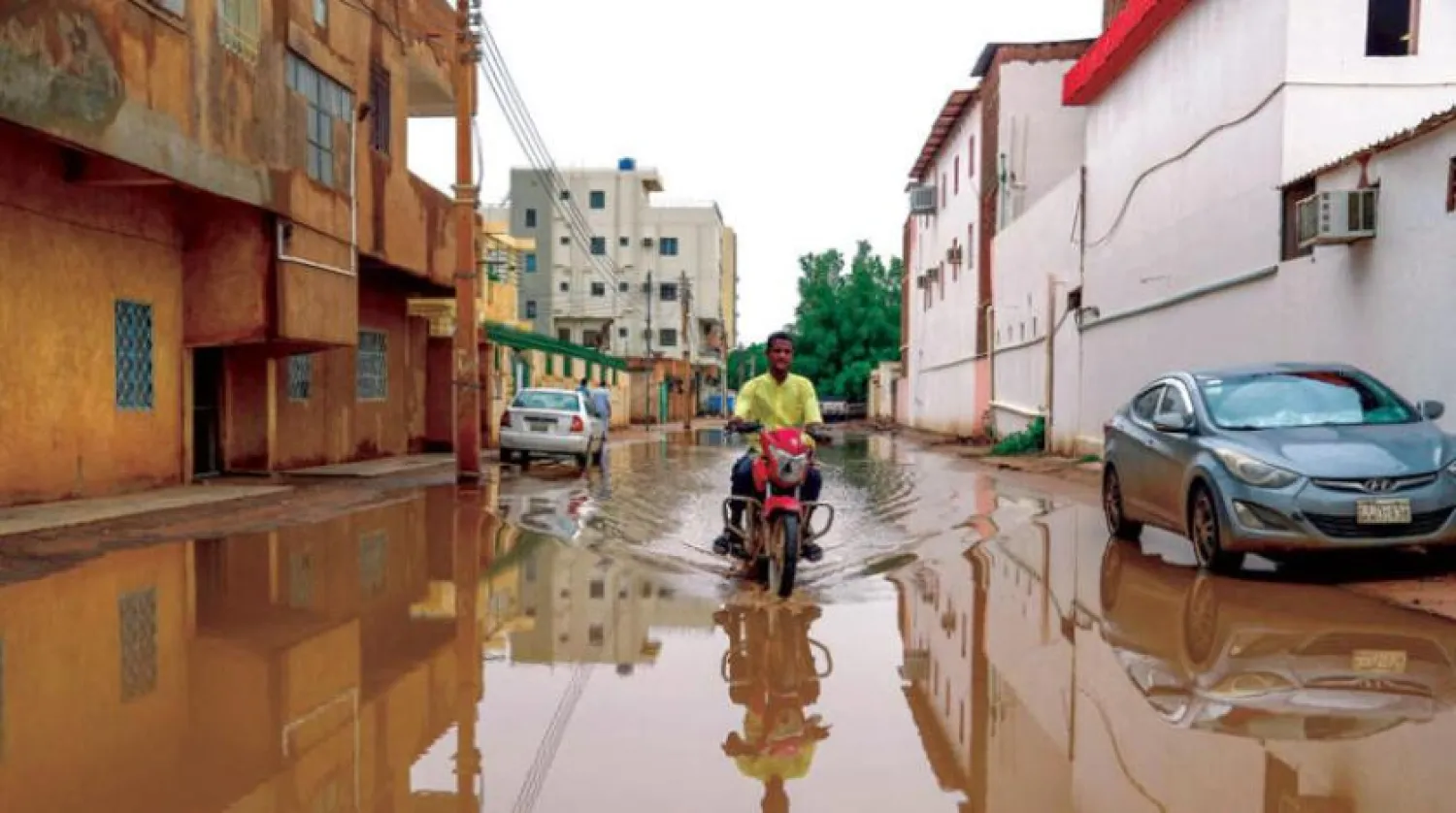
A man rides a motorbike in a pool of water following heavy rain in Sudan's capital Khartoum, on August 13, 2022. (AFP)
TT

Sudan Raises State of Alert to Face Torrents, Heavy Rain

A man rides a motorbike in a pool of water following heavy rain in Sudan's capital Khartoum, on August 13, 2022. (AFP)

Head of Sudan’s Transitional Sovereign Council Lieutenant-General Abdel Fattah al-Burhan pledged Sunday to provide support for all those affected by the floods and heavy rains.

He made the remarks in a speech on Sunday in the northern city of Shendi, on the occasion of the 68th anniversary of the establishment of the Sudanese armed forces.

“A total of 52 people have been killed and 25 others wounded due to torrential rains and floods since the beginning of the fall season,” SUNA reported on Saturday, quoting Abdel Jalil Abdelreheem, spokesman for Sudan’s National Council for Civil Defense.

The country recorded eight new death cases in Kassala State, east of the country, as a result of the seasonal flooding of the Gash River, which originates from the Ethiopian plateau.

Last week, the United Nations Office for the Coordination of Humanitarian Affairs (OCHA) estimated that around 38,000 people across East African country had been affected by rains and floods since the start of the rainy season in May, according to reports received by the government’s Humanitarian Aid Commission (HAC).

Reports indicated that about 9,000 houses were completely or partially destroyed in nine states, in addition to 140 health facilities and water sources.

Official statistics by the Civil Defense Forces stated that about 6,000 houses were destroyed, in addition to the significant damage to health and educational facilities.

The areas hardest hit include the River Nile, Kordofan, South Darfur and large areas of the Gezira State.

Rapporteur of the Supreme Council of Beja Opticals in eastern Sudan, Abdullah Obchard, said the flooding of Gash River isolated more than 20 areas in the east for more than a month.

He told Asharq Al-Awsat that residents of these areas are facing difficult humanitarian conditions after the humanitarian organizations' failure to access their areas.

“We monitored the death of four people who drowned, while deaths and injuries are being confirmed due to people’s houses collapsing,” Obchard said, noting the death of large numbers of livestock.

The Council appealed to the government in Khartoum and to the UN organizations and agencies to provide urgent assistance to save those affected by the river’s flooding.

It issued a statement calling for urgent intervention to relieve the afflicted and provide the necessary aid.



Opposition to Beirut Displacement Center Rises over Security, Sectarian Concerns

The site of a displacement shelter under construction in the Karantina area near Beirut port (Asharq Al-Awsat)
TT

Opposition to Beirut Displacement Center Rises over Security, Sectarian Concerns

The site of a displacement shelter under construction in the Karantina area near Beirut port (Asharq Al-Awsat)

Security and sectarian concerns are fueling opposition in Lebanon to plans for a displacement center in central Beirut, as ongoing conflict between Israel and Hezbollah drives new waves of displaced people.

Prime Minister Nawaf Salam has called for tighter security measures, amid growing political and public debate over establishing shelters for those displaced, most recently in the Karantina area near Beirut port.

At a security meeting at the Grand Serail, Salam stressed “the need to intensify security measures across Lebanon, particularly in Beirut, to safeguard citizens and their property,” citing developments in the south and the resulting displacement and security challenges.

A government decision to set up the displacement center in Karantina has triggered controversy, with several lawmakers urging it be scrapped on security and political grounds.

Although about 70 percent of the facility had been completed shortly after work began, informed sources said construction has been temporarily halted pending further review, without ruling out cancelling the project altogether. Funding is provided by international organizations and civil society groups.

Sources said the dispute reflects both political and sectarian sensitivities, while acknowledging that some concerns are legitimate. They added that security forces and the Lebanese Red Cross would oversee the center, with detailed registries of residents to ensure control.

The facility is intended to house around 800 people, particularly families unwilling to relocate to northern Lebanon or Mount Lebanon, preferring to remain in Beirut near their homes.

The suspension followed criticism from several political figures. MP Nicolas Sehnaoui of the Free Patriotic Movement described the project as “wrong in every sense,” calling for alternative solutions.

Lebanese Forces MP Razi Hage warned against turning the Karantina-port area into “a security and social hotspot under the pretext of a displacement center,” adding that temporary measures often become permanent.

For his part, Independent MP Waddah Sadek warned Beirut risked fragmenting into “security zones” and areas lacking oversight, while MP Fouad Makhzoumi urged the government to reconsider plans for large shelters in Karantina and Martyrs’ Square.

“While we fully recognize the humanitarian dimension, we respectfully urge reconsideration,” he said, warning of security and organizational repercussions.

The debate comes after Israeli strikes targeted areas previously considered relatively safe. Israel said it had targeted members of Hezbollah and Iran’s Revolutionary Guards in Aramoun in Mount Lebanon and areas near central Beirut.

The strikes have heightened concerns among residents in host communities, complicating efforts to respond to the growing displacement crisis.


Hamas Moves to Freeze Leadership Vote amid Regional Turmoil

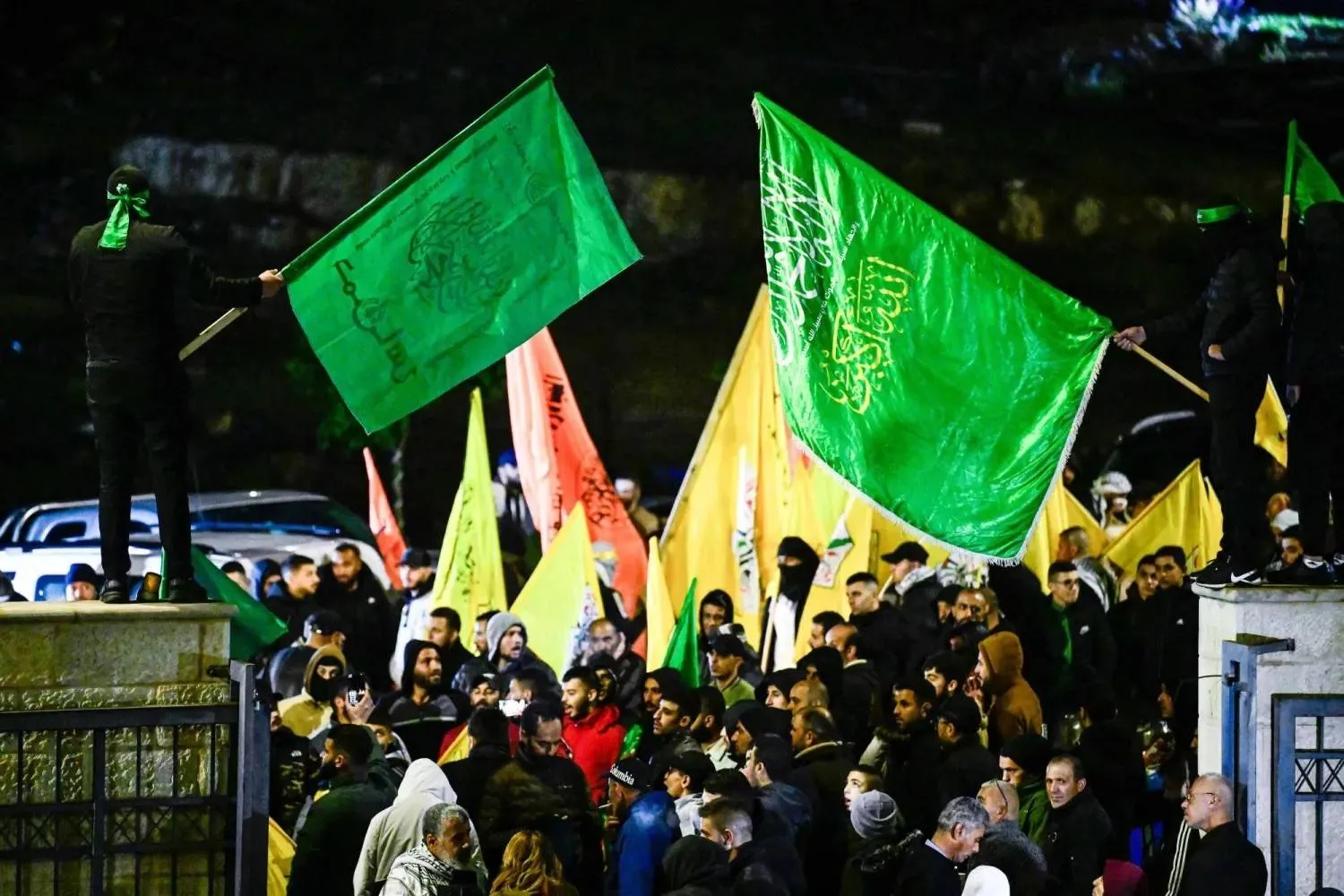
Palestinians wave Hamas flags during the reception of released Palestinian prisoners in Ramallah, in the occupied West Bank, November 2023 (AFP) 
TT

Hamas Moves to Freeze Leadership Vote amid Regional Turmoil

Palestinians wave Hamas flags during the reception of released Palestinian prisoners in Ramallah, in the occupied West Bank, November 2023 (AFP) 

Hamas is moving toward freezing its leadership election process as the US-Israeli war against Iran reshapes the region’s political and security landscape, senior sources in and outside Gaza said.

The Palestinian militant group had been preparing to elect a new head of its political bureau, but multiple sources told Asharq Al-Awsat that a “near-final” decision has emerged to suspend the vote due to mounting complications.

For about 18 months, Hamas has been run by a “leadership council.” In recent weeks, efforts intensified to appoint a new leader to serve the remainder of the current political bureau’s term, extended to 2026. Broader internal elections had been expected later this year or early next year.

Four well-informed sources said current regional conditions, particularly with leading candidates based abroad, have pushed the movement toward delaying the process.

The race has focused on Khaled Meshaal, Hamas’ political chief abroad, and Khalil al-Hayya, a Gaza-based senior figure who leads ceasefire negotiations. Both are members of the leadership council chaired by Mohammed Darwish, head of the group’s Shura Council. Other members include Zaher Jabarin and Nizar Awadallah.

Sources said al-Hayya is believed to have backing from Hamas figures in Gaza and its armed wing, the Ezzedine al-Qassam Brigades, while Meshaal enjoys stronger support in the West Bank and among members abroad.

Two sources - one in Gaza and one outside - said a decision could be taken within days to cancel the current vote and instead hold full political bureau elections at the end of the year.

“The region is undergoing major security and political changes,” one source outside Gaza said. “Field conditions require postponement, and there is growing support for holding a single comprehensive election.”

After the killing of Hamas leader Ismail Haniyeh in Tehran in July 2024, the group appointed Yahya Sinwar as his successor. Following Sinwar’s death in clashes in Rafah in October 2024, Hamas shifted to collective leadership under the council.

A source in Gaza said time constraints were also a factor. “We are approaching April, and there is little time left before the end of the extended term. There is near consensus to cancel elections for now,” the source underlined.

He added that regional developments could significantly affect the Palestinian cause, while Hamas is focusing on diplomatic efforts linked to Gaza’s future.

However, not all Hamas officials support freezing the process. A source outside Gaza said the issue “has not been settled,” describing any delay as temporary.

A senior Hamas figure abroad said much of the election process had already been completed. “It is not logical to cancel after such progress,” he explained.

War impact

The war has also stirred internal tensions within Hamas over Iran’s strikes on Gulf countries.

Hamas, which maintains close ties with Tehran, initially faced pressure after its armed wing praised the Iranian attacks. The group later called on Iran to halt the strikes following criticism.

Sources said Qatar has taken measures in recent days against some Hamas figures over statements supporting Iran.


Attack on Iraqi Intelligence HQ Ends Opportunities for Dialogue between Govt, Armed Factions

Iraqi Prime Minister Mohammed Shia al-Sudani visits the intelligence HQ in Baghdad on Sunday after Saturday's attack. (Iraqi Prime Minister’s Office)
TT

Attack on Iraqi Intelligence HQ Ends Opportunities for Dialogue between Govt, Armed Factions

Iraqi Prime Minister Mohammed Shia al-Sudani visits the intelligence HQ in Baghdad on Sunday after Saturday's attack. (Iraqi Prime Minister’s Office)

Iraqi Prime Minister Mohammed Shia al-Sudani slammed on Sunday the attack by a “cowardly” armed faction against an intelligence headquarters in Baghdad.

His position effectively puts an end to opportunities to hold dialogue between his government and the factions to stop their attacks on various US interests in Iraq and Kurdistan in solidarity with Iran in its war with Washington and Tel Aviv.

One officer was killed and other intelligence personnel were wounded in Saturday’s drone attack.

Sudani called on the political forces to take a “clear and frank” stance against the attacks on state institutions, a reference to some members of the pro-Iran Shiite Coordination Framework that have yet to make their position clear about the attacks.

The factions continue to target the US embassy in Baghdad and have struck a diplomatic logistics support base affiliated with the embassy at Baghdad airport and the US consulate in the Kurdistan Region capital Erbil.

Sudani visited the intelligence headquarters on Sunday, urging the concerned agencies to investigate the “heinous terrorist” attack.

He called on them to not hesitate in exposing the truth and bringing the perpetrators to justice.

“The perpetrators are a cowardly group that have violated Iraqi blood and state institutions. Whoever dares to do so does not represent Iraq. There can be no justification for this crime,” he added.

“The government is acting wisely and responsibly, but it will not stand idly as the country’s higher interests are violated,” he went on to say.

Sudani called on the political forces to “assume their responsibilities and issue clear and frank statements against the violations that are gambling with the future of the country.”

“Some party gave itself the right to control decisions of war and peace. We declare that this decision is the state’s alone. It alone sets and protects Iraq’s interests,” he stressed.

The national intelligence agency said outlaws had carried out Saturday's “terrorist” attack.

Sudani also denied reports that he had tasked national security advisor Qasim al-Araji to hold dialogue with the armed factions to make them stop attacks on US interests and residential neighborhoods in Baghdad.