


Arab, Gulf Countries Welcome Saudi-Iran Agreement, US Skeptical of Tehran’s Commitment

Wang Yi, a member of the Political Bureau of the Communist Party of China (CPC) Central Committee and director of the Office of the Central Foreign Affairs Commission, Ali Shamkhani, the secretary of Iran’s Supreme National Security Council, and Minister of State and national security adviser of Saudi Arabia Musaad bin Mohammed Al Aiban pose for pictures during a meeting in Beijing, China March 10, 2023. (Reuters)
TT

Arab, Gulf Countries Welcome Saudi-Iran Agreement, US Skeptical of Tehran’s Commitment

Wang Yi, a member of the Political Bureau of the Communist Party of China (CPC) Central Committee and director of the Office of the Central Foreign Affairs Commission, Ali Shamkhani, the secretary of Iran’s Supreme National Security Council, and Minister of State and national security adviser of Saudi Arabia Musaad bin Mohammed Al Aiban pose for pictures during a meeting in Beijing, China March 10, 2023. (Reuters)

Arab, Gulf and world countries welcomed on Friday the announcement that Saudi Arabia and Iran had agreed to restore diplomatic relations.

A tripartite statement issued by Saudi Arabia, Iran, and China said Riyadh and Tehran agreed to reopen their embassies and restore representation within a period of two months. They also agreed to activate the security cooperation agreement between them.

Oman’s Ministry of Foreign Affairs expressed Muscat's hope that this step would contribute to strengthening the pillars of security and stability in the region and consolidate positive and constructive cooperation that benefits all peoples of the region and world.

Qatari Prime Minister and Minister of Foreign Affairs Sheikh Mohammed bin Abdulrahman bin Jassim Al-Thani held a telephone call with his Saudi counterpart Prince Faisal bin Farhan bin Abdullah.

Sheikh Mohammed said Qatar welcomed the agreement reached between Saudi Arabia and Iran to restore diplomatic ties, reported Qatar’s state news agency (QNA).

Doha looks forward to the step boosting security and stability in the region and meeting the aspirations of the peoples in Saudi Arabia, Iran and the whole region.

Iraq’s Foreign Ministry welcomed the agreement between Saudi Arabia and Iran to start a "new chapter" of diplomatic relations between the two neighbors.

It highlighted the Iraqi government’s efforts to that end after it had hosted dialogue between Saudi Arabia and Iran in Baghdad.

The government said the dialogue had laid down strong foundations for the meetings between them that followed in Oman and then China that culminated in the signing of the agreement to restore ties.

The agreement will mark the start of a "new stage" that will have a positive impact on regional cooperation.

Anwar Gargash, Diplomatic Adviser to United Arab Emirates President, said: "We welcome the agreement between Saudi Arabia and Iran to resume diplomatic relations, and we hail the Chinese role in this regard."

"The UAE believes in the importance of positive communication and dialogue among the countries of the region towards consolidating the concepts of good neighborliness and starting from a common ground to build a more stable future for all."

Egypt said it was keen for the agreement to improve stability and ease tensions in the region. Its Foreign Ministry hoped that the agreement would also meet the aspirations of the peoples of the region in achieving development and prosperity.

Jordan’s Foreign Ministry echoed Egypt’s remarks, hoping that the agreement would protect the sovereignty of nations and end meddling in their internal affairs.

The Organization of Islamic Cooperation said the agreement gives a "new push towards cooperation between members of the organization."

OIC Secretary General Hissein Brahim Taha hoped the agreement would consolidate peace, security and stability in the region.

Pakistan's Foreign Ministry said the "significant diplomatic development will help establish peace and stability in the region and beyond."

Islamabad will continue to play its constructive role in the Middle East and region, it added, hoping that the agreement will serve as a model for regional cooperation and harmony.

Russian deputy Foreign Minister Mikhail Bogdanov described the agreement as a "very positive step" that he believes will have a "positive impact on the overall situation in the region."

Iran’s proxies

Pro-Iran groups welcomed the Beijing declaration.

Mohammed Abdulsalam, senior Houthi militia negotiator, tweeted that the region needs "normal relations to be restored between its countries so that the Islamic nation can restore its security that has been lost due to foreign meddling."

Secretary General of Hezbollah in Lebanon Hassan Nasrallah described the restoration of relations between Saudi Arabia and Iran as a "good development."

Skeptical Washington

The Turkish Foreign Ministry welcomed the agreement, saying: "Progress in relations between the two countries will greatly impact the security, stability and prosperity of our region."

The United States said it welcomed the agreement.

White House spokesman John Kirby remarked: "It really does remain to be seen whether the Iranians are going to honor their side of the deal."

He rejected claims that the new agreement demonstrates that China is filling the void the US is leaving in the region.

"I would stridently push back on this idea that we’re stepping back in the Middle East — far from it," he stressed.

"The Saudis did keep us informed about these talks that they were having, just as we keep them informed on our engagements, but we weren't directly involved," he added.

Another White House official said the US had long encouraged direct dialogue between Saudi Arabia and Iran.

"Generally speaking, we welcome any efforts to help end the war in Yemen and de-escalate tensions in the Middle East region," a National Security Council official stated.

"De-escalation and diplomacy together with deterrence are key pillars of the policy President Biden outlined during his visit to the region last year."

Chairman and Ranking Member of the Senate Foreign Relations Committee, Republican Jim Risch criticized Biden’s policies, which he said had pushed away the United States’ partners and supported the idea that the US was withdrawing from the Middle East.

The Washington’s partners in the Middle East have constantly noted how Biden’s policy leans towards Iran, he told Asharq Al-Awsat. This led them to feel less secure and the US withdrawal from Afghanistan made them question the American commitment.

The more stringent American approach in striking arms sales also compounds the concerns of Washington’s allies, he noted.

The Washington’s focus on the Indo-Pacific region, China in particular, does not mean that it is turning its back on the Middle East, he added.



Pakistan Supports Saudi Arabia, Welcomes Regional Efforts to De-escalate Situation in Yemen

The Pakistani flag is seen in Islamabad.  AP file photo
The Pakistani flag is seen in Islamabad. AP file photo
TT

Pakistan Supports Saudi Arabia, Welcomes Regional Efforts to De-escalate Situation in Yemen

The Pakistani flag is seen in Islamabad.  AP file photo
The Pakistani flag is seen in Islamabad. AP file photo

Pakistan has confirmed its support for Yemen’s unity and territorial integrity, and for all efforts aimed at achieving lasting peace and stability in the country.

The Pakistani Ministry of Foreign Affairs said in a statement issued Wednesday that Pakistan strongly opposes any unilateral actions taken by any Yemeni party that escalate the situation, undermine peace efforts, and threaten peace and stability in Yemen and the region.

The statement said Pakistan welcomes regional efforts to de-escalate the situation and maintain peace and stability in Yemen, expresses its full solidarity with Saudi Arabia, and reaffirms its commitment to the Kingdom’s security.

It added that Pakistan maintains its strong support for resolving the Yemen issue through dialogue and diplomacy, and hopes that the Yemeni people and regional powers will work together to reach a comprehensive and lasting settlement of the issue and safeguard regional stability.


Saudi-Palestinian Discussions Focus on Gaza, the West Bank

The Saudi Foreign Minister met on Wednesday in Riyadh with Vice President of the State of Palestine and Vice Chairman of the PLO's Executive Committee. SPA
TT

Saudi-Palestinian Discussions Focus on Gaza, the West Bank

The Saudi Foreign Minister met on Wednesday in Riyadh with Vice President of the State of Palestine and Vice Chairman of the PLO's Executive Committee. SPA

Saudi Minister of Foreign Affairs Prince Faisal bin Farhan bin Abdullah met on Wednesday in Riyadh with Vice President of the State of Palestine and Vice Chairman of the Executive Committee of the Palestine Liberation Organization (PLO) Hussein Al Sheikh.

During the meeting, they discussed developments in the Gaza Strip and the West Bank, including the dire humanitarian conditions facing Gaza residents, ongoing Israeli violations of the ceasefire, and Israeli escalation in the West Bank. They stressed the importance of the unhindered delivery of humanitarian aid.

The two sides also underlined the need for the release of Palestinian Authority funds, the protection of the Palestinian banking system, and commitment to implementing the comprehensive peace plan put forward by US President Donald Trump.

The meeting highlighted Saudi Arabia’s support for the reform program launched by Palestinian President Mahmoud Abbas and praised the efforts of the US president.

The two sides affirmed the importance of connecting Gaza to the West Bank and continuing efforts, in coordination with brotherly countries and international partners, to ensure the legitimate rights of the Palestinian people, including the realization of an independent state with East Jerusalem as its capital.

The meeting was attended by Advisor to the Foreign Minister for Political Affairs Prince Musab bin Mohammed Al Farhan and Minister Plenipotentiary at the Ministry of Foreign Affairs Manal Radwan.


Saudi Arabia Stresses Support for Somalia’s Sovereignty

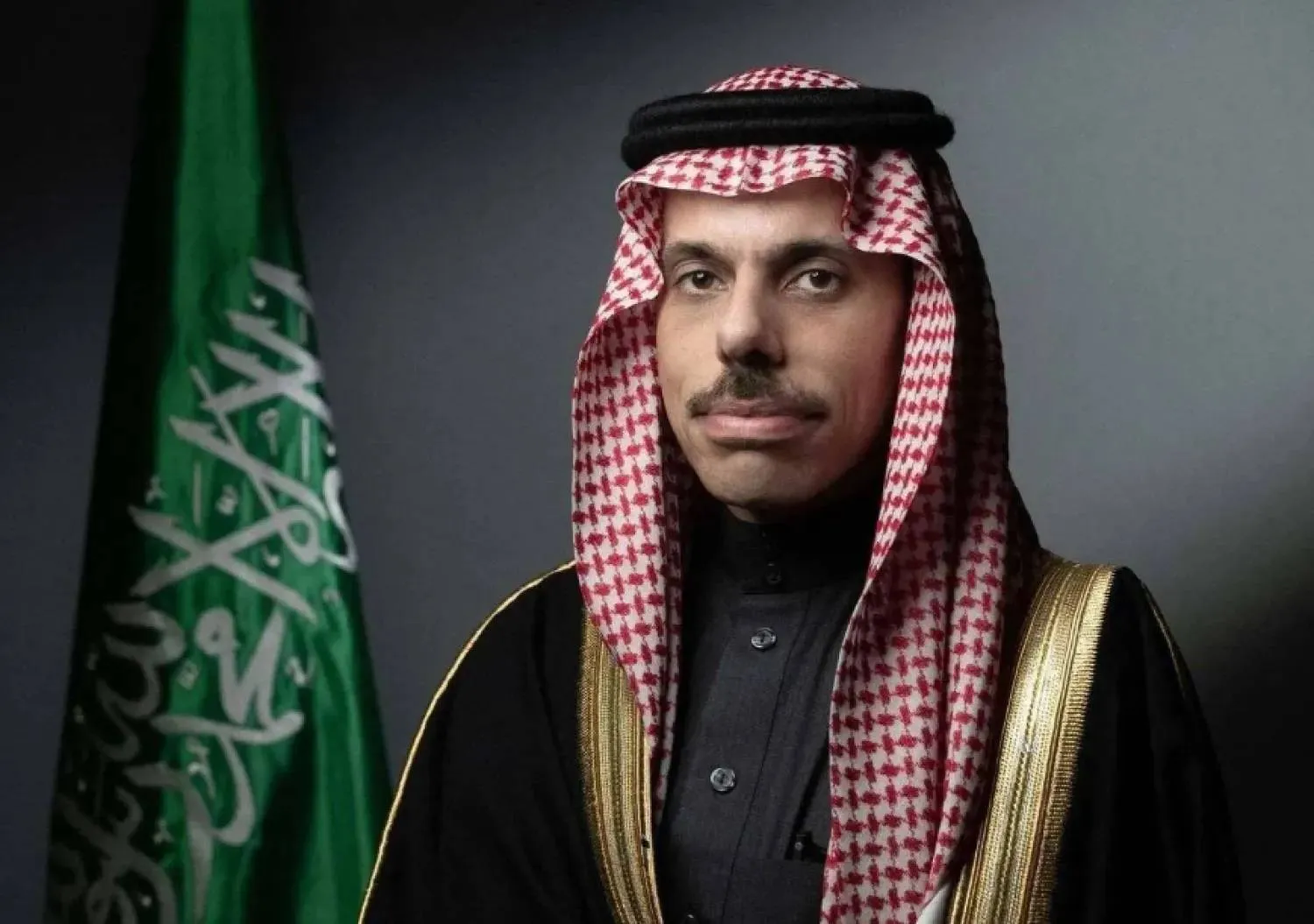
Saudi Minister of Foreign Affairs Prince Faisal bin Farhan bin Abdullah. SPA
TT

Saudi Arabia Stresses Support for Somalia’s Sovereignty

Saudi Minister of Foreign Affairs Prince Faisal bin Farhan bin Abdullah. SPA

Saudi Minister of Foreign Affairs Prince Faisal bin Farhan bin Abdullah received a phone call on Wednesday from Somali Minister of Foreign Affairs and International Cooperation Abdisalam Abdi Ali.

Discussions stressed the importance of preserving the sovereignty, unity and territorial integrity of Somalia and addressed regional developments and other issues of mutual concern.