


Kuwaitis Start Voting in National Assembly Elections

An aerial view shows little traffic on the roads of Kuwait City, Kuwait March 16, 2020. REUTERS/Stephanie McGehee
TT

Kuwaitis Start Voting in National Assembly Elections

An aerial view shows little traffic on the roads of Kuwait City, Kuwait March 16, 2020. REUTERS/Stephanie McGehee

Kuwaiti voters are casting their ballots on Tuesday to choose representatives for the National Assembly during its seventeenth legislative session.

The 2023 parliamentary elections are eagerly anticipated due to the potential to address the ongoing political crisis in Kuwait.

Over the past four years, Kuwait had established three consecutive legislative assemblies.

On Tuesday, a total of 793,646 eligible voters will choose 50 deputies out of 207 candidates, including 15 female candidates, in a voting process conducted under the single-vote electoral system.

Leading up to the electoral silence, candidates have made efforts to convey their messages to the public.

These messages varied from persuasive speeches aimed at convincing voters to strategic communications for building alliances within the National Assembly.

This year’s elections are witnessing the participation of two prominent figures.

First, former Speaker of the National Assembly, Ahmed Al-Sadoun (Third District), who is nearing the age of 90, was elected as the Speaker for the first time in 1985.

After the liberation of Kuwait and upon the return of the National Assembly, Al-Sadoun served as a member and Speaker in 1992 and 1996.

In 1999, the late businessman Jassim Al-Kharafi managed to defeat Al-Sadoun and held the position until 2012 when Al-Sadoun returned as the Speaker once again.

Al-Sadoun then declared that he would not run under the single-vote system. However, he did participate in the 2022 elections and achieved a record-breaking number of votes, surpassing 12,000.

He became the Speaker of the National Assembly until his position was invalidated by the Constitutional Court’s ruling.

The other prominent figure is Marzouq Al-Ghanim, who has served as the Speaker of the National Assembly since 2013.

He was re-elected as Speaker in 2020 and served until the dissolution of the National Assembly on December 15, 2020.

Over the course of four years, the National Assembly has been dissolved twice.

In 2022, the parliament was invalidated by a Constitutional Court ruling.

Kuwait has witnessed intense confrontations between the legislative and executive branches, resulting in the obstruction of legislation on economic reforms and contributing to a political deadlock.

Crown Prince Sheikh Mishal Al-Ahmad Al-Jaber Al-Sabah called for change after deciding to dissolve the National Assembly, stating that this dissolution was aimed at “rectifying the political scene and addressing the lack of consensus and conflicts.


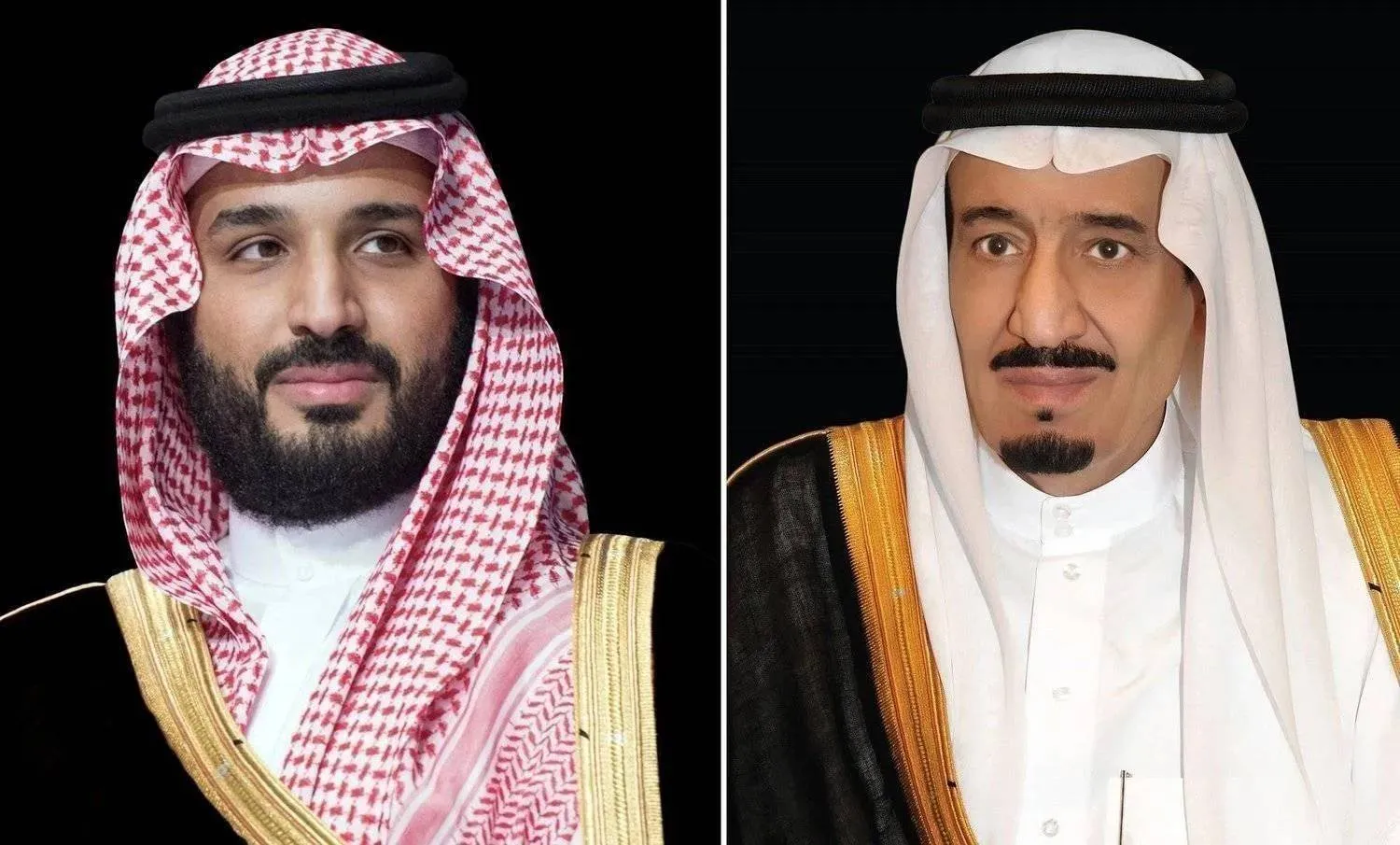

Saudi Health Minister: We Act Proactively on Health Risks

Saudi Health Minister: We Act Proactively on Health Risks
TT

Saudi Health Minister: We Act Proactively on Health Risks

Saudi Health Minister: We Act Proactively on Health Risks

Saudi Arabia’s Cabinet, chaired Tuesday by Custodian of the Two Holy Mosques King Salman bin Abdulaziz, approved the formation of a permanent committee to oversee all matters related to asbestos and ensure enforcement of its ban, marking a new step in public health and regulatory oversight.

Saudi Health Minister Fahad Al-Jalajel told Asharq Al-Awsat that the Kingdom approaches health risks with a proactive strategy grounded in clear policies and long-term planning.

“Any risk we detect affecting citizens, the government works to develop the necessary tools to avert it and to continue enhancing quality of life,” Al-Jalajel said, citing previous announcements including a national drowning prevention policy and a strategic drug policy.

Saudi action on asbestos dates back years, and the decision to establish a monitoring committee follows earlier Cabinet rulings. Decisions numbered 1419 and 1422 halted the use of asbestos, barred its inclusion in official specifications, and banned its import, export, and manufacture.

The measures also mandated the replacement and safe disposal of asbestos in buildings and water networks, alongside continued studies due to its health and environmental hazards.

Scientifically, asbestos refers to a group of naturally occurring mineral fibers once widely used commercially and, in some cases, still in use. Exposure can be fatal, affecting workers and others who come into contact with the fibers.

The material gained commercial value for its exceptional tensile strength, low heat conductivity, and relative resistance to chemical damage. It has been used for insulation in buildings and in products such as roofing sheets, water supply pipes, fire blankets, plastic fillers, medical packaging, vehicle clutches, and brake linings.

There are six main forms of asbestos, with chrysotile, or white asbestos, among the most widely used today. The World Health Organization has concluded that all forms of asbestos cause cancer. It also links asbestos exposure to chronic respiratory diseases.

Because asbestos has been embedded in construction materials, those involved in building, maintaining, or demolishing affected structures may face risks even decades after installation.

WHO assessments classify all six major forms of asbestos as carcinogenic to humans. Exposure, including to chrysotile, is associated with cancers of the lung, larynx, and ovary, as well as mesothelioma, a cancer of the pleural and peritoneal linings.

Clear scientific evidence also shows it causes chronic respiratory diseases such as asbestosis and other severe lung damage.

The World Health Organization estimates that about 125 million people worldwide are currently exposed to asbestos at work. More than 107,000 people die each year from lung cancer, mesothelioma, and asbestosis linked to occupational exposure.

Globally, asbestos is responsible for more than 200,000 deaths annually, according to the WHO, and accounts for roughly one-third of occupational cancer deaths. Thousands more fatalities each year are attributed to domestic exposure.

As of 2024, 50 countries had banned asbestos. In others, uncertainty remains amid insufficient and incomplete data.


SDRPY Hosts Yemen Partners Group with UN and International Participation

Officials are seen at the SDRPY-hosted meeting in Riyadh. (SPA)
TT

SDRPY Hosts Yemen Partners Group with UN and International Participation

Officials are seen at the SDRPY-hosted meeting in Riyadh. (SPA)

The Saudi Program for the Development and Reconstruction of Yemen (SDRPY) hosted in Riyadh on Wednesday a meeting of the Yemen Partners Group (YPG), co-chaired by the Yemeni government, United Kingdom, and World Bank, with the participation of the United Nations and international organizations.

Yemeni Prime Minister and Minister of Foreign Affairs and Expatriates Dr. Shaya Mohsin Zindani; UN Secretary-General’s Special Envoy for Yemen Hans Grundberg; UN Resident Coordinator and Humanitarian Coordinator in Yemen Julien Harneis and Saudi Ambassador to Yemen and SDRPY Supervisor General Mohammed bin Saeed Al Jaber, as well as a number of ambassadors, representatives of international organizations, and donor entities attended the meeting.

Zindani expressed confidence in the new government and its clearly defined priorities that it will work to implement, which will help achieve stability and economic recovery.

He stressed the government’s aim to maximize benefit from the vital projects and initiatives provided by Saudi Arabia through the SDRPY, which offers important support for basic sectors and for boosting development efforts across Yemen.

Zindani expressed his appreciation to Saudi Arabia for its continued support to Yemen, commending the level of cooperation with the SDRPY and its efforts in supporting and empowering national institutions.

For his part, Grundberg emphasized the importance of the development projects provided by the Kingdom, particularly at this stage, noting positive indicators in Yemen, especially improvements in energy-sector stability.

Governor of the Central Bank Ahmed Ghaleb reviewed the bank’s priorities, stressing its commitment to transparency, the need to combat inflation, and the importance of international coordination and support to address challenges.

Al Jaber underscored the importance of continuing joint efforts to overcome obstacles facing peace and development in Yemen under the leadership of the Yemeni government.

The meeting is an important opportunity to learn about the priorities of the government and Central Bank, strengthening coordination to ensure that development and financial support is directed efficiently and effectively, and to assist donor entities and international organizations in aligning their interventions with the government’s priorities, he added.

The meeting reviewed a package of Saudi development projects worth SAR1.9 billion provided to Yemen in January, which helped boost energy-sector stability through the fuel derivatives grant, ensuring the continued operation of hospitals and vital service facilities.

It reviewed other development projects and initiatives scheduled for delivery during the coming period.


Saudi Foreign Minister Receives Letter on Bilateral Ties from Russian Counterpart

Vice Minister of Foreign Affairs Waleed Elkhereiji and Russian Ambassador to the Kingdom Sergey Kozlov meet in Riyadh on Wednesday. (SPA)
TT

Saudi Foreign Minister Receives Letter on Bilateral Ties from Russian Counterpart

Vice Minister of Foreign Affairs Waleed Elkhereiji and Russian Ambassador to the Kingdom Sergey Kozlov meet in Riyadh on Wednesday. (SPA)

Saudi Minister of Foreign Affairs Prince Faisal bin Farhan bin Abdullah received on Wednesday a letter from Russian Foreign Minister Sergei Lavrov on bilateral relations and ways to support and boost them across various fields.

The message was received on behalf of the Foreign Minister by Vice Minister of Foreign Affairs Waleed Elkhereiji during a meeting in Riyadh with Russian Ambassador to the Kingdom Sergey Kozlov.

They reviewed bilateral relations and discussed issues of mutual interest.