


UAE’s ADNOC Drilling Awarded $2 Billion Worth Contracts

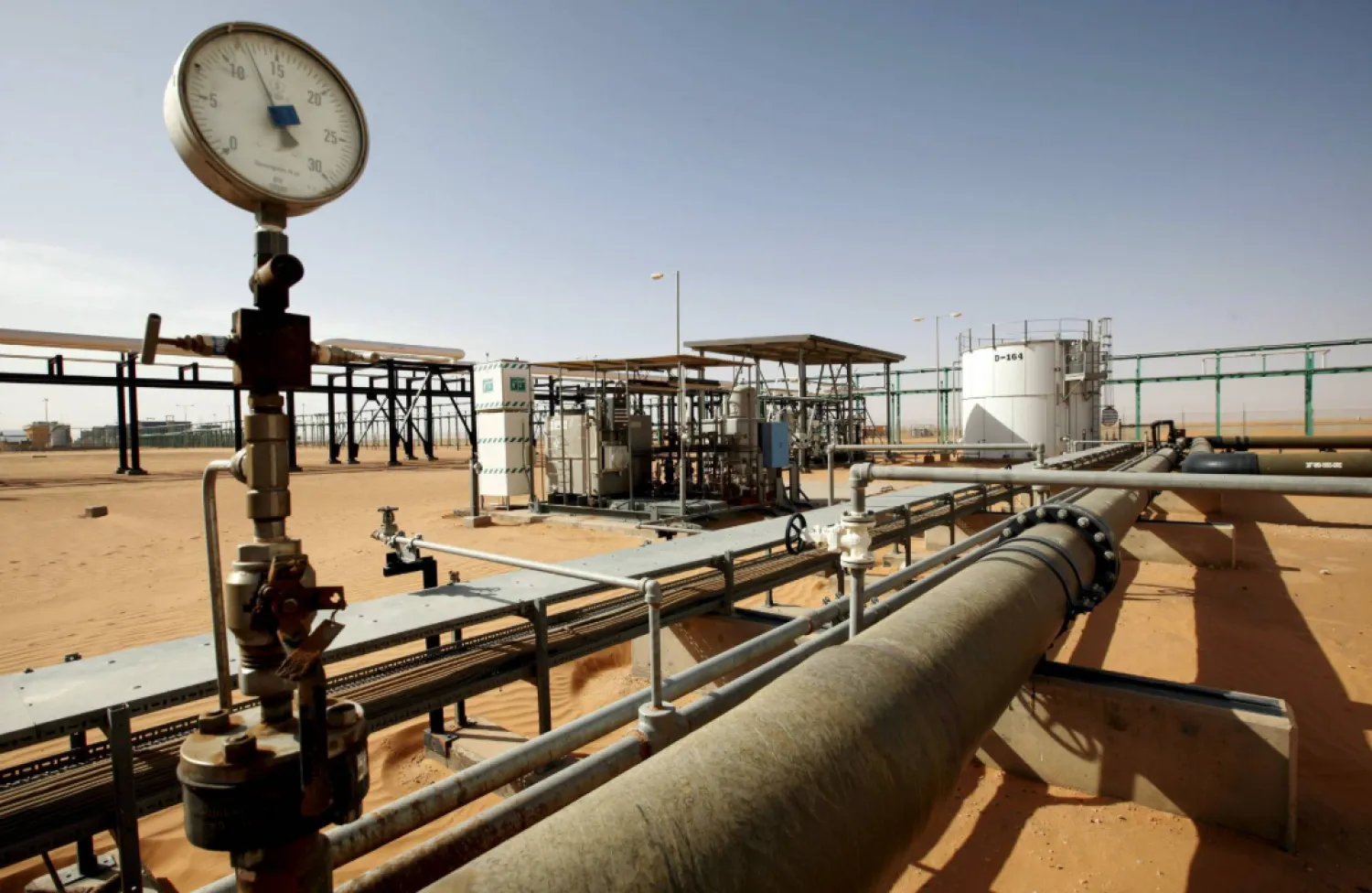
The Salama drilling rig operates within a total of 115 rigs to enhance the production operations of ADNOC. (Asharq Al-Awsat)
TT

UAE’s ADNOC Drilling Awarded $2 Billion Worth Contracts

The Salama drilling rig operates within a total of 115 rigs to enhance the production operations of ADNOC. (Asharq Al-Awsat)

UAE’s ADNOC Drilling confirmed being awarded five 10-year contracts, totaling 7 billion dirhams ($2 billion), in support of ADNOC Offshore’s growing drilling operations.

The rigs will commence activity progressively from the end of 2023, with significant revenue expected in 2024 and the first full-year revenue contribution from 2025. The revenue associated with these contracts is included in the Company’s full-year 2023 and medium-term guidance.

“We are pleased to have been awarded these important contracts. Long-term contracts like these are the backbone of our business model, providing a clear line of sight on future earnings,” said Chief Executive Officer of ADNOC Drilling Abdulrahman Al Seiari.

“As we continue to grow our fleet, our shareholders will benefit from the opportunity to be directly invested in ADNOC’s accelerated production capacity growth, which is driving faster revenue growth and progressive, long-term shareholder returns while responding to the world’s rising energy demand.”

The five rigs have been acquired as part of the company’s fast-tracked rig fleet expansion program, designed to enable the delivery of ADNOC’s accelerated production capacity growth to responsibly meet rising global energy demand.

The new rigs will be among the most capable, high-specification rigs working in the Arabian Gulf.

Each of the five rigs will be equipped with a battery energy storage system to increase efficiency and reduce emissions. The hybrid power technology system stores energy in its batteries to use when there is a need for continuous power or to provide instant extra power when there is an increase in demand.

The new rigs are central to ADNOC Drilling’s rigorous decarbonization strategy and the company’s commitment to supporting ADNOC’s target to reduce greenhouse gas intensity by 25% by 2030, as well as the UAE Net Zero by 2050 strategic initiative.

The 7 billion dirhams ($2 billion) contract award follows more than 42.23 billion ($11.5 billion) in long-term contracts announced since the beginning of 2022.



Saudi Arabia Continues to Excel, Achieves Second-Highest Growth Rate in Tonnage in G20

A night view of Riyadh, Saudi Arabia. (Reuters file)
TT

Saudi Arabia Continues to Excel, Achieves Second-Highest Growth Rate in Tonnage in G20

A night view of Riyadh, Saudi Arabia. (Reuters file)

Saudi Arabia marked a significant milestone in the maritime transport sector in 2025, with its national fleet recording a 32% growth rate compared to 2024.

The achievement secures Saudi Arabia the second-highest growth rate globally among G20 nations.

The rapid growth reflects the continuous development of the Kingdom’s maritime sector, driven by strategic regulatory initiatives, increased investment, modernized legislative frameworks, and the enhanced efficiency of national fleets.

The performance marks a substantial leap from the 6.4% growth rate recorded at the beginning of 2024, highlighting the sector's accelerating year-on-year progress.

The Transport General Authority (TGA) stated that the achievement aligns with the National Transport and Logistics Strategy, which aims to position the Kingdom as a global logistics hub, and focuses on strengthening the maritime sector’s role in supporting supply chains, boosting the national economy, and boosting the efficiency of international trade flows through Saudi ports.

The progress underscores the Kingdom’s commitment to developing a maritime ecosystem consistent with global best practices, ensuring sustainability, and consolidating its strategic position among leading nations in the field, it added.


Iraq to Nationalize West Qurna 2 Oil Field Operations, Government Says

An oil field in Iraq. (AFP)
TT

Iraq to Nationalize West Qurna 2 Oil Field Operations, Government Says

An oil field in Iraq. (AFP)

The Iraqi cabinet has approved nationalizing the petroleum operations in the West Qurna 2 oil field, in accordance with the provisions of a service contract signed with Russia's Lukoil, the government said in a ‌statement.

The cabinet ‌also agreed ‌to ⁠seek approvals ‌to finance operations through the Majnoon oilfield account, to be boosted by proceeds from crude shipments sold by state oil marketer SOMO.

Lukoil declared force majeure in ⁠November at West Qurna 2 ‌as it was hit ‍with sanctions ‍alongside Rosneft as part ‍of US President Donald Trump's push to end the war in Ukraine.

Lukoil's 75% operational stake in Iraq's West Qurna 2 oilfield - one of the world's ⁠largest with output of around 470,000 barrels per day - was its biggest foreign asset.

The field accounts for about 0.5% of world oil supply and 9% of total output in Iraq, OPEC's second-largest producer after Saudi Arabia.


Saudi Tadawul to Open Fully to Direct Foreign Investment from Feb. 1

A view of the Saudi capital Riyadh. (Reuters)
TT

Saudi Tadawul to Open Fully to Direct Foreign Investment from Feb. 1

A view of the Saudi capital Riyadh. (Reuters)

Saudi Arabia’s Capital Market Authority (CMA) announced a landmark reform allowing all categories of foreign investors to invest directly in the Kingdom’s main stock market, Tadawul, starting February 1.

The move signals a strategic repositioning of the Saudi market as a highly competitive global investment destination.

The CMA has scrapped the “qualified foreign investor” requirement and abolished swap agreements, granting international investors full rights to direct share ownership.

The decision is underpinned by strong foreign investment momentum exceeding $157 billion and rising global confidence in the sustainability of Saudi economic growth.

The reform is also expected to increase Saudi Arabia’s weighting in major global indices, including MSCI and FTSE.

Under the new regulatory framework approved by the CMA’s board, the market shifts from “conditional openness” to “full openness.” Non-resident foreign investors will no longer be required to meet prior qualification criteria to access the main market.

The abolition of swap agreements - previously limiting investors to economic benefits without ownership - will allow foreign investors to hold shares directly and exercise full shareholder rights. This is expected to significantly boost liquidity and attract new institutional and individual investors.

According to the CMA, the amendments aim to expand and diversify the investor base, support capital inflows, and strengthen market liquidity.

By the end of the third quarter of 2025, international investors’ ownership in the Saudi market had surpassed SAR 590 billion ($157.3 billion), while foreign investment in the main market reached around SAR 519 billion, up from SAR 498 billion at the end of 2024. The Authority expects the new framework to draw additional international capital.

The steady rise in foreign investment, even before the reforms take effect, points to a potential surge in inflows in 2026 once the decision is implemented.

The announcement builds on earlier steps taken in July 2025, when the CMA eased procedures for opening and operating investment accounts for certain investor categories, including foreign individuals residing in Gulf Cooperation Council (GCC) states or with prior residency in Saudi Arabia or other GCC countries.

The latest changes align with the CMA’s phased approach to market liberalization and follow the publication, in October 2025, of a draft regulatory framework for public consultation.

The Authority said further steps will follow to deepen market openness and strengthen Tadawul’s position as a global financial hub.