


Top US House Republican McCarthy Calls for Biden Impeachment Inquiry

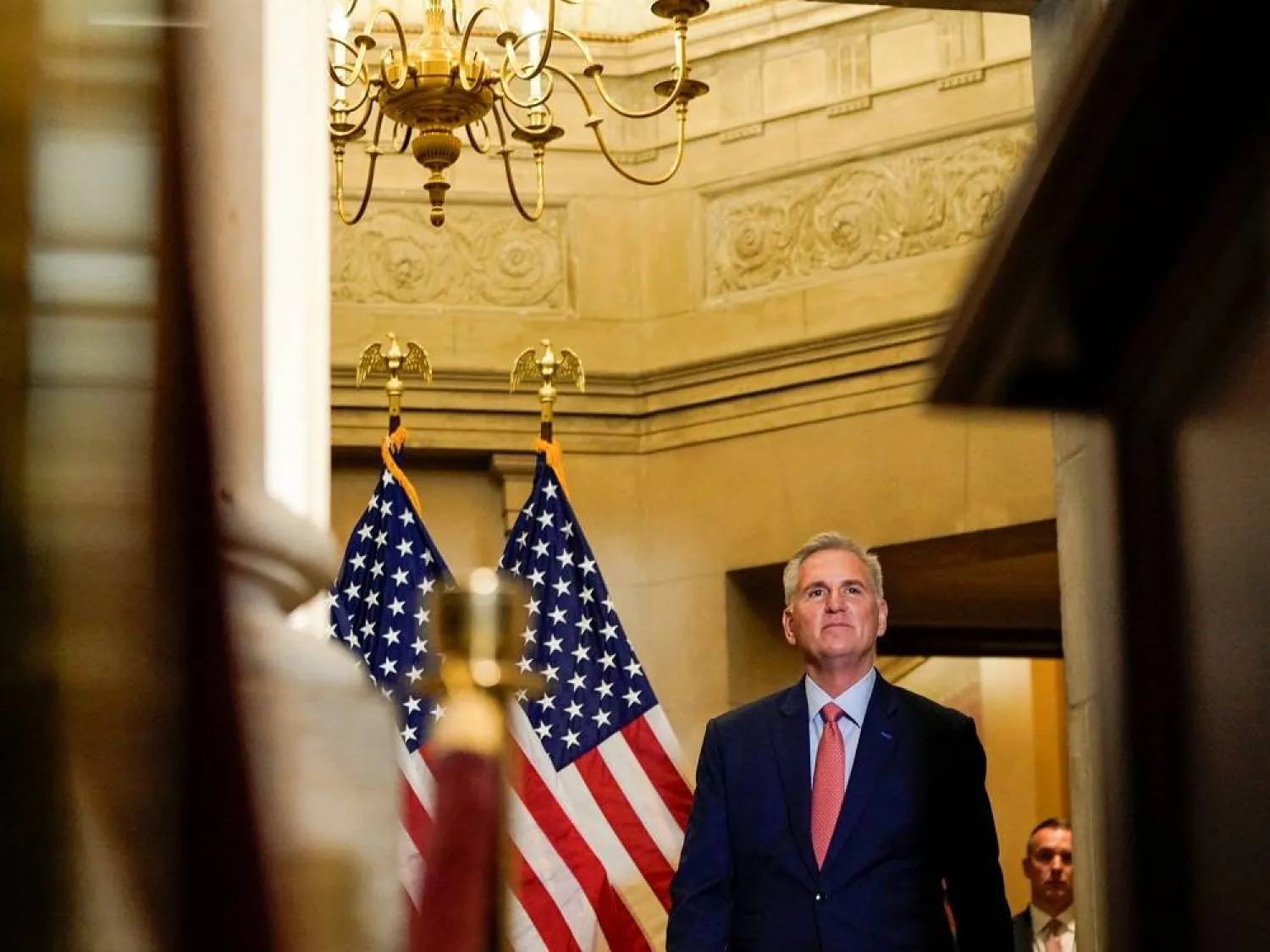
US House Speaker Kevin McCarthy (R-CA) arrives to deliver a statement on allegations surrounding US President Joe Biden and his son Hunter Biden, as the House of Representatives returns from its summer break facing a looming deadline to avoid a government shutdown while spending talks continue on Capitol Hill in Washington, US, September 12, 2023. (Reuters)
TT

Top US House Republican McCarthy Calls for Biden Impeachment Inquiry

US House Speaker Kevin McCarthy (R-CA) arrives to deliver a statement on allegations surrounding US President Joe Biden and his son Hunter Biden, as the House of Representatives returns from its summer break facing a looming deadline to avoid a government shutdown while spending talks continue on Capitol Hill in Washington, US, September 12, 2023. (Reuters)

Republican US House of Representatives Speaker Kevin McCarthy on Tuesday called for an impeachment inquiry into Democratic President Joe Biden, a move certain to further divide lawmakers as they struggle to pass legislation to avoid a government shutdown.

Many in McCarthy's party were infuriated when the House, then controlled by Democrats, twice impeached Republican President Donald Trump, in 2019 and 2021, though he was acquitted both times in the Senate. Some lawmakers on the Republican right flank have said they would try to remove McCarthy as the leader of the House if he did not move ahead with an impeachment effort against Biden.

Biden, who defeated Trump in the 2020 election, is seeking re-election next year.

"I am directing our House committees to open a formal impeachment inquiry into President Joe Biden," McCarthy told reporters. "We will go where the evidence takes us."

Republicans, who now narrowly control the House, have accused Biden of profiting while he served as vice president from 2009 to 2017 from his son Hunter Biden's foreign business ventures, though they have not presented substantiation.

McCarthy said lawmakers on several committees will begin gathering evidence of possible financial misconduct.

A former business associate of the younger Biden told a House hearing that Hunter Biden sold the "illusion" of access to power while his father was vice president, according to a transcript released last month.

The White House has said there is no basis for an investigation and Biden has mocked Republicans over a possible impeachment.

Democrats have sought to portray Republican impeachment talk as an effort to distract public attention from the legal woes of Trump, who faces four separate criminal indictments while running for his party's nomination to face Biden in the 2024 US election.

Trump has pressed Republicans to try to remove Biden from office. Several hard-right Republicans have said they will not vote for must-pass spending bills unless McCarthy greenlights an impeachment inquiry.

The US Constitution empowers Congress to impeach federal officials including the president for treason, bribery and "other high crimes and misdemeanors." A president can be removed from office if the House approves articles of impeachment by a simple majority and the Senate votes by a two-thirds majority to convict after holding a trial.

Any Biden impeachment effort would be unlikely to succeed. Even if the Republican-controlled House votes to impeach Biden -- an uncertain prospect, given the party's narrow 222-212 vote margin -- it would almost certainly fail in the Democratic-controlled Senate.

Trump is the only US president to have been impeached twice. He was acquitted both times after trials in the Senate thanks to votes by his fellow Republicans that prevented the chamber from achieving the two-thirds majority needed for conviction.

In his first impeachment, the House in 2019 charged Trump with abuse of power and obstruction of Congress after he asked Ukraine to investigate Biden and his son on unsubstantiated corruption accusations. In his second impeachment, the House impeached him in 2021 on a charge of inciting an insurrection following the attack on the US Capitol by his supporters.

The first impeachment sought to remove him from office. The second, with a trial held after he left office, sought to disqualify Trump from ever again holding the presidency.

Trump, as he has done with many investigations into his actions, called both impeachments politically motivated witch hunts.

Biden in July mocked Republican lawmakers threatening to impeach him.

"Republicans may have to find something else to criticize me for now that inflation is coming down. Maybe they'll decide to impeach me because it's coming down. I don't know. I'd love that one," Biden said at the time.


Polls: Israelis Favor Resuming War with Iran, Netanyahu Likely to Lose Election

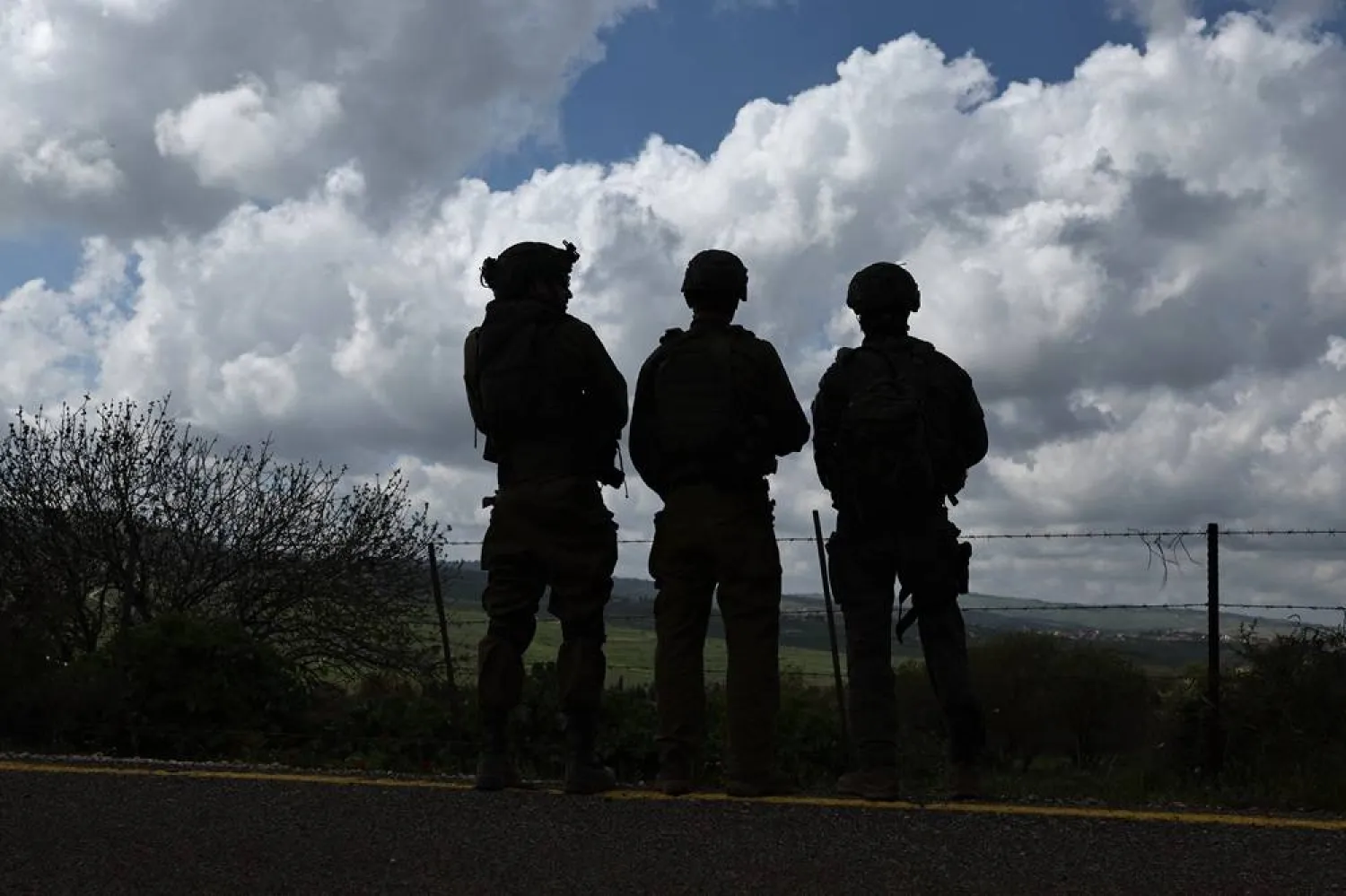
Israeli soldiers on the border with the southern Lebanon village of Bint Jbeil, seen from the Israeli side of the border on 10 April 2026, as the Israeli military continues its targeting operations in southern Lebanon. (EPA)
TT

Polls: Israelis Favor Resuming War with Iran, Netanyahu Likely to Lose Election

Israeli soldiers on the border with the southern Lebanon village of Bint Jbeil, seen from the Israeli side of the border on 10 April 2026, as the Israeli military continues its targeting operations in southern Lebanon. (EPA)

Three opinion polls conducted in Tel Aviv on Friday showed that an overwhelming majority of Israelis view the war against Iran and Lebanon’s Hezbollah as a failure for US President Donald Trump and Israeli Prime Minister Benjamin Netanyahu, while supporting a resumption of the fighting to achieve the objectives announced at the outset.

Most respondents gave low ratings to the political leadership, in contrast to their assessment of the military leadership. On potential Knesset election results, the polls suggested the war would not save Netanyahu from losing power.

The surveys were published by Israel’s public broadcaster Kan 11 and Channel 12, while the third was jointly conducted by Maariv and the Walla news website.

In the Maariv and Walla poll, 46% said the United States and Israel had not won the war, compared with 22% who said they had, while 32% said it was too early to judge.

In the Kan 11 poll, 58% of Israelis said the United States and Israel had not won, while only 25% said they had.

Some 56% of respondents said Tel Aviv should have continued the war, while only about a quarter said the ceasefire had been the right step for Israel.

In the Channel 12 poll, only 30% said Israel and the United States had won, while 19% said Iran had won. About 40% said neither side had prevailed, and 11% said they did not know.

Asked whether they supported a ceasefire with Iran, 53% said they opposed it, compared with 30% who supported it.

Among those intending to vote for the governing coalition, 57% opposed the ceasefire and 25% supported it. Among opposition voters, 62% opposed it and 26% supported it.

Resumption of the war

Asked whether the conflict with Iran would resume, most Israelis said they believed it would, according to the Channel 12 poll.

Some 45% said the war would resume within two weeks after the ceasefire ends, while 26% said it would resume within a few months to a year.

Seven percent said it would resume after more than a year, while only 6% said it would not resume, and 16% said they did not know.

In the same poll, respondents were asked whether Israel should continue the war in Lebanon. An overwhelming majority, about 79%, said it should, while 13% said it should not.

Performance assessment

In the Maariv and Walla poll, respondents were asked about the US president’s performance in the war. Some 52% said they were satisfied, while 43% said they were not.

According to the Kan 11 poll, Israeli military chief Eyal Zamir was seen as having managed the war well, while the prime minister and his defense minister, Israel Katz, were not.

Half of the respondents said Netanyahu had not managed the war well, compared with 45% who said he had. Katz also received a low rating: 52% said his performance was poor, and 37% said it was good.

By contrast, 69% said Zamir had managed the war against Iran well, while 23% disagreed.

David Barnea, head of the Mossad, was rated positively by 57%, while 18% said he had not managed the war well.

In the Maariv poll, 46% said they were satisfied with Netanyahu, while 49% said they were not. Some 71% said they were satisfied with Zamir, 40% with Katz, and 29% with Finance Minister Bezalel Smotrich.

Israeli Air Force commander Tomer Bar received the highest rating, with 77% expressing support, while only 14% said they were dissatisfied.

Election outlook

In the Channel 12 poll, respondents were asked who was best suited to serve as prime minister. The results showed Netanyahu still ahead of all rivals, though former military chief Gadi Eisenkot was narrowing the gap. In a direct contest, Netanyahu led 39% to 35%.

However, if elections were held today, all three polls indicated Netanyahu would lose power. The ruling coalition would fall from its current 68 seats to 49-51, while the opposition would win 59-61 seats, including Arab parties projected to secure 10.


Iran Counts its Human, Material Losses in 5 Weeks of War

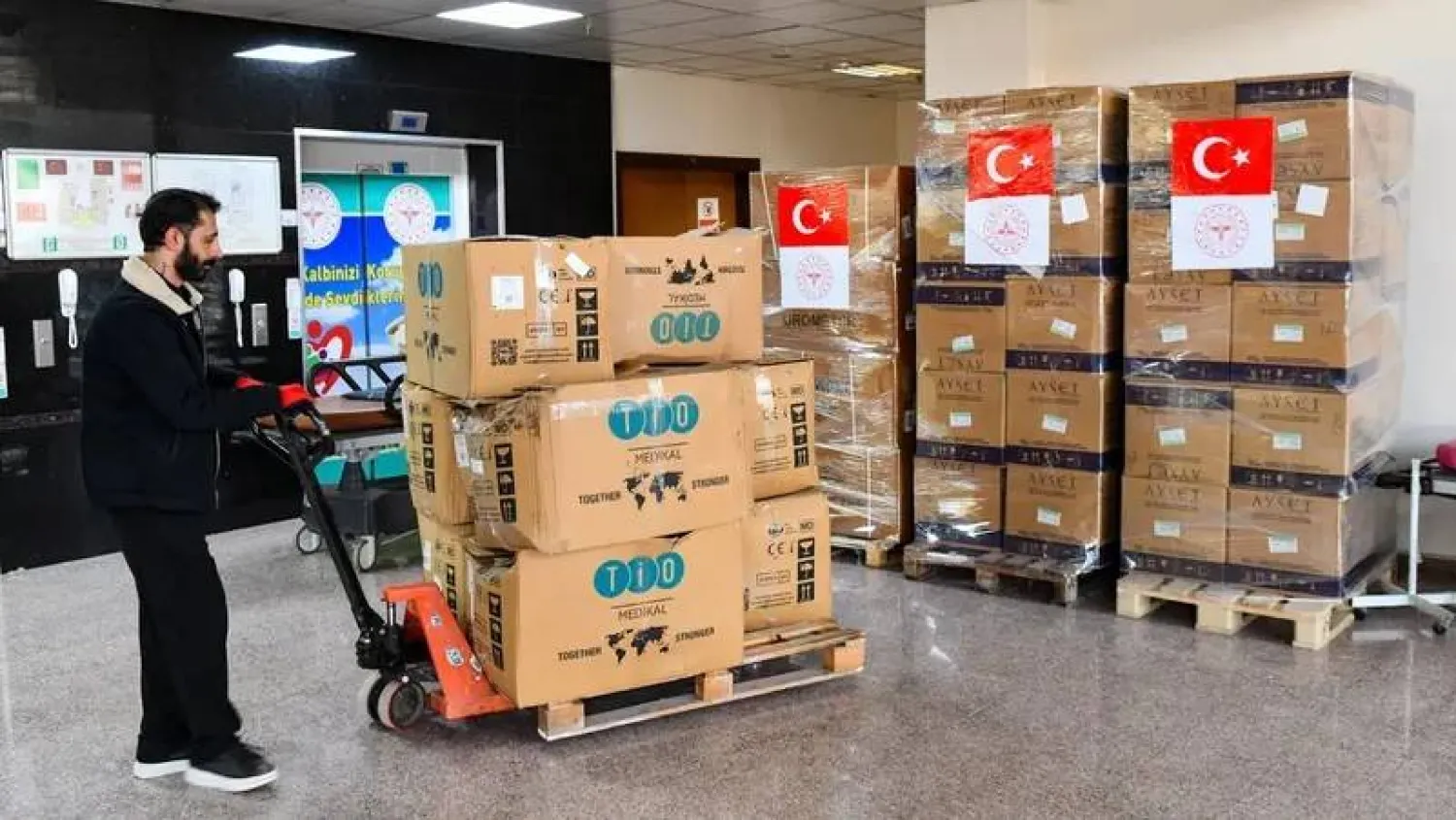
A worker moves a pallet of medical cardboard boxes as Turkish Health Ministry plans to send medical supplies in Iran in Van, north-eastern Türkiye, on April 8, 2026. (AFP) 
TT

Iran Counts its Human, Material Losses in 5 Weeks of War

A worker moves a pallet of medical cardboard boxes as Turkish Health Ministry plans to send medical supplies in Iran in Van, north-eastern Türkiye, on April 8, 2026. (AFP) 

More than 125,000 civilian facilities have been damaged or destroyed in the US-Israeli attacks across Iran, the head of the Iranian Red Crescent Society (IRCS) said on Friday.

Pir-Hossein Kolivand told Iranian state television that around 100,000 homes and at least 23,500 shops were hit during the five-week conflict.

A two-week ceasefire is currently in force, although there are fears the truce could break down over Israel's ongoing attacks in Lebanon.

In addition to residential and commercial areas, numerous other civilian facilities were also hit during the conflict, Kolivand said.

Around 339 medical facilities such as hospitals, pharmacies, emergency centers and laboratories were damaged in the airstrikes, he said.

Furthermore, 32 universities were hit while 857 buildings belonging to schools and other educational institutions were specifically targeted, Kolivand stated.

Thousands of people have been killed across the Middle East in the Iran war, which began when the US and Israel struck Iran on February 28.

Those strikes triggered Iranian attacks on Israel, US bases in the Gulf states, while opening a new front in Lebanon.

More than 3,000 people were killed throughout Iran during the war, Iran's forensic chief ‌told state media on Thursday.

US-based rights group HRANA said 3,636 people have been killed since the war erupted. It said 1,701 of those were civilians, including at least 254 children.

The group said it will stop publishing daily reports on attacks and casualties amid the “change in the situation on the ground and the uncertainty surrounding whether the ceasefire will hold or collapse.”

The Iranian military said at least 104 people were killed in a US attack on an Iranian warship off Sri Lanka on March 4.

In return, missiles launched from Iran and Lebanon have killed 23 people in Israel, according to Israel's ambulance service. The Israeli army said 12 of ‌its soldiers have also been killed in southern Lebanon.

Separately, Israeli forces misfired and killed an Israeli farmer near the border with Lebanon on March 22.

Earlier, US Central Command (CENTCOM) said that 13 US service members have been killed and over 300 wounded since the start of the conflict with Iran on February 28.

It also classified six Air Force deaths as “non-hostile,” the crew of a KC-135 refueling aircraft who died in Iraq while supporting air operations.

Turkish Aid Convoy

Meanwhile, the Red Cross and Türkiye’s Red Crescent on Friday dispatched an emergency humanitarian aid convoy from Türkiye to Iran, as the organization warned of a “desperate” humanitarian situation in the country.

“Humanitarian needs in Iran are extremely high,” International Federation of Red Cross and Red Crescent Societies (IFRC) spokesperson Scott Craig told AFP shortly before the convoy departed from the outskirts of Ankara.

“The humanitarian situation in Iran is desperate,” Craig said. “Needs will change according to how the situation evolves. But the needs will remain critical for a very long time. The health system in the country has been destroyed.”

He added that large-scale damage to infrastructure had compounded the crisis, with severe psychological and mental health impacts on the population.

The convoy includes around 200 trauma kits containing emergency medical supplies for bombing casualties.

The Turkish Red Crescent has also sent four trucks carrying 48 tons of aid, including emergency shelters for displaced families, hygiene kits and first-aid supplies.

The vehicles bear the message “Humanitarian aid from the Turkish people to the brotherly people of Iran,” an AFP journalist observed at the scene.

Craig said the shipment represents “one of the first international humanitarian aid deliveries into Iran since the conflict began,” adding that global supply chain disruptions, especially to maritime routes, have complicated procurement and transport efforts.

“Sending them overland from Türkiye is a really innovative way of being able to move assistance into the country,” he said.

According to Turkish Red Crescent president Fatma Meric Yilmaz, roughly 3.6 percent of Iran’s 90 million people have been displaced, while 62,000 homes and more than 20,000 businesses have been destroyed.

She said the Iranian Red Crescent had also suffered “severe” losses, with 17 of its centers and nearly 100 ambulances damaged.

The convoy is expected to reach Tehran within 48 hours, after which supplies will be distributed to centers hosting displaced people, Turkish

Red Crescent official Alper Kucuk told AFP.

Iran-Linked Sips Cross Hormuz

Also, most vessels sailing through the Strait of Hormuz in the past day are linked to Iran, according to ship tracking data.

The majority of ships that have sailed through the Strait of Hormuz in the past day were linked to Iran, ship tracking data showed on Friday, with other vessels putting off making voyages despite a two-week ceasefire agreed this week between Tehran and Washington, according to data and shipping sources.

Three tankers – a crude supertanker that can carry 2 million barrels of oil, a bunkering tanker and smaller oil ship – all left Iranian waters in the past 24 hours, based on separate data analysis from Kpler and Lloyd’s List Intelligence platforms.


Iranians Look at Pakistan Talks with Mixture of Skepticism, Outright Fear

People walk past an anti-US mural on a street in Tehran, Iran, April 10, 2026. Majid Asgaripour/WANA (West Asia News Agency) via Reuters
TT

Iranians Look at Pakistan Talks with Mixture of Skepticism, Outright Fear

People walk past an anti-US mural on a street in Tehran, Iran, April 10, 2026. Majid Asgaripour/WANA (West Asia News Agency) via Reuters

Everyday Iranians are awaiting planned negotiations between Washington and Tehran with a mixture of skepticism and outright fear, caught between a government they say does not understand peace and an American president who has threatened to destroy a “whole civilization.”

Talks between the US and Iran and hosted by Pakistan were hanging in the balance on Friday, but if they go ahead they could transform a temporary ceasefire in the US-Israeli campaign against the Iranian republic into a lasting peace.

Residents of Tehran contacted by AFP from Paris – who withheld their surnames out of concern for their safety – have mixed views on that prospect and are far from optimistic, with feelings ranging from anger, to anxiety, to deep disillusionment.

Amir, a 40-year-old artist, said he did not “think this temporary agreement and negotiation will last even a week.”

Iran’s repressive apparatus is seen as having been strengthened by the war that broke out on Feb 28, making a deal all the more unlikely, according to Amir.

“The propaganda machine has delivered them such lies that they really believe they have won the war,” he said. “They cannot last in peace because they don’t understand peace.”

For Sheida, 38, the uncertainty around the talks has generated a sense of anxiety.

“We’ve got so much hardship dumped on us that we don’t even know what to worry about first,” she said. “Now that the ceasefire has started, everyone’s scrambling to settle debts and sort out financial stuff.”

A choice between the return of terrifying US-Israeli airstrikes and the preservation of the Iranian republic’s long-standing system is no choice at all, according to Sheida.

“I am scared of the war starting again, and at the same time I’m scared of the regime staying,” she said, adding that “the people in power have become even more aggressive.”

Amir said if the talks do result in an agreement, he continued, it would likely do little to serve the Iranian people.

He pointed to anti-government protests just before the war that were met with a deadly crackdown, saying he and other like-minded Iranians would keep up their opposition, adding: “We will not forgive our murderers.”

Trump’s Shifting Goals

Tehran resident Amin, 30, said it was difficult to determine what US President Donald Trump hoped to accomplish in the talks.

“I guess you shouldn’t take Trump so serious,” Amin said. “He wants to erase a civilization and he makes a ceasefire built on nothing 12 hours later.”

“Most of what he says is just pure noise,” he continued.

Sheida, meanwhile, questioned Trump’s sense of strategy, saying he must be “either crazy or inexperienced.”

“Did the US president really not realize they could get stuck if the Strait of Hormuz was closed?” she said.

Homemaker Shahrzad, 39, said she had been both terrified and disillusioned by Trump’s threat – issued before the ceasefire – that “a whole civilization will die” if Iran did not reopen the strategic Strait of Hormuz.

“I had hoped for the fall of the Islamic regime and accepted the hardships of war, but now I realize this man is playing the whole world and has no sense of humanity.”

Sara, a 44-year-old graphic designer, said Iran’s “government is an ideological one, and it’s not going to collapse easily”.

“Its mindset exists all the way down to the lowest levels, so it’s really not simple to change,” she added.

Amir said he believed the country’s surviving leaders would continue fighting. “They are prepared to destroy everything just to prevail,” he added.