Macron Announces More Aid for Palestinians, Appeals to Israel to Protect Civilians

French President Emmanuel Macron gestures as he speaks during an international humanitarian conference for civilians in Gaza, at the Elysee Presidential Palace, in Paris, on November 9, 2023. (Photo by Ludovic MARIN / POOL / AFP)
TT

Macron Announces More Aid for Palestinians, Appeals to Israel to Protect Civilians

French President Emmanuel Macron gestures as he speaks during an international humanitarian conference for civilians in Gaza, at the Elysee Presidential Palace, in Paris, on November 9, 2023. (Photo by Ludovic MARIN / POOL / AFP)

President Emmanuel Macron said on Thursday that France will increase aid for Palestinians from 20 million euros to 100 million euros in 2023.

Macron opened a Gaza aid conference with an appeal for Israel to protect civilians, saying that “all lives have equal worth” and that fighting terrorism “can never be carried out without rules.”

“Civilians must be protected. It’s absolutely essential. It is non-negotiable,” Macron said.

He reiterated calls for a humanitarian pause in Israel’s operations against Hamas. He said that by attacking Israel on Oct. 7, Hamas “shouldered the responsibility for exposing Palestinians to terrible consequences” and he again defended Israel’s right to defend itself.

But he added that “fighting terrorism can never be carried out without rules. Israel knows that. The trap of terrorism is for all of us the same: giving in to violence and renouncing our values.”

“All lives have equal worth and there are no double standards for those of us with universal and humanist values,” he said.


Lebanon: 350 Hezbollah Members Killed Since Start of New Round of War

Mourners chant slogans as they carry the coffin of Ali Ahmad Mousawi, who was killed early Wednesday by an Israeli strike, during his funeral procession in Nabi Sheet village, in Lebanon's eastern Bekaa Valley, Wednesday, Aug. 21, 2024.   (AP Photo/Bilal Hussein)
Mourners chant slogans as they carry the coffin of Ali Ahmad Mousawi, who was killed early Wednesday by an Israeli strike, during his funeral procession in Nabi Sheet village, in Lebanon's eastern Bekaa Valley, Wednesday, Aug. 21, 2024. (AP Photo/Bilal Hussein)
TT

Lebanon: 350 Hezbollah Members Killed Since Start of New Round of War

Mourners chant slogans as they carry the coffin of Ali Ahmad Mousawi, who was killed early Wednesday by an Israeli strike, during his funeral procession in Nabi Sheet village, in Lebanon's eastern Bekaa Valley, Wednesday, Aug. 21, 2024.   (AP Photo/Bilal Hussein)
Mourners chant slogans as they carry the coffin of Ali Ahmad Mousawi, who was killed early Wednesday by an Israeli strike, during his funeral procession in Nabi Sheet village, in Lebanon's eastern Bekaa Valley, Wednesday, Aug. 21, 2024. (AP Photo/Bilal Hussein)

The war between Hezbollah and Israel has seen a shift in media handling, particularly regarding announcements of casualties. After initially adopting, at the start of the 2024 war, a policy of near-daily announcements, the group later gradually reduced such statements before halting them altogether. This approach continues in the current fighting, with obituary notices largely absent or confined to a limited local scope in the villages and towns from which the members originate, for security, psychological and political reasons.

From public obituaries to limited disclosure

In the first weeks of the 2024 war, Hezbollah issued successive statements naming those killed, publishing their photos and hometowns, alongside public funeral ceremonies. This approach later receded, with fewer statements issued before they nearly stopped entirely by late September 2024, when the announced toll stood at 450.

By the end of the war in November 2024, estimates put the death toll at about 4,000, including those killed in what is referred to as the “pager operation,” according to estimates rather than official figures from Hezbollah.

On Thursday, Israeli military spokesman Avichay Adraee said on X that forces from the 36th Division and the air force had “eliminated more than 20 Hezbollah members within 24 hours in southern Lebanon.”

350 members killed since start of war

Researcher Mohammad Chamseddine, from the International Information organization, told Asharq Al-Awsat the number of Hezbollah members killed so far was estimated at around 350, out of 1,001 deaths announced by Lebanon’s health ministry.

He said most were killed in the “Nabi Sheet landing” on March 7 and in clashes along the border, particularly in Khiam, where 53 members were killed. The estimates are based on the number of bodies transferred to hospitals across regions, excluding a very small number buried immediately, he added.

He said the majority of those killed were civilians or supporters rather than members, amid Israeli strikes targeting areas close to the group, while it has adopted strict measures to protect its members. Since September 2024, Hezbollah’s announcements have been limited to “senior figures,” as part of a policy aimed at reducing the impact on its support base as the toll rises.

Reducing security exposure

Retired brigadier general and military expert Hassan Jouni said Hezbollah’s decision not to announce the deaths of its members during the war was due to overlapping factors.

“The first is morale. Daily announcements, with rising casualties, have a negative impact on the support base and reflect losses that may be interpreted as an indicator of the enemy’s superiority,” he told Asharq Al-Awsat.

He also cited security considerations, saying such statements could reveal sensitive information about identities, family ties and places of residence that could be exploited using modern technology to identify and target specific communities.

“Missing without a trace”

Jouni also pointed to those classified as “missing without a trace,” whose fate remains unknown and whose deaths are not announced due to the uncertainty surrounding their status.

He said the nature and intensity of the fighting, along with Hezbollah’s decentralized structure, made it difficult to determine the fate of some individuals. Loss of contact does not necessarily indicate death, as individuals may still be alive or captured, he said, requiring caution before any official announcement.

After a ceasefire took effect on Nov. 27, 2024, estimates indicated around 1,500 individuals were classified by Hezbollah as of “unknown fate,” with families informed of lost contact. This was followed by the recovery of bodies and DNA testing to confirm identities before announcements were made.

Most bodies were returned and buried, while some families were informed their relatives remained “missing without a trace,” meaning no remains had been found or recovery was unlikely due to destruction caused by strikes on homes and villages. Their number is estimated at about 45.


Arab Interior Ministers Council Condemns Iran’s Heinous, Repeated Aggression Against Arab States

Smoke rises in the Fujairah oil industry zone, caused by debris after interception of a drone by air defenses, according to the Fujairah media office, amid the US-Israel conflict with Iran, in Fujairah, United Arab Emirates, March 14, 2026. REUTERS/Staff
TT

Arab Interior Ministers Council Condemns Iran’s Heinous, Repeated Aggression Against Arab States

Smoke rises in the Fujairah oil industry zone, caused by debris after interception of a drone by air defenses, according to the Fujairah media office, amid the US-Israel conflict with Iran, in Fujairah, United Arab Emirates, March 14, 2026. REUTERS/Staff

The General Secretariat of the Arab Interior Ministers Council (AIMC) condemned and denounced Iran’s repeated and unlawful aggression against Arab states, as well as its deliberate hostile actions targeting civilian sites and vital energy and gas facilities in Saudi Arabia, United Arab Emirates, Bahrain, Qatar, Kuwait, Oman, and other Arab countries.

The AIMC General Secretariat said such actions constitute a flagrant violation of international laws and conventions and the principles of good neighborliness, warning that they represent a serious escalation that could expose regional and global economic interests to significant risks and threaten international peace and security, SPA reported.

In a statement issued from its headquarters in Tunis, the AIMC General Secretariat said it strongly condemns the ongoing terrorist aggression and systematic acts of sabotage by Iran, reaffirming its full solidarity with Arab states and its absolute support for all measures taken to repel such attacks and defend their security, sovereignty, and territorial integrity.

The general secretariat also commended the heroic roles of Arab armed forces, security services, and civil defense agencies in confronting these threats and countering attempts to undermine the security and stability of Arab countries, as well as the safety of their facilities, citizens, and residents.


'War Has Aged Us': Lebanon's Kids Aren't Alright

Theater helps displaced Lebanese children overcome the pain of war. Anwar AMRO / AFP
TT

'War Has Aged Us': Lebanon's Kids Aren't Alright

Theater helps displaced Lebanese children overcome the pain of war. Anwar AMRO / AFP

Forced by yet another war in Lebanon to flee his home for the second time in just two years, and mourning lost relatives and friends, Hassan Kiki said he feels much older than 16.

"War has aged us... We have lived through what no one else has," the tall teen from south Lebanon told AFP in Beirut.

"I miss my school, my friends... I lost two cousins and two friends in a massacre in Shehabiyeh," he added, referring to a deadly Israeli strike in his town that killed at least seven people on March 11.

Kiki is among more than a million people Lebanese authorities have registered as displaced since the country was drawn into the Middle East war on March 2.

On that day, the Iran-backed militant group Hezbollah launched rockets towards Israel to avenge the killing of supreme leader Ali Khamenei.

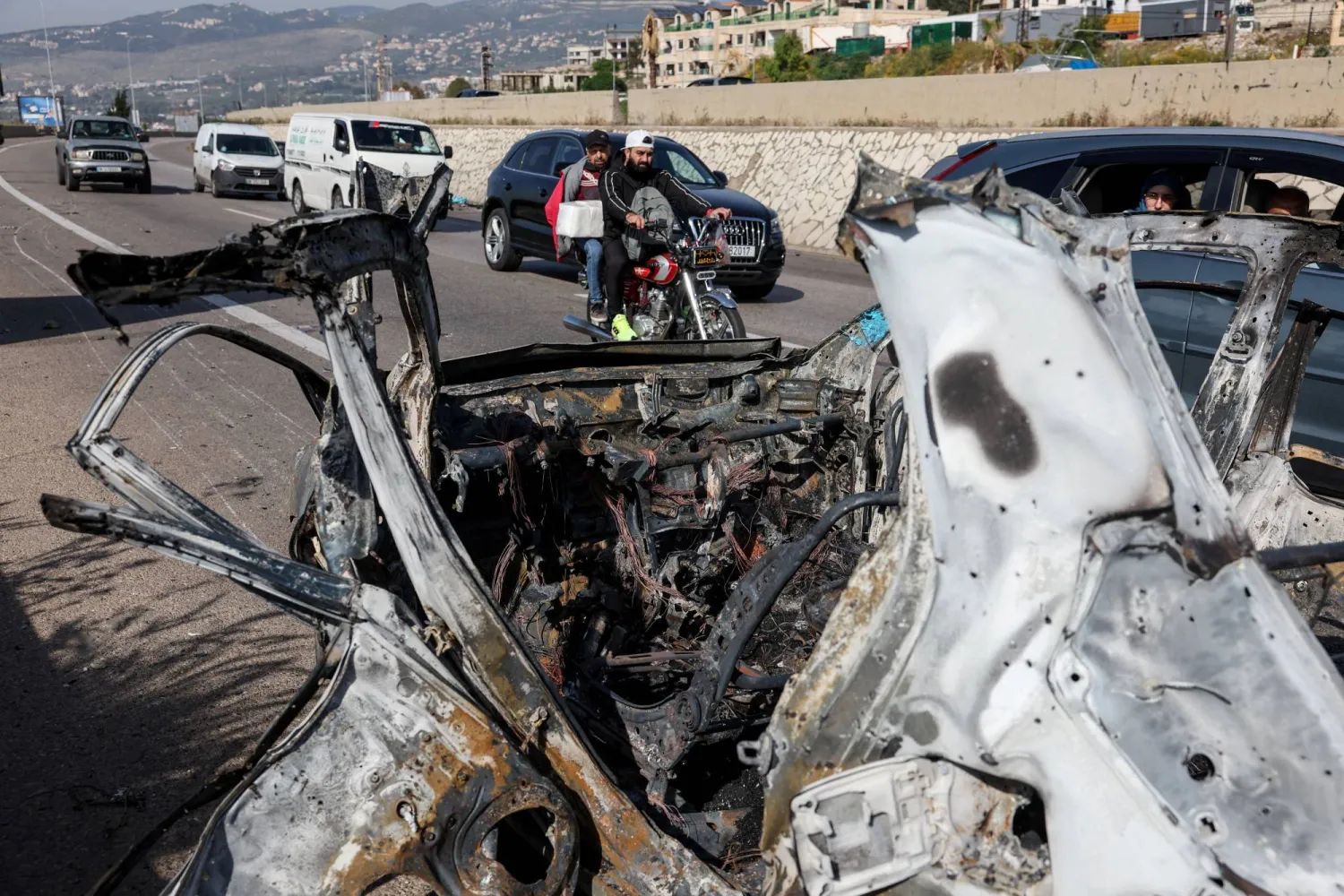
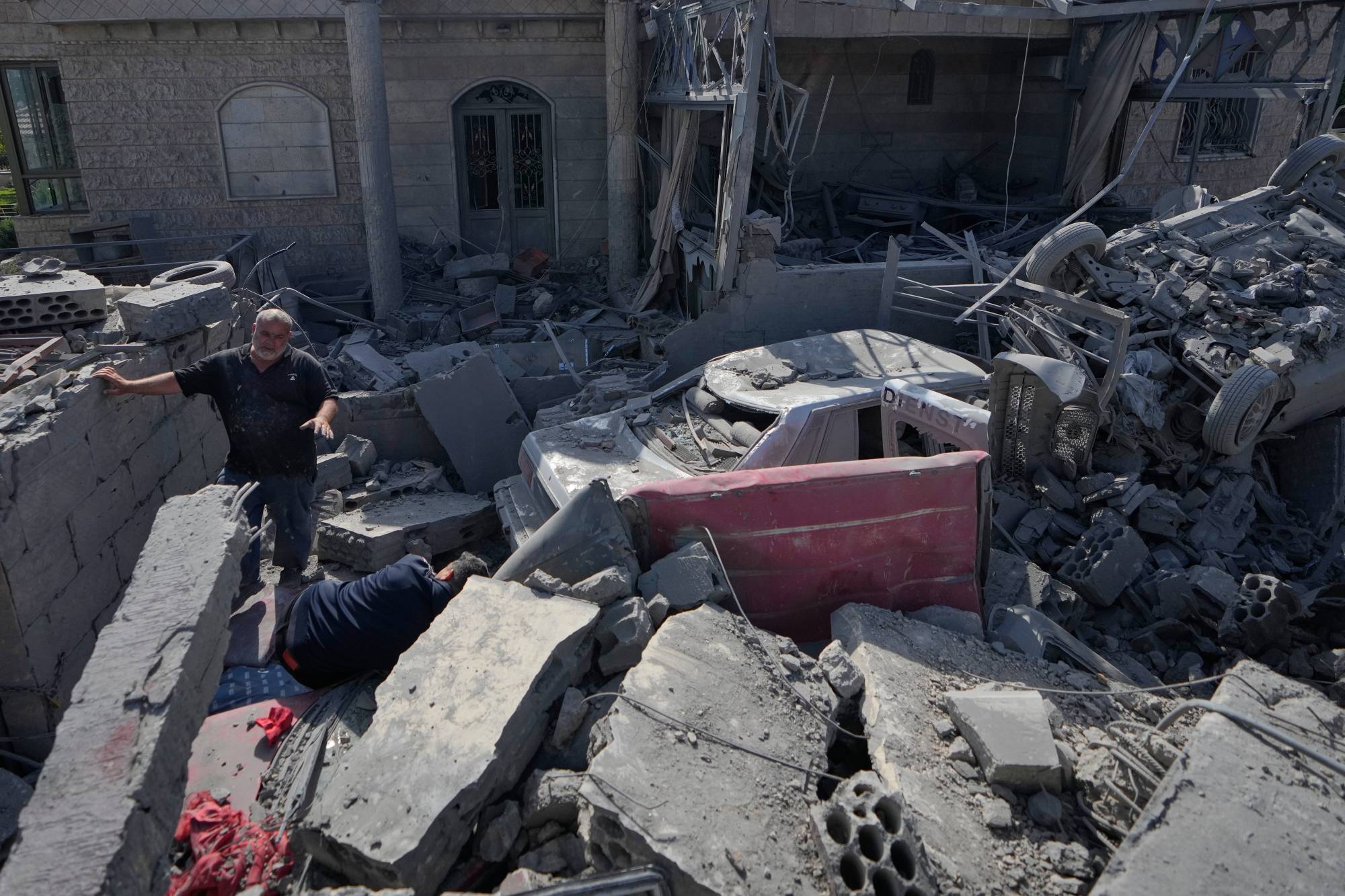
Israel, which never stopped bombing Lebanon despite a 2024 truce that sought to end the last war with Hezbollah, responded with widespread strikes, ground operations along the border, and an evacuation warning for swathes of the country.

For many young Lebanese caught in the crossfire, their formative years have been jeopardized by repeated conflicts and crises.

"My childhood is gone," said Kiki.

"Material losses can be made up for, but people do not come back."

Since 2019, Lebanese have been battling a financial crisis that has locked them out of their bank deposits, while the Covid pandemic made life even harder for everyone.

Beirut's port exploded the following year in one of the world's largest non-nuclear blasts, destroying swathes of the Lebanese capital, and killing more than 220 people.

- 'Dreams on hold' -

The first time Zahraa Fares experienced war was in 2024, when she was just 14.

"We were still discovering what we like to do, what activities we enjoy, how we like to spend our days, then we were displaced... and could not do anything", said the now-16-year-old, who escaped the southern city of Nabatiyeh.

Fares, who said she now feels "mentally crushed", found relief in an acting workshop in Beirut's Lebanese National Theater intended to support war-affected youth like herself.

Wassim al-Halabi, a 20-year-old Syrian who fled the war in his country nine years ago and is still living in Lebanon, has found himself stuck in another conflict.

Working in a restaurant since the 2024 war forced him out of university, Halabi said he was "starting from zero to be able to stand on my two feet again, but war started again".

"Our dreams are now on hold until the war ends."

Lebanese authorities on Thursday said Israeli strikes have killed more than 1,000 people since March 2.

The toll includes 118 children.

"Cumulative trauma, cumulative adverse experiences and ongoing instability and unpredictability certainly put these children at higher risk... of developing psychiatric disorders and negative mental health outcomes," Evelyne Baroud, a child and adolescent psychiatrist told AFP.

"Witnessing violence, physical assaults, killings, forced displacement, losing one's home, loss of a parent, all of these carry a very high risk of developing post-traumatic stress disorder."

- Generational trauma -

Lebanon has been mired in conflicts and crises for decades, the worst of which was the 15-year civil war that erupted in 1975 and which divided the country into warring sectarian fiefdoms.

For many years since the end of that war, which killed 150,000 people and left 17,000 more missing, bitter political divisions continued to plague Lebanon.

The war also saw an Israeli invasion and occupation of southern Lebanon until 2000.

While young Lebanese grew up hearing stories of war from their parents, they never expected to have to live through one themselves.

"My mother used to tell us about how they would be displaced, hear airstrikes, but I was not able to properly imagine it," Fares said.

"I used to ask myself 'how could they shelter in a school?' but now I see it with my own eyes."

At a gathering in Beirut to express solidarity for victims of the war, 18-year-old Laura al-Hajj wondered: "Why do I have so many concerns at my age?"

"We carried burdens that are much bigger than us, and beyond our age... I now just worry about being alive tomorrow."

Hajj said she feels like "from generation to generation, we are all living through wars".

"No child should have to go through what we went through."