In Gaza, Displaced Women Recount Lives Upended by War

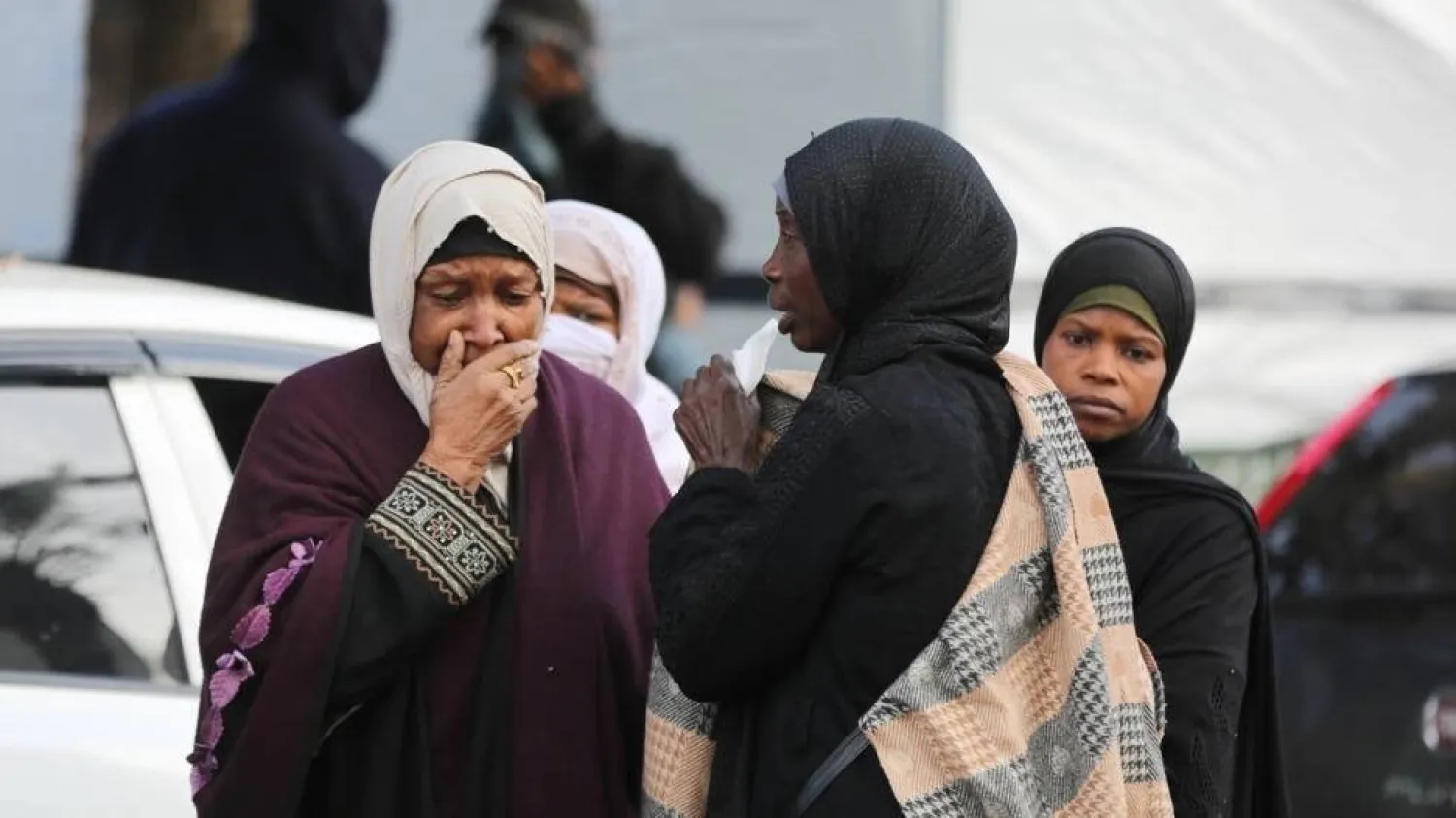
Eleven weeks of war have killed thousands in Gaza and displaced the vast majority of its inhabitants, officials say. AFP
TT

In Gaza, Displaced Women Recount Lives Upended by War

Eleven weeks of war have killed thousands in Gaza and displaced the vast majority of its inhabitants, officials say. AFP

A relentless Israeli military campaign, in response to deadly Hamas attacks on October 7, has upset the lives of most, if not all, residents of the Gaza Strip.
Israeli forces have launched a bombardment campaign and ground invasion of Gaza ever since Hamas militants launched their shock attack -- the deadliest in Israel's 75-year history.
It killed about 1,140 people, mostly civilians, according to an AFP tally based on official Israeli figures.
Israel's retaliatory offensive has killed at least 20,258 people in the besieged Palestinian territory, according to the health ministry in Hamas-run Gaza.
The United Nations estimates the fighting has displaced 1.9 million of Gaza's 2.4 million population.
AFP spoke to three Palestinian women who shared how the conflict has upended their lives.
Nour al-Wahidi, 24, medical intern
Wearing a stethoscope around her neck, Wahidi recalled spending 38 consecutive days treating patients in terrible conditions at Gaza City's Al-Shifa hospital, which has been raided by Israeli forces.
"I worked through moments of escalation these past two years, but everything about this war is different: the length, the death toll, the severity of injuries, the displacement," she said.
For a month now Wahidi has been sharing an apartment with 20 members of her extended family, having been displaced twice since the war broke out.
The medical intern is working in the emergency ward of the Kuwaiti hospital in Rafah, in the besieged territory's south.
"Every day, I come across suffering that I never thought I would see," she said.
Some of her relatives took shelter at a school run by the UN agency for Palestinian refugees, UNRWA, while others remained in Gaza.
Wahidi has lost all contact with those who stayed behind in Gaza City because the grid is often down and communications frequently cut.
"Before, I was home with everything I needed. Now I'm in this strange place, without water or food," she said.
"The situation is catastrophic."
She also warned that "there's been a rapid spread of disease".
Still, she tries to make do by telling herself that others have it even worse.
"After work, I can go home, I can cook and light a fire. I wash my hands when there's water," she said, counting her blessings.
"We've had to consider water and food supplies, and how to charge our phones -- things we never thought about before," she added.
"No one deserves to live like this."
Sondos al-Bayed, 32, housewife
Bayed hails from Gaza City but is now living in a tent outside the Kuwaiti hospital in Rafah.
She shares the space with her journalist husband and three children.
"Our life has been turned upside down. It's been a total 180," she said.
Her family has been forced to move multiple times since leaving Gaza City.
They first fled south towards the central city of Deir al-Balah. However, the homeowners who took them in soon asked them to leave.
It was "out of fear that journalists would be targeted" by Israeli strikes, Bayed told AFP.
"I cried so much... I didn't know what to do," she said.
They set off again for Khan Yunis, in the south, but their plans were thwarted once again. The Israeli army issued an evacuation order for those in the area, sending them further south near the border with Egypt.
With what little food she can find, Bayed prepares meals for her children but they refuse to eat: "The food's bad and expired."
Life has become "hard, like being separated from family, as are the memories", Bayed said.
"We were happy before and had a stable life. We dreamt of building a bigger house. I want (that life) back."
Lynn Ruk, 17, student
Ruk lives in a makeshift camp in Rafah along with her parents, brother, four sisters and niece.
"My life used to be so boring, I'd complain. The war changed everything," she said.
Her family left their home in Khan Yunis the day after the war erupted.
"We took a photo of the house, in tears," Ruk said.
They briefly stayed with one of her sisters. When it became too dangerous there, they left for the city's Nasser hospital, before winding up in Rafah.
"I thought we'd go home after a week. It's been more than 70 days now and we're still not back," she said.
The teenager said she has lost seven kilos (15 pounds) since the war began. She has fallen sick several times and was even taken to the emergency room after fainting.
Today, her meals mainly consist of canned food, with only the occasional piece of bread.
"I never thought my life would look like this... Before the war, I showered every day," she said.
"Now, if I'm lucky, I'll wash at the mosque once a week, at sinks reserved for performing one's ablutions -- if there's any water," she added.
Ruk is afraid for the lives of her friends, and her own.
She aspires to be a journalist and hopes to be able to travel abroad to make her dream come true.
"I wish I could go back to the life I had before, the one I didn't like," she said.



Israel’s Security Cabinet Approves 19 New Settlements in West Bank

 A helicopter flies over the Israeli settlement of Shilo in the occupied West Bank on December 14, 2025. (AFP)
A helicopter flies over the Israeli settlement of Shilo in the occupied West Bank on December 14, 2025. (AFP)
TT

Israel’s Security Cabinet Approves 19 New Settlements in West Bank

 A helicopter flies over the Israeli settlement of Shilo in the occupied West Bank on December 14, 2025. (AFP)
A helicopter flies over the Israeli settlement of Shilo in the occupied West Bank on December 14, 2025. (AFP)

Israel's security cabinet approved the establishment of 19 new settlements in the occupied West Bank, bringing the total number approved over the past three years to 69, an official statement said Sunday.

"The proposal by Finance Minister Bezalel Smotrich and Defense Minister Israel Katz to declare and formalize 19 new settlements in Judea and Samaria has been approved by the cabinet," a statement from Smotrich's office said, without specifying when the decision was taken.

"On the ground, we are blocking the establishment of a Palestinian terror state. We will continue to develop, build, and settle the land of our ancestral heritage, with faith in the justice of our path," Smotrich said in the statement.


Iraq Top Judge Says Armed Factions to Cooperate on Weapons

Cars drive through central Baghdad as a thick fog blankets the Iraqi capital on December 11, 2025. (AFP)
TT

Iraq Top Judge Says Armed Factions to Cooperate on Weapons

Cars drive through central Baghdad as a thick fog blankets the Iraqi capital on December 11, 2025. (AFP)

The head of Iraq's highest judicial body said Saturday that the leaders of armed factions have agreed to cooperate on the sensitive issue of the state's monopoly on weapons.

However, the powerful Kataib Hezbollah group said that it would only discuss giving up its arms when foreign troops leave the country.

"The resistance is a right, and its weapons will remain in the hands of its fighters," the group said in a statement.

The leaders of three other pro-Iran factions designated by Washington as terrorist groups said that it is time to restrict weapons to state control, although they too have stopped short of committing to disarm -- a long-standing US demand.

Faiq Zidan, the head of Iraq's Supreme Judicial Council, in a statement thanked "faction leaders for heeding his advice to coordinate together to enforcing the rule of law, restrict weapons to state control, and transition to political action after the national need for military action has ceased".

After Iraq's general elections in November, the United States demanded that the new government exclude six groups it designates as terrorists and instead move to dismantle them, Iraqi officials and diplomats told AFP.

But some of the groups have increased their presence in the new parliament and are members of the Coordination Framework, a ruling alliance of Shiite parties with varying ties to Iran that holds the majority.

The blacklisted groups are part of the pro-Iran Popular Mobilization Forces, a former paramilitary alliance that has integrated into the armed forces. But they have also developed a reputation for sometimes acting on their own.

They are also part of the Tehran-backed so-called "Axis of Resistance" and have called for the withdrawal of US troops -- deployed in Iraq as part of an anti-ISIS coalition -- and launched attacks against them.

These groups include the powerful Asaib Ahl al-Haq faction, which won 27 seats in the elections.

Earlier this week, the group's leader, Qais al-Khazali, a key figure in the Coordination Framework, said "we believe" in "the slogan to restrict weapons to the state", and "we are now part of the state".

Two other groups, Harakat Ansar Allah al-Awfiya and Kataeb Imam Ali, said on Friday that it is time to "limit weapons to the state".


Israeli Military Says Killed Two Palestinians in West Bank

A Palestinian flag flutters in front of Israeli soldiers standing near their military vehicle parked at the entrance of the Nur Shams Palestinian refugee camp, in the Israeli-occupied northern West Bank on December 15, 2025. (AFP)
TT

Israeli Military Says Killed Two Palestinians in West Bank

A Palestinian flag flutters in front of Israeli soldiers standing near their military vehicle parked at the entrance of the Nur Shams Palestinian refugee camp, in the Israeli-occupied northern West Bank on December 15, 2025. (AFP)

Israel's military said it killed two Palestinians in the north of the occupied West Bank Saturday, accusing one of throwing "a block" and the other an explosive at its soldiers.

In a statement the military said that during an operation "in the area of Qabatiya, a terrorist hurled a block toward the soldiers, who responded with fire and eliminated the terrorist".

"Simultaneously, during an additional operation in the Silat al-Harithiya area, a terrorist hurled an explosive toward the soldiers, who responded with fire and eliminated the terrorist."

Both locations are near the city of Jenin.

The Israeli military reported no injuries among its troops.

The Palestinian health ministry said that a 16-year-old boy died "from wounds caused by a bullet of the Israeli occupation forces", according to the official Wafa news agency.

It also reported that a 22-year-old man was killed by "a bullet to the chest during an occupation forces raid" on Silat al-Harithiya.

Violence in the West Bank, which Israel has occupied since 1967, has soared since the Hamas attack of October 7, 2023 triggered the Gaza war.

It has not subsided despite the truce between Israel and Hamas that came into effect in October.

Israeli troops or settlers have killed more than 1,000 Palestinians, many of them gunmen, but also scores of civilians, in the West Bank since the start of the Gaza war, according to an AFP tally based on Palestinian health ministry figures.

At least 44 Israelis, both soldiers and civilians, have been killed in Palestinian attacks or Israeli military operations, according to official Israeli figures.