Detainees Reveal Details of Drug Smuggling Operations from Syria to Jordanhttps://english.aawsat.com/features/4790291-detainees-reveal-details-drug-smuggling-operations-syria-jordan
Detainees Reveal Details of Drug Smuggling Operations from Syria to Jordan
An army patrol is deployed at the Jordan border to combat drug smuggling from Syria in April 2023. (AFP)
Jordan has intensified its confrontation against drugs smugglers from Syria.
Informed sources told Asharq Al-Awsat that the army was adopting a new strategy of luring the smugglers to the Kingdom instead of confronting them behind the border.
Last week, it arrested 15 smugglers and criminals, while five were killed in clashes.
Days later, a “special force” raided a smuggler den, killing seven people.
Unverified reports said Jordanian businessmen with affiliations to politicians were suspected of cooperating with the drug smuggling militias.
The sources revealed that the Jordanian people will likely be informed of the confessions of the detained smugglers.
The confessions will reveal the extent of the illicit operations and the danger they pose to the kingdom, as well as the revenues generated from the drug economy, which now boasts factories and an army of smugglers in Syria.
Amman has remained on the defense in confronting smuggling operations across the 375-kilometer-long border it shares with Syria.
Officials have repeatedly denied that the army had carried out operations inside Syria and they refuse to comment on widely circulated reports that the air force had carried out four raids against drug factories in Syria’s Daraa and al-Sweida.
Jordan is facing drug gangs backed by Iranian militias and regime-allied military units, as well as others loyal to Maher al-Assad, brother of Syrian President Bashar al-Assad.
In mid-December, the Jordanian military arrested nine smugglers and killed a number of others. The confessions of the detainees revealed the details of the organized smuggling in eastern Jordan.
The revelations allowed the military to carry out sophisticated operations against “dangerous” criminals and seize large amounts of drugs and weapons.
The weapons are sophisticated enough to allow the smugglers to secure their operations in the desert along the northern and eastern borders with Iraq and reaching south to Saudi Arabia in spite of challenging weather conditions, such as fog and sandstorms.
Besides it being a lucrative industry, the smuggling is seen as an attempt by Iran to expand its influence in the region and destabilize Jordan.
A Jordanian source revealed that tons of narcotic pills, hashish and other drugs have been confiscated.
It added that Amman didn’t want to receive complaints from other regional countries that they had busted smuggling attempts.
“The kingdom is working on securing its borders and preventing the drugs from reaching its neighbors. Their national security is integral to Jordan’s,” it stressed.
Jordan is ultimately a small market for these drugs, but the gangs have to pass through the kingdom to smuggle their narcotics to other countries in the region.
Jordan announced last week it was bolstering is border security with plans to set up an electronic fence that would bar all infiltration and smuggling attempts.
The growing focus on combating drugs reflects Amman’s halt in efforts to “revive” the Syrian regime and return it to its Arab fold.
Arab efforts to that end last year led to Bashar al-Assad attending the Arab summit in Jeddah in May. However, that did not stop the drug smuggling operations.
Amman has grown more and more skeptical that Damascus would not fulfill its military and security commitments to protect the border. Jordan appears to be the only side protecting the borders.
“The regime’s negligent approach in dealing with the militias is but another face of the regime that wants to export its crises to neighboring countries,” security officials had told Asharq Al-Awsat in a previous report.
From ‘Ahmed the Japanese’ to ‘Sinwar’s Flood’: A Tale of Torment and a River of Graveshttps://english.aawsat.com/features/5327125-%E2%80%98ahmed-japanese%E2%80%99-%E2%80%98sinwar%E2%80%99s-flood%E2%80%99-tale-torment-and-river-graves
From ‘Ahmed the Japanese’ to ‘Sinwar’s Flood’: A Tale of Torment and a River of Graves
Okamoto stands before his two comrades’ graves during a commemoration of the 50th anniversary of the Lod Airport attack in 2022. (AFP)
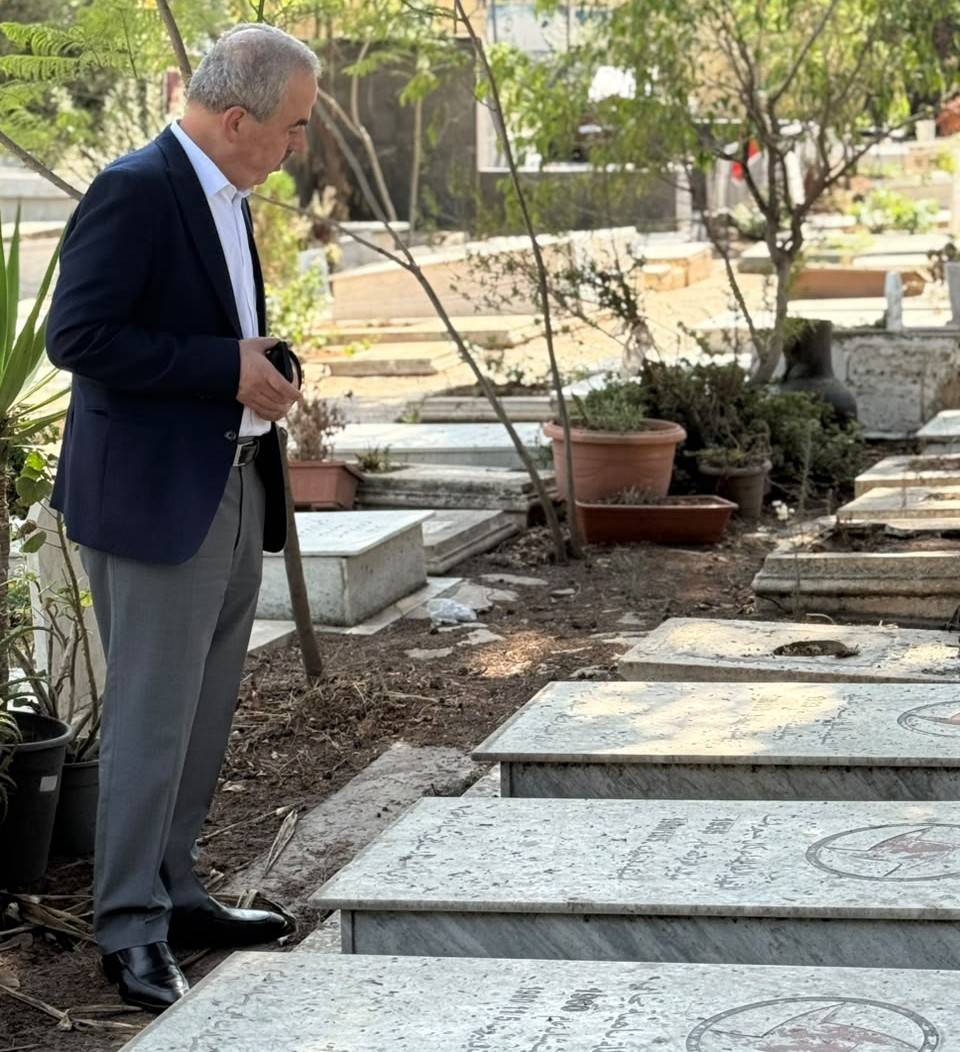
The cemetery caretaker was kind and friendly. Perhaps he was glad that those whose graves he tended had not slipped into total oblivion, that someone still visited or asked about them. He led me through Beirut’s Cemetery of the Martyrs of the Palestinian Revolution.
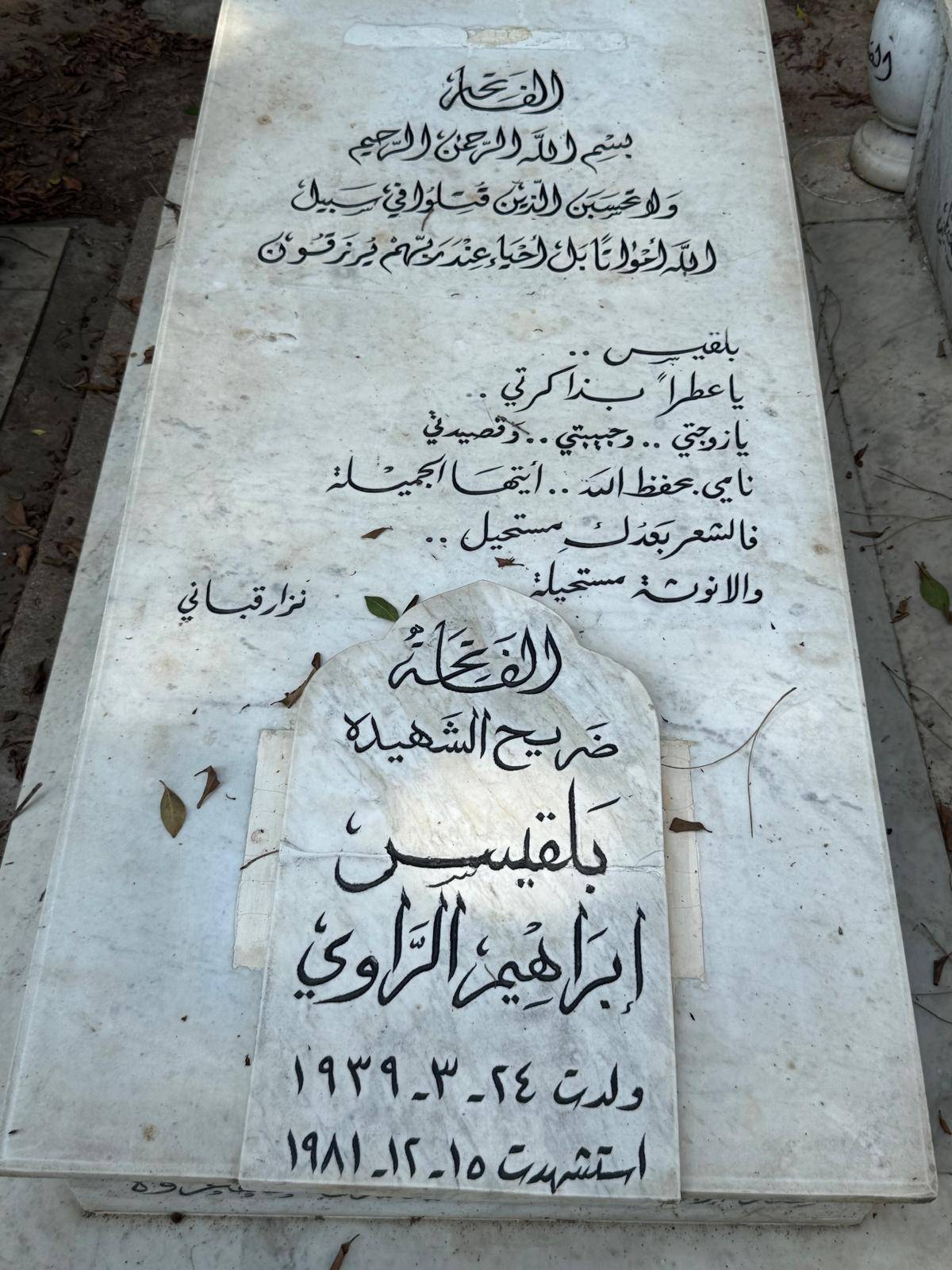
Many names stopped me, including Balqis, the wife of poet Nizar Qabbani, killed in a bombing at the Iraqi Embassy in Beirut. Lines from his searing elegy adorned her grave.
Chance sometimes decides destinies. Stories can begin with an unintended spark. Here are two such coincidences.
Hazem Jawad, who led Iraq’s Baath Party to power in 1963, told me a revealing story. In 1959, a group within the party leadership decided to assassinate Iraqi leader Abdul Karim Qasim.
They selected a team, but one member withdrew after agreeing to take part. Short of time, the leadership asked a party official whether he knew a young replacement. He gave them a name: Saddam Hussein.
Saddam joined the failed assassination attempt and was wounded in the leg. He fled to Syria, where he met party founder Michel Aflaq. Impressed by the young man, Aflaq gave him opportunities a few years later to climb the party ranks.
Around the same time, associates of Palestinian leader Dr. Wadie Haddad told me of another coincidence. Haddad was planning the Lod Airport attack, carried out on May 30, 1972, which killed dozens of people, most of them tourists.
According to their account, a young man due to take part drowned while swimming off Beirut’s Raouche district. Intelligence services overlooked the incident and the dead man’s role. Haddad, however, decided to accelerate the operation.
Ghassan Charbel among the graves at the Palestinian Revolution Cemetery (Asharq Al-Awsat)
Together with the Japanese Red Army group, he sought a replacement. They chose Kozo Okamoto, known as “Ahmed the Japanese” within the Popular Front for the Liberation of Palestine’s external operations branch.
Haddad met the team and gave them instructions after their training in Baalbek, in Lebanon’s Bekaa Valley. They left Beirut for a European stopover, then traveled to Rome and boarded an Air France flight to Israel’s Lod Airport.
It was a suicide mission. None of the attackers was expected to survive. Chance intervened: two were killed; Okamoto was wounded and captured.
For years, he grieved “because he had been unable to leave his body in the soil of Palestine” and “because he had not become a star in the sky like his two comrades,” in keeping with his Japanese beliefs.
Okamoto endured unprecedented torture in his Israeli prison. He was confined in a dog cage, his hands bound. For years, he had to wait for a dog to howl, then howl back before a soldier brought him food. The soldier never asked him a question or spoke a word.
In that deadly isolation, he lost the ability to use his hands, or even to think of using them. Perhaps he expected to grow old and die there. Then an event changed his life.
The Popular Front for the Liberation of Palestine-General Command, led by Ahmed Jibril, was holding three Israeli soldiers after Israel’s 1982 invasion of Lebanon.
In the mid-1980s, the group entered arduous indirect negotiations with Israel, helped by Austrian Chancellor Bruno Kreisky. The talks lasted about two years. Jibril insisted that the exchange include prominent prisoners in Israeli jails.
The deal was ready. The exchange took place on May 20, 1985. My profession brought me there. Our plane left Damascus for Geneva, carrying one of the three Israeli soldiers. After the successful exchange, it flew us to Tripoli. Jibril also wanted to dedicate the victory to Col. Muammar Gaddafi, who had supported him generously in every way.
Among the most prominent prisoners released were Sheikh Ahmed Yassin, the leader of Hamas; Ziad al-Nakhalah, who later became secretary-general of Islamic Jihad; and the well-known Palestinian leader Jibril Rajoub. The fourth was Okamoto. A different chapter of his life began.
After a brief stay in Libya, he went to Syria. He most likely slipped into Lebanon around 1987 and lived with comrades in the Bekaa Valley, changing residences from time to time. In 1997, Lebanese authorities arrested a group of Japanese nationals there. Okamoto was sentenced to three years for entering the country illegally.
The group was released in 2000. But he could not return to Japan, where he was wanted.
The Popular Front for the Liberation of Palestine organized protests with several parties and public figures to secure permission for him to stay in Beirut. Salim al-Hoss was prime minister, Maj. Gen. Jamil al-Sayyed headed General Security, and Gen. Emile Lahoud was president.
In an unprecedented step, Lebanese authorities granted Okamoto political refugee status, on condition that he undertake no activities on Lebanese soil.
The Popular Front took it upon itself to repay the Japanese fighter, covering his living expenses, medical treatment and rehabilitation. His only public activity was laying an annual wreath at the memorial to those killed carrying out the Lod attack, in the martyrs’ cemetery.
He renewed his pledge to his two comrades to become a star in the sky.
Okamoto left his Israeli prison shattered.
He resembled “the remains of a man.” His back was bent, his hands unusable. He ate directly with his mouth, without using his hands. He did not know how to bathe or make coffee.
He dared not switch off the light.
He did not want to revisit the Lod attack. His caregivers avoided discussing it in ways that might reopen his wounds.
Trusted doctors helped him. From 2008 to 2021, Samih Rizk cared for him, becoming “a father, brother, friend and comrade.”
After Samih died, Fouad Daher, who oversaw the Popular Front’s social work in Lebanon, took over. His friendship with Okamoto had begun during Samih’s lifetime.
Okamoto loved the sea at Tyre. His caregivers took him there. He regained a measure of normal life. He liked fish, meat and chicken, and sometimes fancied a glass of wine or a bottle of beer. Occasionally, he asked for a falafel or shawarma sandwich. His Arabic was poor. So was his English.
His movements were never announced in advance. His caregivers saw no sign that Israel had tried to reach him again. Years earlier, the United States had announced a $5 million reward for information on his whereabouts. The Popular Front did not tell him.
In his final years, he lived with a family he loved and who loved him. He never married, had no girlfriend and showed no interest in either. No relative in Japan tried to visit or write to him.
“Okamoto is part of something larger,” Fouad Daher says.
“Yesterday, I visited the graves of the martyrs of the Palestinian revolution. I told someone I met there that the cemetery reflects the international character of the Palestinian cause, which embraces different nationalities and religions.”
“There are Japanese, French, Turkish, Italian, Iranian and Iraqi people buried there. Go to the caretaker and he will show them to you. The grave of Kamal Nasser, a Christian, is next to those of Mohammed Youssef al-Najjar and Kamal Adwan.”
Last July, Okamoto’s health deteriorated. On July 23, he died at Al-Rassoul Al-Aazam Hospital.
His story stirred me. I decided to visit the martyrs’ cemetery. I walked among the graves of Ghassan Kanafani, Abu Hassan Salameh, Kamal Nasser and Balqis, the wife of poet Nizar Qabbani. I also saw the graves of the “foreign martyrs.”
Chance played its part. I had not planned to write about Okamoto. I visited Beirut’s Mar Elias refugee camp to gauge the mood on the eve of the third anniversary of “Sinwar’s Al-Aqsa Flood.” I saw the misery of life in the camp. Then I spotted Okamoto’s photograph on a wall, and the story took another turn.
The caretaker led me to Ghassan Kanafani’s grave. A member of the Popular Front for the Liberation of Palestine’s political bureau, he was assassinated in direct connection with the Lod Airport attack and what Okamoto and his two comrades had done.
He was the official spokesman for the Popular Front, which claimed responsibility.
Haddad’s associates told me they had feared for Kanafani. They urged him to change his residence and car. He refused, “because he feared being accused of behaving like a bourgeois.”
Mossad soon reached him. On July 8, 1972, a bomb exploded in his car, killing him and his niece, 17-year-old Lamis Najm. The titles of his novels came to mind: “Umm Saad,” “Men in the Sun” and “Returning to Haifa.”
In this quiet place lies a man who lived loudly: Abu Hassan Salameh. Born into a wealthy family, he followed his father’s example in resisting occupation. He loved the struggle, life, women and late nights.
Beirut was long captivated by his marriage to Georgina Rizk, Miss Lebanon and Miss Universe. He founded Force 17, the military unit charged with protecting Yasser Arafat. He was close to the leader’s office and heart.
Salameh helped oversee overseas operations against Israeli interests. After a long pursuit, Israel’s Mossad assassinated him in Beirut on Jan. 22, 1979. Many stories surrounded the “Red Prince,” including that he was killed over his connection to the attack on the Israeli team at the 1972 Munich Olympics.
He had no part in conceiving or carrying out that attack, Mohammed Oudeh, known as Abu Daoud, told me. Oudeh brought the attackers into the Olympic Village with weapons Salah Khalaf, known as Abu Iyad, had personally brought to Munich.
Others believe Salameh, whom a Mossad operative had managed to approach, was killed “because he succeeded in opening a channel to the CIA, which caused Israel grave concern.”
We passed the grave of Palestinian leader and writer Majed Abu Sharar.
Mossad booby-trapped his bed in a Rome hotel, where he was staying while attending a conference in solidarity with the Palestinian people alongside the great poet Mahmoud Darwish.
I recalled Mahmoud’s poem “Good Morning, Majed,” which opens: “Rise, recite the surah of the returning one, and hasten toward a country we lost in a traffic accident.”
Nationalities lie side by side here, the caretaker said. So do religions.
He pointed to the grave of Kamal Nasser, the Christian Palestinian leader, beside those of Kamal Adwan and Abu Youssef al-Najjar. Nasser, a poet, had been “envious” of Kanafani’s funeral. “How magnificent,” he said.
“This is what a martyred writer’s wedding should be.”
Nasser, Adwan and Najjar were assassinated on April 10, 1973, in the Israeli army’s nighttime raid on Beirut known as the Verdun operation. One of the officers who took part in the three assassinations was disguised as a woman. His name was Ehud Barak. He would later become prime minister.
Another grave was no less painful. On Dec. 15, 1981, a car bomb rammed into the Iraqi Embassy in Beirut. Among the dead was diplomat Balqis al-Rawi, the wife of the great poet Nizar Qabbani. A passage from his poem adorned her grave:
Balqis...
O fragrance in my memory,
my wife... my beloved... my poem.
Sleep in God’s keeping,
my beautiful one.
For after you, poetry is impossible...
and femininity is impossible.
Nizar Qabbani’s verses on Balqis’s tombstone (Asharq Al-Awsat)
The caretaker wanted no photograph and no words. “I am only a caretaker,” he said. “The story belongs to those who lie in these graves.” I asked who paid his salary. Fatah, he replied.
On the way back, I remembered Mahmoud Darwish, who defies forgetting. I remembered Yasser Arafat, too, and his dream of a grave in a free Palestine. I returned weighed down by a “river of graves.”
Netanyahu, 'Dodging Responsibility,' Battles the Curses of October 7https://english.aawsat.com/features/5327013-netanyahu-dodging-responsibility-battles-curses-october-7
Israel's Prime Minister Benjamin Netanyahu leaves after addressing the 81st United Nations General Assembly at UN headquarters in New York on September 24, 2026. (Photo by Leonardo Munoz / AFP)
Netanyahu, 'Dodging Responsibility,' Battles the Curses of October 7
Israel's Prime Minister Benjamin Netanyahu leaves after addressing the 81st United Nations General Assembly at UN headquarters in New York on September 24, 2026. (Photo by Leonardo Munoz / AFP)
If Israeli Prime Minister Benjamin Netanyahu could erase October 7 from the calendar and wipe it from history, he would not hesitate for a moment. That date began as a curse that turned his life and many of the ideas surrounding him upside down. As it returned year after year, it became a series of accumulated curses that would require a divine miracle to escape.
On that day, three years ago, the sky fell on his head. When he was awakened at 6:40 a.m., 11 minutes after the Hamas attack on Israeli communities and military positions in the south began, and was told what had happened, he could not comprehend it. When he was given the initial details, that “a large number of people had been killed and wounded, and hostages had been taken to Gaza,” he was psychologically shocked.
In testimonies published by Ben Caspit, a writer for Maariv, people close to Netanyahu who saw him firsthand during those hours said that “Netanyahu’s lower jaw seemed slack, his face was pale, he spoke little, and something obsessive and delirious had entered his behavior.” “Why did they do this?” he asked, referring to Hamas’s leaders.
Even Gadi Eisenkot, who met Netanyahu four days after the attack, testified that he saw him frustrated and stunned.
He Devoted Himself to “Erasing Gaza”
In practice, Netanyahu left the management of the state’s response to the attack and the retaliation to the army and the other security agencies. The positions he announced when he appeared before the media were little more than parroted repetitions of what he was hearing from those commanders.
The army chief of staff at the time, Herzi Halevi, revealed that when he was about to leave his home at 6:30 a.m., his wife asked him where he was going. He replied: “To erase Gaza completely.” The phrase became an operational plan, and then a new military doctrine for the army and the entire Israeli state. Netanyahu began translating it into political language.
But according to an investigation by Ilana Dayan on the Israeli Channel 12 television program Uvda, the initial reactions were panicked and showed that Netanyahu’s first concern was to distance himself from responsibility for the October 7 failure. The investigation quoted his aide Eliezer Feldstein, who described Netanyahu’s state during the first days of the attack as “panicked” and “extremely frustrated.” Rather than focusing on the broader strategic implications of the event and issuing appropriate directives, he assigned his media team its “first and immediate task”: to devise an immediate plan to contain the media storm and evade political responsibility, repeatedly asking in frustration whether the news was still talking about his personal responsibility for the failure.
The Moment He Woke Up
Many observers of Netanyahu’s personality say that what pulled him out of his own frustration was the frustration he saw among his staff and close ministers, turning him into a roaring lion. It was no coincidence that he embraced the names “A People Like a Lion” and “The Lion’s Roar” for the two wars against Iran. He considers himself Israel’s “Mr. Security.” He feared that the public would discover the weakness that had afflicted him and his team and demand his removal. He began shouting at them: “Get out of this mindset. Read what they are writing about us,” meaning “about me,” “and respond to them. Terrible things are being written here instead of blaming the army and intelligence.”
From that point on, the government’s political line became one of blaming the military leadership for having been asleep on guard duty and failing to gather intelligence and prevent Hamas from attacking. The security agencies tried to defend themselves. They acknowledged part of the responsibility, conducted internal investigations, and punished some officials. All the heads of these agencies resigned, including Halevi from the army, Ronen Bar, head of the Shin Bet, and David Barnea, head of the Mossad, along with dozens of other generals.
On the Israeli street, there is a widespread belief that the army and the other security agencies do bear responsibility for the failure, but people also want Netanyahu to bear responsibility for it. He refuses. Not only that, he has also refused to establish an official commission of inquiry headed by a judge to investigate what happened. He insists that he is “the inspired leader whom God blessed the people of Israel with at the right time,” as his wife said in several media interviews.
Deep Sleep
Today, Netanyahu sees the general election scheduled for October 27, 2026, as decisive, not for the people of Israel, as political and media circles say, but for him personally. October 7 is the central issue. Despite all his attempts to move beyond it, his many opponents in politics, the media, academia, and the deep state insist on reminding the public of that date.
He has yielded to their pressure and begun addressing their accusations. He says: “If they had woken me half an hour earlier, the outcome would have been different.” Ben Caspit wrote about this on September 8, 2026: “Today, three years later, he dares to say: ‘If they had woken me, this would have looked completely different.’ But in reality, it can be said that even if they had actually woken him that night, nothing would have happened. Absolutely nothing.”
It is not difficult to reach this conclusion. Sadly, no one could have woken him in the middle of the night and told him that Hamas was about to launch an unprecedented attack on the south, with 6,000 militants crossing the barrier and taking over communities and bases. But, unfortunately, they did not know. It was an unprecedented intelligence and operational failure. Everyone responsible took responsibility for it and resigned.
In reality, they had tried to wake him for weeks and months. Who did not warn him? The army chief of staff tried to warn him, but he did not want to listen. The head of the Military Intelligence Directorate, Aman, sent him three letters, but he did not want to read them. (“There is exaggeration in this,” said Linnon Megil.) Avigdor Lieberman warned him. Yair Lapid warned him. His defense minister, Yoav Gallant, tried to wake him. Gadi Eisenkot sent him a letter saying that the situation was more dangerous than it had been on the eve of the Yom Kippur War. Nothing worked. Now he complains that they did not wake him that morning. No alarm bell went unheard. He simply did not want to wake up.
The Pitfall of a “Decisive Election”
Netanyahu believes he can convince voters of his position and win the election. He tells himself and his team: “I must win the election. Losing is not an option. It cannot happen. This is extremely dangerous.” What he means is that if he loses the election, the first consequence will be the establishment of an official commission of inquiry.
More than anyone else, and more than the investigators themselves, he knows that an impartial investigation would reveal how deeply he was involved in the failure. He was the one who forced the security agencies to accept the transfer of millions of dollars in cash to Hamas. He was the one who used to say that “Hamas is a treasure. By maintaining it and keeping it strong, we prevent the establishment of a Palestinian state.” He even convinced the most extreme members of his government of this theory, including Minister Bezalel Smotrich.
If he loses power, he will face the ongoing corruption trial against him, another corruption trial concerning the submarines that may follow, and perhaps a third trial over his role in the failures of October 7. His fate could be prison.
For that reason, Netanyahu will do everything in his power to prevent this danger, even if it means a war that would postpone the election.
Eisenkot: The Commander Who Saved Netanyahu, Only to Become His Targethttps://english.aawsat.com/features/5326994-eisenkot-commander-who-saved-netanyahu-only-become-his-target
Former Israeli military chief Gadi Eisenkot, Yashar opposition party leader, visits a roadside bomb shelter on the third anniversary of the deadly Hamas-led October 7 2023 attack, near Reim in southern Israel, October 7, 2026. REUTERS/Nir Elias
Eisenkot: The Commander Who Saved Netanyahu, Only to Become His Target
Former Israeli military chief Gadi Eisenkot, Yashar opposition party leader, visits a roadside bomb shelter on the third anniversary of the deadly Hamas-led October 7 2023 attack, near Reim in southern Israel, October 7, 2026. REUTERS/Nir Elias
When Gadi Eisenkot decided to appeal to the Israeli public and seek its trust in a bid to become prime minister, Prime Minister Benjamin Netanyahu felt he was in trouble. He was facing a figure unlike his previous rivals, Naftali Bennett, Yair Lapid, Tzipi Livni, and even Shimon Peres and Ehud Barak.
The new challenger, Eisenkot, is not only a former army chief of staff with a strong military record, but also possesses distinctive personal qualities. He is the complete opposite of Netanyahu. Israeli analysts describe him as “straight as an arrow,” which is why his colleagues named their new party Yashar, meaning “straight.” He is a decent man. He does not swear, play political games, wage battles against the press, or engage in conspiracies. He is said to be made of a different mold from Israel's new generation of politicians. Some compare him to Yitzhak Rabin.
The Opposite of Netanyahu
Eisenkot is not a conventional opposition politician. When Israel was caught off guard by the Hamas attack on October 7, 2023, and suffered a psychological shock, Eisenkot approached Netanyahu carrying a lifeline. Instead of pushing him to resign over the massive failure, Generals Eisenkot and Benny Gantz came to his support. They joined his government four days after the disaster and placed their experience and determination at his disposal to wage a war of retaliation.
Eisenkot is also not one of those leaders whose lives are riddled with flaws and scandals that opponents can exploit against them in political battles. His life is modest. His wife stays far from the spotlight. He is not known for extravagance, greed, or avarice. He does not accept gifts.
Nor does he belong to the Ashkenazi elite that has ruled, and continues to rule, Israel since its establishment. He comes from a family of Moroccan roots, and he takes pride in that heritage.
And that is not all. Eisenkot is a bereaved father. Just two years ago, his son was killed in the war in Gaza. His sister's son and his brother's son were also killed.
So how does Netanyahu conduct his electoral battle against such a figure? How can he turn against a man who stood beside him and supported him at his most difficult moments?
But these perfectly legitimate questions seem naive when faced with a figure like Netanyahu. He wants to win the election at any cost. He therefore wages his electoral battle without mercy, tearing down every word of praise for Eisenkot and inventing attributes, statements, and actions to pin on him.
For example, in a series aired by Channel 14, which is affiliated with Netanyahu, titled “Eisenkot” and aimed at undermining the man's stature and character, political correspondent Moti Kastel says: “Gadi Eisenkot is a man of the left. I also spoke with many people who were in the cabinet. When difficult decisions were on the table, they told me: ‘Gadi Eisenkot thinks like the left and says what he thinks.’ Gadi Eisenkot is a beloved, pampered teddy bear, gentle, at least in his appearance and demeanor. He is not fit to be prime minister in a country engulfed in wars.”
He adds: “Eisenkot is not an ordinary man of the left. He is deeply on the left. When a Palestinian girl carrying scissors approached a group of soldiers, he ordered them not to shoot her. He said: If there is a 13-year-old girl holding scissors or a knife, and there is a barrier between her and the soldiers, I will not accept a soldier opening fire and emptying a magazine of ammunition into such a girl, even if she is carrying out a very dangerous act. When Hamas fired 500 rockets at us, he justified not responding with a war by saying: ‘If, for every rocket that is fired, we go to war, we will end up in a Hundred Years' War.’ Is this a commander? He is someone who can be shaped like a PlayStation game. Others can decide on his behalf what he says, and they can decide on his behalf what he does. I believe Ehud Barak is behind him. He sees him today as someone capable of bringing down Netanyahu and moving Israel's leadership and government to the farthest left, the most liberal, the most progressive position. Yes, he has such foundations. Yes, he is committed to those people.”
A Defensive Position
It is clear that Netanyahu's electoral campaign is based on directing a series of accusations at Eisenkot. It does not matter whether they are true or based on lies. The goal is to undermine his image in the eyes of the public. But this is a familiar tactic in election campaigns. He wants Eisenkot to remain constantly occupied with defending himself. He does not want to give him room to breathe.
Netanyahu, who is prime minister and, by virtue of that position, should be the one facing scrutiny, criticism, and attacks, leaves no room for Eisenkot and keeps him constantly explaining, justifying, and defending himself. He has succeeded in doing so. Anyone who visits Eisenkot's social media accounts finds a prominent headline: “10 Lies.” It is a defense against the series of lies contained in Netanyahu's campaign.
Within this campaign, it is clear that Eisenkot has fallen into its trap and is trying to prove that he is the true liberal right. Netanyahu accuses him of planning to form a government based on Arab parties, so Eisenkot says that after October 7, he will not form a government with Arabs. He accuses him of supporting the establishment of a Palestinian state, and Eisenkot responds that he has never once said that he supports such a state, pointing out that Netanyahu was the one who had declared his support for the two-state solution. Netanyahu accuses him of promoting the theory of reducing the army, “a small and smart army,” which turned it into “a large and stupid army.”
Eisenkot tries to prove that he was the one who shut down wasteful and unnecessary military units and established a commando unit that operates far behind enemy lines. Netanyahu accuses him of advocating a policy of avoiding war in the fight against terrorism. Eisenkot responds that he was the one who crushed the Second Intifada when he was commander of the army in the West Bank, and that he was the one who etched the “Dahiya doctrine” into history when he carried out the strikes that destroyed Beirut's southern suburbs in 2006.
The biggest problem is that Eisenkot is not fighting Netanyahu alone. He is also facing his allies, Naftali Bennett, Yair Lapid, and Avigdor Lieberman. Supposedly, they are on the same side and want to bring down Netanyahu because he is responsible for the biggest security and strategic failure in Israel's history. Yet they openly say they do not trust Eisenkot to lead the alternative camp, even though he is winning the highest number of seats in the polls.
He has proposed a modest, practical solution: “Let us agree that whoever wins the largest number of seats becomes our collective candidate for prime minister.” But they rejected it, with each demanding the position of prime minister for himself. The latest poll gives Eisenkot 22 seats, compared with 13 for Bennett and Lapid and nine for Lieberman.
Eisenkot, who was an opposition lawmaker on October 7 and rushed to help prevent the government from collapsing, helping transform Israel from a stunned and traumatized state into a state waging a fierce war against the Palestinians, paid a heavy personal price in the process. He lost his son, his sister's son, and his brother's son. Today, he and his party are putting forward a plan to make Israel a normal state that ends wars through political agreements and improves its standing in the world.
Yet he now finds himself in the defendant's seat before Netanyahu. He is fighting to make people remember the qualities that made him a popular figure for so long. He is trying to prove that he is not a “beloved, pampered teddy bear,” nor “someone who can be shaped like a PlayStation game,” but a leader carrying out a national duty to save Israel from itself. There is no doubt that it is a difficult battle, and its success is not necessarily guaranteed.
لم تشترك بعد
انشئ حساباً خاصاً بك لتحصل على أخبار مخصصة لك ولتتمتع بخاصية حفظ المقالات وتتلقى نشراتنا البريدية المتنوعة