
Netanyahu Says Israel is Changing Security Balance on Northern Border

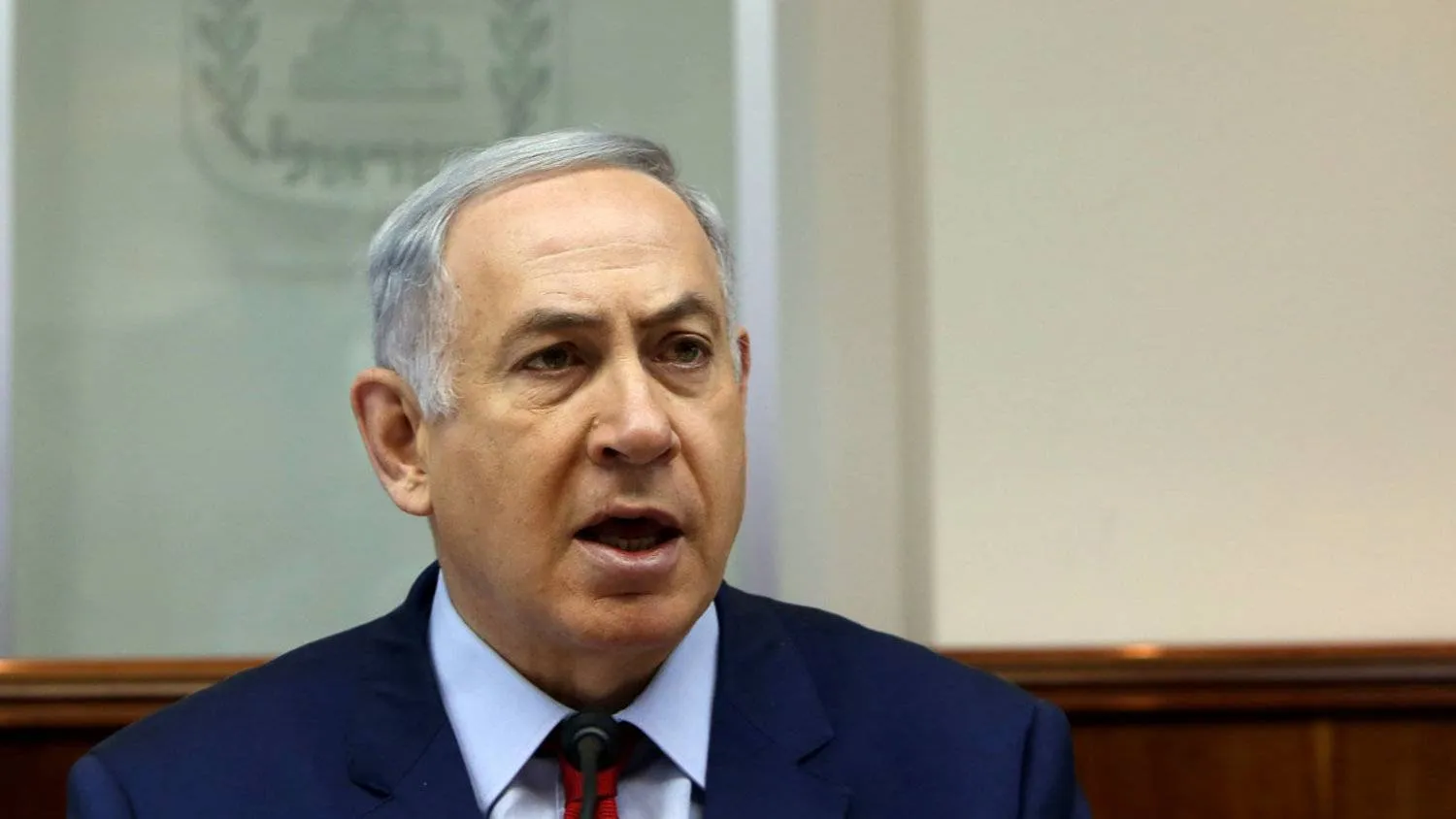
Israeli Prime Minister Benjamin Netanyahu . AFP / GALI TIBBON
TT

Netanyahu Says Israel is Changing Security Balance on Northern Border

Israeli Prime Minister Benjamin Netanyahu . AFP / GALI TIBBON

Israeli Prime Minister Benjamin Netanyahu said on Monday Israel faced "complicated days" as it stepped up strikes against Hezbollah in southern Lebanon and he called on Israelis to stay united as the campaign unfolded.

"I promised that we would change the security balance, the balance of power in the north - that is exactly what we are doing," he said in a message issued following a situational assessment at military headquarters in Tel Aviv.

Israeli strikes on Monday killed more than 180 Lebanese in the deadliest barrage since the 2006 Israel-Hezbollah war as the Israeli military warned residents in southern and eastern Lebanon to evacuate their homes ahead of a widening air campaign against Hezbollah.
Thousands of Lebanese fled the south, and the main highway out of the southern port city of Sidon was jammed with cars heading toward Beirut in the biggest exodus since the 2006 fighting. More than 700 other people were wounded in the strikes — a staggering one-day toll for a country still reeling from a deadly attack on communication devices last week.
The government ordered schools and universities to close Tuesday across most of the country and began preparing shelters for people displaced from the south.
The military said it was expanding the airstrikes to include areas of the valley along Lebanon’s eastern border with Syria. Hezbollah has long had an established presence in the valley, and it is where the group was founded in 1982 with the help of Iran’s Revolutionary Guards.
Israeli military spokesman Rear Adm. Daniel Hagari repeated warnings urging residents to immediately evacuate areas where Hezbollah is storing weapons, including in the valley.

The evacuation warnings were the first of their kind in nearly a year of steadily escalating conflict and came after a particularly heavy exchange of fire on Sunday. Hezbollah launched around 150 rockets, missiles and drones into northern Israel in retaliation for strikes that killed a top commander and dozens of fighters.
There was no sign of an immediate exodus from the villages of southern Lebanon, and the warning left open the possibility that some residents could live in or near targeted structures without knowing that they are risk.

Lebanese media reported that residents received text messages urging them to move away from any building where Hezbollah stores arms until further notice.
“If you are in a building housing weapons for Hezbollah, move away from the village until further notice,” the Arabic message reads, according to Lebanese media.
Lebanon's information minister, Ziad Makary, said in a statement that his office in Beirut had received a recorded message telling people to leave the building.
“This comes in the framework of the psychological war implemented by the enemy,” Makary said, and urged people “not to give the matter more attention than it deserves.”

It was not immediately clear how many people would be affected by the Israeli orders. Communities on both sides of the border have largely emptied out because of the near-daily exchanges of fire.

Lebanon-Israel Truce Committee Talks Widen as Hezbollah Disarmament Deadline Nears

People inspect a damaged building, after Israeli military said on Sunday that it struck a militant from the Lebanese Iran-aligned Hezbollah group, in Beirut's southern suburbs, Lebanon November 23, 2025. REUTERS/Mohamed Azakir
TT

Lebanon-Israel Truce Committee Talks Widen as Hezbollah Disarmament Deadline Nears

People inspect a damaged building, after Israeli military said on Sunday that it struck a militant from the Lebanese Iran-aligned Hezbollah group, in Beirut's southern suburbs, Lebanon November 23, 2025. REUTERS/Mohamed Azakir

The committee overseeing the Hezbollah-Israel truce in Lebanon focused on Friday on how to return displaced people to their homes, addressing civilian issues to help prevent ​renewed war if a year-end deadline to disarm Hezbollah is not met.

The 15th meeting of the committee reflected a long-standing US push to broaden talks between the sides beyond monitoring the 2024 ceasefire, in line with President Donald Trump's agenda of cementing peace deals across the volatile Middle East, according to Reuters.

Israel has publicly urged Lebanese authorities to fulfil a commitment under the truce to disarm Hezbollah, ‌warning that ‌it would act "as necessary" if Lebanon does not ‌take ⁠steps ​against the ‌Iran-aligned proxy militia.

At Friday's meeting in the south Lebanon coastal town of Naqoura, civilian participants discussed steps to support safe returns of residents uprooted by the 2023-24 war and advance economic reconstruction, the US Embassy in Beirut said.

A source familiar with the discussions told Reuters they also addressed disputes over how to limit weaponry south of the Litani River ⁠and deploying the Lebanese army into Hezbollah's stronghold region.

The Lebanese and Israeli participants agreed ‌that durable political and economic progress was essential ‍to reinforcing security gains and ensuring ‍long-term stability and prosperity, the US Embassy added in a ‍statement.

The committee added that a strengthened Lebanese army, which participants described as the guarantor of security south of the Litani River but was for many years outgunned by Hezbollah, was critical to sustaining stability.

Lebanese President Joseph Aoun ​affirmed the priority of returning residents of border villages to their homes, a presidency statement said, adding that the ⁠committee would reconvene on January 7.

Lebanon and Israel have been officially enemy states for more than 70 years. Since the US-brokered truce, the two sides have traded accusations of violations while Israel has continued to carry out strikes that have killed hundreds, saying it is targeting Hezbollah attempts to rebuild military capabilities.

At the committee's December 3 meeting, the first including civilians from both sides, Lebanese Prime Minister Nawaf Salam said he hoped civilian participation would help defuse tensions.

Israeli Prime Minister Benjamin Netanyahu said then the atmosphere at the meeting was good and ‌that the sides agreed to put forth ideas for economic cooperation, but that Hezbollah must be disarmed regardless.


Egypt Says Gas Deal with Israel is 'Strictly Commercial'

Under the deal, Leviathan will sell about 130 bcm of gas to Egypt through 2040 or until all contract values are fulfilled - File Photo
TT

Egypt Says Gas Deal with Israel is 'Strictly Commercial'

Under the deal, Leviathan will sell about 130 bcm of gas to Egypt through 2040 or until all contract values are fulfilled - File Photo

Egypt said that a natural gas deal with Israel was a "strictly commercial" arrangement with no political dimensions, adding it was concluded by private energy companies under market rules without direct government intervention, Reuters reported.

Earlier this week, Israel approved an export deal signed in August with Chevron and its partners, NewMed and Ratio, to supply up to $35 billion of gas to Egypt from the Leviathan natural gas field.

Egypt's position on the Palestinian cause is "firm and unwavering," supporting the legitimate rights of the Palestinian people, rejecting forced displacement, and adhering to a two-state solution, the head of Egypt's State Information Service, Diaa Rashwan, said in a statement.

Israeli Prime Minister Benjamin Netanyahu on Wednesday described the agreement as the largest gas deal in Israel's history, adding it would help bolster regional stability.

Under the deal, Leviathan, which has reserves of around 600 billion cubic metres, will sell about 130 bcm of gas to Egypt through 2040 or until all contract values are fulfilled, NewMed said in a statement.

Egypt's gas production began declining in 2022, forcing it to abandon its ambitions to become a regional supply hub. It has increasingly turned to Israel to make up the shortfall.


Israel Says Man's Capture Sabotaged Secret Hezbollah Naval Unit

Amhaz's ID card at the Maritime Sciences and Technology Institute. (Telegram)
TT

Israel Says Man's Capture Sabotaged Secret Hezbollah Naval Unit

Amhaz's ID card at the Maritime Sciences and Technology Institute. (Telegram)

Israel's military said Friday a man seized last year in Lebanon was a Hezbollah operative who played a key role in planning a covert maritime force for the militant group.

The military said special unit troops apprehended Imad Amhaz in November 2024 from the north Lebanese city of Batroun, and transferred him to Israel, reported AFP.

"During his questioning, Amhaz stated that he held a central role in the 'covert maritime portfolio'," which the military called "one of Hezbollah's most classified and sensitive projects".

It said the portfolio's "core objective is the establishment of organized maritime terrorist infrastructure, under civilian cover, in the maritime domain against Israeli and international targets".

The military added that it had disrupted the portfolio's advancement by dismantling its chain of command and through its questioning of Amhaz.

In November 2024, a Lebanese judicial official told AFP that a preliminary probe found that Israeli commandos used a speedboat equipped with radar-jamming devices to abduct Amhaz.

The official called his capture "a war crime that violated national sovereignty" because it involved the kidnapping of a Lebanese citizen in an area far from the fighting.

Amhaz was studying to become a sea captain at the Maritime Sciences and Technology Institute (MARSATI) in Batroun, Lebanon's primary training college for the shipping industry.

Israel says Amhaz was an "invisible" Hezbollah operative who joined the Lebanese armed group in 2004 and was trained in Iran in 2007.

Hezbollah has not claimed Amhaz as a member of the group.

Despite a November 2024 ceasefire supposed to end more than a year of hostilities between Israel and Hezbollah, Israel has kept up strikes on Lebanon and has also maintained troops in five areas of south Lebanon it deems strategic.

Israel says the strikes target Hezbollah members and infrastructure, and aim to stop the group from rearming.