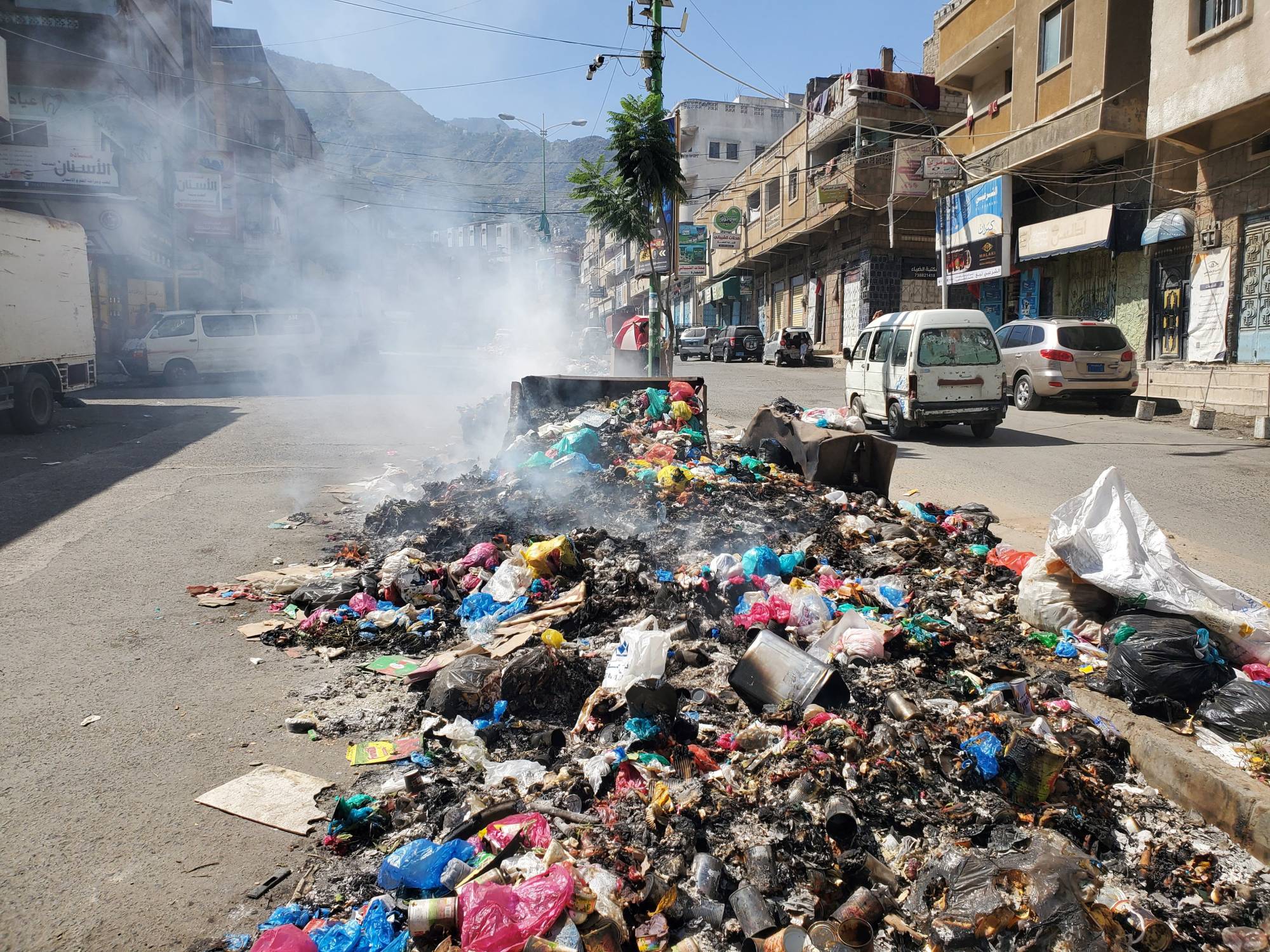
UN: Half of Yemen’s Births Not Attended by Trained Personnel

11,000 Yemenis have benefited from reproductive health services supported by UNFPA. (UN)
TT

UN: Half of Yemen’s Births Not Attended by Trained Personnel

11,000 Yemenis have benefited from reproductive health services supported by UNFPA. (UN)

While Yemen continues to face a dire humanitarian crisis, a new UN report showed that more than half of Yemen’s births are run in unsafe spaces.

Over half of Yemen’s population requires aid due to economic collapse and failing services, according to the United Nations Population Fund (UNFPA).

This has led to increased child marriage and displacement, with climate shocks displacing almost half a million people in 2024, it said.

“The healthcare system is also struggling, with only 45% of births attended by trained personnel and a high burden of cholera,” UNFPA said in its Yemen Situation Report.

Humanitarian response efforts are hampered by access restrictions, particularly for female aid staff in Houthi-controlled areas, and security concerns, it added.

UNFPA said it is responding to the reproductive health crisis in Yemen on multiple fronts.

It is improving maternal and neonatal health services by providing reproductive health commodities, medicines, cash assistance, equipment and incentives for health care workers.

Additionally, UNFPA is rehabilitating health facilities affected by flooding, and also launched campaigns to increase demand for reproductive health services.

“We continue to support health institutes with training for students and midwives and have deployed mobile clinics to provide an integrated package of reproductive health services in remote and underserved areas,” the Fund added.

UNFPA said it is supporting midwives operating out of home-based clinics and providing treatment and care for women with obstetric fistula and is also investing in essential medical support services and the integration of women’s protection and reproductive health services.

In Yemen, UNFPA has provided multiple services to women, girls and young people, including case management, safe spaces, shelters, awareness-raising sessions and community dialogues.

The Fund reached nearly 11,000 women with multisectoral services, established nine new women and girls’ safe spaces, and supported eight shelters.

Moreover, UNFPA reached over 110,000 individuals with awareness-raising sessions and conducted six community dialogues.

The Fund advocated for the prevention of FGM and provided mental health services to over 150,000 people.

UNFPA provided services to young people, reaching 121,200 with reproductive health information and services.

Finally, through the Rapid Response Mechanism, the UN agency delivered life-saving assistance to over 43,000 individuals affected by conflict and natural disasters.

UNFPA Yemen leads the Gender-Based Violence Area of Responsibility under the Protection Cluster, aiming to address both immediate humanitarian service delivery and effective prevention and risk reduction strategies for women’s protection.

UNFPA also leads information gathering to inform strategic decisions related to GBV prevention and mitigation; GBV humanitarian planning, implementation, resource mobilization, training, and monitoring of activities; and the Reproductive Health Working Group with the Health Ministry under the health cluster.

Furthermore, UNFPA chairs the inter-agency working group on youth alongside UNDP and leads the UN Rapid Response Mechanism, overseeing strategic coordination, resource mobilization and the development of implementation strategies to deliver immediate, life-saving assistance to displaced families.


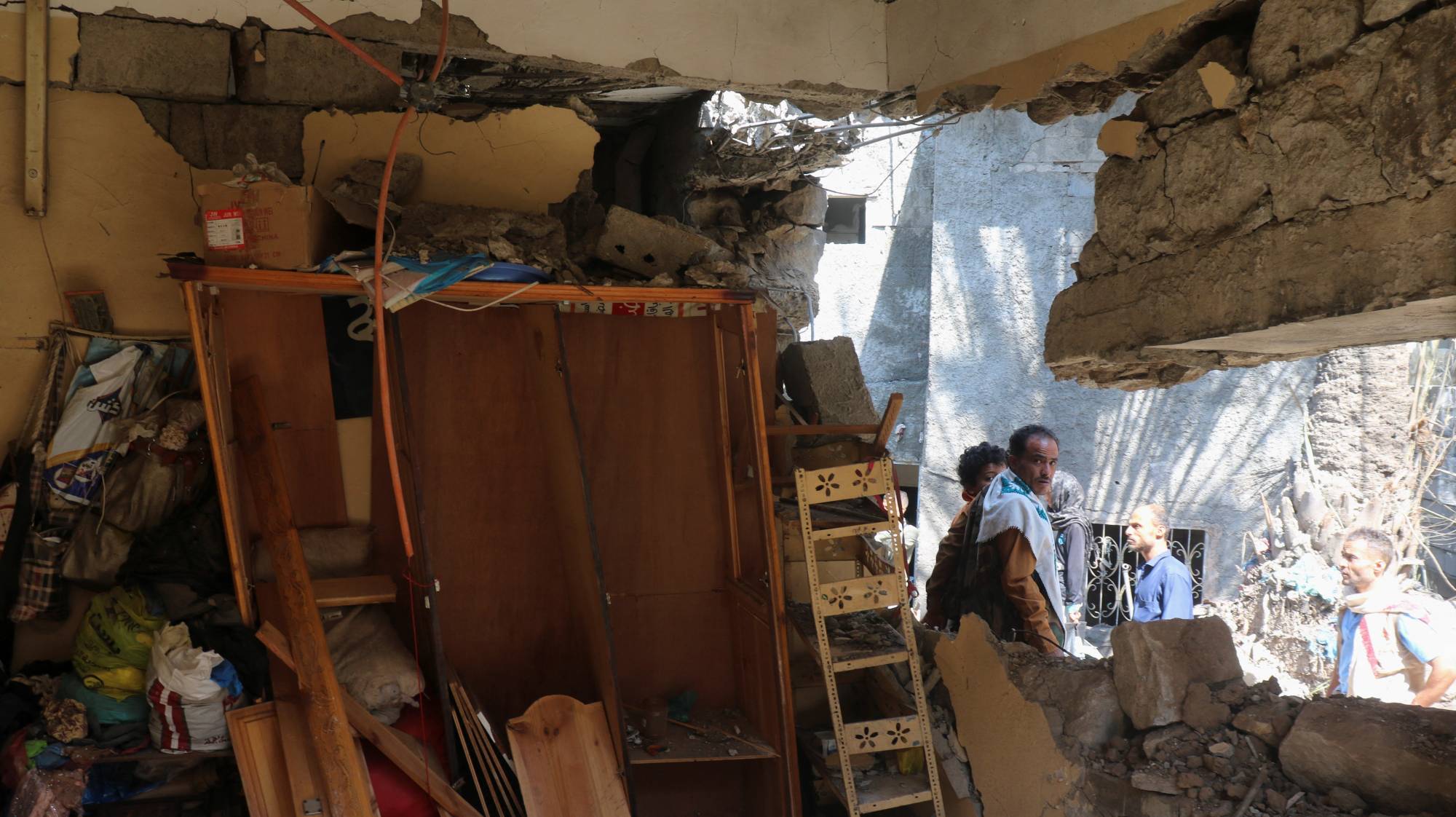
Aoun: Lebanon Rejects Being A Bargaining Chip in Regional Conflicts

 Lebanese President Joseph Aoun delivers his address at an informal European Union leaders’ meeting in Cyprus (AP)
Lebanese President Joseph Aoun delivers his address at an informal European Union leaders’ meeting in Cyprus (AP)
TT

Aoun: Lebanon Rejects Being A Bargaining Chip in Regional Conflicts

 Lebanese President Joseph Aoun delivers his address at an informal European Union leaders’ meeting in Cyprus (AP)
Lebanese President Joseph Aoun delivers his address at an informal European Union leaders’ meeting in Cyprus (AP)

Lebanese President Joseph Aoun said Lebanon “refuses to be a bargaining chip in regional conflicts,” stressing it “negotiates in its own name, in defense of its national interests and sovereignty,” as Beirut pursues a US-sponsored diplomatic track backed by European and Arab support to reach a lasting end to the war and ensure arms are held exclusively by the state.

Aoun made the remarks in Lebanon’s address to an informal meeting of European Union leaders, attended by southern neighbors and convened by Nikos Christodoulides during Cyprus’ EU presidency.

He said Lebanon had “engaged in a diplomatic negotiation process under US sponsorship, with support from the European Union and Arab countries,” aimed at a “sustainable solution” that ends Israeli attacks and secures a full Israeli withdrawal behind internationally recognized borders, allowing the state to extend authority over all its territory.

“Lebanon today refuses to be a bargaining chip in regional conflicts. It negotiates in its own name, in defense of its national interests and sovereignty,” he said, adding the country “places great importance on de-escalation and achieving stability and peace,” and that diplomacy, not escalation, is the only path to a lasting solution.

Severe humanitarian situation

Aoun described conditions on the ground as “extremely dangerous,” citing “more than 1,300 evacuation orders affecting 311 towns and over 6,800 airstrikes up to April 11,” leaving “more than 10,000 casualties, killed and wounded.”

He accused Israel of “violating international law” by targeting medical teams, hospitals, schools, journalists and places of worship, and by the “systematic destruction” of villages and civilian infrastructure to prevent residents from returning. Displacement has “exceeded one million,” he said.

Only 13% of the displaced are in shelters, mostly in public schools and universities, increasing pressure on the education system, he added. Lebanon still hosts around one million Syrian refugees, placing “significant strain” on infrastructure, services and host communities. He described the crisis as “not a conventional humanitarian crisis, but an existential one by all measures.”

Economic losses mount

More than 150,000 people are expected to have no homes to return to after the war.

Aoun urged the EU to convene an international conference on reconstruction and recovery, alongside boosting humanitarian funding, and called for reviving a France-backed conference to support the Lebanese army, which he described as “a guarantor of national unity and a cornerstone of local and regional stability.”

Syrian refugees

Aoun called for coordination with Syrian authorities, backed by international partners, to step up efforts for the safe and dignified return of Syrian refugees, saying Syria’s recovery offers “a real opportunity” to advance the process gradually and in an organized manner.

He said Lebanon is “not merely a humanitarian case,” but is directly tied to regional stability, migration, counterterrorism and energy security, urging stronger cooperation with Europe.

Nicosia meetings: French and Italian support

On the sidelines, Aoun met French President Emmanuel Macron, briefing him on efforts to end the conflict and ease the suffering of the Lebanese people.

He said Lebanon had pressed in talks at the US State Department and the White House for a ceasefire, followed by a three-week extension to halt hostilities, stop the destruction of homes in villages occupied by Israeli forces, and end attacks on medics, Red Cross and civil defense personnel, journalists and civilians.

Aoun also outlined Lebanon’s post-ceasefire position, thanking France for aid to displaced Lebanese and expressing hope for continued support from France and EU countries.

Macron reaffirmed France’s backing, saying he had contacted European leaders and partners to support Lebanon’s push to consolidate a ceasefire and begin bilateral negotiations, adding Paris would continue efforts to bolster Lebanon’s position.

Aoun also met Italian Prime Minister Giorgia Meloni, briefing her on ceasefire contacts and two rounds of talks in Washington, the first attended by US Secretary of State Marco Rubio and the second by US President Donald Trump.

“The option of war leads to no result,” he said.

Meloni reaffirmed Italy’s support for Lebanon, particularly for direct bilateral negotiations, and said Rome was ready to assist efforts to achieve stability, while continuing aid.


Gaza Reconstruction Back on the Table, Parallel Track to the Board of Peace

Palestinians walk amid the rubble of destroyed buildings in the Jabalia refugee camp in northern Gaza (AFP)
TT

Gaza Reconstruction Back on the Table, Parallel Track to the Board of Peace

Palestinians walk amid the rubble of destroyed buildings in the Jabalia refugee camp in northern Gaza (AFP)

The reconstruction of the Gaza Strip has returned to the agenda in recent days during Egyptian talks with international parties, amid a stalemate in implementing the ceasefire and earlier reports of funding problems facing the “Board of Peace” led by U.S. President Donald Trump.

Those reports were later denied, but without producing tangible steps toward even early recovery.

Egyptian experts told Asharq Al-Awsat that Cairo is pushing the file forward, either by opening parallel tracks to the Board of Peace’s reconstruction plan or by breaking the deadlock in the ceasefire phases, while preserving the agreement’s effectiveness as attention shifts to the “Iran war.”

Egyptian Foreign Minister Badr Abdelatty met Japan’s envoy for Gaza reconstruction, Takeshi Okubo, days ago, discussing “early recovery and reconstruction efforts in light of the ongoing regional escalation.”

Foreign Ministry spokesperson Ambassador Tamim Khallaf said Abdelatty stressed the need to accelerate early recovery through practical projects with immediate impact on Palestinians’ lives, including medicines, construction materials, desalination plants, mobile power units, and adequate temporary housing, taking into account realities on the ground and residents’ needs.

The issue also featured during Abdelatty’s mid-April visit to Washington, where he discussed with Stefan Emblad ways to boost cooperation on early recovery and reconstruction.

Abdelatty called for a major role for the World Bank in ensuring sustainable living conditions for Palestinians, citing its experience in reconstruction. He stressed the need to prioritize urgent projects and affirmed Egypt’s readiness to fully cooperate with the Board of Peace and the bank.

Ashraf Harbi of the Egyptian Council for Foreign Affairs said reviving the reconstruction file aims to create parallel paths to the Board of Peace’s steps, which have yet to begin, adding that Cairo is counting on international and European institutions to push early recovery.

He said Egypt is also seeking to break the ceasefire deadlock and sustain momentum on the Palestinian issue and the “Gaza agreement,” amid fears of a complete freeze as global attention turns to the Iran war.

In recent weeks, Cairo hosted talks between Hamas and the Board of Peace’s representative in Gaza, Nickolay Mladenov, focused largely on Hamas disarmament, but without agreement.

Mladenov said arrangements acceptable to all parties “will take some time.”

A Reuters report in early April said the Board of Peace had received only a small share of the $17 billion pledged for Gaza, delaying Trump’s plan for the devastated territory.

The Board said it faces no funding obstacles and that all requests were met “immediately and in full,” adding it is focused on enabling a national committee to manage Gaza, restoring governance, and expanding aid.

Days before the Iran war erupted in February, Washington hosted the Board of Peace’s first meeting, where countries pledged billions for Gaza’s reconstruction and administration after two years of war.

The plan envisions large-scale reconstruction alongside Hamas disarmament and an Israeli withdrawal, paving the way for a Palestinian national committee to take over governance.

Ahmed Fouad Anwar, also of the Egyptian Council for Foreign Affairs, said Cairo is stepping up efforts to overcome Israeli obstacles that have delayed a technocratic committee from taking over in Gaza and hindered the formation of a “stabilization force,” both of which are tied to reconstruction and early recovery.

He said delays in implementing the ceasefire are also linked to funding for reconstruction and development.

Cairo is working to establish a practical starting point to boost humanitarian and development support through the World Bank or the Japan International Cooperation Agency, aiming to restore hope for Palestinians facing harsh conditions.

Anwar added that the faltering first phase of the ceasefire, Israel’s withdrawal from only 55 percent of Gaza, and the focus on the Iran war and its economic and political fallout, including the risk of renewed fighting, are shaping the Palestinian landscape and require intensified action on multiple tracks.

International institutions estimate Gaza’s reconstruction cost at about $70 billion after widespread destruction of infrastructure and buildings, leaving the enclave’s future dependent on funding and political consensus.

The World Health Organization said on Friday that rebuilding Gaza’s health system will require $10 billion over five years, with 1,800 health facilities damaged, some fully and others partially.


Lebanon Ambassador in Riyadh: Saudi Arabia Played Key Ceasefire Role

CAPTION: Lebanon’s ambassador to Saudi Arabia, Ali Karanouh (Asharq Al-Awsat)
TT

Lebanon Ambassador in Riyadh: Saudi Arabia Played Key Ceasefire Role

CAPTION: Lebanon’s ambassador to Saudi Arabia, Ali Karanouh (Asharq Al-Awsat)

Lebanon’s ambassador to Saudi Arabia, Ali Karanouh, said a phone call on Tuesday between Lebanese President Joseph Aoun and Saudi Crown Prince and Prime Minister Mohammed bin Salman, along with a statement by Prime Minister Nawaf Salam, marked the culmination of Saudi efforts that drew on the kingdom’s regional and international weight to secure Lebanon’s inclusion in a temporary ceasefire agreement. He added that the Saudi crown prince affirmed the kingdom’s support for Lebanon in asserting its sovereignty and backing its efforts to preserve its resources and the safety and unity of its territory.

Karanouh, who took up his post in Saudi Arabia less than six months ago after serving as a diplomatic adviser to the prime minister, told Asharq Al-Awsat in an extended phone interview that the past days during the war had been difficult for Lebanon and the region, with a large number of casualties and widespread destruction.

He also referred to Lebanon’s position, which unequivocally condemns Iranian attacks on Gulf states, stressing his country’s need for all its friends, foremost among them Saudi Arabia, given its regional and international weight.

He said that reaching a ceasefire agreement is, in itself, an achievement, given the complexities of the regional situation and Lebanon’s internal challenges.

Karanouh said Lebanon’s position “aims to liberate its land, preserve its rights, and achieve sustainable security and stability,” expressing hope that the negotiations represent the only hope for Lebanon, given the difficult situation and the war it was drawn into, which it does not want and its people do not want, while paying a heavy price.

He added that Lebanon hopes the next phase, through the return of security and stability, will allow it to continue the path it had begun before the war, paving the way for rebuilding the state and extending its authority over all its territory.

On reports of recent visits by Lebanese politicians to Saudi Arabia, the ambassador said the kingdom maintains relations with all parties in Lebanon and calls for unity, security, stability, and the preservation of civil peace.

He noted that Saudi Arabia had previously sponsored the Taif Agreement and the reconstruction phase that followed, adding that these visits came within that framework.

He said this had been reflected domestically through a reduction in the intensity of rhetoric and a calming of internal tensions in recent periods, in favor of a unifying discourse and national unity, which has had a positive impact on Lebanon’s internal situation, where civil peace and a ceasefire are top priorities.

Karanouh said there is genuine seriousness today in addressing the issues that have affected Lebanon’s relations with Arab and Gulf states, with the aim of lifting the ban on Lebanese exports and rebuilding trust.

He added that the Lebanese side has held multiple meetings with Arab envoys, listened to their concerns, and is working to address many of them, noting that significant progress has been made and that many issues have already been resolved.

He added that there is a track of dialogue and cooperation with Saudi Arabia in this regard, noting that security concerns are troubling all parties at this stage.

Karanouh said the return of security and stability is a condition for the return of Gulf nationals to Lebanon, reiterating the current government’s seriousness in ensuring this, especially since the start of the current term under Aoun and Salam.

He cited cooperation in combating drug trafficking and tightening control over crossings and airports, adding that the outbreak of war had frozen these Lebanese efforts, with the priority shifting to preserving lives.

The ambassador said the Lebanese army has a responsibility to extend its authority over all Lebanese territory, expressing Lebanon’s aspiration for support from Saudi Arabia and Gulf states to help the army carry out its major responsibilities, alongside support for reconstruction, stability and economic recovery.

He said Gulf states are “the lifeblood of Lebanon,” adding that “the return of Gulf nationals to Lebanon is like the return of life to Lebanon and its economy.”

Karanouh concluded by thanking the Saudi Foreign Ministry for its cooperation with the Lebanese embassy in Saudi Arabia and Lebanese embassies in Gulf states in facilitating the entry of more than 1,500 Lebanese nationals stranded in Gulf countries during the war and the closure of most airports and flights in the region, by securing transit visas and facilitating their return home or onward travel to Saudi Arabia and other destinations.

On a symposium held by the Gulf Cooperation Council on Tuesday, attended by the council’s secretary general as well as a number of ambassadors and experts, Karanouh said the event itself was a message of attention to Lebanon and a reaffirmation of support.

He said GCC Secretary General Jasem Albudaiwi affirmed the council’s support for Lebanon, the implementation of international resolutions, the restriction of arms to the state, and the extension of state authority over all Lebanese territory.

He stressed that this position aligns with Lebanon’s demands and with the Taif Agreement, particularly regarding the extension of state authority over all its territory, adding that it is also a central element of the president’s inaugural address and a key part of the ministerial statement of Prime Minister Nawaf Salam’s government.

Karanouh expressed hope that the efforts of both sides would lead to the return of security and stability to Lebanon and the region, paving the way for the return of investments and Gulf tourists to Lebanon.

Over the past 48 hours, there have been a series of political consultations between the two countries. On Wednesday, Karanouh met Saudi Deputy Foreign Minister Saud Al-Sati to discuss issues of mutual interest.

On Thursday, the Lebanese presidency said President Joseph Aoun received Prince Yazid bin Farhan, adviser to the Saudi foreign minister, and discussed the current situation in light of recent developments and Saudi Arabia’s role in helping Lebanon overcome its difficult circumstances.

On the same day, Lebanese Parliament Speaker Nabih Berri, in a phone call with Saudi Foreign Minister Prince Faisal bin Farhan, thanked the kingdom for its efforts to help Lebanon and halt the aggression against it. He also discussed developments in Lebanon and the region with Prince Faisal.