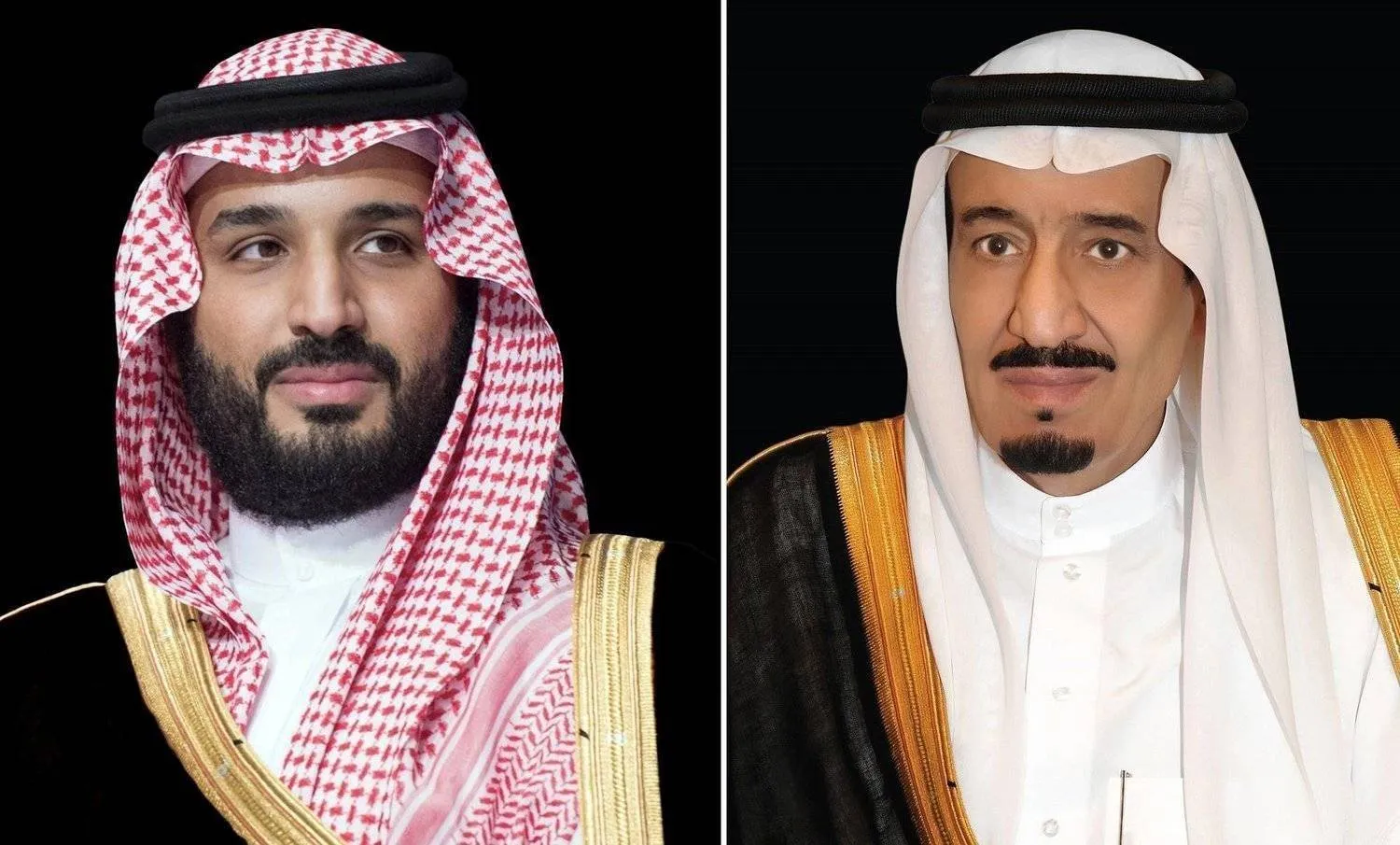
Observers told Asharq Al-Awsat that the Saudi Foreign Ministry statement early on Sunday on rejecting Israeli Prime Minister Benjamin Netanyahu’s comments on the displacement of Palestinians reflects the Kingdom’s "high regard for the centrality of the Palestinian cause" in the Arab and Islamic worlds.
Saudi Arabia stressed its categorical rejection of remarks by Netanyahu about displacing Palestinians from their land, the Foreign Ministry said in a statement on Sunday.
"The Kingdom stresses its categorical rejection to such statements that aim to divert attention from the continuous crimes committed by the Israeli occupation against the Palestinian brothers in Gaza, including the ethnic cleansing they are subjected to," said the statement.
"This occupying extremist mindset does not comprehend what the Palestinian territory means for the brotherly people of Palestine and its conscientious, historical and legal association with that land," it added.
"The Kingdom affirms that the Palestinian people have a right to their land, and they are not intruders or immigrants to it who can be expelled whenever the brutal Israeli occupation wishes," it stated.
"The Kingdom notes that the proponents of these extremist ideas are the ones who prevented Israel from accepting peace by refusing peaceful coexistence, rejecting the peace initiatives adopted by the Arab countries, and systematically practicing injustice towards the Palestinian people for more than 75 years, with disregard to the truth, justice, law and the values established in the United Nations Charter, including the human's right to live in dignity on his land," the statement further said.
It asserted that lasting peace will not be achieved except through reason and accepting the principle of peaceful coexistence through the two-state solution.
Arab and Islamic countries, the Organization of Islamic Conference (OIC) and Gulf Cooperation Council (GCC) slammed Netanyahu’s remarks
Writer Abdul Latif al-Melhem told Asharq Al-Awsat that the condemnations "underscore the centrality of the Palestinian cause."
He warned that the comments may steer the world’s attention away from the main issue at hand and that this the "ethnic cleansing looming on the horizon against the Palestinians, specifically the people of Gaza."
Saudi political analyst and American affairs specialist Ahmed Al Ibrahim said Netanyahu was using US media as a platform to promote his ideas, thinking he can use it to pressure Saudi Arabia.
However, the Kingdom’s direct and frank statement put a stop to his efforts, he added.
Widespread condemnation
A string of condemnations from across the Arab and Islamic worlds poured in on Sunday over Netanyahu’s remarks.
The OIC strongly condemned the "unacceptable and irresponsible" statements calling for "the establishment of a Palestinian state on Saudi lands," deeming them an incitement against the Kingdom and an infringement on its sovereignty, national security, and territorial integrity, in flagrant violation of international law and the United Nations Charter.
The OIC stressed that these racist remarks are part of Israel's ongoing denial of the historical, political, and legal rights of the authentic Palestinian people in their homeland. They are "desperate" Israeli attempt to circumvent the national rights of the Palestinian people, including their right to return, self-determination, and the establishment of their independent state on their national soil.
The OIC renewed its rejection of the plans and attempts to displace the Palestinian people from their land, condemning this action as "ethnic cleansing, a crime and a flagrant violation of international law."
It reiterated its call for the international community to intensify efforts to end the illegal Israeli colonial occupation and settlement in Palestinian territories and to ensure the sovereignty of the State of Palestine over the land occupied since 1967, with East Jerusalem as its capital.
Moreover, the OIC acknowledged the unwavering historical positions and tireless efforts of Saudi Arabia in providing all forms of support to the Palestinian people and their just cause, as well as its role in mobilizing international efforts to implement the two-state solution based on relevant UN resolutions and the Arab Peace Initiative.
Gulf rejection
GCC Secretary-General Jasem Albudaiwi strongly condemned Netanyahu’s statements on Sunday.
"These dangerous and irresponsible statements underscore the approach of the Israeli occupation forces in their disrespect for international laws, treaties, and the sovereignty of nations," he noted.
He reiterated the firm and steadfast stance of Saudi Arabia and the GCC countries in supporting the Palestinian people in obtaining their legitimate rights. He highlighted their significant and valuable efforts in regional and international forums to advocate for the Palestinian cause.
"These efforts focus on the need for a two-state solution, supporting Palestinian sovereignty over all Palestinian territories occupied since June 1967, establishing an independent Palestinian state with East Jerusalem as its capital, and ensuring the right of return for refugees, in accordance with the Arab Peace Initiative and international resolutions," Albudaiwi stated.
He renewed his call for the international community to take a serious and decisive stand against the aggressive Israeli statements, which threaten the security and stability of both the region and the world at large.
Kuwait
The Kuwaiti Foreign Minister strongly rejected the Israeli statements, saying Kuwait stands by Saudi Arabia in confronting any threat to its stability and sovereignty.
It rejected any attempt to displace the brotherly Palestinian people, praising efforts by Saudi Arabia and other countries for them to reclaim all of their legitimate rights, including the establishment of an independent state according to the 1967 borders.
UAE
The United Arab Emirates slammed Netanyahu’s "unacceptable" and "provocative" statements, saying they are flagrant violations of international law and the UN Charter.
It expressed its complete solidarity with Saudi Arabia, while stressing its categorical rejection of the violation of the rights of the Palestinian people and attempts to displace them.
It stressed the need for a halt in settlement activity that threatens regional stability and undermines opportunities for peace and coexistence.
The UAE called on the international community and UN Security Council to assume their responsibilities and put a stop to these illegal practices that violate international law.
Qatar
Qatar strongly condemned Netanyahu’s "incendiary remarks on establishing a Palestinian state in the Kingdom of Saudi Arabia", deeming them a "flagrant violation of international law and the UN Charter."
A Ministry of Foreign Affairs statement on Sunday stressed "Doha's full solidarity with Saudi Arabia and called on the international community to firmly combat such Israeli provocations."
Reiterating Qatar's "categorical rejection of calls to forcibly transfer the Palestinian people," the Ministry warned that such suggestions "would impede the chances of peace and reincite regional confrontations and stressed that a just and sustainable peace will remain unattainable without empowering Palestinians to exercise sovereignty over their territories."
It reiterated Qatar's firm position on the justice of the Palestinian cause and the Palestinian people's legitimate rights, including the establishment of their independent state on the 1967 borders, with East Jerusalem as its capital.
Bahrain
Bahrain strongly condemned the "irresponsible" Israeli statements, slamming them as flagrant violation of international law and the UN Charter.
A statement by the Ministry of Foreign Affairs emphasized Bahrain’s full solidarity with Saudi Arabia, and support for its security, stability, and sovereignty.
Just and comprehensive peace in the Middle East depends on safeguarding the rights of the Palestinian people, preventing their displacement, and establishing an independent Palestinian state with full sovereignty, paving the way for peaceful coexistence with Israel in accordance with international resolutions and the Arab Peace Initiative, it said.
Oman
Oman expressed its full solidarity with Saudi Arabia, firmly rejecting the Israeli prime minister's statements.
It reiterated its steadfast support for the establishment of an independent Palestinian state on all its sovereign territory, with East Jerusalem as its capital, based on the 1967 borders, said a Foreign Ministry statement.
The statement emphasized that this stance aligns with international resolutions and the principles of international law, ensuring lasting stability in the region.
Egypt
The Egyptian Foreign Ministry strongly condemned Israel’s "irresponsible" and "reckless" statements, saying they were a "flagrant violation of international law and the UN Charter."
"The Israeli statements are a violation of all diplomatic norms," it said. "They erase the inalienable right of the Palestinian people to the establishment of their independent state on all their territories, from the West Bank to the Gaza Strip and East Jerusalem, according to the 1967 border."
Egypt stressed that it stands in complete solidarity with Saudi Arabia against these statements, calling on the international community to condemn them in full.
Jordan
Jordan echoed the condemnation and call for the Palestinians to establish their own independent sovereign state.
It slammed the incitement against the Palestinians, which it deemed a violation of international law, UN resolutions and the sovereignty of nations.
Moreover, it said the Israeli statements "reflect an exclusionary and inciting ideology hostile to peace and contribute to further escalation in the region."
Jordan stands in "full solidarity with Saudi Arabia", calling on the international community to "condemn and denounce these irresponsible remarks."
The Palestinian Authority slammed Netanyahu's "racist and Islamophobic" remarks, saying they were blatant violations of international law and UN resolutions and an attack on the sovereignty, security and stability of Saudi Arabia and all Arab nations.
It stressed the state of Palestine’s constant solidarity with Saudi Arabia against Israeli incitement and attempts to bend Saudi Arabia’s firm and bold support to the Palestinian people’s national, just and legitimate rights.
Sudan also slammed Israel’s "reckless" statements, reiterating its support for the establishment of an independent Palestinian state and rejecting threats to displace the Palestinians from their land.
Arab League
Secretary-General of the Arab League Ahmed Aboul Gheit strongly condemned Netanyahu's statements on the transfer of Palestinians to Saudi Arabia, denouncing the rhetoric as unacceptable and completely detached from reality.
"The logic behind them is unacceptable and reflects a complete detachment from reality," Aboul Gheit said in a statement, adding that ideas as the one aired by Netanyahu during a recent media interview "are nothing more than mere fantasies or illusions".
He reiterated that the establishment of a Palestinian state will only take place on the land occupied in 1967, with East Jerusalem as its capital.
Hamas
The Palestinian movement Hamas slammed Netanyahu’s remarks, praising Saudi Arabia for rejecting them and for its firm stance in standing against plots aimed at displacing the Palestinian people.
It hailed the Kingdom for constantly supporting the just Palestinian cause and the people’s right to establish an independent state on their territories.
Pakistan
Pakistan strongly condemned in unequivocal terms Netanyahu’s remarks against Saudi Arabia.
Deputy Prime Minister and Foreign Minister Senator Mohammad Ishaq Dar stated that the Israeli remarks are "irresponsible, provocative and thoughtless, which is not only deeply offensive but also undermine and disregard the legitimate rights of the Palestinian people to self-determination and an independent State on their own historical and legitimate territory."
Dar said that Pakistan stands in solidarity with Saudi Arabia and commends its steadfast support for the Palestinian people and their just cause, read a Foreign Ministry statement. Any attempt to undermine Saudi Arabia’s unwavering position and misrepresentation of its commitment to the Palestinian cause are deeply regrettable.
Pakistan urged the international community to denounce Netanyahu’s provocative remark and hold Israel accountable for its continued attempts to undermine the peace process.