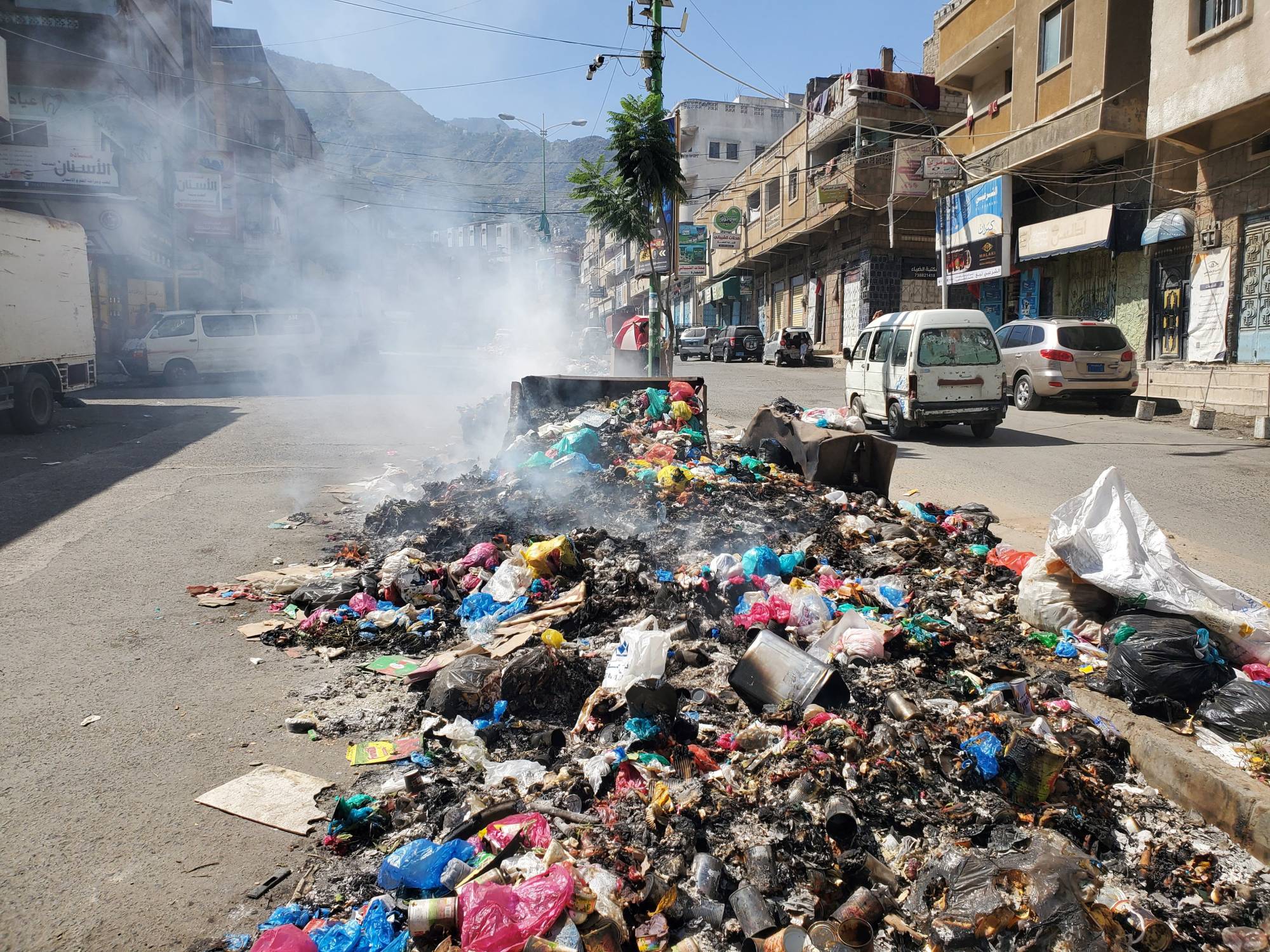
UN Expects Food Security to Worsen in Yemen's Houthi-Controlled Areas

Operational challenges limited WFP's ability to reach around 1.5 million people only in 32 districts by mid-March (UN)
TT

UN Expects Food Security to Worsen in Yemen's Houthi-Controlled Areas

Operational challenges limited WFP's ability to reach around 1.5 million people only in 32 districts by mid-March (UN)

The World Food Program (WFP) expects the food insecurity crisis in Houthi-controlled areas of northern Yemen to worsen in the coming months as a result of sanctions linked to Washington’s designation of the group as a foreign terrorist organization.

“Operational challenges limited WFP's ability to reach around 1.5 million people only in 32 districts by mid-March,” the agency said in its Yemen Food Security Update for March.

WFP said the inclusion of the Houthi militias on the US list of terrorist organizations impedes humanitarian work, limits the flow of essential commodities into Yemen, risks escalating the conflict and raises serious concerns about fuel availability and prices in Houthi-controlled areas.

According to the report, the prevalence of inadequate food consumption remains at alarming levels in Yemen, reaching 62% nationwide in February 2025.

This includes 66% in areas under the internationally-recognized government of Yemen (IRG) and 61% in areas under the control of the Houthis, with year-on-year increases of 15% and 20%, respectively.

Also, severe levels of food deprivation (poor food consumption) also rose from 25% in February 2024 to 36% in February 2025, with a higher proportion recorded in IRG areas (38%) compared to 35% in SBA areas.

All governorates in Yemen exceeded the “very high” threshold of 20% for poor food consumption, except for Sanaa City. The peaks were recorded in Al Bayda, Ad Dali', and Shabwah governorates, the UN agency said.

In IRG-controlled areas, WFP said it is currently assisting approximately three million people per each distribution cycle.

This includes 2.2 million with general food assistance (GFD), and 787,500 with cash-based transfers (CBT).

While food assistance has provided some relief to vulnerable households in the targeted districts of IRG areas, the persistent economic challenges continue to largely offset these gains, coupled with ongoing lean season effects, the WFP report noted.

It said that in Houthi areas, the second Targeted Emergency Food Assistance (TEFA) cycle of 2025 started in mid-February, targeting 2.8 million people in 70 districts.

However, due to operational challenges, WFP had only reached around 1.5 million people in 32 districts by mid-March.

Also, the report said the Yemeni riyal in IRG-controlled areas hit another record low against the US dollar in February 2025, depreciating by 26% year-on-year.

This currency depreciation has primarily driven local fuel and food prices to unprecedented levels in February 2025, further eroding households purchasing power, it noted.

WFP said that fuel imports in the first two months of 2025 saw a 14 drop via the Red Sea ports compared to the same time last year, while Aden and Mukalla ports experienced a 35% decline year-on-year.

It therefore warned that the fuel import ban through the Houthi-controlled ports, set to take effect in April 2025 due to the FTO designation, raises serious concerns about fuel availability and prices in areas falling under militia control.


Iraq Condemns Any ‘Aggression, Targeting’ of Gulf States, Jordan

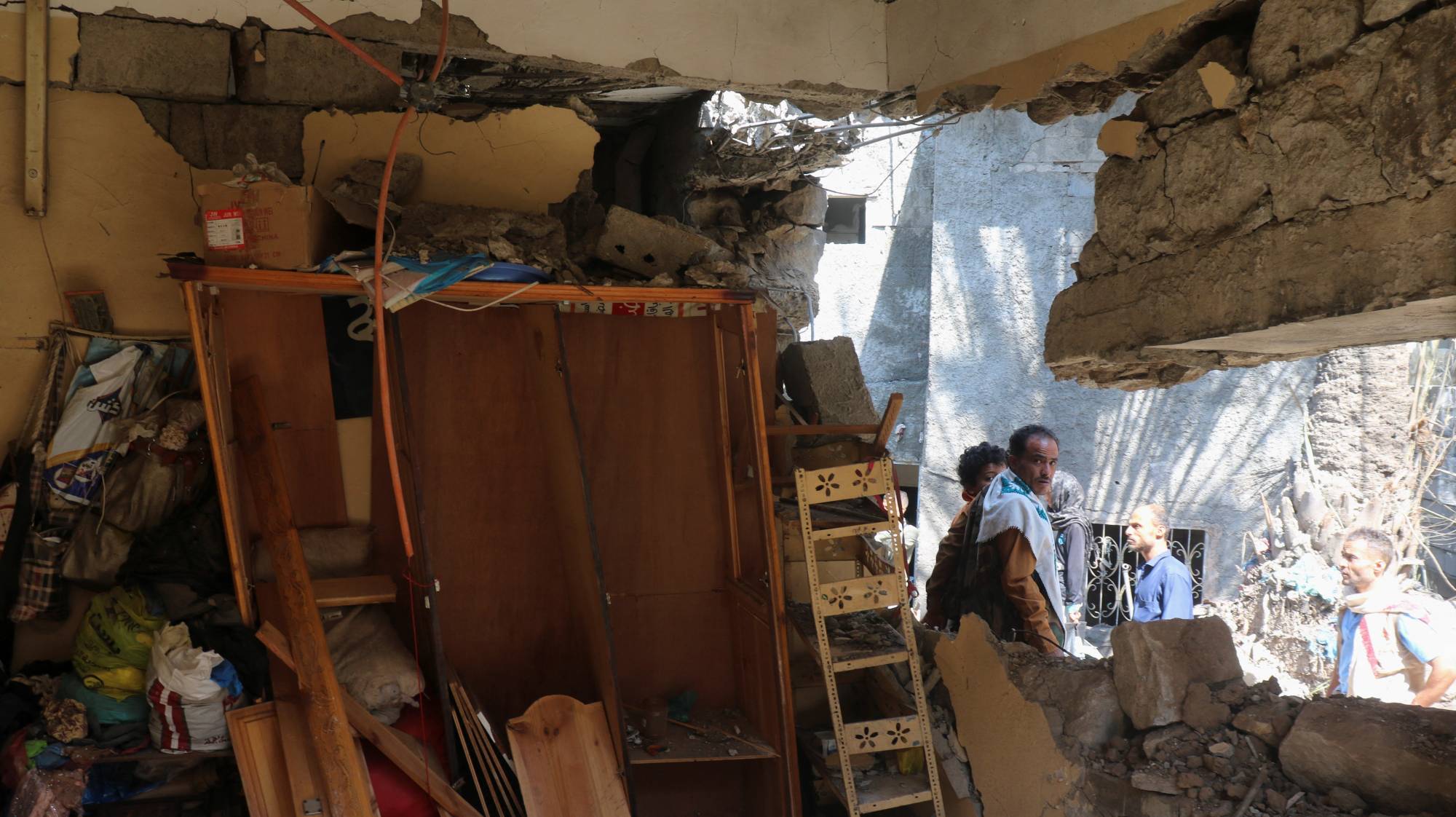
An Iraqi soldier stands guard at the site of a destroyed healthcare center in the Habbaniyah military base, which was targeted by in an airstrike killing seven security personnel and wounding 13 others, in Habbaniyah, west of Baghdad on March 26, 2026. (AFP)
TT

Iraq Condemns Any ‘Aggression, Targeting’ of Gulf States, Jordan

An Iraqi soldier stands guard at the site of a destroyed healthcare center in the Habbaniyah military base, which was targeted by in an airstrike killing seven security personnel and wounding 13 others, in Habbaniyah, west of Baghdad on March 26, 2026. (AFP)

Iraq on Thursday condemned the targeting of the Gulf states and Jordan, a day after these countries issued a joint statement demanding Baghdad act to prevent attacks from its territory.

The Iraqi foreign ministry "affirms the government's categorical condemnation of any aggression or targeting of the Gulf countries and the Kingdom of Jordan", it said in a statement, adding it was prepared to "work jointly to address them (attacks) responsibly and swiftly".

Iraq was committed to taking the "necessary measures to manage the security challenges", it added.

On Wednesday, Saudi Arabia, the United Arab Emirates, Qatar, Kuwait, Bahrain and Jordan issued a joint statement demanding that Baghdad act immediately to prevent attacks from its territory by Iran-backed armed groups.

Iraq has been drawn into the war sparked by US and Israeli strikes against Iran on February 28.

Pro-Tehran Iraqi groups have said they have targeted US interests in the country, as well as the wider region.

Kuwait and Jordan have both said they have been targeted by Iraqi armed factions.

A shadowy group called Saraya Awliyaa al-Dam (Guardians of the Blood Brigades), which claims to be part of the Tehran-backed Islamic Resistance in Iraq, has claimed attacks on the two countries.

On Wednesday, reacting to the joint statement, the group said attacks "by the Islamic Resistance strictly target the American presence" in the Gulf nations and Jordan.


Rubio Holds Call with Iraqi Kurdish Leader, State Department Says

 US Secretary of State Marco Rubio arrives at Paris-Le Bourget Airport, in Le Bourget, France, early Friday, March 27, 2026, to take part in the G7 foreign ministers' meeting. (AP)
US Secretary of State Marco Rubio arrives at Paris-Le Bourget Airport, in Le Bourget, France, early Friday, March 27, 2026, to take part in the G7 foreign ministers' meeting. (AP)
TT

Rubio Holds Call with Iraqi Kurdish Leader, State Department Says

 US Secretary of State Marco Rubio arrives at Paris-Le Bourget Airport, in Le Bourget, France, early Friday, March 27, 2026, to take part in the G7 foreign ministers' meeting. (AP)
US Secretary of State Marco Rubio arrives at Paris-Le Bourget Airport, in Le Bourget, France, early Friday, March 27, 2026, to take part in the G7 foreign ministers' meeting. (AP)

US Secretary of State Marco Rubio spoke with Kurdistan Regional Government Prime Minister Masrour Barzani on Thursday, the State Department said, adding he expressed "gratitude" to KRG for enabling oil from Iraq, including from Iraq's Kurdistan, to reach global markets.

"The secretary also expressed his gratitude to the Kurdistan Regional Government for enabling oil from Iraq, ‌including from the Iraq ‌Kurdistan Region, to reach global ‌markets," ⁠the State Department said ⁠in a statement.

The Iran war has raised oil prices and shaken global markets.

The State Department said Rubio "offered his condolences to the families of the Peshmerga killed in an Iranian missile attack on March 24 and wished a ⁠speedy recovery to those injured."

At least six ‌Kurdish Peshmerga fighters ‌were killed and 30 wounded in a rocket attack ‌on their base north of Erbil in Iraqi ‌Kurdistan, a Peshmerga statement said on Tuesday.

The Peshmerga statement said Iran carried out a "treacherous attack," adding that six Iranian ballistic missiles struck a Peshmerga ‌military headquarters north of Erbil early on Tuesday.

The Iran war began on ⁠February 28 ⁠when the US and Israel attacked Iran. Tehran subsequently responded by launching its own attacks on Israel and Gulf states with US bases. Joint US-Israeli strikes in Iran and Israeli attacks in Lebanon have killed thousands.

US President Donald Trump has offered shifting goals and timelines for the war, ranging from overthrowing Iran's government to destroying its military and missile capabilities.


Blasts Heard as Lebanese State Media Says Israel Strikes Beirut Suburbs

The rubble of a damaged building after an Israeli strike in the Chiyah area, a southern suburb of Beirut, Lebanon, 25 March 2026. (EPA)
TT

Blasts Heard as Lebanese State Media Says Israel Strikes Beirut Suburbs

The rubble of a damaged building after an Israeli strike in the Chiyah area, a southern suburb of Beirut, Lebanon, 25 March 2026. (EPA)

Lebanese media reported an Israeli strike hit Beirut's southern suburbs early Friday, as AFP correspondents heard several explosions from the Hezbollah stronghold that Israel has repeatedly struck since war erupted this month.

AFPTV footage showed smoke billowing from the area after the raid.

Lebanon's official National News Agency reported that "enemy aircraft" carried out a raid on Tahouitet al-Ghadir in the southern suburbs at dawn.

Israel has previously issued sweeping evacuation warnings for the area, but provided no specific warning in advance of Friday's strike.

The usually densely populated area has largely emptied of residents since the hostilities erupted, and it was unclear whether there were any casualties.

Hours later, Israeli military spokesman Avichay Adraee called on residents of Sejoud village in southern Lebanon to evacuate to the north of Zahrani river, warning of an imminent attack against Hezbollah.

Lebanon was drawn into the Middle East war on March 2 when Tehran-backed Hezbollah began firing rockets into Israel to avenge the killing of Iranian supreme leader Ali Khamenei.

Israel has since been bombing Lebanon, mainly in areas where Hezbollah has long held sway, and has sent in ground troops in a push to establish a buffer zone in south Lebanon.

Hezbollah said its fighters kept up its attacks on Israeli troops in south Lebanon early Friday.

On Thursday, official Lebanese media reported deadly Israeli raids in the country's south, and Hezbollah claimed more than 90 attacks on Israeli targets inside Lebanon and across the border.

Also Thursday, Israel's military said two soldiers were killed in south Lebanon, while Israeli emergency services said a rocket fired from Lebanon killed a man in northern Israel's Nahariya area.

Israeli strikes since March 2 have killed at least 1,116 people including 121 children, according to Lebanese authorities, while more than one million people have been displaced.