


Gaza’s Bakeries Could Shut Down within a Week under Israel’s Blockade of All Food and Supplies

 Palestinians queue outside a bakery during Eid al-Fitr, which marks the end of the holy fasting month of Ramadan, in Gaza City on March 30, 2025. (AFP)
Palestinians queue outside a bakery during Eid al-Fitr, which marks the end of the holy fasting month of Ramadan, in Gaza City on March 30, 2025. (AFP)
TT

Gaza’s Bakeries Could Shut Down within a Week under Israel’s Blockade of All Food and Supplies

 Palestinians queue outside a bakery during Eid al-Fitr, which marks the end of the holy fasting month of Ramadan, in Gaza City on March 30, 2025. (AFP)
Palestinians queue outside a bakery during Eid al-Fitr, which marks the end of the holy fasting month of Ramadan, in Gaza City on March 30, 2025. (AFP)

Gaza’s bakeries will run out of flour for bread within a week, the UN says. Agencies have cut food distributions to families in half. Markets are empty of most vegetables. Many aid workers cannot move around because of Israeli bombardment.

For four weeks, Israel has shut off all sources of food, fuel, medicine and other supplies for the Gaza Strip’s population of more than 2 million Palestinians. It’s the longest blockade yet of Israel’s 17-month-old campaign against Hamas, with no sign of it ending. Many are going hungry during the normally festive Eid al-Fitr, a major Muslim holiday.

Aid workers are stretching out the supplies they have but warn of a catastrophic surge in severe hunger and malnutrition. Eventually, food will run out completely if the flow of aid is not restored, because the war has destroyed almost all local food production in Gaza.

"We depend entirely on this aid box," said Shorouq Shamlakh, a mother of three collecting her family’s monthly box of food from a UN distribution center in Jabaliya in northern Gaza. She and her children reduce their meals to make it last a month, she said. "If this closes, who else will provide us with food?"

The World Food Program said Thursday that its flour for bakeries is only enough to keep producing bread for 800,000 people a day until Tuesday and that its overall food supplies will last a maximum of two weeks. As a "last resort" once all other food is exhausted, it has emergency stocks of fortified nutritional biscuits for 415,000 people.

Fuel and medicine will last weeks longer before hitting zero. Hospitals are rationing antibiotics and painkillers. Aid groups are shifting limited fuel supplies between multiple needs, all indispensable — trucks to move aid, bakeries to make bread, wells and desalination plants to produce water, hospitals to keep machines running.

"We have to make impossible choices. Everything is needed," said Clémence Lagouardat, the Gaza response leader for Oxfam International, speaking from Deir al-Balah in central Gaza at a briefing Wednesday. "It’s extremely hard to prioritize."

Compounding the problems, Israel resumed its military campaign on March 18 with bombardment that has killed hundreds of Palestinians, mostly women and children, according to health officials. It has hit humanitarian facilities, the UN says. New evacuation orders have forced more than 140,000 Palestinians to move yet again.

But Israel has not resumed the system for aid groups to notify the military of their movements to ensure they were not hit by bombardment, multiple aid workers said. As a result, various groups have stopped water deliveries, nutrition for malnourished children and other programs because it's not safe for teams to move.

COGAT, the Israeli military body in charge of coordinating aid, said the system was halted during the ceasefire. Now it is implemented in some areas "in accordance with policy and operational assessments ... based on the situation on the ground," COGAT said, without elaborating.

Rising prices leave food unaffordable

During the 42 days of ceasefire that began in mid-January, aid groups rushed in significant amounts of aid. Food also streamed into commercial markets.

But nothing has entered Gaza since Israel cut off that flow on March 2. Israel says the siege and renewed military campaign aim to force Hamas to accept changes in their agreed-on ceasefire deal and release more hostages.

Fresh produce is now rare in Gaza’s markets. Meat, chicken, potatoes, yogurt, eggs and fruits are completely gone, Palestinians say.

Prices for everything else have skyrocketed out of reach for many Palestinians. A kilo (2 pounds) of onions can cost the equivalent of $14, a kilo of tomatoes goes for $6, if they can be found. Cooking gas prices have spiraled as much as 30-fold, so families are back to scrounging for wood to make fires.

"It’s totally insane," said Abeer al-Aker, a teacher and mother of three in Gaza City. "No food, no services. ... I believe that the famine has started again. "

Families depend even more on aid

At the distribution center in Jabaliya, Rema Megat sorted through the food ration box for her family of 10: rice, lentils, a few cans of sardines, a half kilo of sugar, two packets of powdered milk.

"It’s not enough to last a month," she said. "This kilo of rice will be used up in one go."

The UN has cut its distribution of food rations in half to redirect more supplies to bakeries and free kitchens producing prepared meals, said Olga Cherevko, spokesperson for the UN humanitarian agency, known as OCHA.

The number of prepared meals has grown 25% to 940,000 meals a day, she said, and bakeries are churning out more bread. But that burns through supplies faster.

Once flour runs out soon, "there will be no bread production happening in a large part of Gaza," said Gavin Kelleher, with the Norwegian Refugee Council.

UNRWA, the main UN agency for Palestinians, only has a few thousand food parcels left and enough flour for a few days, said Sam Rose, the agency's acting director in Gaza.

Gaza Soup Kitchen, one of the main public kitchens, can’t get any meat or much produce, so they serve rice with canned vegetables, co-founder Hani Almadhoun said.

"There are a lot more people showing up, and they’re more desperate. So people are fighting for food," he said.

Israel shows no sign of lifting the siege

The United States pressured Israel to let aid into Gaza at the beginning of the war in October 2023, after Israel imposed a blockade of about two weeks. This time, it has supported Israel’s policy.

Rights groups have called it a "starvation policy" that could be a war crime.

Israeli Foreign Minister Gideon Saar told a news conference Monday that "Israel is acting in accordance with international law."

He accused Hamas of stealing aid and said Israel is not required to let in supplies if it will be diverted to combatants.

He gave no indication of whether the siege could be lifted but said Gaza had enough supplies, pointing to the aid that flowed in during the ceasefire.

Hunger and hopelessness are growing

Because its teams can’t coordinate movements with the military, Save the Children suspended programs providing nutrition to malnourished children, said Rachael Cummings, the group’s humanitarian response leader in Gaza.

"We are expecting an increase in the rate of malnutrition," she said. "Not only children — adolescent girls, pregnant women."

During the ceasefire, Save the Children was able to bring some 4,000 malnourished infants and children back to normal weight, said Alexandra Saif, the group’s head of humanitarian policy.

About 300 malnourished patients a day were coming into its clinic in Deir al-Balah, she said. The numbers have plunged — to zero on some days — because patients are too afraid of bombardment, she said.

The multiple crises are intertwined. Malnutrition leaves kids vulnerable to pneumonia, diarrhea and other diseases. Lack of clean water and crowded conditions only spread more illnesses. Hospitals overwhelmed with the wounded can’t use their limited supplies on other patients.

Aid workers say not only Palestinians, but their own staff have begun to fall into despair.

"The world has lost its compass," UNRWA’s Rose said. "There’s just a feeling here that anything could happen, and it still wouldn’t be enough for the world to say, this is enough."



Iraq's Political Future in Limbo as Factions Vie for Power

FILED - 02 November 2025, Iraq, Najaf: Iraqi Prime Minister Mohammed Shia' al-Sudani delivers a speech during a campaign rally of his Reconstruction and Development Coalition in Najaf, ahead of the Iraqi parliamentary elections, scheduled to be held on 11 November 2025. Photo: Ameer Al-Mohammedawi/dpa
TT

Iraq's Political Future in Limbo as Factions Vie for Power

FILED - 02 November 2025, Iraq, Najaf: Iraqi Prime Minister Mohammed Shia' al-Sudani delivers a speech during a campaign rally of his Reconstruction and Development Coalition in Najaf, ahead of the Iraqi parliamentary elections, scheduled to be held on 11 November 2025. Photo: Ameer Al-Mohammedawi/dpa

Political factions in Iraq have been maneuvering since the parliamentary election more than a month ago to form alliances that will shape the next government.

The November election didn't produce a bloc with a decisive majority, opening the door to a prolonged period of negotiations, said The Associated Press.

The government that eventually emerges will be inheriting a security situation that has stabilized in recent years, but it will also face a fragmented parliament, growing political influence by armed factions, a fragile economy, and often conflicting international and regional pressures, including the future of Iran-backed armed groups.

Uncertain prospects

Prime Minister Mohammed Shia al-Sudani's party took the largest number of seats in the election. Al-Sudani positioned himself in his first term as a pragmatist focused on improving public services and managed to keep Iraq on the sidelines of regional conflicts.

While his party is nominally part of the Coordination Framework, a coalition of Iran-backed Shiite parties that became the largest parliamentary bloc, observers say it’s unlikely that the Coordination Framework will support al-Sudani’s reelection bid.

“The choice for prime minister has to be someone the Framework believes they can control and doesn't have his own political ambitions,” said Sajad Jiyad, an Iraqi political analyst and fellow at The Century Foundation think tank.

Al-Sudani came to power in 2022 with the backing of the Framework, but Jiyad said that he believes now the coalition “will not give al-Sudani a second term as he has become a powerful competitor.”

The only Iraqi prime minister to serve a second term since 2003 was Nouri al-Maliki, first elected in 2006. His bid for a third term failed after being criticized for monopolizing power and alienating Sunnis and Kurds.

Jiyad said that the Coordination Framework drew a lesson from Maliki “that an ambitious prime minister will seek to consolidate power at the expense of others.”

He said that the figure selected as Iraq's prime minister must generally be seen as acceptable to Iran and the United States — two countries with huge influence over Iraq — and to Iraq’s top Shiite cleric, Grand Ali al-Sistani.

Al-Sudani in a bind

In the election, Shiite alliances and lists — dominated by the Coordination Framework parties — secured 187 seats, Sunni groups 77 seats, Kurdish groups 56 seats, in addition to nine seats reserved for members of minority groups.

The Reconstruction and Development Coalition, led by al-Sudani, dominated in Baghdad, and in several other provinces, winning 46 seats.

Al-Sudani's results, while strong, don't allow him to form a government without the support of a coalition, forcing him to align the Coordination Framework to preserve his political prospects.

Some saw this dynamic at play earlier this month when al-Sudani's government retracted a terror designation that Iraq had imposed on the Lebanese Hezbollah militant group and Yemen’s Houthis— Iran-aligned groups that are allied with Iraqi armed factions — just weeks after imposing the measure, saying it was a mistake.

The Coalition Framework saw its hand strengthened by the absence from the election of the powerful Sadrist movement led by Shiite cleric Muqtada Sadr, which has been boycotting the political system since being unable to form a government after winning the most seats in the 2021 election.

Hamed Al-Sayed, a political activist and official with the National Line Movement, an independent party that boycotted the election, said that Sadr’s absence had a “central impact.”

“It reduced participation in areas that were traditionally within his sphere of influence, such as Baghdad and the southern governorates, leaving an electoral vacuum that was exploited by rival militia groups,” he said, referring to several parties within the Coordination Framework that also have armed wings.

Groups with affiliated armed wings won more than 100 parliamentary seats, the largest showing since 2003.

Other political actors

Sunni forces, meanwhile, sought to reorganize under a new coalition called the National Political Council, aiming to regain influence lost since the 2018 and 2021 elections.

The Kurdish political scene remained dominated by the traditional split between the Kurdistan Democratic Party and Patriotic Union of Kurdistan parties, with ongoing negotiations between the two over the presidency.

By convention, Iraq’s president is always a Kurd, while the more powerful prime minister is Shiite and the parliamentary speaker Sunni.

Parliament is required to elect a speaker within 15 days of the Federal Supreme Court’s ratification of the election result, which occurred on Dec. 14.

The parliament should elect a president within 30 days of its first session, and the prime minister should be appointed within 15 days of the president’s election, with 30 days allotted to form the new government.

Washington steps in

The incoming government will face major economic and political challenges.

They include a high level of public debt — more than 90 trillion Iraqi dinars ($69 billion) — and a state budget that remains reliant on oil for about 90% of revenues, despite attempts to diversify, as well as entrenched corruption.

But perhaps the most delicate question will be the future of the Popular Mobilization Forces, a coalition of militias that formed to fight the ISIS group as it rampaged across Iraq more than a decade ago.

It was formally placed under the control of the Iraqi military in 2016 but in practice still operates with significant autonomy. After the Hamas-led attack in southern Israel on Oct. 7, 2023 sparked the devastating war in Gaza, some armed groups within the PMF launched attacks on US bases in the region in retaliation for Washington’s backing of Israel.

The US has been pushing for Iraq to disarm Iran-backed groups — a difficult proposition, given the political power that many of them hold and Iran’s likely opposition to such a step.

Two senior Iraqi political officials, who spoke on condition of anonymity because they weren't authorized to comment publicly, said that the United States had warned against selecting any candidate for prime minister who controls an armed faction and also cautioned against letting figures associated with militias control key ministries or hold significant security posts.

“The biggest issue will be how to deal with the pro-Iran parties with armed wings, particularly those... which have been designated by the United States as terrorist entities,” Jiyad said.


What Egypt’s Red Lines Mean for Sudan’s War

Egyptian President Abdel Fattah al-Sisi holds talks with Sudan’s army chief Abdel Fattah al-Burhan in Cairo on Thursday (Egyptian Presidency)
TT

What Egypt’s Red Lines Mean for Sudan’s War

Egyptian President Abdel Fattah al-Sisi holds talks with Sudan’s army chief Abdel Fattah al-Burhan in Cairo on Thursday (Egyptian Presidency)

In unusually blunt language, and following a visit by Sudan’s Sovereignty Council Chairman and army chief Abdel Fattah al-Burhan to Cairo, the Egyptian presidency issued a statement on the war in Sudan outlining three points it described as red lines.

It said Egypt would not allow any of them to be crossed or compromised, as they directly affect Egypt’s national security, which it said is inseparable from Sudan’s national security.

The reference to activating the joint defense agreement between the two countries was seen as a signal that Egypt could bring its military, political, and diplomatic weight to bear in support of the Sudanese army.

Joint defense agreement

In March 2021, Egypt signed a military cooperation agreement with Sudan that covers training, border security, and the confrontation of shared threats. That agreement followed a joint defense pact signed in 1976 during the presidencies of Sudan’s Gaafar Nimeiry and Egypt’s Anwar Sadat.

Articles One and Two of the pact stipulate that any attack on one party is considered an attack on the other, and require immediate consultation, including the use of armed force to repel aggression. The agreement also commits both sides to coordinating their defense and military policies on matters related to their national security.

After the fall of Nimeiry’s regime in the 1985 popular uprising, then Prime Minister Sadiq al-Mahdi informed the Egyptian leadership of his desire to cancel the joint defense agreement. Instead, the two sides signed what became known as the Brotherhood Charter in 1987. While it did not explicitly cancel the 1976 agreement, its mechanisms have not been discussed or activated since then.

Regional and international messages

Sudanese journalist Osman Mirghani, editor-in-chief of Al-Tayar newspaper, said the Egyptian statements amounted to regional and international messages linked to recent developments and what he described as serious security threats facing Sudan.

He pointed to the expansion of the Rapid Support Forces in the Darfur and Kordofan regions in a way that threatens shared Sudanese and Egyptian national security, warning of risks of geographic fragmentation that could endanger Sudan’s unity.

Speaking to Asharq Al-Awsat, Mirghani said Egypt was, for the first time, using direct and tough language and signaling the possibility of intervention under international law in Sudan’s conflict. He said this reflected the level of Egyptian concern over the situation in Sudan.

Mirghani added that the reference to red lines was a message directed at all parties, noting that there are many influential players in Sudan.

The red lines

The first red line cited by Cairo was the preservation of Sudan’s unity and territorial integrity, preventing any tampering with its resources or those of the Sudanese people, and rejecting the secession of any part of the country. Egypt reiterated its categorical refusal to the establishment or recognition of any parallel entities, saying such moves would undermine Sudan’s unity and territorial integrity.

The statement also stressed the need to preserve Sudanese state institutions and prevent any harm to them. Egypt affirmed its full right to take all necessary measures permitted under international law, including activating the joint defense agreement between the two brotherly countries, to ensure these red lines are not crossed.

Timing of the visit

Former Sudanese Foreign Minister Ali Youssef noted the timing of Burhan’s visit to Cairo, stating that it occurred after his trip to Saudi Arabia earlier this week and following a visit by Saudi Crown Prince Mohammed bin Salman to the United States.

Youssef said the trip was part of efforts to end the war in Sudan through the Quartet mechanism, which includes Saudi Arabia, the United Arab Emirates, Egypt, and the United States.

Speaking to Asharq Al-Awsat, Youssef said Burhan briefed Egyptian President Abdel Fattah al-Sisi on the outcomes of his Saudi visit and the latest developments in Sudan.

He stated that the visit did not follow the usual ceremonial protocol and was a result of developments in the war, noting that Egypt’s security is linked to Sudan’s security. He added that Egypt is part of the Quartet, which seeks to end a war that is approaching its third year.

Military implications

Sudanese military expert Al-Muatasim Abdel Qader said activating the joint agreement would imply Egyptian intervention in various forms, including supplying weapons and ammunition or direct military involvement.

He said the provisions of the agreement obligate each army to defend the other, adding that the red lines outlined by the Egyptian presidency represented a significant step and carried major implications for the Sudanese state.

In remarks to Asharq Al-Awsat, Abdel Qader described mutual protection between the two countries as a historically rooted matter, dating back to wars Egypt fought in the last century in which Sudanese armed forces took part.

Rapid Support Forces response

Basha Tabiq, an adviser to the commander of the Rapid Support Forces, said in posts on X that Egypt’s position amounted to blatant interference, bias toward one party, and a colonial mindset that views Sudan as a backyard.

Another source aligned with the RSF said accusations against Egypt of backing the Sudanese army have persisted since the early days of the war. The source pointed to the presence of Egyptian forces at Merowe air base in northern Sudan at the start of the conflict, when several Egyptian soldiers and officers were captured before later being handed over to Cairo.

The source also cited accusations by RSF leader Mohamed Hamdan Dagalo, known as Hemedti, who said in October 2024 that the Egyptian army had carried out air strikes against his forces and supplied the Sudanese army with drones and training.

He said Hemedti renewed those accusations last June, alleging that Cairo supported the Sudanese army with aircraft flown by Egyptian pilots that bombed areas under his forces’ control, and supplied weapons and aviation fuel. Hemedti described this as a blatant aggression against the Sudanese people.

The source, who requested anonymity, said Egypt has been intervening in the war from the outset and that activating the joint defense agreement would merely formalize an existing reality.

No time to spare

Sudanese ambassador Al-Sadiq al-Maqli said Egypt is working with Saudi Arabia and the international Quartet, in coordination with the United States, to give fresh momentum to efforts on Sudan.

He said Washington is currently using soft power rather than force, which he described as an option deferred until shuttle diplomacy by US President’s senior adviser Massad Boulos is exhausted.

Speaking to Asharq Al-Awsat, Maqli said the United States fully understands the influence of Saudi Arabia and Egypt and their ability to persuade and soften the stance of Sudan’s government, which has rejected the latest US initiative.

He said Burhan currently has no time to spare, as what is unfolding in Sudan represents the world’s worst humanitarian disaster, according to the international community.

Maqli noted that Egypt, represented by Foreign Minister Badr Abdelatty, has been almost fully dedicated to making the Quartet mechanism succeed, given that the continuation of the current situation in Sudan poses a threat to Egypt’s national security.

He described Burhan’s visits to Riyadh and Cairo as short but necessary steps toward accepting the Quartet initiative, saying the Saudi visit marked a qualitative shift in the Sudanese government’s official position.

He added that Sudan’s foreign ministry later expressed Port Sudan’s readiness to cooperate with President Donald Trump, his secretary of state, and Boulos in efforts to achieve peace in Sudan, predicting imminent developments that could lead to a major breakthrough in the crisis.


Iraq Negotiates New Coalition Under US Pressure

Election workers count ballots as they close a polling station, during the parliamentary elections in Baghdad, Iraq, Nov. 11, 2025. (AP)
TT

Iraq Negotiates New Coalition Under US Pressure

Election workers count ballots as they close a polling station, during the parliamentary elections in Baghdad, Iraq, Nov. 11, 2025. (AP)

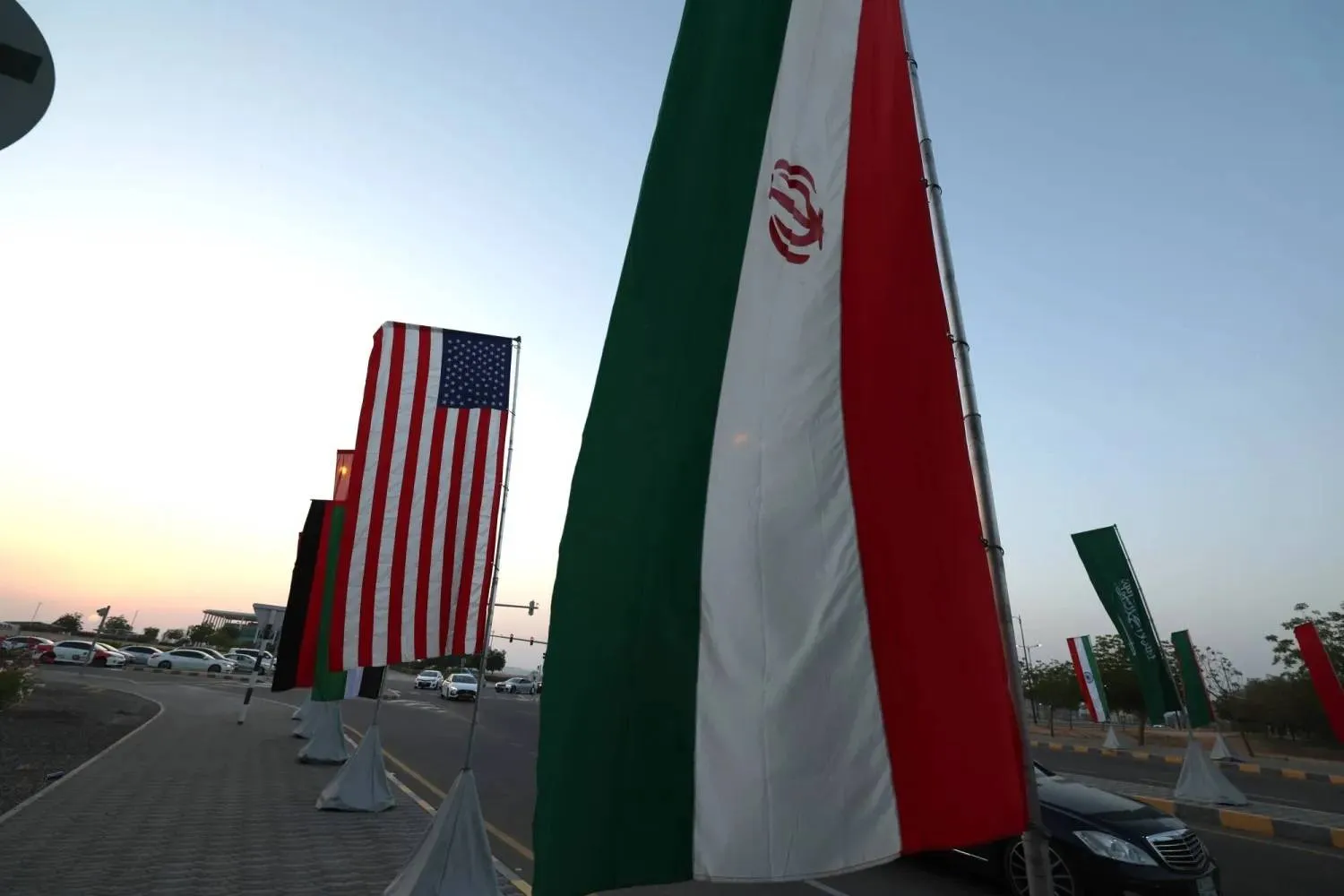
More than a month after Iraq's parliamentary elections, the country's top leaders remain locked in talks to form a government while facing pressure from Washington to exclude Tehran-backed armed groups.

Amid seismic changes in the Middle East, where new alliances are forming and old powers waning, Iraqi leaders face a daunting task: navigating relations with US-blacklisted pro-Iranian factions.

The US has held significant sway over Iraqi politics since leading the 2003 invasion that ousted long-time ruler Saddam Hussein.

But another specter also haunts Iraq's halls of power: Washington's arch-foe, Iran.

Iraq has long been caught between the two, with successive governments negotiating a delicate balance.

Now, after November's election, Washington has demanded the eventual government must exclude Iran-backed armed groups and instead move to dismantle them, Iraqi officials and diplomats told AFP.

A State Department spokesperson, speaking on condition of anonymity, said: "Iraqi leaders well know what is and is not compatible with a strong US-Iraq partnership".

Washington, the spokesperson said, "will continue to speak plainly to the urgency of dismantling Iran-backed militias".

But some of these groups have increased their presence in the new chamber and have joined the Coordination Framework, an alliance of Shiite parties with varying ties to Iran and which holds the majority.

For weeks, the Coordination Framework has been embroiled in talks to nominate the next prime minister.

"The US has put conditions that armed factions should not be part of the new government," a senior Iraqi official said. The factions must disarm and "sever ties with Iran's Revolutionary Guard," he added.

In recent tweets, the US special envoy to Iraq, Mark Savaya said that Iraqi leaders are at a "crossroads".

Their decision "will send a clear and unmistakable signal to the United States... that Iraq is ready to claim its rightful place as a stable and respected nation in the new Middle East.

"The alternative is equally clear: economic deterioration, political confusion, and international isolation," Savaya said.

The US has blacklisted as "terrorist organizations" several armed groups from within the pro-Iran Popular Mobilization Forces, a former paramilitary alliance now integrated into the armed forces.

They are also part of the Iran-backed so-called "Axis of Resistance" and have called for the withdrawal of US troops -- deployed in Iraq as part of an anti-ISIS coalition -- and launched attacks against them.

Most of these groups hold seats in parliament and have seen their political and financial clout increase.

The Asaib Ahl al-Haq faction, led by Qais al-Khazali, who is a key figure in the Coordination Framework, won 27 seats in the latest election, making it harder to exclude it from the government.

A potential compromise is to deny it a key portfolio, as in the current government.

"The US has turned a blind eye before, so they might after all engage with the government as a whole but not with ministries held by armed groups," a former Iraqi official said.

Other blacklisted groups are:

+ Kataeb Hezbollah, one of the most powerful armed groups, supports a parliamentary bloc (six seats).

+ Kataeb Sayyid al-Shuhada, Kataeb Imam Ali and Harakat Ansar Allah al-Awfiya.

+ The al-Nujaba movement is the only group that has steered clear of elections.

Iraq has its economic growth to worry about.

After decades of turmoil, it has only begun to regain a sense of normalcy in recent years.

Washington has already imposed sanctions on several Iraqi entities and banks, accusing them of helping Tehran evade sanctions.

But Iraqi leaders hope for greater foreign investments and support partnerships with US companies.

The most striking endorsement came from Khazali, an opponent of the US military presence who now argues that it would be in Baghdad's interest for major US companies to invest.

Since the Israel's war with Hamas in Gaza began in October 2023, Iraq has remained relatively unscathed by the turmoil engulfing the Middle East.

Iraqi armed groups did launch attacks on US troops and largely unsuccessful ones on Israel. Washington responded with heavy strikes, and the attacks have long since halted.

Iraq remained the only close regional ally of Iran to stay out of Israel's crosshairs.

So far, the US has acted as a buffer, helping to prevent an Israeli attack, but Iraqis have been warned of strikes against the armed groups, multiple sources said.

But as the presence of American forces dwindles, fears are growing.