

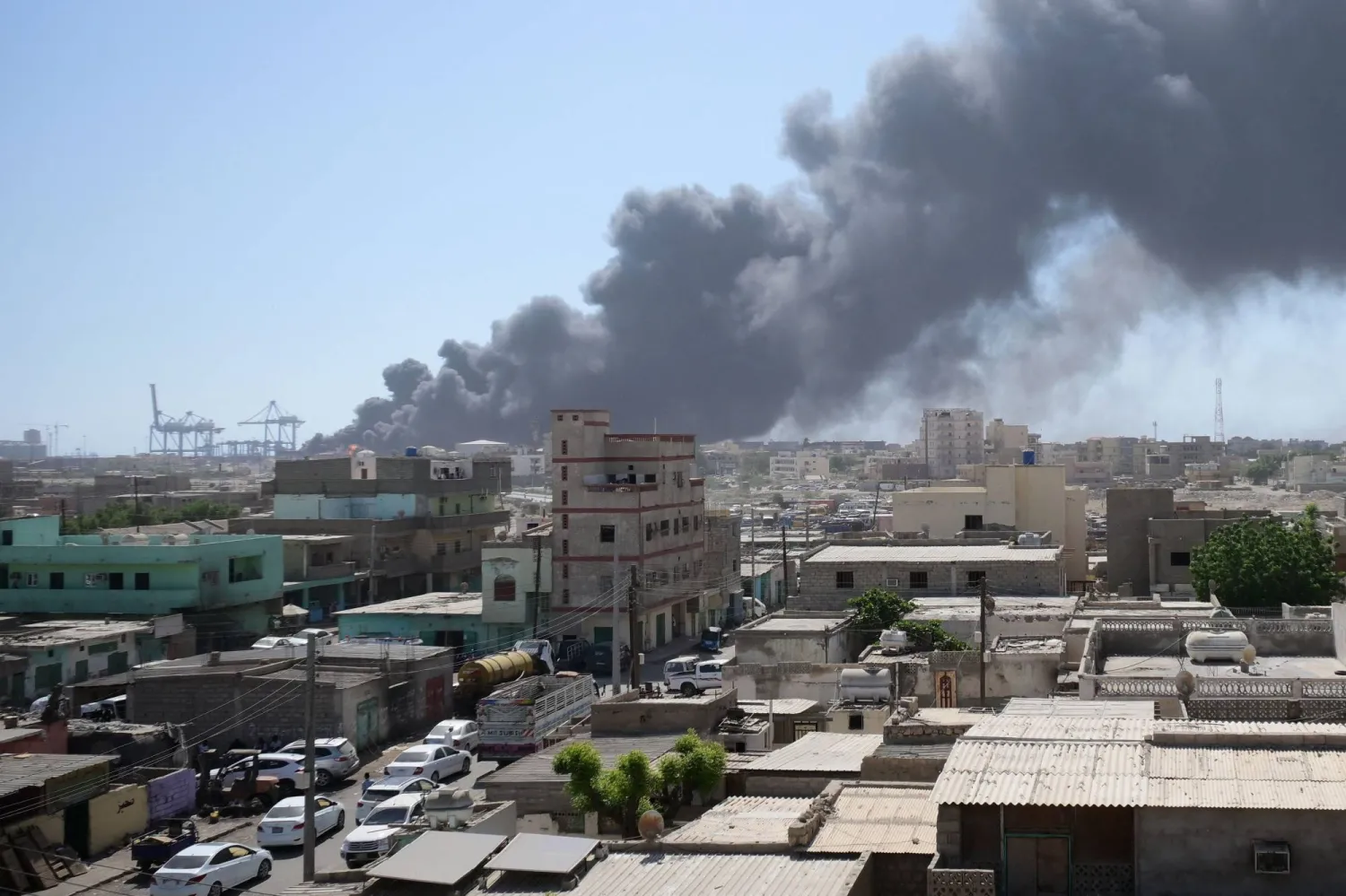

Sumoud Alliance: Global Divisions Hampering Sudan Peace Efforts

 The war between the army and the Rapid Support Forces has destroyed much of Sudan’s infrastructure (AFP). 
 The war between the army and the Rapid Support Forces has destroyed much of Sudan’s infrastructure (AFP). 
TT

Sumoud Alliance: Global Divisions Hampering Sudan Peace Efforts

 The war between the army and the Rapid Support Forces has destroyed much of Sudan’s infrastructure (AFP). 
 The war between the army and the Rapid Support Forces has destroyed much of Sudan’s infrastructure (AFP). 

The Sumoud Democratic Civil Alliance, led by former Prime Minister Abdalla Hamdok, has unveiled a new political vision to end the war in Sudan and address the escalating humanitarian crisis. This initiative considers recent political and military developments within Sudan, the diverging regional stances, and shifting international dynamics.

According to the alliance, international and regional divisions over the Sudan conflict have obstructed all efforts to reach a ceasefire and prevented the unification of Sudanese civil forces into a bloc capable of pressuring internal and external actors toward peace. Sumoud emphasized the need for a unified political strategy to bring the conflict to an end.

To advance this goal, alliance leaders plan a regional and international diplomatic tour to build support for reviving negotiations between the warring parties. This move aligns with widespread international consensus that a negotiated, peaceful solution is the only viable path to end the suffering of the Sudanese people swiftly and sustainably.

While acknowledging external peace efforts, Sumoud underscored that lasting peace must stem from a shared national will, both civilian and military, to agree on principles that lead to a ceasefire and a broader political process aimed at unity and lasting stability.

In meetings held in Kampala, Uganda on May 22-24, the alliance condemned attacks by the Rapid Support Forces (RSF) on infrastructure and denounced human rights violations committed by both the RSF and the Sudanese army, including alleged war crimes. It reiterated calls for an independent international investigation into all wartime atrocities, including recent US allegations that the Sudanese army used chemical weapons.

The alliance warned that both the army-backed government and the parallel administration proposed by the RSF fail to address the Sudanese people’s basic needs - such as safety, food, and a return to civil life. The war, it said, has fueled deep social division, ethnic polarization, and widespread destruction of infrastructure.

Sumoud also condemned attempts by remnants of the former regime, particularly the National Congress Party, to exploit the conflict and regain power, citing increasing reports of extrajudicial actions and repression.

The alliance called for the formation of an independent civilian bloc to facilitate inclusive political dialogue and urged international organizations, particularly the WHO, to provide urgent medical aid—especially to besieged areas like El Fasher in North Darfur.




Formation of Lebanese-Syrian Higher Business Council to Revive Economic Relations

Syrian President Ahmed al-Sharaa and Lebanese Prime Minister Nawaf Salam in Damascus (Lebanese Prime Minister’s Office)
TT

Formation of Lebanese-Syrian Higher Business Council to Revive Economic Relations

Syrian President Ahmed al-Sharaa and Lebanese Prime Minister Nawaf Salam in Damascus (Lebanese Prime Minister’s Office)

Lebanon and Syria are expected in the coming weeks to translate the agreements and understandings reached during the recent visit of the Lebanese prime minister to Damascus into a series of measures and decisions to be issued successively, underscoring a clear decision by both states to move their relationship to a new level of cooperation and coordination after years of a strained relationship that negatively affected both sides.

Among the most prominent steps already under way is the formation of the “Lebanese-Syrian Higher Business Council,” aimed at revitalizing economic and trade relations between the two countries and involving the private sector.

Economy and Trade Minister Amer Bisat explained that “talks on establishing this council began some time ago, and it was agreed that its first meeting would be held at the end of June.” He noted that “it will comprise representatives from the private sector, while the Economy Ministry will oversee it, support and monitor its work, help set its agenda, and provide guidance.”

Bisat stressed to Asharq Al-Awsat the “importance of Lebanese-Syrian relations given that the two countries are bound by geography and history, and therefore advancing these relations is a strategic objective for our government.”

He added: “Institutional economic relations with Syria require modernization, or even a rebuild from scratch. It can now be said that matters have been placed on the right track, and we have embarked on a path that may be long.”

Bisat said the Syrian state had met Lebanon’s desire to improve bilateral relations with “welcome, commitment, and positive will,” explaining that “both sides are convinced that Syria’s success is part of Lebanon’s success, and vice versa, and that the relations being built today are based on shared interests, new and healthy foundations, and mutual respect.”

Abolishing the Higher Council

In October 2025, Syria announced the suspension of the Lebanese-Syrian Higher Council, a body established under the “Treaty of Brotherhood, Cooperation and Coordination” between Lebanon and Syria, signed in 1991. The treaty marked “a major turning point” in relations between the two countries, as it entrenched “Syrian tutelage” over Lebanon, which continued until the withdrawal of Syrian troops in 2005.

According to an official Lebanese source, the treaty and the council “are effectively no longer in existence, although legal steps are still expected to be taken in this regard.”

Professor Maroun Khater, a writer and researcher in financial and economic affairs, said that “talk of establishing a new higher business council between Lebanon and Syria goes beyond the technical economic dimension to reopening the broader question of the nature of bilateral relations themselves.”

He noted that “Lebanon’s experience with the Lebanese-Syrian Higher Council, which emerged under the Brotherhood, Cooperation and Coordination Agreement signed in 1991, remained highly controversial in Lebanon because of the major imbalance in power relations and the political and security overlap that, in most cases, undermined the concept of a normal relationship between two independent states.”

“Based on that,” he added, “no new economic or institutional framework can succeed unless it begins with a deep critical review of the experience of those agreements and the flaws that accompanied their implementation.”

He continued: “Any attempt to conclude new agreements or establish modern frameworks for cooperation will remain incomplete unless the issue of revoking and abolishing the Brotherhood, Cooperation and Coordination Agreement in its current form, which is unfair to Lebanon, is clearly addressed.”

Organizing Economic Relations

Khater stressed to Asharq Al-Awsat that “the need to organize economic relations between the two countries is realistic and necessary given geography and the deep strategic economic interconnection.”

He explained that “higher business councils are usually established to provide a permanent institutional platform for dialogue between the public and private sectors and to follow up on issues related to trade, investment, energy, transport, border crossings, and customs coordination, in addition to removing obstacles to the movement of goods and capital.”

As for the outstanding economic issues between the two countries, Khater said they are “numerous and accumulated, foremost among them the smuggling of weapons, goods, and money, as well as illicit trade through illegal crossings and tunnels, which has drained the Lebanese economy for decades.”

He added that the issue of overland transit, which represents a vital artery for Lebanese exports to the Gulf, also remains key.

“Energy, and the imports of gas and electricity through Syrian territory, also stands out, in addition to customs cooperation, fees, and financial coordination, which has become complicated and opaque following the international sanctions previously imposed on Syria,” he said.

“Among the most prominent issues are the exchange of security information and the issue of Syrian refugees, which remains one of the most sensitive matters given the heavy economic, social, and financial repercussions it has imposed on Lebanon,” he added.


Israel Strikes Southern Lebanon, 8 Dead in Attacks on Cars South of Beirut

Lebanese rescuers and army soldiers inspect the wreckage of a vehicle that was hit in an Israeli strike in Jiyeh town, south of Beirut, Lebanon, 13 May 2026. EPA/WAEL HAMZEH
TT

Israel Strikes Southern Lebanon, 8 Dead in Attacks on Cars South of Beirut

Lebanese rescuers and army soldiers inspect the wreckage of a vehicle that was hit in an Israeli strike in Jiyeh town, south of Beirut, Lebanon, 13 May 2026. EPA/WAEL HAMZEH

The Israeli military said it launched a new wave of strikes across southern Lebanon Wednesday, despite a truce with the Lebanese government to halt fighting with Hezbollah.

"The IDF has begun striking Hezbollah terror infrastructure in several areas in southern Lebanon," the military said, hours after issuing fresh evacuation warnings for six villages in the Tyre region.


Smoke billows from the site of an Israeli airstrike that targeted the southern area of Burj al-Shamali, as seen from the city of Tyre on May 13, 2026. (Photo by KAWANT HAJU / AFP)


Israeli strikes also targeted several cars on a major highway linking Beirut to southern Lebanon, state media reported.

The attacks took place near Jiyeh and Barja. Eight people, including a woman and her child, were killed in the attacks, the Public Health Emergency Operations Center said.

On Saturday, similar strikes targeted two other cars in the same area.

Israel has kept up airstrikes in Lebanon against Hezbollah despite a truce since April 17 aimed at halting the fighting.

On Tuesday, 13 people were killed in attacks on towns in the south, according to Lebanon's health ministry, which said a total of 380 people had been killed since the start of the ceasefire.

The violence came with Lebanon and Israel due to hold a new round of direct negotiations in Washington on Thursday, brokered by the United States.


Defections Hit Sudan’s RSF … Has the Breakup Phase Begun?

Sudanese Army Commander Abdel Fattah al-Burhan welcoming Major General Al-Nour Al-Qubba, who defected from the Rapid Support Forces (Sovereignty Council)
TT

Defections Hit Sudan’s RSF … Has the Breakup Phase Begun?

Sudanese Army Commander Abdel Fattah al-Burhan welcoming Major General Al-Nour Al-Qubba, who defected from the Rapid Support Forces (Sovereignty Council)

Sudan’s Rapid Support Forces (RSF) are facing a growing wave of defections, raising questions over the future of the paramilitary group’s military cohesion and tribal alliances as the conflict with the Sudanese army enters its fourth year and turns into a prolonged war of attrition.

The latest and most prominent defection came from senior field commander Ali Rizqallah, known as “Al-Safana,” one of the RSF’s leading battlefield commanders in Darfur and Kordofan.

His departure follows a series of similar moves in recent months, including the defection of Major General Al-Nour Ahmed Adam, known as “Al-Nour Al-Qubba,” and field commander Bishara Al-Huwaira, who left RSF ranks in North Kordofan weeks ago. Before them, Abu Aqla Keikel, commander of the Sudan Shield Forces, became one of the first high-profile defectors in late 2024.

Observers say Al-Huwaira’s defection carries particular military significance because of his position in the Bara area near El-Obeid, the Sudanese army’s main stronghold in North Kordofan. The area is a strategic junction linking western Sudan with the east and center of the country and serves as a key corridor for supplies, fuel and fighters.

Local reports said Al-Huwaira joined the Sudanese army with a force of between 11 and 15 fully equipped combat vehicles, in what was seen as another blow to the RSF despite efforts by its leadership to downplay the impact.

After Al-Nour Al-Qubba defected in April, there was speculation that Al-Safana would be the next commander to leave, especially after reports emerged that he had withdrawn from the battlefield and traveled abroad. He later appeared in a video denying those reports before formally announcing his defection weeks later.

Sources said Al-Safana had left the frontlines for Uganda before traveling to India for medical treatment. He later appeared in a video from an undisclosed location believed to be in India, announcing he had left the RSF.

Although Al-Safana said he was not aligning himself with any armed faction, sources close to the Sudanese army expect him to formally join the military. RSF sources, meanwhile, insisted that the move posed no real threat to the force or to the “Sudan Founding Alliance” project run by the RSF in areas under its control.

RSF leaders say the departure of some commanders has not altered the balance of power on the ground, stressing the group still controls territories it captured during the war and that field units linked to those commanders continue to fight under its banner.

But analysts say the defections carry significance beyond their immediate military effect because of the RSF’s structure, which relies heavily on tribal loyalties, local alliances and influential field commanders, particularly in Darfur.

Unlike conventional armies with centralized command structures, the RSF has relied since its inception on tribal alliances and armed groups with overlapping loyalties. While that structure helped it expand rapidly, it also left it vulnerable to internal divisions and shifting allegiances as the war dragged on.

Analysts also attribute the defections to growing tensions within the RSF leadership, where commander Mohamed Hamdan Dagalo, known as Hemedti, and his brother Abdel Rahim Dagalo control military decision-making, reportedly sidelining some field commanders.

While the defections are unlikely to immediately shift the military balance, observers say they could deepen internal instability within the RSF and gradually weaken its military and tribal cohesion.