Cautious Optimism Between Washington and Tehran as Nuclear Talks Inch Forward

The Iranian negotiating team departs the Embassy of the Sultanate of Oman in Rome last Friday (Reuters). 
TT

Cautious Optimism Between Washington and Tehran as Nuclear Talks Inch Forward

The Iranian negotiating team departs the Embassy of the Sultanate of Oman in Rome last Friday (Reuters). 

Amid renewed diplomatic engagement, cautious optimism is building around the Iranian nuclear file, with sources in Washington and Tehran suggesting that a political understanding may soon be within reach. While a comprehensive agreement has not yet been finalized, both sides appear to be edging closer to a deal that could revive stalled negotiations.

US officials have indicated that a broad framework is on the table and could be finalized in the next round of talks. Iranian sources, meanwhile, have signaled conditional readiness to pause uranium enrichment -if two core demands are met: the release of billions in frozen Iranian assets and formal recognition of Iran’s right to enrich uranium for civilian purposes.

Still, Tehran’s tone remains guarded. Iranian Foreign Minister Abbas Araghchi pushed back against speculation of an imminent deal, stating that while Iran is genuinely pursuing a diplomatic resolution, the path to agreement requires the full lifting of sanctions and formal guarantees of its nuclear rights. Araghchi warned against overreliance on media speculation, asserting that real solutions will only emerge through direct negotiation, not public pressure campaigns or political posturing.

Iran’s semi-official Nour News echoed this message, characterizing recent US optimism as a psychological tactic aimed at pressuring the Iranian delegation ahead of the upcoming, yet unscheduled, sixth round of talks. The outlet reiterated that meaningful outcomes cannot be dictated through media narratives but must be shaped at the negotiating table.

US President Donald Trump added to the intrigue this week by confirming he had urged Israeli Prime Minister Benjamin Netanyahu not to launch a military strike against Iran, arguing that such an action would be ill-timed as talks approach a critical juncture. Trump said a resolution appears “very close” and that aggressive moves would only derail progress.

On the Iranian side, nuclear chief Mohammad Eslami said Tehran might consider granting more access to international inspectors if future agreements are framed respectfully and reflect Iran’s concerns. However, senior lawmakers pushed back against any suggestion that Iran is prepared to dismantle its nuclear infrastructure, underscoring that uranium enrichment and the removal of sanctions remain non-negotiable pillars of Iran’s position.

Meanwhile, International Atomic Energy Agency (IAEA) Director-General Rafael Grossi warned that any new nuclear deal must include “rigorous inspection mechanisms” to ensure compliance.

In Moscow, Iran’s top security official Ali Akbar Ahmadian met with his Russian counterpart and reaffirmed Tehran’s commitment to diplomacy. However, he emphasized that Iran would not compromise on its right to maintain enrichment capabilities for peaceful purposes.


NATO: Ukraine Still Receiving Arms Despite Mideast War

NATO Secretary General Mark Rutte via Reuters/File
TT

NATO: Ukraine Still Receiving Arms Despite Mideast War

NATO Secretary General Mark Rutte via Reuters/File

Ukraine is still getting essential defense equipment despite the war in the Middle East, which is depleting stockpiles in Europe and the United States, NATO Secretary General Mark Rutte said Thursday.

"The good news is that essential equipment into Ukraine continues to flow," he told reporters. That included American-made Patriot missile interceptors, which Ukraine desperately needs, he added, AFP reported.

The PURL program, launched last year, allows Ukraine to receive US equipment financed by European countries.

Some 75 percent of the missiles used by Patriot batteries in Ukraine have been supplied through the program, and 90 percent of the munitions used by other air-defense systems, Rutte added.

Rutte called on European countries to increase their own production capacity.

"They need to produce more extra production lines, extra shifts, opening new factories. The money is there," he said.


Germany FM Says 'Encouraging' if US Speaking Directly to Iran

German Foreign Minister Johann Wadephul. (Reuters: File Photo)
TT

Germany FM Says 'Encouraging' if US Speaking Directly to Iran

German Foreign Minister Johann Wadephul. (Reuters: File Photo)

Germany's foreign minister Thursday said it was encouraging if the United States was talking directly to Iran to end the war in the Middle East, but Washington should make its intentions clear.

"I hear that there are signs that the US is speaking directly to Iran. I think that this is encouraging and this is welcome," Johann Wadephul told reporters before heading into the meeting of G7 foreign ministers outside Paris, AFP reported.

With US Secretary of State Marco Rubio set to join the discussions from Friday, he added: "For the German government it is of great importance to know precisely what our American partners are intending."


US Envoy Witkoff Says Iran is Seeking an Off-ramp

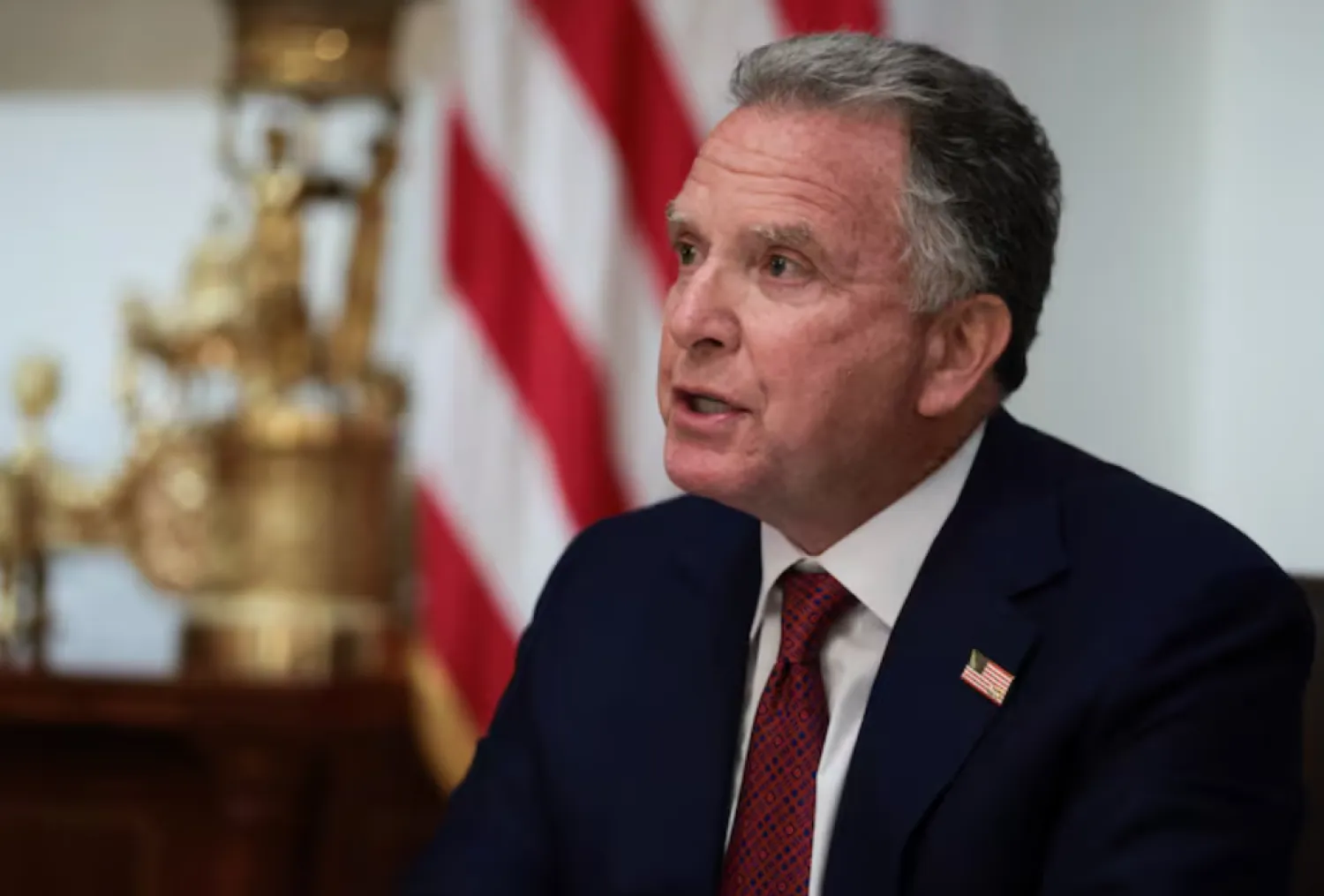
US Special Envoy Steve Witkoff speaks during a cabinet meeting at the White House in Washington, DC, US, March 26, 2026. REUTERS/Evelyn Hockstein
TT

US Envoy Witkoff Says Iran is Seeking an Off-ramp

US Special Envoy Steve Witkoff speaks during a cabinet meeting at the White House in Washington, DC, US, March 26, 2026. REUTERS/Evelyn Hockstein

The United States has sent Iran a "15-point action list" as a basis for negotiations to end the current conflict, US Special Envoy Steve Witkoff said on Thursday, adding that there are signs that Tehran was interested in making a deal.


Witkoff, speaking during a cabinet meeting at the White House, said that the nascent talks could be successful if the Iranians realize there were no good alternatives - a realization Tehran might be coming to, he argued, Reuters reported.


"We will see where things lead, and if we can convince Iran that this is the inflection point with no good alternatives for them other than more death and destruction," Witkoff told reporters.


"We have strong signs that this is a possibility."


Witkoff said Pakistan had been acting as a mediator, confirming statements from Pakistani officials.