


Netanyahu Survives Opposition Bid to Dissolve Parliament

FILE - Israeli Prime Minister Benjamin Netanyahu attends a ceremony on the eve of Israel's Remembrance Day for fallen soldiers at the Yad LaBanim Memorial in Jerusalem, on April 29, 2025. (Abir Sultan/Pool Photo via AP, File)
TT

Netanyahu Survives Opposition Bid to Dissolve Parliament

FILE - Israeli Prime Minister Benjamin Netanyahu attends a ceremony on the eve of Israel's Remembrance Day for fallen soldiers at the Yad LaBanim Memorial in Jerusalem, on April 29, 2025. (Abir Sultan/Pool Photo via AP, File)

Israeli Prime Minister Benjamin Netanyahu's hard-right government survived an opposition bid to dissolve parliament on Thursday, as lawmakers rejected a bill that could have paved the way for snap elections.

Out of the Knesset's 120 members, 61 voted against the proposal, with 53 in favor.

The opposition had introduced the bill hoping to force elections with the help of ultra-Orthodox parties in the governing coalition angry at Netanyahu over the contentious issue of exemptions from military service for their community.

While the opposition is composed mainly of centrist and leftist groups, ultra-Orthodox parties that are propping up Netanyahu's government had earlier threatened to back the motion.

The results of the vote Thursday morning, however, showed that most ultra-Orthodox lawmakers ultimately did not back the opposition bill, with just a small number voting in favor.

The opposition will now have to wait six months before it can try again.

Before the vote, Yuli Edelstein, a lawmaker from Netanyahu's right-wing Likud party, announced that after lengthy discussions, parties had agreed on the "principles on which the draft conscription law will be based".

Edelstein, who chairs the foreign affairs and defense committee, did not specify the terms of the agreement.

"As I said all along -- only a real, effective bill that leads to an expansion of the (Israeli military's) recruitment base will emerge from the committee I chair," he wrote on social media platform X.

"This is historic news, and we are on the path to real reform in Israeli society and strengthening the security of the State of Israel."

Edelstein had earlier put forward a bill aimed at increasing the number of ultra-Orthodox conscripted, and tightening the penalties for those who refuse to serve.

Opposition leader Yair Lapid, meanwhile, said the government was seeing the beginning of the end.

"When coalitions begin to fall apart, they fall apart. It started and this is what it looks like when a government begins to collapse," he said.

Ultra-Orthodox parties had been given a choice between losing a law on their exemption from military service, or losing their place in the government, and they chose exemption, Lapid added.

"The government helped them... organize the exemption of tens of thousands of healthy young people," he said, referring to ultra-Orthodox Israelis.

Communications Minister Shlomo Karhi hit back, saying the coalition government was "moving forward" and "stronger than ever".

Earlier on Wednesday, opposition leaders had said their decision to bring the dissolution bill to the Knesset for a vote was "made unanimously and is binding on all factions".

They said that all opposition parties would freeze their lawmaking activities to focus on "the overthrow of the government".

Netanyahu's coalition is one of the most right-wing in the country's history. It includes two ultra-Orthodox parties -- Shas and United Torah Judaism (UTJ).

The two parties had threatened to back the motion for early elections.

'Existential danger'

Military service is mandatory in Israel but, under a ruling that dates back to the country's creation when the ultra-Orthodox were a very small community, men who devote themselves full-time to the study of Jewish scripture are given a de facto pass.

Whether that should change has been a long-running issue.

Efforts to scrap the exemption have intensified during the nearly 20-month war in Gaza as the military looks for extra manpower.

Netanyahu is under pressure from his Likud party to draft more ultra-Orthodox men -- a red line for parties such as Shas, who demand a law guaranteeing their constituents permanent exemption from military service.

Ahead of the vote in the early hours of Thursday morning, Israeli media reported that officials from Netanyahu's coalition were holding talks with ultra-Orthodox leaders hoping to find common ground.

In an apparent bid to allow time for those negotiations, Netanyahu's coalition filled the Knesset's agenda with bills to delay the vote.

Far-right Finance Minister Bezalel Smotrich said that bringing down the government during wartime would pose "an existential danger" to Israel's future.

"History will not forgive anyone who drags the state of Israel into elections during a war," Smotrich told parliament, adding that there was a "national and security need" for ultra-Orthodox to fight in the military.

Netanyahu's government is a coalition between his Likud party, far-right groups and ultra-Orthodox parties, whose departure would leave it without a parliamentary majority.



NATO: Ukraine Still Receiving Arms Despite Mideast War

NATO Secretary General Mark Rutte via Reuters/File
TT

NATO: Ukraine Still Receiving Arms Despite Mideast War

NATO Secretary General Mark Rutte via Reuters/File

Ukraine is still getting essential defense equipment despite the war in the Middle East, which is depleting stockpiles in Europe and the United States, NATO Secretary General Mark Rutte said Thursday.

"The good news is that essential equipment into Ukraine continues to flow," he told reporters. That included American-made Patriot missile interceptors, which Ukraine desperately needs, he added, AFP reported.

The PURL program, launched last year, allows Ukraine to receive US equipment financed by European countries.

Some 75 percent of the missiles used by Patriot batteries in Ukraine have been supplied through the program, and 90 percent of the munitions used by other air-defense systems, Rutte added.

Rutte called on European countries to increase their own production capacity.

"They need to produce more extra production lines, extra shifts, opening new factories. The money is there," he said.


Germany FM Says 'Encouraging' if US Speaking Directly to Iran

German Foreign Minister Johann Wadephul. (Reuters: File Photo)
TT

Germany FM Says 'Encouraging' if US Speaking Directly to Iran

German Foreign Minister Johann Wadephul. (Reuters: File Photo)

Germany's foreign minister Thursday said it was encouraging if the United States was talking directly to Iran to end the war in the Middle East, but Washington should make its intentions clear.

"I hear that there are signs that the US is speaking directly to Iran. I think that this is encouraging and this is welcome," Johann Wadephul told reporters before heading into the meeting of G7 foreign ministers outside Paris, AFP reported.

With US Secretary of State Marco Rubio set to join the discussions from Friday, he added: "For the German government it is of great importance to know precisely what our American partners are intending."


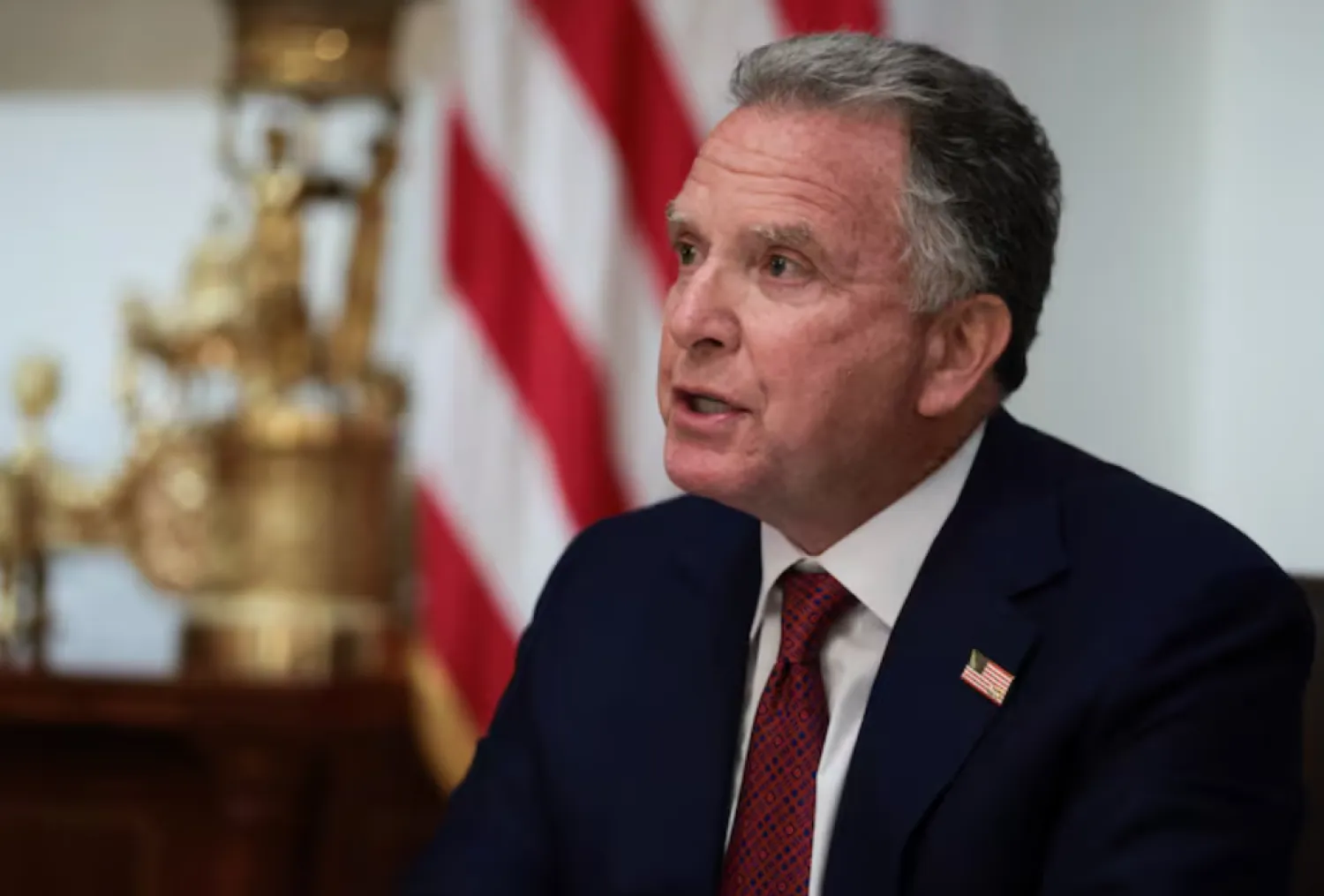
US Envoy Witkoff Says Iran is Seeking an Off-ramp

US Special Envoy Steve Witkoff speaks during a cabinet meeting at the White House in Washington, DC, US, March 26, 2026. REUTERS/Evelyn Hockstein
TT

US Envoy Witkoff Says Iran is Seeking an Off-ramp

US Special Envoy Steve Witkoff speaks during a cabinet meeting at the White House in Washington, DC, US, March 26, 2026. REUTERS/Evelyn Hockstein

The United States has sent Iran a "15-point action list" as a basis for negotiations to end the current conflict, US Special Envoy Steve Witkoff said on Thursday, adding that there are signs that Tehran was interested in making a deal.


Witkoff, speaking during a cabinet meeting at the White House, said that the nascent talks could be successful if the Iranians realize there were no good alternatives - a realization Tehran might be coming to, he argued, Reuters reported.


"We will see where things lead, and if we can convince Iran that this is the inflection point with no good alternatives for them other than more death and destruction," Witkoff told reporters.


"We have strong signs that this is a possibility."


Witkoff said Pakistan had been acting as a mediator, confirming statements from Pakistani officials.