


Chinese Travel Thousands of Miles to Flee Iran Overland 

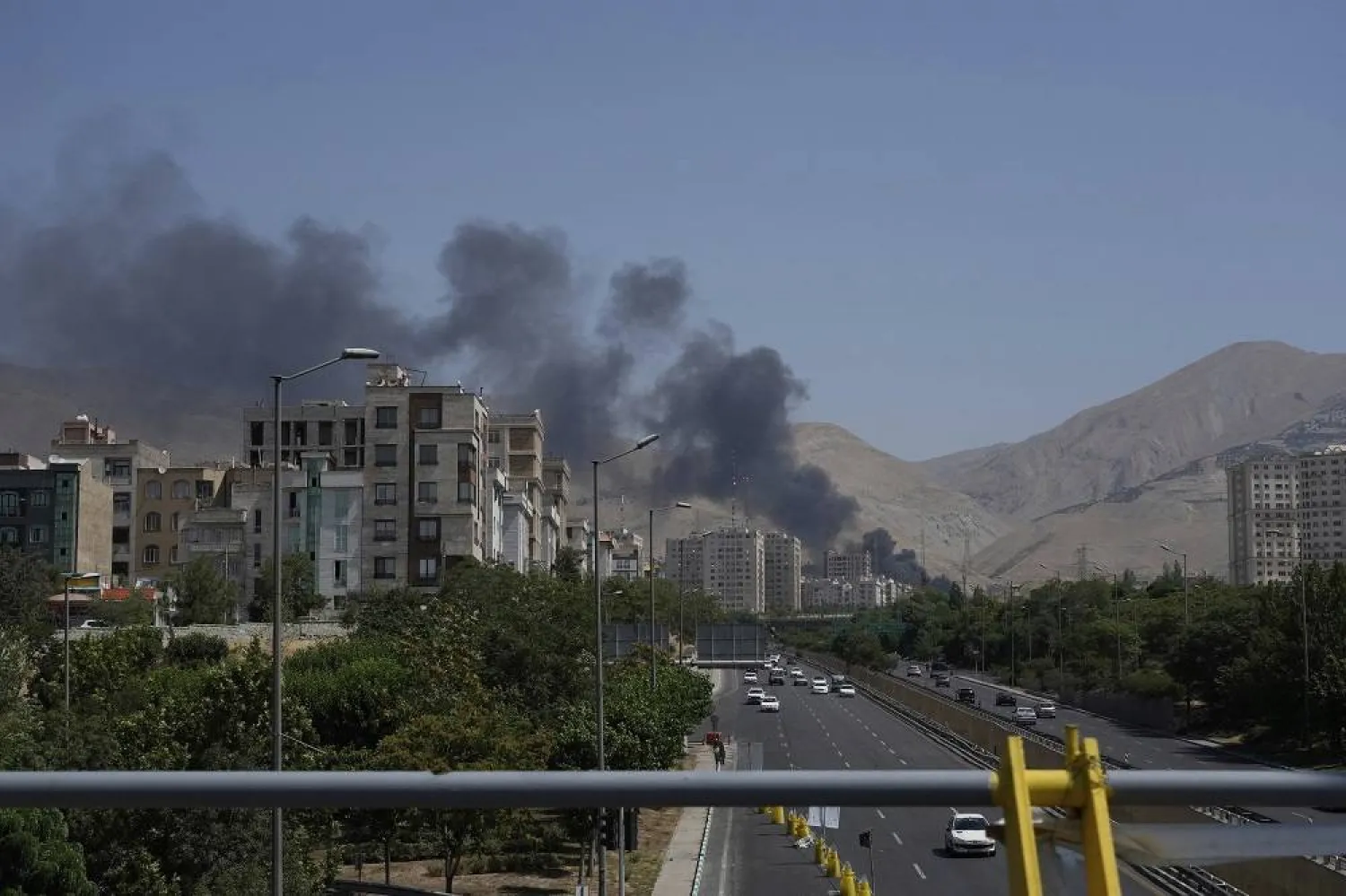
Smoke rises from an oil storage facility after it appeared to have been struck by an Israeli strike on Saturday, in Tehran, Iran, Monday, June 16, 2025. (AP)
TT

Chinese Travel Thousands of Miles to Flee Iran Overland 

Smoke rises from an oil storage facility after it appeared to have been struck by an Israeli strike on Saturday, in Tehran, Iran, Monday, June 16, 2025. (AP)

The first Chinese evacuees from Iran have started sharing on social media their desperate efforts to reach the country's borders and the safety of Turkmenistan, Armenia and Azerbaijan, as the Israel-Iran air war entered a sixth day.

Several thousand Chinese nationals are thought to reside in oil-rich Iran, according to state media reports, highlighting Beijing's efforts to deepen strategic and commercial ties with Iran over the past two decades.

"My heart was pounding but amid the haze of war, everything became clear: I packed my bags and tried to evacuate to the embassy," wrote a Chinese travel blogger under the alias Shuishui Crusoe, a nod to Daniel Defoe's fictional castaway, Robinson Crusoe.

The travel blogger had decided to leave after sitting through Israel's overnight bombings last Friday when the conflict began, even as the embassy advised her to stay put.

Emboldened by news of fellow citizens who made it across to Armenia, 750 km (500 miles) from the Iranian capital Tehran, she chose the same route, arriving by bus in the Armenian capital Yerevan on Monday, a day before China's embassy officially urged its citizens to leave Iran.

China started evacuating its citizens from Tehran to Turkmenistan by bus on Tuesday, a distance of 1,150 km, state-run China News Service reported Wednesday.

Guo Jiakun, a spokesperson for China's foreign ministry, said Beijing had not received any reports of Chinese casualties.

"Seven hundred and ninety-one Chinese nationals have already been relocated from Iran to safe areas, and over 1,000 more are in the process of being evacuated," he told a regular news conference.

While the embassy emphasized evacuation, some other Chinese netizens still in Iran shared video compilations showing an orderly scenario of well-stocked grocery shops and fruit stalls, with only a couple of clips of large purchases of bottled water.

Most Chinese in Iran are engineers who moved there to work for Chinese firms that have invested just under $5 billion in the country since 2007 - primarily in its oil sector - according to data from the American Enterprise Institute think tank.

If the regime in Tehran is severely weakened or replaced, Beijing loses a key diplomatic foothold in a region long dominated by the US, but vital to President Xi Jinping's flagship Belt and Road initiative and its aim to link the world's second-largest economy with Europe and the Gulf.

China, the world's leading energy consumer, has also benefited from importing heavily discounted Iranian crude, despite Washington's sanctions aimed at curbing the trade.



Türkiye’s Foreign Minister Says the US and Iran Showing Flexibility on Nuclear Deal

FILE PHOTO: Turkish Foreign Minister Hakan Fidan speaks during an interview with Reuters at the 23rd edition of the annual Doha Forum, in Doha, Qatar, December 6, 2025. REUTERS/Ibraheem Abu Mustafa/File Photo
TT

Türkiye’s Foreign Minister Says the US and Iran Showing Flexibility on Nuclear Deal

FILE PHOTO: Turkish Foreign Minister Hakan Fidan speaks during an interview with Reuters at the 23rd edition of the annual Doha Forum, in Doha, Qatar, December 6, 2025. REUTERS/Ibraheem Abu Mustafa/File Photo

The United States and Iran are showing flexibility on a nuclear deal, with Washington appearing "willing" to tolerate some nuclear enrichment, Turkish Foreign Minister Hakan Fidan told the Financial Times in an interview published Thursday.

“It is positive that the Americans appear willing to tolerate Iranian enrichment within clearly set boundaries," Fidan, who has been involved in talks with both Washington and Tehran, told the FT.

“The Iranians now recognize ‌that they ‌need to reach a deal with the ‌Americans, ⁠and the Americans ⁠understand that the Iranians have certain limits. It’s pointless to try to force them.”

Washington has until now demanded Iran relinquish its stockpile of uranium enriched to up to 60% fissile purity, a small step away from the 90% that is considered weapons grade, said Reuters.

Iranian ⁠President Masoud Pezeshkian has said Iran would continue ‌to demand the ‌lifting of financial sanctions and insist on its nuclear rights including ‌enrichment.

Fidan told the FT he believed Tehran “genuinely ‌wants to reach a real agreement” and would accept restrictions on enrichment levels and a strict inspection regime, as it did in the 2015 agreement with the US and others.

US ‌and Iranian diplomats held talks through Omani mediators in Oman last week in ⁠an effort ⁠to revive diplomacy, after President Donald Trump positioned a naval flotilla in the region, raising fears of new military action. Trump on Tuesday said he was considering sending a second aircraft carrier to the Middle East, even as Washington and Tehran prepared to resume negotiations.

The Turkish foreign minister, however, cautioned that broadening the Iran-US talks to ballistic missiles would bring "nothing but another war."

The US State Department and the White House did not respond to a request for comment outside regular business hours.


Russia Strikes Heating in Kyiv, Kills Two in East Ukraine

In this photo provided by the Ukrainian Emergency Service, emergency services personnel work to extinguish a fire at a house following a Russian air attack in Barvinkove, Kharkiv region, Ukraine, Wednesday, Feb. 11, 2026. (Ukrainian Emergency Service via AP)
TT

Russia Strikes Heating in Kyiv, Kills Two in East Ukraine

In this photo provided by the Ukrainian Emergency Service, emergency services personnel work to extinguish a fire at a house following a Russian air attack in Barvinkove, Kharkiv region, Ukraine, Wednesday, Feb. 11, 2026. (Ukrainian Emergency Service via AP)

Russian strikes early Thursday cut heating to nearly 2,600 residential buildings in Kyiv, in a nationwide attack on energy facilities that killed two people in eastern Ukraine.

Russia has stepped up strikes on Ukraine's power and heating infrastructure, plunging entire cities into darkness in the coldest winter of the four-year war.

AFP journalists in Kyiv heard loud blasts and saw explosions light up the night sky, as Ukrainian air defense systems fended off the Russian barrage.

"After last night's massive attack, due to damage to critical infrastructure targeted by the enemy, nearly 2,600 more buildings in the capital have been left without heat," the mayor of Kyiv, Vitaliy Klitschko, said.

He added that two people had been wounded in the capital overnight.

More than 1,000 of the capital's approximately 12,000 apartment blocks were already without heating after massive Russian attacks over the last few weeks.

Russia launched 24 missiles and 219 drones at the war-torn country, Ukraine's air force said, adding that its air defense units had downed 16 missiles and 197 drones.

Two people were killed in the eastern Ukrainian town of Lozova, where the attack cut power to residents and forced authorities to use alternative power sources for critical infrastructure, a local official said.

The attack also wounded four people in the central city of Dnipro, and cut heating to 10,000 customers, Restoration Minister Oleksiy Kuleba said.

"This is yet another attempt to deprive Ukrainians of basic services in the middle of winter. But restoration efforts continue nonstop," Kuleba added.

In the southern Odesa region, the attacks wounded one person, the state emergency services said, while Kuleba said around 300,000 had been left without water supplies.

Russia meanwhile said it repelled a missile attack in the Volgograd region but that debris ignited a fire at a military facility and prompted the evacuation of a nearby village.


Deaths in Iran's Crackdown on Protests Reach at Least 7,000

Policemen stand guard during an annual rally marking 1979 Iranian Revolution as a woman walks at right at the Azadi (Freedom) St. Tehran, Iran, Wednesday, Feb. 11, 2026. (AP Photo/Vahid Salemi)
TT

Deaths in Iran's Crackdown on Protests Reach at Least 7,000

Policemen stand guard during an annual rally marking 1979 Iranian Revolution as a woman walks at right at the Azadi (Freedom) St. Tehran, Iran, Wednesday, Feb. 11, 2026. (AP Photo/Vahid Salemi)

The death toll from a crackdown over Iran’s nationwide protests last month has reached at least 7,002 people killed with many more still feared dead, activists said Thursday.

The slow rise in the number of dead from the demonstrations adds to the overall tensions facing Iran both inside the country and abroad as it tries to negotiate with the United States over its nuclear program. A second round of talks remains up in the air as Israeli Prime Minister Benjamin Netanyahu pressed his case directly with US President Donald Trump to intensify his demands on Tehran in the negotiations.

“There was nothing definitive reached other than I insisted that negotiations with Iran continue to see whether or not a Deal can be consummated. If it can, I let the Prime Minister know that will be a preference,” Trump wrote afterward on his TruthSocial website.

“Last time Iran decided that they were better off not making a Deal, and they were hit. ... That did not work well for them. Hopefully this time they will be more reasonable and responsible.”

Meanwhile, Iran at home faces still-simmering anger over its wide-ranging suppression of all dissent in the Iranian Republic. That rage may intensify in the coming days as families of the dead begin marking the traditional 40-day mourning for the loved ones.

Activists' death toll slowly rises

The US-based Human Rights Activists News Agency, which offered the latest figures, has been accurate in counting deaths during previous rounds of unrest in Iran and relies on a network of activists in Iran to verify deaths. The slow rise in the death toll has come as the agency slowly is able to crosscheck information as communication remains difficult with those inside of Iran.

Iran’s government offered its only death toll on Jan. 21, saying 3,117 people were killed. Iran’s theocracy in the past has undercounted or not reported fatalities from past unrest.

The Associated Press has been unable to independently assess the death toll, given authorities have disrupted internet access and international calls in Iran.

The rise in the death toll comes as Iran tries to negotiate with the United States over its nuclear program.

Diplomacy over Iran continues

Senior Iranian security official Ali Larijani met Wednesday in Qatar with Foreign Minister Sheikh Mohammed bin Abdulrahman Al Thani. Qatar hosts a major US military installation that Iran attacked in June, after the US bombed Iranian nuclear sites during the 12-day Iran-Israel war in June. Larijani also met with officials of the Palestinian Hamas group, and in Oman with Tehran-backed Houthis from Yemen on Tuesday.

Larijani told Qatar’s Al Jazeera satellite news network that Iran did not receive any specific proposal from the US in Oman, but acknowledged that there was an “exchange of messages.”

Qatar has been a key negotiator in the past with Iran, with which it shares a massive offshore natural gas field in the Arabian Gulf. Its state-run Qatar News Agency reported that ruling emir Sheikh Tamim bin Hamad Al Thani spoke with Trump about “the current situation in the region and international efforts aimed at de-escalation and strengthening regional security and peace,” without elaborating.

The US has moved the aircraft carrier USS Abraham Lincoln, ships and warplanes to the Middle East to pressure Iran into an agreement and have the firepower necessary to strike Iran should Trump choose to do so.

Already, US forces have shot down a drone they said got too close to the Lincoln and came to the aid of a US-flagged ship that Iranian forces tried to stop in the Strait of Hormuz, the narrow mouth of the Arabian Gulf.

Trump told the news website Axios that he was considering sending a second carrier to the region. “We have an armada that is heading there and another one might be going,” he said.

Concern over Nobel Peace Prize laureate

Meanwhile, the Norwegian Nobel Committee said it was “deeply appalled by credible reports detailing the brutal arrest, physical abuse and ongoing life‑threatening mistreatment” of 2023 Peace Prize laureate Narges Mohammadi.

The committee that awards the prize said it had information Mohammadi had been beaten during her arrest in December and continued to be mistreated. It called for her immediate and unconditional release.

“She continues to be denied adequate, sustained medical follow‑up while being subjected to heavy interrogation and intimidation,” the committee said. “She has fainted several times, suffers from dangerously high blood pressure and has been prevented from accessing necessary follow‑up for suspected breast tumors.”

Iran just sentenced Mohammadi, 53, to over seven more years in prison. Supporters had warned for months before her arrest that she was at risk of being put back into prison after she received a furlough in December 2024 over medical concerns.