


Israel Escalates Strikes in Southern Lebanon, Targeting Hezbollah

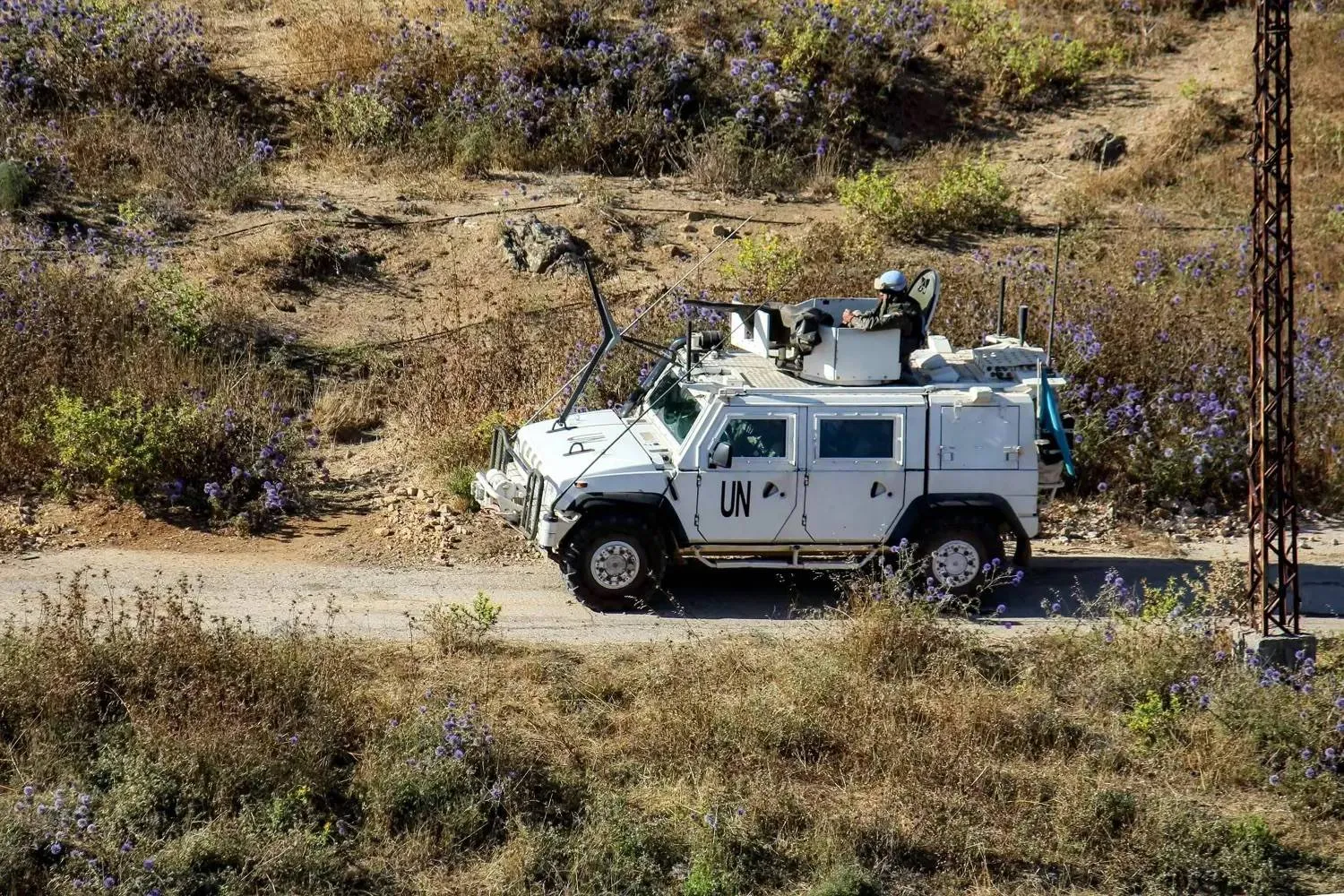
A UNIFIL vehicle on patrol in the southern Lebanese town of Marjayoun (AFP)
TT

Israel Escalates Strikes in Southern Lebanon, Targeting Hezbollah

A UNIFIL vehicle on patrol in the southern Lebanese town of Marjayoun (AFP)

Israel intensified its military operations in southern Lebanon on Saturday, carrying out four raids against suspected Hezbollah operatives in the deadliest day of attacks in two months. The strikes killed one person and wounded six others.

The escalation comes as Lebanese officials struggle to finalize a unified response to a US proposal demanding Hezbollah’s disarmament and sweeping reforms. The response is expected to be delivered to US envoy Thomas Barrack on Monday.

According to the Israeli army, one drone strike killed a member of Hezbollah’s elite Radwan force near the town of Ainata. Lebanese authorities reported that the attack targeted a vehicle in the Saf al-Hawa area at the entrance to Bint Jbeil.

Lebanon’s Health Ministry said an initial strike killed one person and injured two. Later strikes in Bint Jbeil and neighboring Shaqra wounded four more, including two critically. Another attack in Shebaa reportedly targeted a house, injuring a civilian.

Israel’s Army Radio confirmed that the military had tried to assassinate four Hezbollah members in separate operations, confirming one fatality while assessing the status of the others.

The attacks represent the largest number of targeted strikes in a single day since April. Lebanese observers see the surge in military pressure as an Israeli attempt to influence the tense negotiations in Beirut.

Hezbollah has yet to provide an official response to the American demands and has signaled it will not compromise without guarantees, particularly requiring Israel to fully implement a ceasefire agreement reached last November. That truce called for Israel’s withdrawal from occupied Lebanese territory, an end to air and ground violations, and the release of Lebanese prisoners.

Since the ceasefire, Hezbollah has demanded Israel withdraw from five strategic positions it continues to occupy in southern Lebanon, while Israel insists it will maintain military pressure unless Hezbollah disarms.

On Thursday, an Israeli drone strike near southern Beirut killed a man and wounded three others. Israeli forces claimed they had targeted an “Iranian-affiliated terrorist.”

Under the ceasefire terms, Hezbollah was to dismantle its military infrastructure south of the Litani River, about 30 kilometers from the Israeli border, in exchange for expanded deployment of Lebanese troops and UN peacekeepers. Israel was to withdraw from the newly occupied positions, though it has so far refused to pull out of key sites.



EU Condemns Israel's West Bank Control Measures

The Israeli settlement of Har Homa, seen from the West Bank city of Bethlehem, Tuesday, Dec. 17, 2024. (AP)
TT

EU Condemns Israel's West Bank Control Measures

The Israeli settlement of Har Homa, seen from the West Bank city of Bethlehem, Tuesday, Dec. 17, 2024. (AP)

The European Union on Monday condemned new Israeli measures to tighten control of the West Bank and pave the way for more settlements in the occupied Palestinian territory, AFP reported.

"The European Union condemns recent decisions by Israel's security cabinet to expand Israeli control in the West Bank. This move is another step in the wrong direction," EU spokesman Anouar El Anouni told journalists.


Atrocities in Sudan's El-Fasher Were 'Preventable Human Rights Catastrophe'

Sudanese displaced people who left El Fasher after its fall, sit in the shade in Tawila at the Rwanda camp reception point on December 17, 2025. (Photo by AFP)
TT

Atrocities in Sudan's El-Fasher Were 'Preventable Human Rights Catastrophe'

Sudanese displaced people who left El Fasher after its fall, sit in the shade in Tawila at the Rwanda camp reception point on December 17, 2025. (Photo by AFP)

The atrocities unleashed on El-Fasher in Sudan's Darfur region last October were a "preventable human rights catastrophe", the United Nations said Monday, warning they now risked being repeated in the neighbouring Kordofan region.


"My office sounded the alarm about the risk of mass atrocities in the besieged city of El-Fasher for more than a year ... but our warnings were ignored," UN rights chief Volker Turk told the Human Rights Council in Geneva.


He added that he was now "extremely concerned that these violations and abuses may be repeated in the Kordofan region".


Arab League Condemns Israel's Decisions to Alter Legal, Administrative Status of West Bank

A general view shows the opening session of the meeting of Arab foreign ministers at the Arab League Headquarters (Reuters)
TT

Arab League Condemns Israel's Decisions to Alter Legal, Administrative Status of West Bank

A general view shows the opening session of the meeting of Arab foreign ministers at the Arab League Headquarters (Reuters)

The General Secretariat of the Arab League strongly condemned decisions by Israeli occupation authorities to impose fundamental changes on the legal and administrative status of the occupied Palestinian territories, particularly in the West Bank, describing them as a dangerous escalation and a flagrant violation of international law, international legitimacy resolutions, and signed agreements, SPA reported.

In a statement, the Arab League said the measures include facilitating the confiscation of private Palestinian property and transferring planning and licensing authorities in the city of Hebron and the area surrounding the Ibrahimi Mosque to occupation authorities.

It warned of the serious repercussions of these actions on the rights of the Palestinian people and on Islamic and Christian holy sites.

The statement reaffirmed the Arab League’s firm support for the legitimate rights of the Palestinian people, foremost among them the establishment of their independent state on the June 4, 1967 borders, with East Jerusalem as its capital.