


A Father's Grief and a Nation's Hope: Lebanon Awaits Justice 5 Years after Beirut Blast

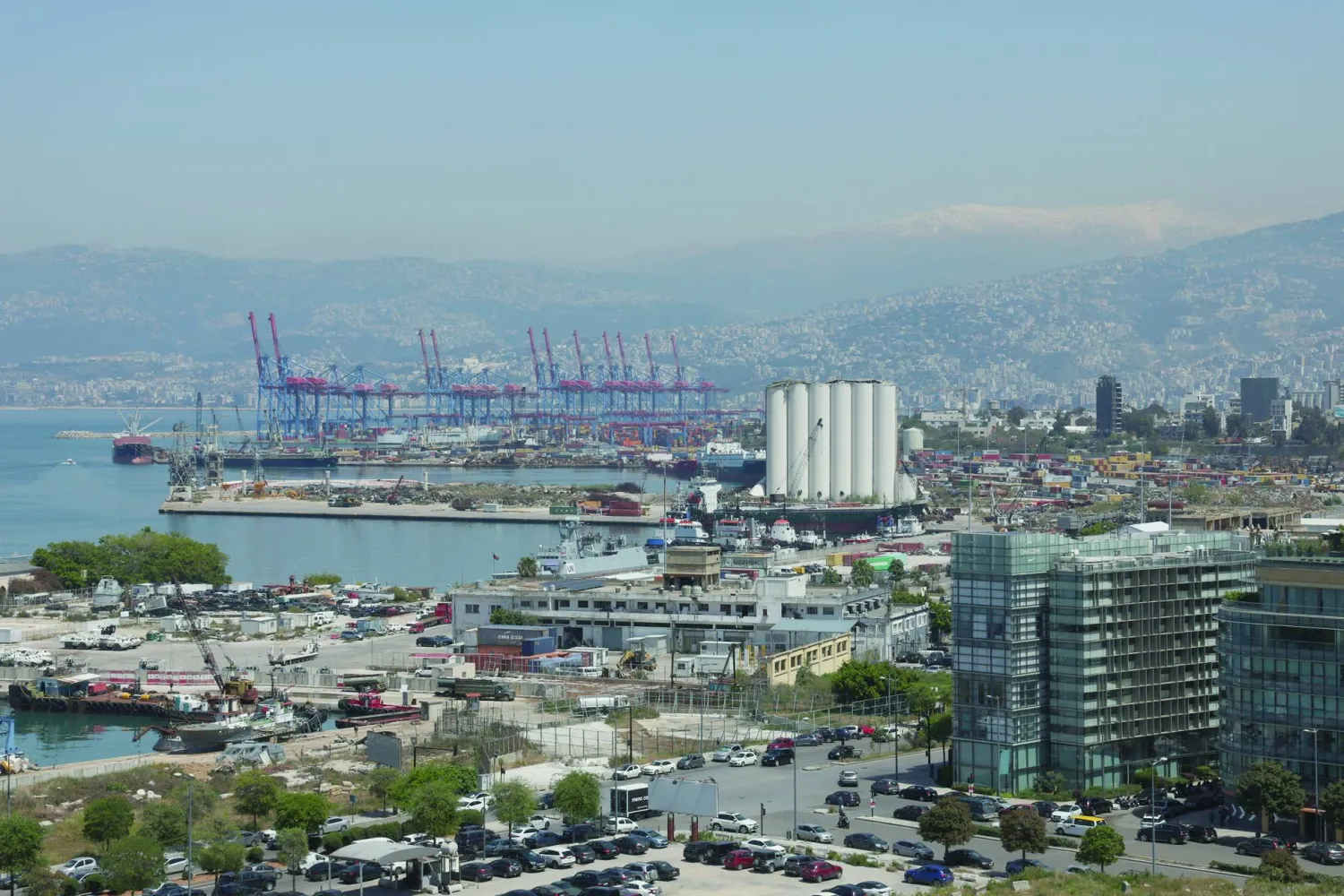
Buildings and the partially collapsed grain silos damaged in the August 4, 2020 Beirut port blast, stand in Beirut port, Lebanon April 17, 2025. REUTERS/Mohamed Azakir
TT

A Father's Grief and a Nation's Hope: Lebanon Awaits Justice 5 Years after Beirut Blast

Buildings and the partially collapsed grain silos damaged in the August 4, 2020 Beirut port blast, stand in Beirut port, Lebanon April 17, 2025. REUTERS/Mohamed Azakir

George Bezdjian remembers searching for his daughter, Jessica, after a massive explosion at Beirut's port five years ago. He found her at the St. Georges Hospital where she worked as a nurse.

The hospital was in the path of the blast and was heavily damaged. He found his daughter lying on the floor as her colleagues tried to revive her. They weren't able to save her. She was one of four medical staff killed there.

“I started telling God that living for 60 years is more than enough. If you're going to take someone from the family, take me and leave her alive,” he told The Associated Press from his home in Bsalim, some 10 kilometers (6.2 miles) away from the port. He sat in a corner where he put up portraits of Jessica next to burning incense to honor her.

“I begged him, but he didn’t reply to me.”

The Aug. 4, 2020 blast in Beirut’s port tore through the Lebanese capital after hundreds of tons of ammonium nitrate detonated in a warehouse. The gigantic explosion killed at least 218 people, according to an AP count, wounded more than 6,000 others and devastated large swathes of Beirut, causing billions of dollars in damages.

It further angered the nation, already in economic free-fall after decades of corruption and financial crimes. Many family members of the victims pinned their hopes on Judge Tarek Bitar, who was tasked with investigating the explosion. The maverick judge shook the country’s ruling elite, pursuing top officials, who for years obstructed his investigation.

But five years after the blast, no official has been convicted as the probe stalled. And the widespread rage over the explosion and years of apparent negligence from a web of political, security and judicial officials has faded as Lebanon's economy further crumbled and conflict rocked the country.

Judge Bitar had aimed to release the indictment last year but it was stalled by months of war between Israel and the Hezbollah militant group that decimated large swaths of southern and eastern Lebanon, killing some 4,000 people.

In early 2025, Lebanon elected President Joseph Aoun, Prime Minister Nawaf Salam and a Cabinet that came to power on reformist platforms. They vowed that completing the port probe and holding the perpetrators to account would be a priority.

“There will be no settlement in the port case before there is accountability,” Salam said Sunday.

Bitar, apparently galvanized by these developments, summoned a handful of senior political and security officials in July, as well as three judges in a new push for the case, but was unable to release an indictment over the summer as had been widely expected.

However, the judge has been working on an additional phase of his investigation — now some 1,200 pages in length — aiming for the indictment to be out by the end of the year, according to four judicial officials and two security officials. They all spoke to the AP on condition of anonymity in line with regulations.

Before completing his own report, he is waiting to receive a fourth and final report from France, which has conducted its own probe into the blast given that several of those killed are citizens of the European country. Bitar since 2021 had received three technical reports, while the fourth will be the French investigation's conclusion, which also looks at the cause of the explosion, the officials added.

Bitar is also looking to hear the testimonies of some 15 witnesses, and is reaching out to European and Arab countries for legal cooperation, the officials said. He hopes that some European suspects can be questioned about the shipment of ammonium nitrate and the vessel carrying them that ended up in the Beirut Port.

Despite the malaise across much of the troubled country, Kayan Tlais, brother of port supervisor Mohammad Tlais who was killed in the blast, is hopeful that the indictment will see the light of day. He says he’s encouraged by Bitar’s tenacity and Lebanon’s new leadership.

“We do have judges with integrity,” he said. “The president, prime minister, and all those who came and were voted in do give us hope ... they are all the right people in the right place.”

The port and the surrounding Beirut neighborhoods that were leveled in the deadly blast appear functional again, but there are still scars. The most visible are what’s left standing of the mammoth grain silos at the port, which withstood the force of the blast but later partly collapsed in 2022 after a series of fires. Culture Minister Ghassan Salameh Sunday classified them as historical monuments.

There was no centralized effort by the cash-strapped Lebanese government to rebuild the surrounding neighborhoods. An initiative by the World Bank, Europe and United Nations to fund recovery projects was slow to kick off, while larger reconstruction projects were contingent on reforms that never came.

Many family and business owners fixed their damaged property out of pocket or reached out to charities and grassroots initiatives.

A 2022 survey by the Beirut Urban Lab, a research center at the American University of Beirut, found that 60% to 80% of apartments and businesses damaged in the blast had been repaired.

“This was a reconstruction primarily driven by nonprofits and funded by diaspora streams,” said Mona Harb, a professor of urban studies and politics at AUB and co-founder of the research center.

But regardless of how much of the city is rebuilt and through what means, Aug. 4 will always be a “dark day of sadness,” says Bezdjian. All that matters to him is the indictment and to find who the perpetrators are. He tries to stay calm, but struggles to control how he feels.

“We will do to them what every mother and father would do if someone killed their child, and if they knew who killed their son or daughter,” he said. "What do you think they would do?”



Egyptian Gaza Relief Group Says Israeli Strike on Photographers Was Deliberate

An aid distribution point in northern Gaza operated by the Egyptian Relief Committee (Egyptian Relief Committee)
TT

Egyptian Gaza Relief Group Says Israeli Strike on Photographers Was Deliberate

An aid distribution point in northern Gaza operated by the Egyptian Relief Committee (Egyptian Relief Committee)

The spokesperson for the Egyptian Relief Committee in Gaza, Mohamed Mansour, said Israel deliberately targeted three photojournalists while they were carrying out a humanitarian mission inside the Netzarim camp, an area located about six kilometers away from Israeli army forces.

Mansour told Asharq Al-Awsat that the attack was “a continuation of Israeli pressure on the committee’s work since it began operating, as part of the occupation’s efforts to tighten restrictions on anyone attempting to provide relief work and humanitarian services to the people of Gaza.”

The Israeli army killed three photojournalists on Wednesday who were working as a media team for the Egyptian Relief Committee for Gaza.

Field sources told Asharq Al-Awsat that the victims were Mohammed Salah Qashta, Abdul Raouf Shaat, and Anas Ghneim.

They were carrying out a filming mission using a small drone and cameras to document stages of work at camps that the Egyptian committee is helping to establish.

Mansour stressed that “the targeting of the photographers will only increase the committee’s determination to provide relief services and shelter to the Palestinian people.”

He said the committee would continue its work as usual to be “a genuine support for the people of the Strip, amid extremely complex security conditions.”

Israeli Army Radio reported, citing sources, that Egypt sent an angry message to Israel following the attack in Gaza in which Palestinians working for the Egyptian committee for the reconstruction were killed.

According to the radio report, Egypt expressed its protest that the attack took place outside the boundaries of the so-called yellow line, in an area that does not pose a threat to Israeli forces.

For its part, the Israeli army claimed it had targeted suspects operating a “Hamas-affiliated drone” in central Gaza.

In a statement on Wednesday, the army said: “Following the identification of the drone and due to the threat it posed to the forces, the Israeli army precisely struck the suspects who were operating the drone.”

The army said the details were under review.


Israel Launches Wave of Fresh Strikes on Lebanon

Smoke and sparks ascend from the site of an Israeli airstrike that targeted a building in the southern Lebanese village of Kfour on January 21, 2026. (AFP)
TT

Israel Launches Wave of Fresh Strikes on Lebanon

Smoke and sparks ascend from the site of an Israeli airstrike that targeted a building in the southern Lebanese village of Kfour on January 21, 2026. (AFP)

Israel launched fresh strikes on what it said were Hezbollah targets in south Lebanon after raids earlier Wednesday killed two people, the latest violence despite a year-old ceasefire with the group.

The state-run National News Agency said Israeli warplanes launched raids on buildings in several south Lebanon towns including Qanarit and Kfour, after the Israeli army issued evacuation warnings to residents identifying sites it intended to strike there.

An AFP photographer was slightly wounded along with two other journalists who were working near the site of a heavy strike in Qanarit.

The Israeli army said it was striking Hezbollah targets in response to the group's "repeated violations of the ceasefire understandings".

Under heavy US pressure and fears of expanded Israeli strikes, Lebanon has committed to disarming Hezbollah.

But Israel has criticized the Lebanese army's progress as insufficient and has kept up regular strikes, usually saying it is targeting members of the Iran-backed group or its infrastructure.

Earlier Wednesday, the health ministry said an Israeli strike on a vehicle in the town of Zahrani, in the Sidon district, killed one person.

An AFP correspondent saw a charred car on a main road with debris strewn across the area and emergency workers in attendance.

Later, the ministry said another strike targeting a vehicle in the town of Bazuriyeh in the Tyre district killed one person.

Israel said it struck Hezbollah operatives in both areas.

A Lebanese army statement decried the Israeli targeting of "civilian buildings and homes" in a "blatant violation of Lebanon's sovereignty" and the ceasefire deal.

It also said such attacks "hinder the army's efforts" to complete the disarmament plan.

This month, the army said it had completed the first phase of its plan to disarm Hezbollah, covering the area south of the Litani river, around 30 kilometers (20 miles) from the Israeli border.

Most of Wednesday's strikes were north of the river.

More than 350 people have been killed by Israeli fire in Lebanon since the ceasefire, according to an AFP tally of health ministry reports.

The November 2024 truce sought to end more than a year of hostilities, but Israel accuses Hezbollah of rearming, while the group has rejected calls to surrender its weapons.


Syria’s Rifaat Al-Assad, ‘Butcher of Hama’, Dies Aged 88, Say Sources

Rifaat al-Assad, uncle of deposed Syrian ruler Bashar al-Assad. (AP file)
TT

Syria’s Rifaat Al-Assad, ‘Butcher of Hama’, Dies Aged 88, Say Sources

Rifaat al-Assad, uncle of deposed Syrian ruler Bashar al-Assad. (AP file)

Rifaat al-Assad, uncle of deposed Syrian ruler Bashar al-Assad and dubbed the "Butcher of Hama" for suppressing an uprising in the 1980s, has died aged 88, two sources close to the family said Wednesday.

Once a pillar of the Assad family's dynastic rule, Rifaat "died after suffering from influenza for around a week", one source who worked in Syria's presidential palace for over three decades told AFP.

A second source, an ex-officer of Syria's army in the Assad era, confirmed the death, saying Rifaat had moved to the United Arab Emirates after his nephew's government was toppled by opposition factions in December 2024, without specifying if he died there.

Rifaat's role in a February 1982 massacre as part of a crackdown on an armed revolt by the Muslim Brotherhood earned him the nickname "the Butcher of Hama", referring to the central Syrian city.

His brother Hafez al-Assad, who ruled Syria at the time, launched the campaign, which government forces carried out under the command of Rifaat, who was the head of the elite "Defense Brigades".

The death toll from 27 days of violence, which took place under a media blackout, has never been formally established, though estimates range from 10,000 to 40,000.

Swiss prosecutors had accused Rifaat of a long list of crimes, including ordering "murders, acts of torture, inhumane treatment and illegal detentions" while an officer in the Syrian army.

He also served as vice president under his brother Hafez but went into exile in 1984 after a failed attempt to overthrow him, moving to Switzerland then France.

He later presented himself as an opponent of his nephew Bashar, who succeeded Hafez in 2000.

In 2021, he returned to Syria from France to escape a four-year prison sentence for money laundering and misappropriation of Syrian public funds.

Two years later, he appeared in a family photo alongside Bashar, the ruler's wife Asma and other relatives.

Shortly after Bashar's ouster, Rifaat crossed into Lebanon and then flew out of Beirut airport, a Lebanese security source said at the time, without specifying his final destination.