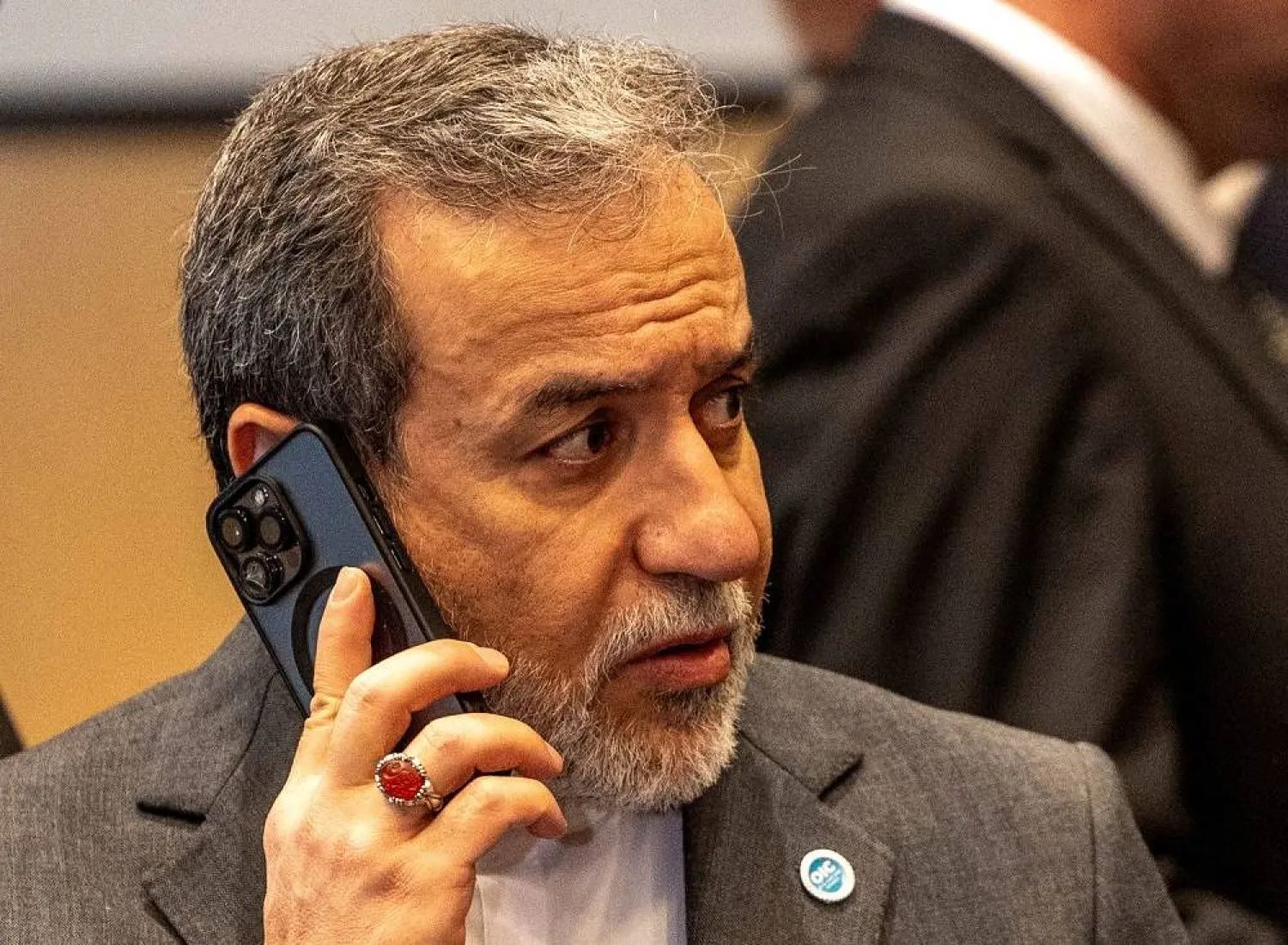

Lebanese officials were outraged on Thursday over Iranian Foreign Minister Abbas Araghchi’s recent remarks over the state’s decision to disarm Tehran-backed Hezbollah.
Araghchi said the decision will fail, sparking a wave of condemnation in Lebanon and complaints over Iran’s meddling in its internal affairs.
Some officials went so far as to demand that a complaint be filed against it at the United Nations Security Council.
Foreign Minister Youssef Rajji tasked the ministry’s secretariat with summoning the Iranian ambassador in Lebanon.
In a statement, Rajji slammed Araghchi for commenting on Lebanese internal affairs “that do not concern the Islamic Republic in any way, shape or form.”
The remarks “violate Lebanon’s sovereignty, unity and stability and are interference in its internal affairs and sovereign decisions.”
“Relations between countries can only be built on mutual respect and non-interference in internal affairs, as well as a full commitment to the decisions taken by legitimate constitutional institutions,” he added.
“It is completely unacceptable for these relations to be used to encourage or support one party, which is operating outside the state and its institutions, to act against them,” he declared.
Furthermore, Rajji underscored the Lebanese government’s “historic decision over limiting the possession of weapons to the state before the end of the year.”
“We clearly declare to the Arab and international communities: The decision is final and decisive and there can be no backing down from it,” he vowed.
Political forces in Lebanon are concerned that Iran’s latest position would empower Hezbollah to rebel against government decisions and give Israel an excuse to resume its war on Lebanon.
Member of the Lebanese Forces’ Strong Republic bloc MP Ghayath Yazbeck slammed Araghchi’s statements as “a complete violation of the dignity of a sovereign and independent state.”
“It reflects the extent of the blatant Iranian meddling in Lebanon and the harm it has done to the Lebanese people and their state,” he told Asharq Al-Awsat.
He condemned Iran’s “clear destructive role in Lebanon,” noting that it has “destroyed every country it has meddled in, including Yemen, Iraq and Syria, whose peoples are facing a dark fate that is difficult to escape.”
Moreover, he said Araghchi’s remarks are “just as bad as the Israeli attacks on Lebanon.” He called on the government to take “a clear decision that puts an end to this flagrant interference and submit a complaint against Iran and its officials at the Security Council, because Araghchi’s comments are enough to spark a new Israeli war on Lebanon.”
Iranian meddling in Lebanese affairs was one of the reasons that caused the latest war on Lebanon. The war started when Hezbollah, with Iran’s backing, opened in 2023 a “support front” against Israel in solidarity with Hamas in Gaza.
Iranian officials had repeatedly said that there can be no separating the Lebanese and Gaza fronts. Iranian speaker Mohamed Bagher Qalibaf said so explicitly during a trip to Beirut last year.
Democratic Gathering MP Faisal al-Sayegh slammed Araghchi’s statements, saying it was “the ultimate form of meddling in Lebanon’s internal affairs.”
“Such remarks create a divide among the Lebanese people,” he told Asharq Al-Awsat.
The government decision is in line with the constitution, President Joseph Aoun’s swearing in speech, Taif Accord, international resolutions and the government policy statement, which enjoys the vote of confidence of Hezbollah MPs, he added.
“Limiting the possession of weapons to the state is the foundation of building a state,” he stressed. “It paves the way for forging new and different relations with the Arab and international communities. It will help Lebanon secure American and international guarantees that Israel will not attack it again and withdraw from the points it is occupying in the South.”
It will also lead to the liberation of prisoners held by Israel and the reconstruction process, he went on to say.
He hoped Iran would “reconsider” its positions and cease meddling in Lebanese and regional affairs. He hoped it would play a “positive and helpful role” in Lebanon’s reconstruction, which cannot take place before the state has monopoly over arms and decisions of war and peace.