


Saudi–Egyptian Coordination Seen as a Pillar of Security and Stability

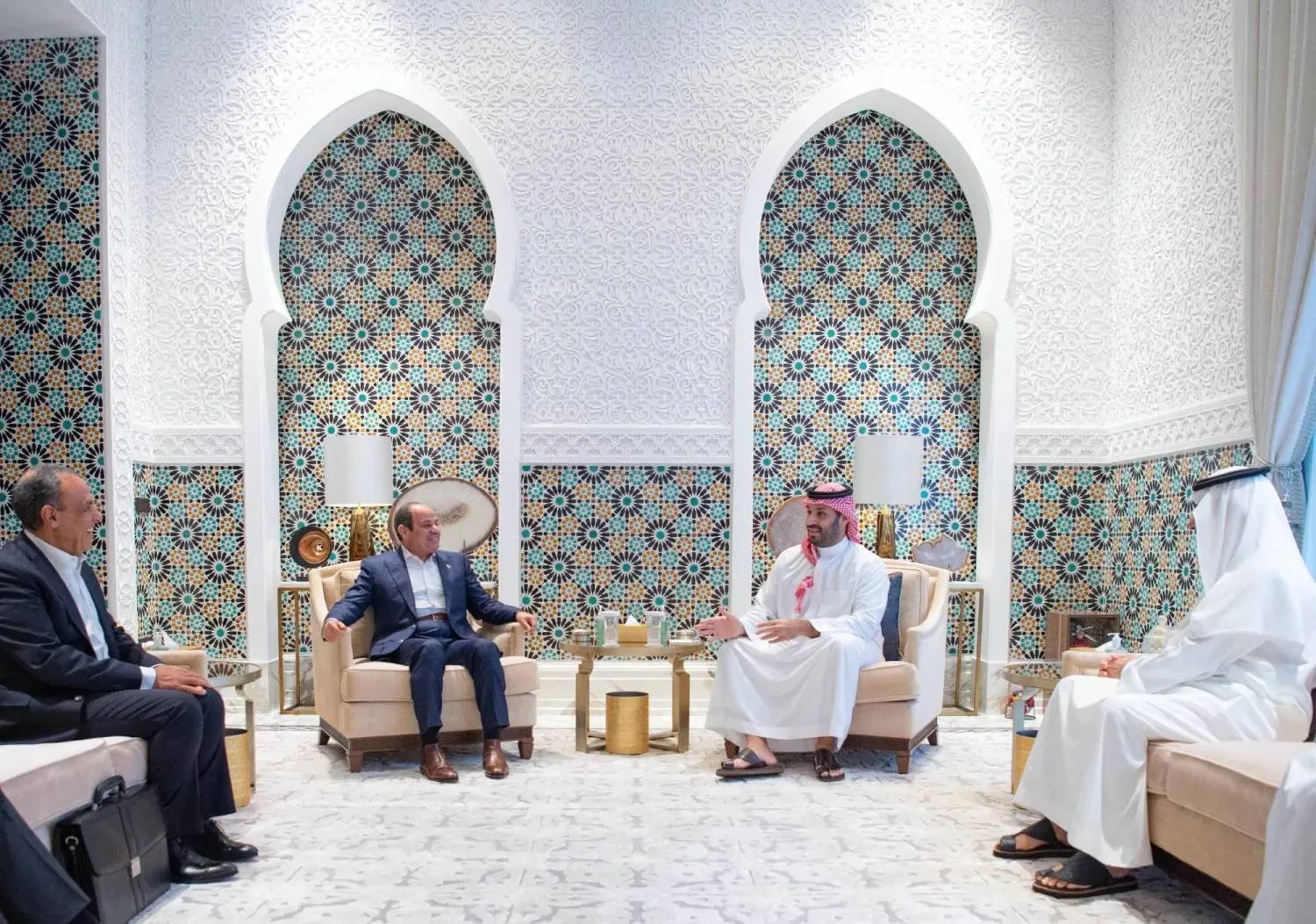
Crown Prince Mohammed bin Salman and President Abdel Fattah al-Sisi at NEOM Palace on Thursday (SPA).
TT

Saudi–Egyptian Coordination Seen as a Pillar of Security and Stability

Crown Prince Mohammed bin Salman and President Abdel Fattah al-Sisi at NEOM Palace on Thursday (SPA).

Analysts argue that coordination between Saudi Arabia and Egypt represents a cornerstone of security and stability in the Middle East, particularly amid growing attempts to reshape the regional landscape and impose new realities on the Palestinian issue.

Speaking to Asharq Al-Awsat, they stressed that the rapidly unfolding developments in the region - chief among them the conflict in Gaza and the West Bank, along with other pressing regional files - are expected to dominate talks between Egyptian President Abdel Fattah al-Sisi and Saudi Crown Prince and Prime Minister Mohammed bin Salman.

Sisi began a special visit to Saudi Arabia on Thursday and was received a day earlier in NEOM by the Crown Prince.

Visit at a Sensitive Moment

Dr. Abdulaziz Sager, chairman of the Gulf Research Center, described the visit as coming at “an exceptionally sensitive time,” pointing to Israeli attempts to alter the status quo in Gaza and “terminate the Palestinian cause” by occupying the territory and displacing its residents.

He warned that both Riyadh and Cairo view these actions as a threat to regional and international stability, and as an effort by Israel to eliminate prospects for peace and coexistence among the peoples of the region, including Israelis themselves.

“There are great hopes pinned on the meeting between the Crown Prince and the Egyptian President to advance the Palestinian issue away from Israeli claims and maneuvers, in a way that ensures security and stability for the entire region,” Sager said.

He emphasized that Saudi–Egyptian relations are “historic and strategic, built on solid foundations, and a guarantee of security and stability for the Arab world and the broader Middle East, given the political weight and influence of both nations at the regional and global levels.”

According to Sager, the current period demands closer coordination than ever before. “In light of unprecedented regional and global shifts, and persistent attempts to impose changes on the Arab world, Saudi Arabia and Egypt must align their policies and positions more closely,” he added.

Deep and Multifaceted Ties

For his part, Saudi political analyst Dr. Khalid Al-Habass noted that Sisi’s visit is focused on both bilateral and regional priorities.

“On the bilateral front, Riyadh and Cairo enjoy multi-layered relations, anchored by well-established cooperation mechanisms aimed at advancing shared interests across all sectors,” he told Asharq Al-Awsat.

He continued: “On the regional level, the Saudi–Egyptian relationship serves as the backbone of Arab solidarity, essential for confronting the grave challenges that threaten the region’s security and stability.”

Al-Habass pointed to the escalating dangers facing the Palestinian cause in Gaza and the West Bank, alongside other critical regional issues, particularly in Syria and Lebanon. “All of these files will feature prominently in the discussions between the two leaderships,” he said.

He also underlined Riyadh’s role as one of the region’s most influential capitals, recognized for its proactive diplomacy aimed at fostering peace and stability both regionally and internationally.

Active Diplomacy and Shared Vision

Al-Habass highlighted Saudi Arabia’s recent diplomatic initiatives, including the international conference it co-chaired with France to revive the two-state solution, which produced significant outcomes. He also recalled earlier summits hosted by both Riyadh and Cairo to counter Israeli escalation in the occupied territories, press for an end to the war in Gaza, and rally international support for peace.

The depth of Saudi–Egyptian ties is also evident in the frequency of high-level visits. Crown Prince Mohammed bin Salman has traveled to Egypt eight times since April 2015, while President al-Sisi has visited Saudi Arabia on 11 occasions.

These exchanges continue a tradition of engagement that dates back to King Abdulaziz’s historic visit to Egypt in January 1946, underscoring the determination of both nations to expand cooperation and open new horizons for joint action across multiple fields.



Botanical Facility Inaugurated at Saudi King Salman Royal Reserve to Boost Ecosystem Sustainability

Saudi  Minister of Interior and Chairman of the Board of Directors of the King Salman bin Abdulaziz Royal Reserve Development Authority Prince Abdulaziz bin Saud bin Naif bin Abdulaziz (R) is seen at the inauguration. (SPA)
TT

Botanical Facility Inaugurated at Saudi King Salman Royal Reserve to Boost Ecosystem Sustainability

Saudi  Minister of Interior and Chairman of the Board of Directors of the King Salman bin Abdulaziz Royal Reserve Development Authority Prince Abdulaziz bin Saud bin Naif bin Abdulaziz (R) is seen at the inauguration. (SPA)

Saudi Minister of Interior and Chairman of the Board of Directors of the King Salman bin Abdulaziz Royal Reserve Development Authority Prince Abdulaziz bin Saud bin Naif bin Abdulaziz inaugurated a central nursery and wild seed research and production station in Al-Jouf, reported the Saudi Press Agency on Monday.

The project aims to boost vegetation cover and sustainability within the reserve. Spanning 1,600 hectares, the project includes advanced botanical facilities, including parent seed fields, seed storage, nurseries, and a wild plant garden, to support local seed and seedling production.

The parent seed fields consist of 14 areas with over 400,000 trees and shrubs from more than 30 local species.

The central nursery covers 60,000 square meters and contains 30 greenhouses, with an annual production capacity of 1.5 million seedlings across 15 plant species. The project boasts a botanical garden spanning 12,000 square meters, featuring over 280 species of trees, shrubs, and perennial grasses.

The central nursery and seed station have contributed to planting over four million seedlings and dispersing more than 8,000 kilograms of seeds across 10 locations within the reserve, resulting in five million wild plants. This reflects the reserve’s commitment to restoring ecosystems and expanding vegetation cover.


Saudi-Tunisian Joint Committee Kicks Off 12th Session in Riyadh

Alkhorayef stressed that the convening of the 12th session comes at an important time that requires intensified coordination in growth-driving sectors - SPA
TT

Saudi-Tunisian Joint Committee Kicks Off 12th Session in Riyadh

Alkhorayef stressed that the convening of the 12th session comes at an important time that requires intensified coordination in growth-driving sectors - SPA

The 12th session of the Saudi-Tunisian Joint Committee kicked off Sunday in Riyadh, organized by the Ministry of Industry and Mineral Resources and bringing together representatives from government entities of both countries to discuss opportunities for expanding cooperation and developing strategic partnerships across various economic and development sectors.

The committee session was co-chaired by Minister of Industry and Mineral Resources Bandar Alkhorayef and Tunisian Minister of Economy and Planning Dr. Samir Abdelhafidh, attended by official delegations and government sector representatives from both countries, SPA reported.

In his opening remarks, Alkhorayef emphasized the strength of Saudi-Tunisian relations and the brotherly and economic ties between the two countries, which span more than 70 years. He noted that these ties are reflected today in shared visions and ambitious work programs that align with the aspirations of both countries’ leaderships and peoples, as well as their mutual interests.

He pointed out that the Saudi-Tunisian Joint Committee, launched in 1998, represents an institutional framework aimed at translating cooperation into executable programs and initiatives. He expressed his hope that this session would serve as a new starting point for joint strategic projects and more impactful agreements that contribute to the economic development of both countries.

Alkhorayef stressed that the convening of the 12th session comes at an important time that requires intensified coordination in growth-driving sectors. The minister called on companies in both countries to build practical partnerships in promising industries and value chains. He also highlighted the outcomes of the third meeting, held in Tunisia in July 2025, namely the agreements on mutual recognition of product conformity certificates, which positively contributed to a 38% growth in trade exchange through September 2025 compared with the same period last year.

The committee’s current session focused on boosting cooperation mechanisms, discussing investment opportunities, and exchanging expertise in key sectors, including industry, mining, tourism, transport and logistics, and the judiciary and justice sectors. These efforts aim to enhance trade efficiency, support the access of Saudi products to international markets, and strengthen economic and investment cooperation.


77th Saudi Relief Plane for Palestinian People in Gaza Arrives in Egypt

This assistance is part of the Kingdom’s ongoing humanitarian support to alleviate the difficult living conditions faced by the Palestinian people in Gaza - SPA
TT

77th Saudi Relief Plane for Palestinian People in Gaza Arrives in Egypt

This assistance is part of the Kingdom’s ongoing humanitarian support to alleviate the difficult living conditions faced by the Palestinian people in Gaza - SPA

The 77th Saudi relief airplane, operated by the King Salman Humanitarian Aid and Relief Center in coordination with the Ministry of Defense and the Kingdom’s Embassy in Cairo, arrived Sunday at El Arish International Airport in Egypt.

The airplane carried food baskets and shelter kits destined for those affected in the Gaza Strip, SPA reported.

This assistance is part of the Kingdom’s ongoing humanitarian support, provided through the center, to alleviate the difficult living conditions faced by the Palestinian people in Gaza.