



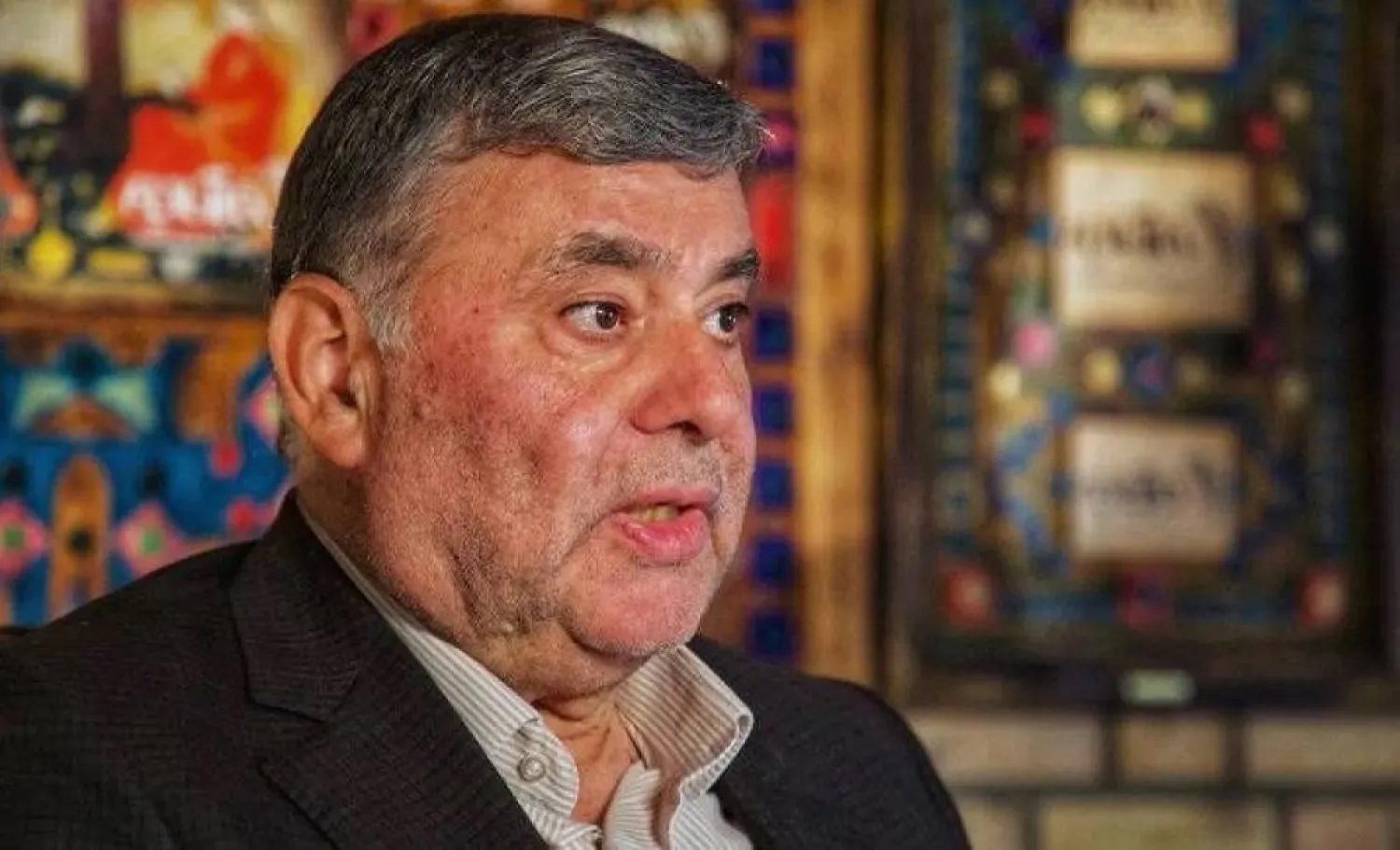

A veteran Iranian diplomat on Monday accused Russia of providing information to Israel on the location of its air defenses, saying Tel Aviv also played a role in assassinating then-president Ebrahim Raisi in May 2024.
Mohammad Sadr, a member of Iran's Expediency Discernment Council, said in an interview that “Russia provided Israel with information about Iran’s air defense sites” during the 12-day war between the two countries in June.
In mid-June, Israel launched several attacks on Iranian military sites and assassinated senior military commanders and nuclear scientists. The United States briefly joined the war and struck key Iranian nuclear facilities.
Israel largely destroyed Iran's air defenses during the war and much of its stockpile of ballistic weapons is believed to have been damaged. Tehran has since said it is ready to counter any future attacks.
“This is Russia,” Sadr said. “Russia was ready to deliver the S-400 system to NATO member Türkiye, but not to us,” despite the strategic alliance between Tehran and Moscow, he added.
Moreover, he noted that Iran had bought Sukhoi-35 fighter jets from Russia but none were delivered.
“Russia has a special bias towards Israel,” he said. “We must have ties with Russia, but at the same time, it cannot be trusted.”
In his interview, Sadr said Israel played a role in “assassinating” Raisi, who died in a helicopter crash in May 2024, along with then-foreign minister Hossein Amir-Abdollahian and others.
Sadr said Israel's assassination of Raisi was intended to send a message that “if Iran continues, we [Israel] will continue as well,” insinuating that it killed him to prevent Iran's military build-up.
Sadr has served as a member of the Expediency Discernment Council since 2017, and is the nephew of Mousa al-Sadr, the influential Iraqi cleric.
His comments came amid reports that Russia could obstruct the European snapback mechanism to reinstate sanctions against Tehran under a United Nations Security Council resolution.
On Saturday, Tehran and Moscow told the UK, France, and Germany that UN Security Council Resolution 2231 should expire on schedule. The three countries have threatened to invoke the snapback mechanism to reinstate previously revoked UN resolutions.


